


If your skin feels dry and tight, the best oil cleanser won't just clean your face—it will transform it. A good one melts away makeup and grime without stripping away your skin’s natural moisture, leaving it feeling soft, calm, and deeply nourished. Traditional foaming washes just can't compete.
Why Traditional Cleansers Fail Dry Skin
For anyone with dry skin, the post-wash feeling is painfully familiar. You cleanse, and moments later, your face feels tight, uncomfortable, maybe even a little flaky. That isn't the feeling of "squeaky clean." It's your skin's moisture barrier sending out an S.O.S.
Most foaming, gel, and even some cream cleansers get that satisfying lather from harsh surfactants like sulfates. While they’re great at removing dirt, they act like aggressive solvents, washing away not just the day's grime but also the essential, healthy oils that keep your skin hydrated and protected.
The Stripping Effect Explained
Think of your skin's moisture barrier like a brick wall. Your skin cells are the bricks, and your natural oils (lipids) are the mortar holding it all together. Harsh cleansers dissolve that mortar, creating tiny gaps in your skin’s defenses. This leads to a couple of major issues for dry skin:
- Increased Water Loss: With a weakened barrier, moisture evaporates right out of your skin. This process is called transepidermal water loss (TEWL).
- Heightened Sensitivity: Without its protective shield, your skin is suddenly vulnerable to environmental triggers like pollution and allergens, leading to redness and irritation.
This endless cycle of cleansing and stripping keeps your skin in a constant state of repair, never giving it a chance to find its balance. You can read more about how the environment plays a role in our article on why winter skin throws a tantrum.
A Fundamentally Different Approach
This is where the right oil cleanser changes everything. Instead of working against your skin, it works with it. The logic is beautifully simple: like dissolves like. The nourishing oils in the cleanser bind to the oil-based impurities on your skin—think makeup, sunscreen, and excess sebum.
It's like trying to clean a greasy pan with just water; it doesn't work. But add a drop of oil, and the grease lifts right off. Oil cleansing uses a similar, but far more gentle, principle for your face.
When you massage the oil onto dry skin, it gently lifts away everything you want gone without disrupting your delicate moisture barrier. Then, thanks to gentle emulsifiers in modern formulas, a splash of water transforms the oil into a light, milky liquid that rinses away clean.
The result? A complexion that feels truly clean, yet remains soft, comfortable, and perfectly prepped for the rest of your routine. It turns cleansing from a necessary chore into a calming, supportive ritual.
How Oil Cleansing Actually Heals and Hydrates
To really get why oil cleansing is so transformative for dry, thirsty skin, we need to go back to a basic chemistry rule: like dissolves like. It’s a simple idea, but it’s the entire reason this method works so beautifully without stripping the skin.
Think about what’s on your face at the end of the day. It’s a mix of makeup, sunscreen, pollution, and your own sebum—and nearly all of it is oil-based. A typical foaming cleanser uses harsh detergents to blast everything away, taking your skin’s own protective oils with it. That’s what leaves you with that tight, squeaky (and deeply uncomfortable) feeling.
An oil cleanser works differently. It’s like a gentle magnet. When you massage it onto your skin, the cleanser’s oils bind to all the other oils—the makeup, the grime, the excess sebum—and lift them away from the surface and out of your pores. It dissolves only what you don’t want, leaving your delicate moisture barrier completely intact.
The Two-in-One Benefit for Dry Skin
This is where oil cleansing becomes a true game-changer for anyone with dry skin. It’s a dual-action process, giving you two essential benefits in one single step:
- It melts away impurities: It effortlessly breaks down even the most stubborn, long-wear makeup and waterproof sunscreen—things water-based cleansers just can’t handle on their own.
- It adds back nourishment: While it cleanses, the botanical oils in the formula are also delivering essential fatty acids back into your skin, actively hydrating and softening it on the spot.
You’re essentially swapping out the "bad" oils (like old sebum and pollutants) for clean, nourishing ones that fortify your skin’s natural defenses. This simple exchange helps your skin hold onto moisture, finally putting an end to that chronic tightness that so many of us struggle with.
The worldwide shift toward gentler cleansing isn’t just a fleeting trend; it’s people realizing what our skin has needed all along. As we all get smarter about skincare, the demand for products that support skin health has soared. The global cleansing oil market is on track to hit $2.28 billion by 2025, with a stunning 13.9% annual growth rate expected through 2033. This isn't just marketing—it's driven by people ditching harsh formulas for oils that respect the skin's vital moisture barrier. For a deeper dive, you can check out the full cleansing oil market report from Market Report Analytics.
Stopping Water Loss in Its Tracks
A major villain in the story of dry skin is something called transepidermal water loss (TEWL). It’s the scientific term for moisture literally evaporating out of your skin and into the air. When your skin's barrier is damaged—often by those harsh cleansers—TEWL speeds up, leading to that cycle of dehydration, flakiness, and irritation.
Oil cleansing directly tackles this. By cleansing without stripping and depositing nourishing lipids at the same time, it helps seal the tiny cracks in your skin’s barrier.
Think of your skin barrier like a well-built roof. A strong, intact barrier keeps moisture locked inside, just like a solid roof keeps rain out. Oil cleansing helps repair any missing shingles, making sure everything inside stays protected and hydrated.
This simple switch helps your skin hold onto its own water far more effectively, leading to a complexion that feels comfortable, plump, and resilient day after day.
Busting the Myth That Oil Clogs Pores
One of the most persistent myths out there is that putting oil on your face will clog your pores and cause breakouts. This fear usually comes from bad experiences with heavy, comedogenic ingredients like mineral oil or coconut oil, which simply aren't right for every skin type.
But a well-formulated oil cleanser is different. It uses non-comedogenic botanical oils—like jojoba, safflower, and sunflower—that are chosen specifically for their ability to cleanse without causing congestion. Their molecular structures actually help dissolve the hardened sebum plugs inside your pores instead of creating new ones.
And when they’re combined with an emulsifier, the entire mix of oil and grime rinses away cleanly with water. Nothing is left behind but soft, balanced skin. For dry skin, this means you get all the healing hydration without any of the worry.
Choosing Your Cleanser: What Ingredients Matter
Stepping into the world of skincare can feel like trying to read another language, especially when you’re faced with a long ingredient list. But finding the best oil cleanser for dry skin isn’t about memorizing complex chemical names; it’s about learning to spot the heroes and avoid the villains.
When you know what you're looking for, you can scan a label with confidence, knowing instantly whether a product will soothe your dry skin or send it into a spiral of irritation.
This handy decision tree shows why making the switch from traditional cleansers is such a game-changer for anyone with dry skin.
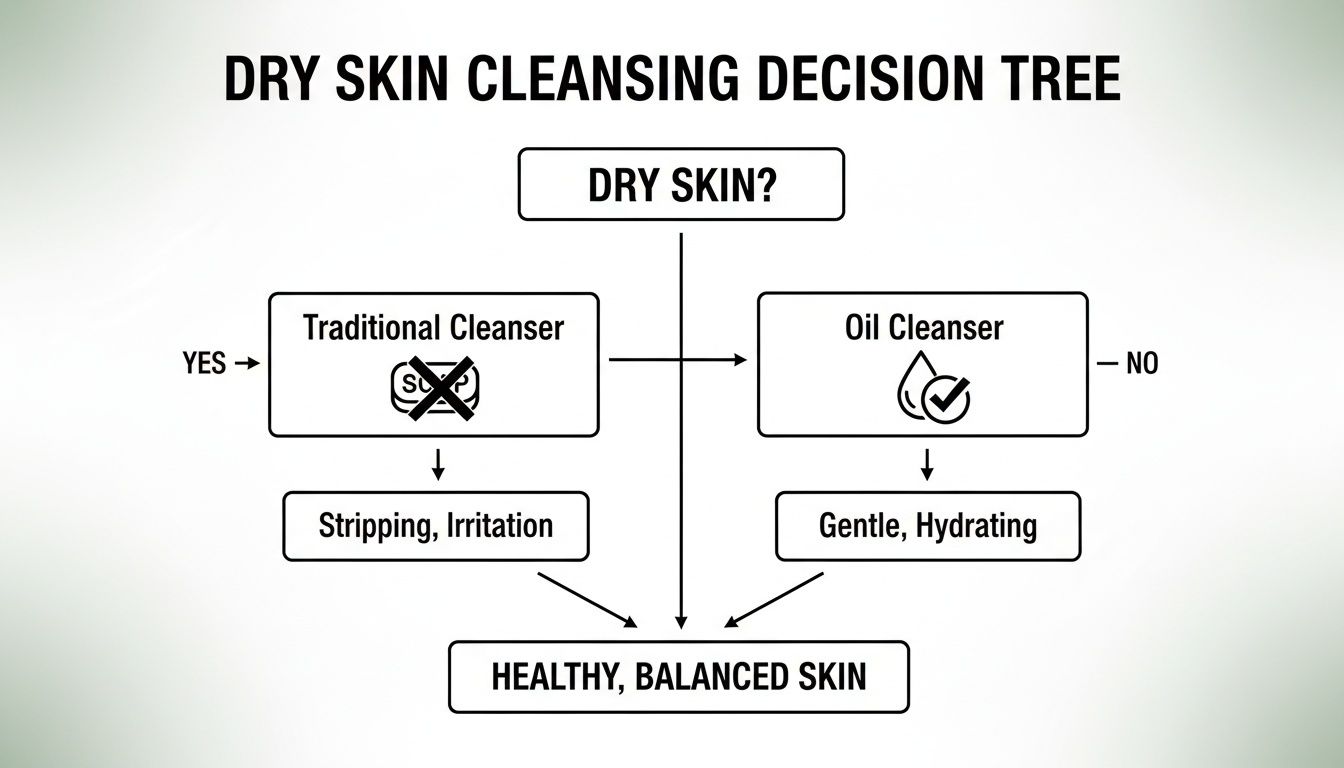
As the visual guide makes clear, oil cleansers offer a direct path to nourished, comfortable skin, while harsh traditional cleansers often create more problems than they solve.
The Nourishing Heroes to Look For
When you have dry skin, your cleanser needs to do more than just clean—it needs to replenish. The secret lies in beautiful botanical oils rich in specific fatty acids that mimic what your skin produces naturally. These are the ingredients that help repair your moisture barrier, leaving your skin feeling soft, not stripped.
- Jojoba Oil: This superstar is remarkably similar to your skin’s own sebum. Your skin just recognizes it, allowing it to sink in easily and help balance moisture levels without ever feeling greasy.
- Sunflower & Safflower Oils: Both are incredibly high in linoleic acid, an omega-6 fatty acid that’s a miracle worker for dry skin. Linoleic acid is a crucial building block for ceramides, the "mortar" that holds your skin barrier together to prevent water loss.
- Apricot Kernel Oil: Light, gentle, and packed with vitamins, this oil is fantastic for softening skin and delivering a dose of nourishment to soothe a sensitive or irritated complexion.
For a deeper dive into how these building blocks work, you can explore our detailed guide on what are fatty acids in skincare. The right blend of these oils is what makes the best oil cleanser for dry skin so deeply effective.
Potential Irritants to Run From
Just as important as knowing what to look for is knowing what to avoid. Certain common ingredients can undermine all the good work of nourishing oils, leading to irritation, clogged pores, and even more dryness.
Think of your skincare routine like a healthy diet. You can eat all the good-for-you greens you want, but if you're also consuming things you’re sensitive to, you won't feel your best. The same principle applies to your skin.
It’s all about eliminating the ingredients that work against your goal of a calm, hydrated complexion. Here are the main culprits to watch out for.
- Artificial Fragrance: "Fragrance" or "parfum" on a label can hide a cocktail of hundreds of synthetic chemicals. They’re among the most common causes of skin sensitization and allergic reactions.
- Mineral Oil: While some people tolerate it, this petroleum byproduct is an occlusive that can feel heavy and may contribute to congestion for some skin types. Natural botanical oils simply offer far more skin-loving benefits.
- Drying Alcohols: Watch out for ingredients like SD alcohol, denatured alcohol, or isopropyl alcohol. They’re often used to make products feel lightweight, but they evaporate quickly—taking your skin’s precious moisture along with them.
To help you sort the good from the bad at a glance, here’s a quick comparison of what your dry skin loves versus what it’s better off without.
Key Ingredients for Dry Skin Oil Cleansers
| Ingredient Type | What to Look For (Examples) | Why It's Great for Dry Skin | What to Avoid (Examples) |
|---|---|---|---|
| Carrier Oils | Jojoba, Sunflower, Safflower, Apricot Kernel Oil | High in barrier-supporting fatty acids; mimics skin's natural lipids. | Mineral Oil, Petrolatum |
| Fragrance | Essential Oils (used mindfully), Unscented formulas | Provides natural, gentle aroma; minimizes irritation risk. | Synthetic Fragrance, Parfum |
| Alcohol | Fatty Alcohols (e.g., Cetearyl Alcohol) | Non-drying; can act as emollients to soften skin. | SD Alcohol, Denatured Alcohol |
| Preservatives | Vitamin E (Tocopherol), Rosemary Extract | Natural antioxidants that also help keep oils fresh. | Parabens, Formaldehyde-releasers |
Knowing this distinction is empowering. You can walk the skincare aisle and immediately filter out the products that won’t serve your skin.
The growing awareness around these ingredients is driving a massive consumer shift. The botanical cleansing oil market is projected to hit $2.6 billion by 2026, fueled by a 10.4% annual growth rate. This reflects a clear demand for clean, transparent formulas, with 75% of U.S. consumers prioritizing skincare spending.
Many of the most beloved formulas—like the best Japanese cleansing oil options on the market—excel at this gentle-yet-effective approach. By learning to read labels, you can confidently choose a product that aligns with your skin’s true needs.
Mastering the Oil Cleansing Method
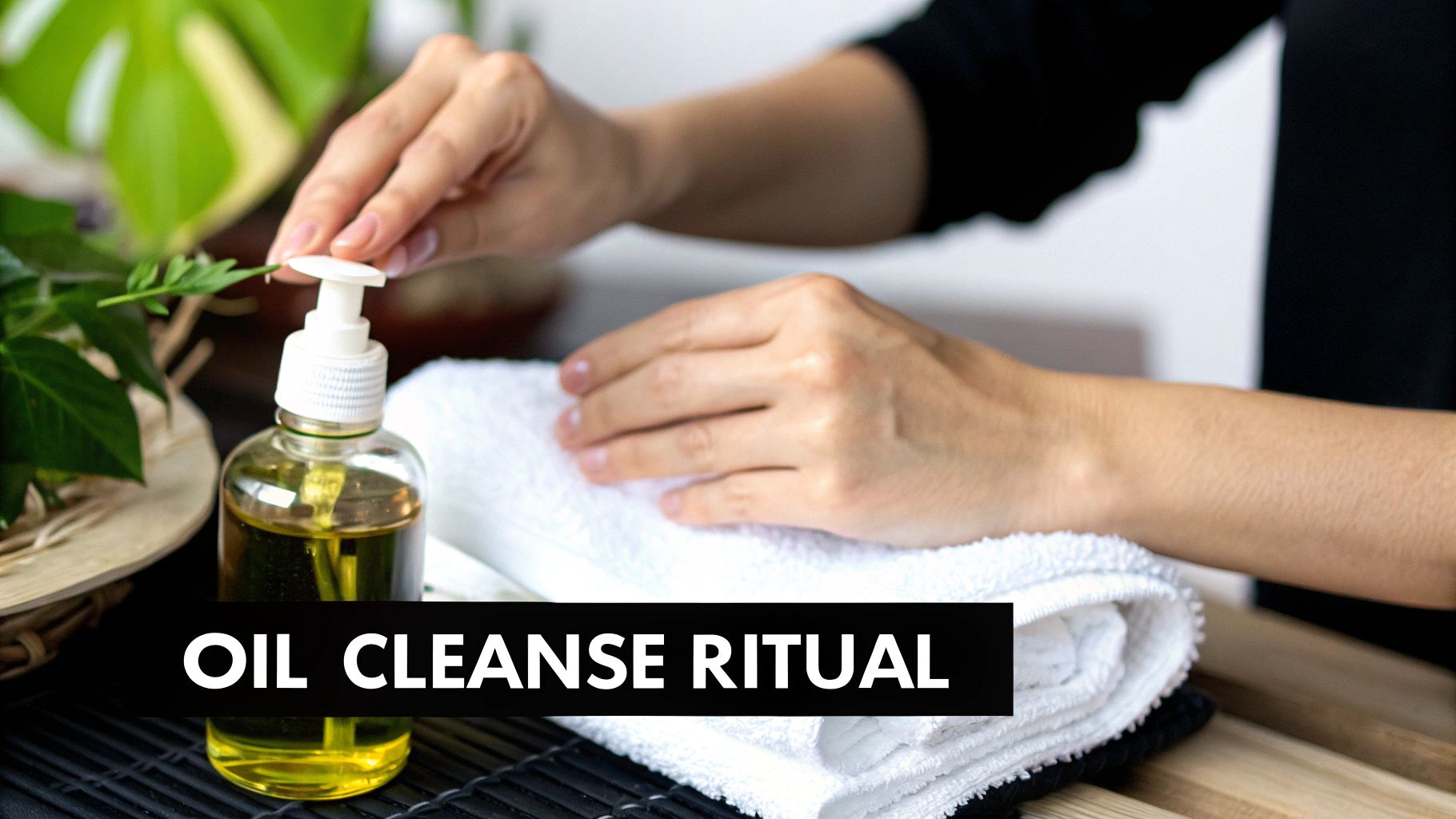
Knowing why an oil cleanser works is the first step, but the real magic happens in the ritual itself. When you get the technique right, you unlock truly soft, hydrated, and perfectly clean skin. The process is simple, but every detail matters for achieving that residue-free glow.
The single biggest mistake people make is applying oil to a wet face. For that "like dissolves like" chemistry to work, the oil needs to connect directly with the oil-based gunk on your skin—makeup, sunscreen, sebum, you name it. So, rule number one: always start with a completely dry face and dry hands.
Your Step-by-Step Cleansing Ritual
Think of this as less of a chore and more of a calming daily ritual that supports your skin. It’s a moment to slow down, reconnect, and give back to your skin.
- Start Dry: Pump two or three drops of your oil cleanser into dry palms. Remember, water comes later.
- Massage Gently: Apply the oil to your dry face and start massaging in slow, circular motions. Use your fingertips to work it into every corner—around your nose, along the hairline, over the chin. Give it a good 30 to 60 seconds to really melt away the day. This gentle massage also boosts circulation, which is a lovely little bonus.
- Emulsify Correctly: This is the most important step. Add a splash of lukewarm water to your hands and keep massaging your face. You'll see the oil instantly turn into a light, milky liquid. This is emulsification, and it's what allows the oil (and all the impurities it has grabbed) to rinse away completely.
- Rinse Thoroughly: Once the oil looks milky all over, rinse with more lukewarm water until your skin feels clean and soft, with no oily film left behind. Stay away from hot water, which can strip your skin and undo all the good you just did.
- Pat Dry Gently: Use a soft, clean towel to gently pat your skin dry. No rubbing! Rubbing creates friction and can irritate a delicate complexion.
Your skin should now feel clean, supple, and comfortable—never tight or greasy. You've created the perfect canvas, ready to drink up the serums and moisturizers that come next.
Pro Tips for the Best Results
To really elevate your experience, keep these simple tips in mind. They can make a surprising difference in your skin's texture and glow.
"The goal of cleansing is to remove impurities without disrupting the skin's natural balance. An oil cleanser, when used properly with the emulsification step, achieves this beautifully. It respects the skin barrier, which is everything for dry and sensitive types."
A few small adjustments can create a much more thoughtful and effective routine.
- Use a Soft Washcloth: For an extra touch of gentle exfoliation and a spa-like feel, you can use a warm, damp washcloth to wipe away the emulsified oil. Just make sure it’s soft and clean to avoid introducing any bacteria.
- Don't Rush the Massage: Give the oil time to do its job. That massage isn't just for spreading the product around; it's what's actively breaking down stubborn makeup and loosening sebum plugs in your pores.
When you nail the application, you get all the benefits without any of the drawbacks. For more ideas on weaving oils into your routine, check out our guide on how to use facial oil for maximum hydration.
A Natural Solution That Just Makes Sense
So, you’ve done the homework. You know the science behind a good oil cleanse, you can spot nourishing ingredients from a mile away, and you know which synthetics to leave on the shelf. The final step is finding a product that puts all that theory into practice.
This is where it all comes together in a bottle. The search for the best oil cleanser for dry skin often ends with brands that are fiercely committed to purity, gentle formulas, and thoughtful ingredients. A perfect example of this philosophy in action is Baby le Bébé’s Rinse-Away Oil Cleanser.
A Formula That Respects Your Skin
This cleanser is a beautiful testament to the power of pure, botanical ingredients. Its formula reads like a checklist of the "Nourishing Heroes" we talked about earlier, built on a base of oils chosen specifically for their ability to hydrate and soothe. It’s crafted with 99% organic ingredients, which means your skin gets a concentrated dose of nature without any fluff.
But what’s left out is just as important. The formula is completely free of the synthetics, preservatives, and artificial fragrances you now know to steer clear of. It’s a clean, direct approach that honors your skin's delicate moisture barrier.
A great cleanser doesn't just take away; it gives back. It should remove makeup and impurities while depositing nourishment, leaving the skin's ecosystem stronger and more resilient than before.
This simple principle is at the very heart of a well-made oil cleanser. It’s not just about washing your face—it’s about nurturing it from the very first step.
Crafted with Care and Intention
Beyond the ingredient list, the story behind a product often says a lot about its quality. Baby le Bébé’s cleanser is crafted with care in the Catskills, embodying a commitment to both skin health and a lighter footprint on the earth. This isn't some mass-produced formula; it's a thoughtful blend designed to turn your daily cleanse into a calming, supportive ritual.
The brand's whole vibe aligns with a growing movement of people who want transparency and quality from their skincare. You can see this shift in the market itself. The global cleansing oil market is projected to hit $3.34 billion by 2035, growing at a steady clip of 6.42%. That surge is largely driven by people with dry, sensitive skin looking for gentle, effective solutions. Brands like Baby le Bébé, with their natural formulas, tap directly into this need, delivering results without compromise. You can dive deeper into this trend with these cleansing oil market insights from Business Research Insights.
This commitment also shows up in their ethical standards. The entire line is cruelty-free and vegan (plus beeswax), which resonates with anyone who wants their skincare to be as kind to the planet as it is to their skin.
Why This Cleanser Is an Ideal Choice
For those of us with dry skin, finding a product that actually delivers on its promises can feel like a huge win. Baby le Bébé’s Rinse-Away Oil Cleanser checks all the right boxes, making it a perfect fit for a gentle and truly effective routine.
- Pure Botanical Ingredients: The formula relies on high-quality, organic oils to dissolve impurities without stripping your skin bare.
- No Hidden Irritants: It's completely free from parabens, synthetics, and artificial fragrances that can stir up sensitivity.
- Emulsifies Beautifully: It transforms into a light milk with water, rinsing away completely and leaving zero greasy residue behind.
- Supports a Healthy Barrier: By cleansing gently and depositing fatty acids, it helps your skin hold onto moisture and stay calm.
Ultimately, this cleanser is the perfect real-world example of everything we've learned. It shows how a thoughtfully formulated oil can deliver on the promise of clean, hydrated, and resilient skin. For anyone struggling with dryness, making this simple switch can be the first step toward a complexion that feels comfortable and happy every single day.
Common Questions About Oil Cleansing
Trying any new skincare method comes with a few questions, and oil cleansing is no exception. For those of us with dry or sensitive skin, a couple of concerns tend to pop up again and again. Getting clear, honest answers is the key to cleansing with confidence and finally getting that soft, hydrated skin you’re looking for.
One of the biggest hesitations? The fear of breakouts. It’s a stubborn myth that putting oil on your face will automatically lead to clogged pores and blemishes. Let's clear that up.
Will It Make My Skin Greasy or Cause Breakouts?
This is the number one question we hear, and the answer comes down to the formula itself. A thoughtfully made oil cleanser uses non-comedogenic botanical oils—ingredients that are scientifically shown not to clog pores. Unlike heavy, pore-blocking ingredients like mineral oil, nourishing oils such as jojoba and safflower actually help dissolve the hardened sebum already inside your pores.
The real magic, though, is in the emulsification step. When you add water, a proper oil cleanser transforms into a milky liquid that rinses away completely, taking all the dissolved makeup, sunscreen, and excess oil with it. There’s no greasy film left behind—just clean, soft skin.
Can I Use It with Sensitive Skin or Rosacea?
Absolutely. In fact, oil cleansing is often the best oil cleanser for dry skin for the simple reason that it’s so gentle. Traditional foaming cleansers often rely on harsh surfactants that strip the skin’s protective barrier, leading to irritation, redness, and flare-ups—especially for those with sensitive conditions like rosacea.
An oil cleanser works without disrupting this delicate barrier. It cleanses beautifully while simultaneously soothing the skin and replenishing it with essential fatty acids. The most important thing is to choose a product free from common irritants.
A fragrance-free formula is non-negotiable for sensitive skin. Artificial fragrances are a leading cause of skin reactions, so opting for a pure, unscented oil cleanser minimizes the risk of irritation and lets your skin feel calm and comfortable.
Do I Need a Second Cleanser After?
This brings us to the popular "double cleansing" method. The idea is to use an oil cleanser first to break down oil-based impurities, followed by a water-based cleanser to wash away any remaining residue. For many people, this two-step process provides an incredibly thorough clean.
But for dry and sensitive skin, it’s often not necessary. A high-quality oil cleanser that emulsifies properly will rinse clean on its own, leaving your skin perfectly prepped for the rest of your routine. Over-cleansing can easily lead to more dryness, so listen to your skin. If it feels clean and soft after just the oil step, you’re good to go.
Ready to experience the gentle power of a truly natural cleanse? Discover the Baby le Bébé Rinse-Away Oil Cleanser, thoughtfully crafted to calm, hydrate, and restore your dry skin.


0 comments