


The search for the best organic face cleanser usually starts with wanting healthier, more radiant skin. For us, that begins with a nourishing oil cleanser. A formula like Baby le Bébé’s rinse-away oil cleanser uses pure botanicals to melt away impurities without stripping your skin of what it needs. It’s a gentle approach that respects your skin’s natural balance—the true foundation of any good skincare ritual.
Your Journey to Radiant Skin Starts with the Right Cleanser
Stepping into the world of skincare can feel like a lot. It’s crowded with conflicting advice and complicated ingredient lists. But the truth is, the most profound results often come from simplifying your routine and choosing products with intention.
This guide is built on a single belief: the most effective skincare comes from pure, potent botanicals. We’ll help you cut through the noise, explaining the real difference between terms like ‘natural’ and ‘organic,’ so you have a clear roadmap. Think of it as moving beyond the marketing hype to find what truly works for you.
Why Choose an Organic Cleanser?
Switching to an organic cleanser is a conscious move. It’s part of a bigger shift toward clean beauty and knowing exactly what’s in your products. This isn't just a trend; it reflects a deeper understanding that what we put on our skin matters for our overall well-being.
A truly effective routine has just three steps: cleanse, treat, and protect. Starting with a gentle, organic cleanser creates a clean canvas, allowing everything that follows to absorb better and work harder.
The global organic skincare market proves this shift is real. Valued at USD 15.4 billion in 2026, the industry is expected to nearly triple to USD 34.2 billion by 2035, growing at a rapid 9.3% each year. This incredible growth speaks volumes about our collective desire for skincare that is both effective and mindfully made.
The Foundation of a Healthy Routine
Cleansing is the first and most critical step in any skincare ritual. It washes away the daily buildup of dirt, oil, makeup, and pollutants, prepping your skin for whatever comes next. Without a proper cleanse, your serums and moisturizers can’t penetrate effectively, which means you won't see their full benefits.
A great cleanser gets the job done without disrupting your skin’s delicate moisture barrier. To really understand its role, you can explore the many benefits of using a cleanser. This guide will help you choose the right one to master this essential first step.
Decoding What Organic Really Means for Your Skin
When you start looking for the best organic face cleanser, you'll see the words "organic" and "natural" used almost interchangeably. But in the world of skincare, they mean very different things. Getting clear on this distinction is the first step to becoming a truly savvy shopper.
Think of it like you're at the farmer's market. "Natural" is a beautiful, freshly picked apple—it looks healthy, but you have no real idea how it was grown. "Organic," on the other hand, is that same apple with a certification seal. That seal is your guarantee it was grown in soil free from prohibited substances, without synthetic pesticides, and under strict, regulated conditions.
This same principle applies directly to your skincare. A cleanser labeled "natural" might have plant-based ingredients, but those plants could have been conventionally farmed. An "organic" cleanser, however, is made with ingredients cultivated through organic farming methods, which often means more potent, nutrient-dense botanicals for your skin.
Why The Organic Label Matters
Choosing organic goes beyond just avoiding chemicals you don't want. Research suggests that plants grown organically often produce higher levels of antioxidants to protect themselves from pests and environmental stress. When those botanicals end up in your cleanser, those protective benefits are passed right on to your skin.
This means an organic cleanser isn't just about what it lacks (like synthetic pesticides), but about what it offers—a richer concentration of the vitamins, minerals, and phytonutrients that support true skin health. It's a proactive approach that prioritizes nourishment from the very source.
And people are catching on. The demand for pure formulations is growing so fast that natural and organic facial cleansers are projected to expand at a rate of 8.02% annually through 2031. That's a clear signal that conscious consumers want integrity in their ingredients.
Navigating Certifications and Greenwashing
Because "organic" is a regulated term, brands can't just slap it on a label without meeting specific standards. This is where third-party certifications become your most trusted guide. They cut through the noise of "greenwashing"—a marketing tactic where brands use eco-friendly buzzwords to make a product seem healthier than it actually is.
To really get it, it's helpful to understand what certified organic means, as this gives you a window into the rigorous standards your products are held to.
When you see an official certification seal, you can trust that an independent body has verified the product's claims, from the farm where the ingredients were grown to the facility where the final product was bottled.
Understanding Organic Skincare Certifications
This simplified table breaks down what some of the most common certifications guarantee when you see them on a face cleanser.
| Certification | What It Guarantees | Key Requirement Example |
|---|---|---|
| USDA Organic | A very strict standard ensuring purity and organic farming practices. | At least 95% of ingredients (excluding water and salt) must be certified organic. |
| COSMOS | A leading European standard focused on organic farming, biodiversity, and clean processing. | Has two levels: COSMOS Organic (high % of organic ingredients) and COSMOS Natural. |
| NSF/ANSI 305 | A specific standard for personal care products "containing organic ingredients." | The product must contain at least 70% certified organic ingredients to qualify. |
Learning to spot these seals empowers you to see past vague marketing claims. You're no longer just taking a brand's word for it; you're relying on a verified, transparent process. This ensures the organic face cleanser you choose has genuine integrity and will deliver the pure, effective results your skin deserves.
The Clean Cleanser Ingredient Checklist
Let's be honest: staring at an ingredient list shouldn't feel like you're trying to pass a chemistry final. But when you’re looking for the best organic face cleanser, the back of the bottle is where the truth lies. It’s your chance to look past the pretty packaging and understand what the product is really all about.
The good news is, you don't need a degree in cosmetic science. We can break it down into two simple categories: what you want to see more of, and what you’re better off avoiding. This little checklist will give you the confidence to spot a beautiful, effective formula that has your skin's long-term health in mind.
Ingredients to Embrace in Your Cleanser
The most elegant formulas are often the simplest, relying on powerful botanicals that work with your skin, not against it. These are the ingredients that cleanse beautifully without stripping away the natural oils that make up your skin’s protective barrier—the very thing that keeps moisture in and irritants out.
Look for cleansers built around a foundation of nourishing, non-comedogenic oils. These are the heroes of a gentle, yet truly thorough, cleanse.
- Jojoba Oil: This one is just incredible. Jojoba oil’s molecular structure is so close to your skin's own sebum that it acts like a master regulator. It helps moisturize dry patches while signaling to oily spots that they can calm down. A true skin normalizer.
- Sunflower Oil: Full of Vitamin E and linoleic acid, sunflower oil is a powerhouse for strengthening the skin barrier. It helps fortify your skin against daily stressors while melting away impurities without a hint of dryness.
- Castor Oil: Known for its potent cleansing properties, castor oil has a unique knack for drawing dirt, grime, and makeup from deep within the pores. When balanced with other nourishing oils, it delivers a deep clean that leaves skin feeling soft and supple, never tight.
These oils work on a simple scientific principle: "like dissolves like." They bind to the excess oil, makeup, and sunscreen on your skin, dissolving them so they can be rinsed or wiped away with ease. This is exactly why a product like Baby le Bébé's rinse-away oil cleanser feels so effective yet so gentle—it respects your skin's natural balance.
Ingredients to Avoid for Healthier Skin
Knowing what to look for is only half the battle. Knowing what to steer clear of is just as important. Some very common additives can disrupt your skin's delicate ecosystem, leading to dryness, irritation, and sensitivity over time. While not every person will react badly, avoiding them is an easy way to sidestep potential issues and keep your skin barrier happy.
The goal isn’t to create fear around certain ingredients, but to give you the knowledge to make mindful choices. Understanding the potential downsides of a few key additives lets you pick products that truly align with your skin’s needs. If you want to go deeper, learning more about the safety and efficacy of natural ingredients can give you even more insight into building a clean, supportive routine.
When scanning a label, remember that the first five ingredients usually make up the bulk of the formula. If you see high-quality botanical oils at the top and the ingredients below are absent, you’ve probably found a winner.
Here are a few common culprits to keep an eye out for on your next shopping trip:
- Sulfates (SLS & SLES): Sodium Lauryl Sulfate and Sodium Laureth Sulfate are the harsh detergents that create that big, bubbly lather in many conventional cleansers. It might feel satisfying, but all that foam can strip your skin of its protective oils, leaving it feeling tight, dry, and vulnerable.
- Parabens: Used as preservatives to give products a longer shelf life, parabens (like methylparaben or propylparaben) have raised concerns for their potential to mimic estrogen and disrupt hormonal balance. Choosing formulas with natural preservatives is a much safer bet.
- Synthetic Fragrances: That one little word on a label—"fragrance" or "parfum"—can hide a cocktail of hundreds of undisclosed chemicals. Many of these are common allergens and irritants that offer zero benefit to your skin and are a top cause of allergic reactions. Fragrance-free products, or those scented only with pure essential oils, are always the gentler choice.
With this simple checklist in your back pocket, you can move from being a passive consumer to an empowered advocate for your own skin. You'll be able to confidently pick the best organic face cleanser that truly nourishes from the inside out.
Find the Perfect Organic Cleanser for Your Skin Type
Picking the best organic face cleanser isn't about finding a single miracle product that works for everyone. It’s more like learning your skin's unique language and giving it exactly what it needs to feel balanced, calm, and comfortable.
Think of your skin like a garden; you wouldn't use the same fertilizer for a cactus that you would for a rose. The secret to a great cleanse is matching the right ingredients to your specific skin profile. A formula that feels like a hug to dry, tight skin might be too heavy for an oily complexion, while sensitive skin needs the gentlest touch of all.
When you learn to spot the botanicals that work in harmony with your skin, you can turn a daily chore into a truly restorative ritual.
For Dry or Mature Skin
Dry and mature skin types share a common goal: hold on to moisture and replenish what’s been lost. Harsh, stripping cleansers are their biggest enemy. They can weaken an already delicate skin barrier, leading to that dreaded tight, flaky feeling and a dull appearance.
The aim here is to cleanse while delivering deep nourishment. An oil-based cleanser is a complete game-changer for these skin types because it melts away impurities without disrupting the skin's natural lipid layer. Look for formulas rich in oleic acid, a fatty acid known for its incredible moisturizing and softening properties.
- Key Ingredients: Avocado Oil, Camellia Seed Oil, and Shea Butter are beautiful choices. They give a cushiony, emollient cleanse that leaves skin feeling supple and hydrated, never stripped.
For Oily or Acne-Prone Skin
This might sound backward, but one of the best things you can do for oily skin is to wash it with the right kind of oil. Many foaming cleansers strip away so much oil that the skin panics and overcompensates, producing even more sebum to rebalance itself. This kicks off a frustrating cycle of shine and breakouts.
An organic oil cleanser works on a simple principle: "like dissolves like." It gently breaks down excess sebum, makeup, and pore-clogging grime. The key is to find lightweight, non-comedogenic oils high in linoleic acid, which is known to help balance sebum and keep pores clear.
Choosing a cleanser that respects your skin's natural oil production is crucial. By avoiding harsh detergents, you help your skin find its own equilibrium, leading to a clearer and more balanced complexion over time.
This little decision tree can help you quickly scan labels and identify the ingredients to welcome or avoid.
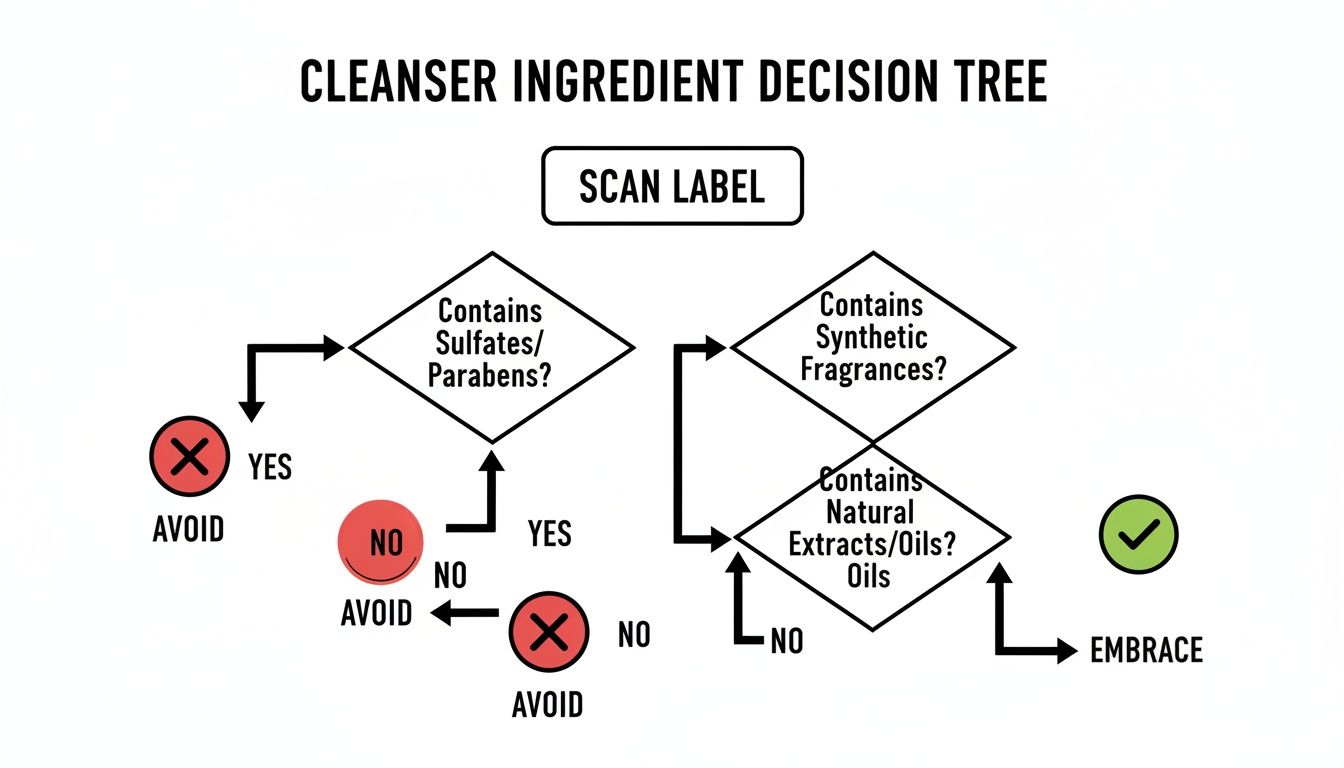
This visual guide is a great reminder to focus on beneficial botanicals while sidestepping common irritants.
For Sensitive Skin
Sensitive skin is highly reactive and thrives on a minimalist approach. The focus should always be on calming, soothing ingredients and formulas with very short, simple ingredient lists. Less is truly more, as every additional ingredient introduces another potential for irritation.
Look for cleansers that are free from all potential triggers—synthetic fragrances, harsh preservatives, and even some essential oils. A gentle, fragrance-free oil cleanser is often the safest and most effective choice, as it cleanses thoroughly with minimal friction or disruption. Soothing botanicals like Calendula and Chamomile can provide extra comfort.
For Combination Skin
Combination skin is the ultimate balancing act—oily in the T-zone (forehead, nose, and chin) but dry or normal on the cheeks. This type needs a cleanser that can tackle both concerns at once without making either one worse.
The ideal solution is a formula that clarifies and balances without over-drying. Ingredients like Jojoba Oil are perfect for combination skin because their structure closely mimics our skin’s own sebum. This allows it to moisturize the dry areas while helping to regulate oil production in the T-zone, bringing the entire complexion back into harmony.
To see how these ingredients come together, you can learn more about the formulation of Baby le Bébé's rinse-away oil cleanser, which is designed to suit a wide variety of skin types.
Organic Cleanser Guide by Skin Type
To make things even simpler, here’s a quick reference guide to help you find the best organic cleanser ingredients and formulation type based on your primary skin concerns.
| Skin Type | Key Characteristics | Best Organic Ingredients to Look For | Ideal Cleanser Texture |
|---|---|---|---|
| Dry / Mature | Feels tight, flaky, looks dull, prone to fine lines | Avocado Oil, Camellia Seed Oil, Shea Butter, Rosehip Oil | Rich Oil or Cream |
| Oily / Acne-Prone | Shiny, visible pores, prone to blackheads and breakouts | Jojoba Oil, Grapeseed Oil, Hemp Seed Oil, Calendula | Lightweight Oil or Gel |
| Sensitive | Easily irritated, red, itchy, reacts to fragrance/chemicals | Calendula, Chamomile, Oat Oil, Squalane (from olives) | Gentle Oil or Milky Lotion |
| Combination | Oily T-zone (forehead, nose, chin), dry/normal cheeks | Jojoba Oil, Sunflower Seed Oil, Squalane | Balancing Oil or Light Cream |
| Normal | Balanced, minimal concerns, not overly dry or oily | Jojoba Oil, Apricot Kernel Oil, Sunflower Seed Oil | Oil, Cream, or Gel |
This table serves as a starting point. Remember to always listen to your skin—it will tell you what it loves! Finding the right match can transform your cleansing routine from a necessity into a moment of true self-care.
Mastering Your Organic Cleansing Ritual
Having the best organic face cleanser in your cabinet is one thing; knowing how to use it is where the magic really happens. The right technique can turn a quick wash from a chore into a mindful, restorative ritual that actually delivers visible results. A good cleanse isn't just about getting dirt off—it's about feeding your skin and respecting its delicate balance.
This is especially true when you're working with an oil-based cleanser. Instead of harsh surfactants that strip your skin, oil cleansers work on a simple, elegant principle: "like dissolves like." The nourishing botanical oils in the cleanser grab onto the oils in your makeup, sunscreen, and the day's grime, gently dissolving them without disrupting your skin's protective barrier. The result? A deep clean that leaves your skin feeling soft and hydrated, never tight or raw.
The demand for a better way to cleanse is clear. The global facial wash market, valued at USD 33.33 billion in 2025, is expected to climb to USD 55.36 billion by 2033. It’s no surprise, really. Between urban pollution, sweat, and long-wear cosmetics, our skin is dealing with more than ever, making a proper cleansing ritual non-negotiable. You can dig into more of the data in this face wash and cleanser market research.
The Art of the Oil Cleanse Step by Step
Mastering the oil cleansing method is simple, satisfying, and feels incredibly luxurious. Following these steps will help you get the most out of your organic cleanser, leaving you with a complexion that feels impeccably clean and remarkably soft.
-
Start with Dry Hands and a Dry Face: This is the golden rule. Applying oil to dry skin lets it bind directly with the makeup and sebum you want to remove. Go ahead and dispense one or two pumps into your palm.
-
Gently Massage the Oil into Your Skin: Using your fingertips, work the oil into your face with slow, circular motions for about 30 to 60 seconds. This isn’t just about spreading the product around; the massage itself boosts circulation, bringing fresh oxygen to the skin's surface for a healthy glow. Give a little extra love to areas with more makeup or congestion, like around your nose and chin.
-
Introduce Warm Water: Now, wet your hands with warm (not hot!) water and keep massaging. You’ll see the oil transform into a light, milky liquid. This is called emulsification, and it's the key step that lifts all the dissolved impurities away from your skin. For a deeper dive into how different plant oils benefit the skin, you might like our guide on how to use facial oil effectively.
-
Remove with a Warm, Damp Cloth: Soak a soft washcloth in warm water and wring it out. For a truly spa-like moment, drape the cloth over your face for a few seconds to let the gentle steam open your pores. Then, gently wipe away every trace of the cleanser, makeup, and grime.
This final step offers a light exfoliation and ensures no residue is left behind. It’s the secret to a polished, professional-feeling cleanse at home, revealing skin that is perfectly prepped for whatever comes next.
Pro Tips for the Perfect Cleanse
To elevate your daily ritual even further, here are a few best practices. These small tweaks can make a huge difference in your skin's health over time.
- Adjust Your Massage Time: On days you’re wearing heavy makeup, spend an extra minute massaging the oil in to make sure everything has a chance to fully dissolve.
- Don't Forget Your Neck: Your neck and décolleté are exposed to the same daily pollutants as your face, so extend your cleanse downward.
- Always Use a Clean Cloth: This is a big one. Grab a fresh cloth for every cleanse to avoid reintroducing old bacteria to your clean skin.
By embracing this mindful approach, you do more than just wash your face—you create a moment of intentional self-care that nurtures your skin from the outside in.
Building Your Complete Natural Skincare Routine
Finding the right organic face cleanser is a perfect start—it lays the foundation for truly healthy skin. But cleansing is just the beginning. The steps that follow—toning, treating, and moisturizing—are what lock in hydration and deliver the targeted nutrients your skin needs to really glow.
Think of it like tending a garden. Cleansing is the equivalent of clearing the weeds and tilling the soil. It’s a crucial first step that makes the ground receptive to the seeds and water that come next, ensuring they can sink in deeply and do their work. Without that clean canvas, everything else you apply just won’t be as effective.
The Essential Steps After Cleansing
Building a complete routine doesn't have to be complicated. In fact, a simplified approach is often best. An effective ritual really only needs three core steps: cleanse, treat, and protect. Once you’ve finished your evening cleanse with a product like Baby le Bébé's rinse-away oil cleanser, you can move on to the treatment and protection phases.
The key is to layer your products correctly, moving from the thinnest texture to the thickest. This simple sequence ensures each product can actually absorb without being blocked by heavier creams or oils applied out of order.
"I often remind my patients that more isn’t always better. The optimal simplified skin-care routine is one that supports your skin’s natural barrier while addressing your core needs and nothing more." - Dr. Azadeh Shirazi, Board-Certified Dermatologist
Here’s a simple, holistic framework to build upon your cleanse for calm, resilient skin.
-
Tone (Optional but Recommended): Right after cleansing, while your skin is still a little damp, spritz on a hydrating toner or press in an essence. This balances your skin's pH and adds that first layer of hydration, prepping it for whatever comes next.
-
Treat with Serums or Face Oils: This is where you get specific. Apply a few drops of a nourishing face oil or a targeted serum to address things like fine lines, uneven tone, or dryness. Gently press the product into your skin—don’t rub.
-
Moisturize and Seal: Finish with a moisturizer or a rich balm to lock it all in. This final layer creates a protective barrier that seals in the good stuff from your treatment step and prevents moisture from escaping while you sleep.
A Few Common Questions About Organic Cleansers
As you explore the world of clean beauty, it's natural to have a few questions pop up. Finding the best organic face cleanser means knowing what to expect and how these botanical formulas actually work with your skin. Here are some of the most common queries we hear, answered simply and clearly.
Will an Organic Oil Cleanser Make My Oily Skin Worse?
This is one of the biggest myths out there, but the truth is usually the exact opposite. High-quality botanical oils, like jojoba, are brilliant because they closely mimic your skin's own sebum. This helps trick your skin into thinking it's already produced enough oil, which in turn helps balance things out over time.
It all comes down to a simple chemistry principle: "like dissolves like." The cleanser's oils gently break down the excess oil, makeup, and daily grime on your skin without stripping it dry. This prevents the frustrating rebound effect where harsh, sudsy cleansers trigger your skin to produce even more oil to compensate. An oil cleanser can be a game-changer for oily and even blemish-prone skin, helping it find a calmer, more stable equilibrium.
How Do I Know if a Product Is Truly Organic?
This is where you have to become a bit of a detective. Marketing terms like "natural" or "pure" sound lovely on the front of a bottle, but they aren't regulated and don't mean much. The most reliable proof comes from third-party certifications like USDA Organic or COSMOS. These official seals are your guarantee that a product has met incredibly strict standards for both its ingredients and its production methods.
Your best tool, however, is always the ingredient list. A truly organic product will have recognizable, plant-based ingredients at the very top. It will also be free from the usual suspects like sulfates, parabens, and synthetic fragrances.
A quick scan of the first five ingredients will tell you almost everything you need to know about a formula’s integrity.
Can Organic Cleansers Really Remove Heavy Makeup?
Absolutely. In fact, oil-based organic cleansers are one of the best and gentlest ways to dissolve stubborn, long-wear, and even waterproof makeup. The oils in the formula bind directly to the oils in your cosmetics, melting them away thoroughly but without any drama.
When you massage the cleanser into your skin and lift it away with a warm, damp cloth, you take everything with it—no harsh rubbing or tugging required. The process leaves your skin feeling completely clean, soft, and hydrated, never tight or irritated. It's a powerful cleanse that still deeply respects your skin’s delicate moisture barrier.
Ready to build a clean, effective ritual of your own? Explore the botanical formulas from Baby le Bébé, including our nourishing rinse-away oil cleanser, at https://www.babylebebe.com.


0 comments