

You pick up a bottle that says clean, put it down for one that says non-toxic, then turn over a third that promises natural botanicals. A fourth has a soft green label, a leaf icon, and a long ingredient list that reads like a chemistry set. Somewhere between the skincare aisle and your tenth open browser tab, the whole thing starts to feel less like self-care and more like homework.
That confusion is reasonable. The modern beauty shelf asks you to judge safety, ethics, sourcing, sustainability, and skin compatibility in a few seconds. Few can do that from front-label language alone.
The interest behind those labels is real. The global clean beauty market was valued at USD 8.25 billion in 2023 and is projected to reach USD 21.29 billion by 2030, with a 14.8% CAGR from 2024 to 2030, according to Free Yourself’s clean skincare brand statistics. People are not buying prettier packaging. They are looking for ingredient safety, better transparency, and formulas that fit a more careful way of living.
A useful guide has to do more than hand you a blacklist. It has to help you read between the lines. It has to explain why one “clean” product may still be irritating, why another is gentle but poorly preserved, and why a simple balm can sometimes be the wiser choice for reactive skin than a complicated cream.
Navigating the World of Clean Beauty
The most common clean beauty experience starts with mixed signals.
A serum says it is plant-based, but the ingredient list is long and unfamiliar. A balm says preservative-free, but you wonder whether that means safer or less stable. A face oil says fragrance-free, while another says scented only with essential oils, and you are left trying to decide which one your skin will tolerate.
Here, many readers get stuck. They assume there must be a simple, universal rule. There usually is not.
Why the shelf feels so confusing
Brands often use the same comforting words to describe very different formulas. One product may focus on avoiding certain synthetic preservatives. Another may emphasize recyclable packaging. A third may be speaking mainly about cruelty-free practices. All of them may call themselves clean.
That does not mean all of them are misleading. It means the term covers several ideas at once.
A gentler way to approach the category
Try thinking like an apothecary rather than a marketer. Ask basic, grounding questions.
- What is this product made of
- Why were those ingredients chosen
- How is the formula kept stable
- Who is it best suited for
- What does the brand explain clearly, without evasive language
A good clean beauty purchase usually begins with curiosity, not trust in the front label.
When you approach clean beauty brands this way, the noise quiets. You stop asking, “Is this label good?” and start asking, “Does this formulation make sense?”
That shift matters most for people with sensitive skin. A product can avoid a long list of ingredients and still be too active, too scented, too complex, or too carelessly made for a reactive skin barrier. The opposite can also be true. A simple oil, balm, or cleanser may look humble on the shelf and yet be the more thoughtful choice.
What Does Clean Beauty Mean
Clean beauty has no single official definition that every brand must follow. That is the first thing to understand. It is not a tightly regulated category with one shared rulebook. It is a broad idea shaped by retailer standards, brand philosophies, ingredient preferences, and consumer expectations.

That is why two clean beauty brands can look similar from the outside and operate very differently underneath.
The term is a philosophy, not a guarantee
A helpful way to think about clean beauty is to compare it to clean eating. Many do not mean exactly the same thing by that phrase. But they usually mean food with fewer unnecessary additives, more recognizable ingredients, and a stronger connection to quality and sourcing.
Skincare works in a similar way. In everyday use, clean often points to formulas that try to avoid certain controversial or harsh ingredients, while also paying attention to ethics and environmental impact.
Still, “natural” and “clean” are not interchangeable. A natural ingredient can be lovely, or irritating, or unstable, depending on the plant, the concentration, and the formula around it.
Three Core Consumer Interests
Ingredient caution
Many shoppers use clean beauty brands because they want products made without ingredients they prefer to avoid, such as parabens, phthalates, synthetic fragrance, or certain harsh surfactants. This is often the most visible part of the clean conversation.
But ingredient caution is not the same as ingredient fear. The better question is not whether an ingredient name sounds scientific. The better question is whether the ingredient fits the product’s purpose, dose, and user.
Sustainability
Some brands use clean to signal attention to packaging, refill systems, biodegradable materials, or lower-impact sourcing. That matters, but it is a separate layer from skin compatibility.
A recyclable bottle does not make a formula gentler. A botanical formula does not make a supply chain responsible. Both pieces need examination.
Ethical practice
Cruelty-free testing policies, transparent sourcing, and honest claims all sit under the clean beauty umbrella for many shoppers. This is often where trust is either built or lost.
If a brand speaks plainly about where ingredients come from, how products are made, and what the formula is designed to do, that usually tells you more than a polished slogan.
Why shoppers care so much about labels
Consumer behavior shows how much people are paying attention. 63% of US consumers prioritize products with natural ingredients, and 65% of women aged 35 to 54 carefully scrutinize ingredient lists before purchase, according to CIDESCO’s discussion of the rise of clean beauty.
Those numbers help explain why the clean beauty aisle keeps growing. They also explain why brands lean so heavily on language like pure, gentle, and conscious. Shoppers are reading more closely.
If a label gives you a feeling but not an explanation, pause there.
What clean beauty does not mean
It does not mean every plant ingredient is soothing.
It does not mean every synthetic ingredient is harmful.
It does not mean a formula is automatically right for acne, rosacea, eczema-prone skin, or a damaged barrier.
And it does not mean the brand has proved its claims in a way that will satisfy a highly cautious shopper.
That is why education matters. The most reliable approach is to treat clean beauty as a starting point for questions, not the final answer. Once you understand that, clean beauty brands become much easier to compare with clear eyes.
Debunking Clean Beauty Myths and Greenwashing
Some of the most persuasive beauty claims are also the least useful. They sound reassuring because they are vague.
A soft green bottle, a leaf symbol, and words like pure or conscious can create trust before you have learned anything meaningful about the formula. That is the territory where greenwashing lives. Greenwashing happens when branding suggests a product is safer, more natural, or more environmentally responsible than the evidence supports.
Myth one that chemical-free means safer
“Chemical-free” is not a scientific skincare term. Water is a chemical. Botanical oils are made of chemical compounds. Essential oils are chemical compounds. What matters is not the presence of chemistry. What matters is the nature of the ingredients, the concentration, the formulation, and how your skin responds.
If a brand uses “chemical-free” as its main proof point, treat that as a sign that the marketing may be doing more work than the education.
Myth two that natural means gentle
Poison ivy is natural. So are many fragrant plant compounds that can bother reactive skin.
Natural ingredients can be beautiful in skincare. Calendula, oat, chamomile, plant oils, and butters all have a cherished place in botanical formulation. But nature does not guarantee tolerance. A formula rich in essential oils may smell exquisite and still be too stimulating for a compromised barrier.
Myth three that free-from lists tell the whole story
A “free from” panel can be helpful. It can also distract you.
If a product says free from parabens, sulfates, and phthalates, ask what replaced them. Did the brand choose a gentle alternative? Did they rely on strong fragrance instead? Did they build a more minimal formula, or swap one marketing concern for another?
A short exclusion list is not the same as a thoughtful formula.
What greenwashing looks like on the shelf
A few warning signs appear again and again:
- Vague virtue words like eco-friendly, conscious, pure, or clean with no detail behind them
- Nature imagery without substance such as leaves, herbs, or earthy colors on packaging that does not explain sourcing or formulation choices
- Hidden trade-offs where a brand highlights one positive feature while saying little about irritation risk, heavy fragrance, or complexity
- Selective transparency where only the ingredients they avoid are prominent, but ingredient sourcing, preservation method, and manufacturing standards are hard to find
For readers who like visual explainers, this short video helps unpack how myth and reality often diverge in beauty marketing.
A better shopping mindset
Try replacing “Is this brand saying the right words?” with “Is this brand showing its work?”
That means looking for signs of seriousness. Ingredient lists. plain-English explanations. clarity around fragrance. storage guidance. sourcing notes. realistic claims. acknowledgment that sensitive skin varies from person to person.
A trustworthy brand usually sounds less dramatic and more specific.
When clean beauty brands avoid grand promises and explain how a product is built, they become easier to trust. Not because they are perfect, but because they are easier to evaluate.
That is the heart of wise skincare. You do not need to become cynical. You only need to become a little less easily charmed.
How to Vet Clean Beauty Brands Like an Expert
Once you stop shopping by front-label language, the next step is practical. You need a method that works in a store aisle, on a product page, or while comparing two brands side by side.
Start with the ingredient list
The INCI list is the standardized ingredient list on the package or product page. It is not always easy to read at first, but it is still the most honest snapshot of the formula.
Look for a few simple clues.
- Placement matters. Ingredients listed near the beginning are generally present in larger amounts than those near the end.
- Fragrance deserves attention. If your skin is reactive, broad fragrance labeling may be a reason to slow down, especially if the brand says little else about scent sources.
- Complexity matters too. A long list is not automatically bad, but highly reactive skin often does better when formulas are simpler and easier to interpret.
If you want a practical comparison guide, Baby le Bébé has a useful article on best non-toxic skincare brands that shows how ingredient philosophy and label reading fit together.
Treat free-of lists as a starting point
“Free of” language can help you narrow options. It should not end the investigation.
A product might be free of parabens and still include a heavy blend of aromatic plant extracts. Another may be sulfate-free but use a cleansing system your skin still finds drying. Read exclusions as one small part of a larger picture.
Look for meaningful standards
One of the more useful benchmarks in the space is The Credo Clean Standard, which bans over 2,700 potentially harmful chemicals and requires rigorous human safety testing, as described in SOSHE Beauty’s explanation of how clean “clean beauty” is. You do not need every product to come from that retail environment, but standards like this show what stronger accountability can look like.
A serious standard does two things. It defines ingredient boundaries, and it asks brands to support safety and transparency with actual process.
Read the brand website like a label detective
Strong clean beauty brands usually answer ordinary questions clearly.
What to check
- Ingredient sourcing. Does the brand explain where key botanicals or raw materials come from?
- Manufacturing information. Do they discuss how products are made, especially if they are waterless or preservative-free?
- Storage and shelf guidance. Stable products often come with clear instructions.
- Claims language. Honest brands tend to describe what a product is for, rather than promising dramatic transformation.
What to notice
Silence can be informative. If a brand talks at length about values but says little about formulation choices, preservation approach, or ingredient function, that gap matters.
Decoding common beauty labels
| Symbol / Term | What It Means | What to Look For |
|---|---|---|
| Cruelty-free | The brand says it does not test on animals | Check whether the policy is clearly explained, not just shown as a bunny icon |
| Fragrance-free | No added fragrance for scenting | Confirm whether aromatic plant extracts or essential oils are still present |
| Unscented | The product may have no noticeable scent, but masking ingredients can still be used | Read the full INCI list rather than relying on the front label |
| Preservative-free | The formula avoids conventional preservative systems | Look for how the brand explains stability, packaging, and use instructions |
| Organic | Some ingredients may be organically grown | Check whether the brand specifies which ingredients, rather than using the term loosely |
| Dermatologist-tested | The product has undergone some form of testing | Look for context. The phrase alone does not tell you how broad or useful that testing was |
A simple decision rule
If you cannot tell what the product is, why it is built that way, and how it is meant to stay safe in use, keep looking.
Expert shoppers are not people with perfect ingredient memory. They are people who know how to slow down and ask better questions.
A Look Inside Natural Formulation
A well-made botanical product often looks simple on the surface. Underneath, it requires restraint, ingredient knowledge, and manufacturing discipline.
That is especially true when a brand chooses a preservative-free path.
Why water changes the conversation
Water-based skincare can be elegant and effective, but once water enters a formula, preservation becomes a central concern. That is one reason many botanical apothecaries favor waterless oils, balms, and oil cleansers for certain skin needs. Without water, the formulation strategy changes. The product can rely more directly on oils, butters, waxes, and plant extracts, and it may avoid the kind of preservation system a conventional cream needs.
That does not make waterless skincare superior. It does make the logic easier to understand.
A balm built from butters, oils, and waxes often has a shorter, more readable ingredient story. You can usually see how each piece contributes. One oil softens. One butter seals. One wax gives structure. One botanical infusion supports the skin feel or ritual.
Why process matters as much as ingredients
For preservative-free formulations, Good Manufacturing Practices are essential. Audits cited by Inte Cosmetics on production standards in clean beauty note that real-time microbial monitoring can reduce contamination risks by 78%, which is especially relevant for formulas built with 99%+ organic botanicals.
That point is easy to miss as a shopper. People often focus on what is excluded from a formula and forget to ask how the product is produced.
The cleaner the formula philosophy, the more disciplined the production process must be.
What ingredient integrity looks like in practice
A careful natural formulator pays attention to more than the headline ingredients. They consider oxidation, texture, packaging compatibility, storage, and how a customer will use the product day to day.
This is also why conversations around ingredient transparency and what brands leave out are useful. The educational value is not just in what appears on the label, but in what the brand chooses not to use and how it explains those decisions.
For readers who want a deeper look at how botanical ingredients can be both gentle and effective, this guide on demystifying natural ingredients safety and efficacy in skincare is a practical companion.
A formulation philosophy worth understanding
A transparent botanical brand often works from a few steady principles:
- Use fewer ingredients with clearer roles
- Choose oils and butters for barrier support and skin feel
- Avoid decorative additives that add little functional value
- Match packaging to the formula’s sensitivity
- Teach customers how to store and use the product well
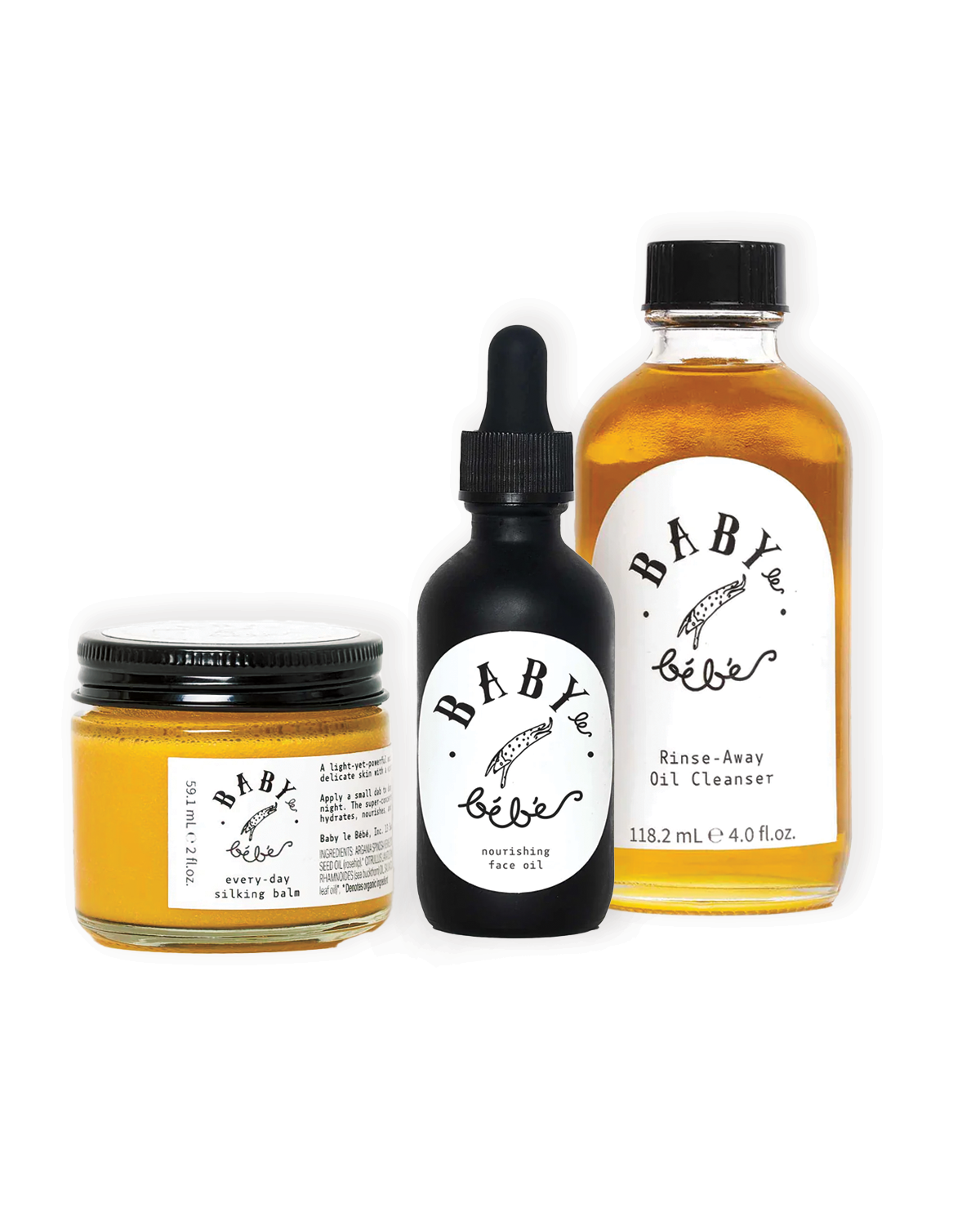
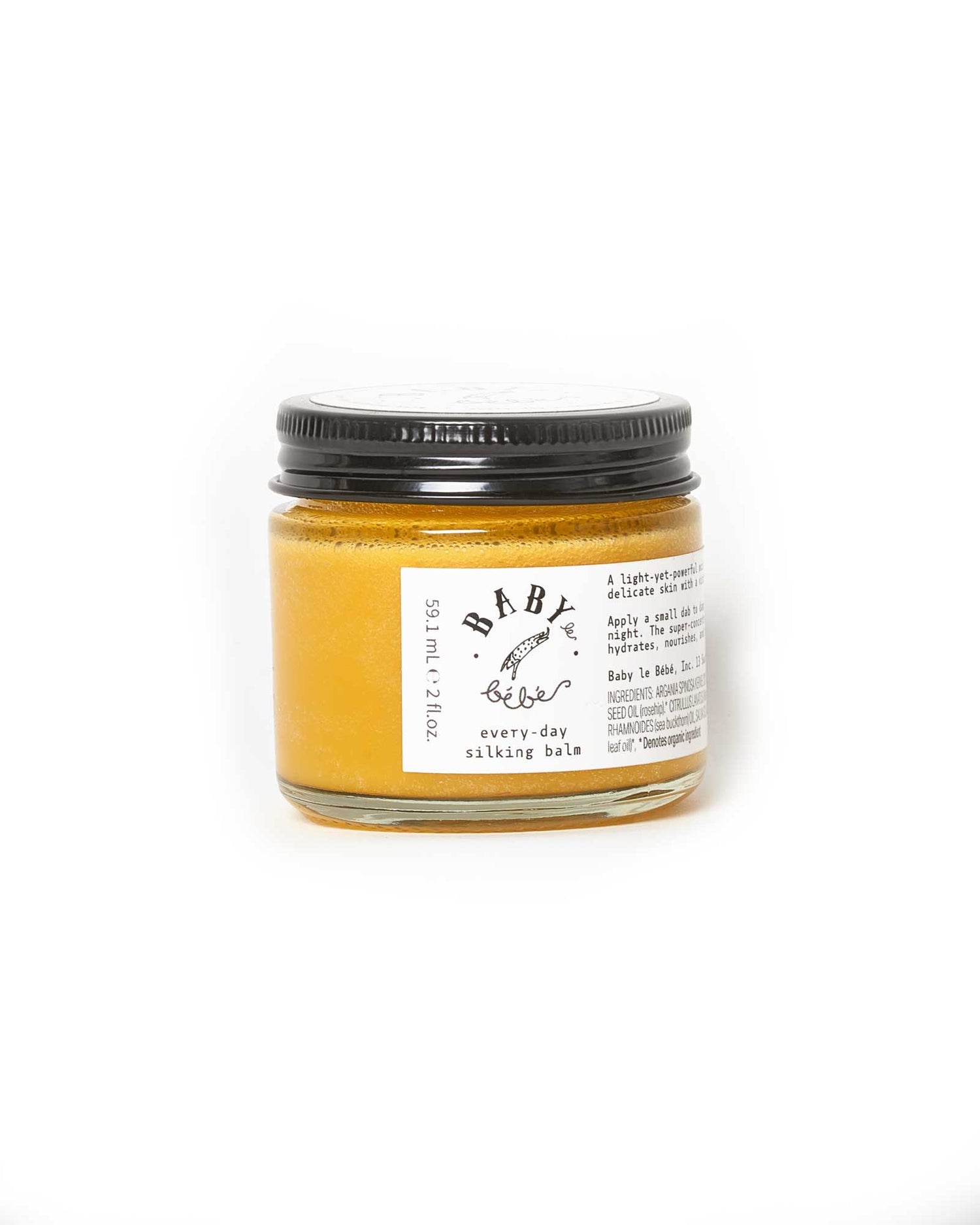
This is one place where Baby le Bébé fits as an example. The line centers on waterless, botanical formulas such as face oil, rinse-away oil cleanser, and balms made without preservatives, petroleum, parabens, or synthetics. That formulation style illustrates how a brand can build around simplicity, plant sourcing, and use guidance rather than relying on buzzwords alone.
Building Your Clean Routine for Sensitive Skin
Sensitive skin rarely responds well to trend-chasing. It usually prefers steadiness, fewer variables, and products with a clear purpose.
That is one reason clean beauty can feel disappointing for reactive skin if you shop only by exclusion lists. A product may avoid many commonly questioned ingredients and still be too fragrant, too active, or too crowded for your skin barrier.
Research-based commentary also points to a real information gap here. The Good Trade’s discussion of clean and organic beauty brands notes that clean beauty coverage often emphasizes what products exclude while offering far less guidance on irritation outcomes or performance for reactive skin.
Start with a smaller routine
If your skin gets red easily, stings after cleansing, or reacts unpredictably, resist the urge to replace everything at once.
A calmer starting point often looks like this:
- A gentle cleanser that does not leave the skin tight
- A simple moisturizer, balm, or face oil with a readable ingredient list
- One optional treatment only after your base routine feels settled
This slow approach makes it easier to identify what helps and what irritates.
Patch test with patience
Patch testing sounds tedious, but it saves many people from larger flares.
A practical patch test method
- Choose one product at a time
- Apply a small amount to a discreet area such as the jawline or behind the ear
- Repeat for several days
- Watch for redness, itching, heat, bumps, or lingering discomfort
If a formula contains aromatic essential oils or active botanicals, give your skin even more time before using it widely.
Sensitive skin often reacts to accumulation, not just first contact.
Consider simpler botanical formats
For reactive skin, a single-ingredient oil or a short-ingredient balm can sometimes be easier to evaluate than a multi-step routine full of layered actives.
You are not trying to build the most impressive shelf. You are trying to build a routine your skin can recognize as calm.
If you want a more guided framework, this sensitive skin care routine offers a useful path for keeping products and steps manageable.
For the eco-conscious shopper
Skin gentleness and environmental awareness can work well together.
Look for brands that discuss:
- Refillable or recyclable packaging
- Water-free formats like oils and balms, which often have a leaner formulation logic
- Sourcing transparency
- Clear use instructions that reduce waste
A beautifully made oil or balm that you finish consistently is often a more grounded purchase than a cabinet of barely used “clean” experiments.
A routine that respects both skin and values
A thoughtful clean routine does not need to be severe. It just needs to be legible. You should know why each product is there, what it contributes, and how your skin behaves around it.
For sensitive skin, that kind of clarity is not a luxury. It is the routine.
Your Path to Conscious Beauty
The clean beauty world gets easier once you stop looking for a perfect label and start looking for a coherent product.
That means reading ingredient lists with patience. It means noticing whether a brand explains its sourcing, preservation, and manufacturing choices. It means treating green language with healthy skepticism and giving more weight to specificity than mood.
It also means listening to your own skin.
Some people do beautifully with botanical oils and wax-rich balms. Others need fewer fragrant plant materials and a simpler profile. Some want refillable packaging above all. Others are focused on avoiding certain ingredients or finding a gentler routine for a reactive barrier. These are not competing values. They are different ways of shopping with care.
The best clean beauty brands help you ask better questions. They do not ask you to surrender your judgment.
Conscious beauty is not about perfection. It is a series of small, informed choices. A clearer label. A shorter ingredient list. Better storage habits. More patience with patch testing. More respect for your skin’s limits.
That is how trust is built. Wisely, and one product at a time.
Frequently Asked Questions About Clean Beauty
Are clean beauty products as effective as conventional ones
They can be, but effectiveness depends on the product category, the formula design, and your skin needs. A well-made botanical cleansing oil, balm, or face oil can perform beautifully. The smarter question is not “clean or conventional?” It is “Was this formula built well for its job?”
Does preservative-free mean the product is better
Not automatically. It means the product has been formulated without a conventional preservative system. That can make sense in waterless products like balms and oils, but it also puts more importance on manufacturing quality, packaging, and how you store and use the product.
How should I store preservative-free skincare
Follow the brand’s instructions closely. In general, keep products tightly closed, away from heat, humidity, and direct light. Use clean hands or a clean spatula when needed. If a brand offers no storage guidance for a preservative-free product, that is worth noting.
Should I switch my whole routine to clean beauty at once
Usually not, especially if you have sensitive skin. Change one product at a time. That makes it easier to spot what works, what causes trouble, and what your skin does not miss.
Is fragrance-free always better for sensitive skin
Often, but not always. Fragrance-free can be a useful starting point for reactive skin. Still, read the full ingredient list. Some products use aromatic botanicals or essential oils without calling the product fragranced in the usual sense.
What matters more than a free-from list
Formulation logic. Ask what replaced the excluded ingredients, how the product is stabilized, and whether the brand explains its choices clearly. A short ingredient list with a clear purpose often tells you more than a dramatic marketing panel.
How do I know whether a clean beauty brand is trustworthy
Look for plain, direct information. Strong brands usually explain ingredients, sourcing, product use, and storage in ordinary language. They avoid oversized promises. They make it easier for you to evaluate them.
If you want skincare that reflects this slower, more informed approach, explore Baby le Bébé. Its botanical apothecary collection focuses on waterless, preservative-free formulas made with natural and organic ingredients, alongside practical education that helps you understand what you are putting on your skin.