

The best routine is not the one with the most steps. It is the one your skin can tolerate, you can repeat, and every product has a clear purpose.
That is especially true with face care products. A cabinet full of half-used jars can make skin care feel confusing, while a simple set of well-chosen essentials can support the skin barrier, keep skin comfortable, and make daily care feel like a ritual rather than a chore.
A simple face routine does not mean bare minimum care. It means choosing products that do real work: cleanse without stripping, hydrate without heaviness, nourish without congestion, protect from sun exposure, and add targeted support only when your skin needs it.
Below is a practical way to decide which face care products are worth keeping, which ones are optional, and how to build a routine that feels refined, natural, and easy to maintain.
What makes a face care product worth keeping?
A product earns its place when it solves a specific need and works well with the rest of your routine. If you cannot explain why you use it, or if it regularly leaves your skin tight, greasy, itchy, or irritated, it may not belong in your daily lineup.
The most useful face care products usually meet five standards:
- They support your skin barrier instead of disrupting it.
- They are comfortable enough for consistent use.
- They fit your real lifestyle, not an idealized 12-step routine.
- They contain ingredients you understand and trust.
- They do not duplicate the job of another product you already use.
This is why many people are moving toward shorter, ingredient-conscious routines. A thoughtful edit can be especially helpful if you prefer natural formulations, want fewer synthetics, or are trying to reduce the number of products touching your skin each day. If you want a broader approach to simplifying with botanicals, Baby le Bébé also has a helpful guide to natural skin products that keep routines simple.
The face care products worth keeping in a simple routine
You do not need every product category on the shelf. For most people, a dependable routine can be built around a few core products, with one or two extras depending on skin type, climate, and makeup habits.
| Product | Main purpose | Daily or occasional? | Worth keeping if... |
|---|---|---|---|
| Gentle cleanser | Removes sweat, oil, sunscreen, and makeup | Daily, often evening-focused | Your skin feels clean but not tight after use |
| Hydrating layer | Adds water-based comfort and softness | Daily or as needed | Your skin feels dehydrated, dull, or tight |
| Face oil, cream, or balm | Helps seal in moisture and nourish skin | Daily or as needed | Your skin needs softness, barrier support, or protection from dryness |
| Sunscreen | Helps protect against UV damage | Daily in the morning | You spend time near windows or outdoors |
| Targeted treatment | Addresses a specific concern | Occasional or scheduled | It solves a real issue without irritating your skin |
| Lip or multi-use balm | Protects small dry areas | As needed | Lips, cheeks, or dry patches get uncomfortable |
The exact format can vary. Some people prefer a cream moisturizer, others prefer a face oil, and others do best with a balm in cold or dry weather. The goal is not to follow a rigid template. The goal is to cover the essentials without unnecessary overlap.
1. A gentle cleanser that does not leave skin tight
A cleanser is worth keeping if it removes the day without making your skin feel squeaky, tight, or raw. That tight feeling is often a sign that the cleanser is too harsh for your skin, especially if you need to rush into moisturizer immediately after washing.
The American Academy of Dermatology recommends washing with a gentle, non-abrasive cleanser and avoiding harsh scrubbing when cleansing the face. Its face washing guidance is a good reminder that cleansing should be effective but not aggressive.
For a simple routine, you may not need a cleanser twice a day. Many people do well with a water rinse in the morning and a thorough cleanse at night, especially if the skin is dry or sensitive. If you wear sunscreen, makeup, or spend time in pollution, evening cleansing becomes more important.
A good cleanser should leave your skin feeling balanced. Clean, yes. Stripped, no.
2. A hydrating layer for comfort and flexibility
Hydration and moisture are related, but they are not the same. Hydrating products help add or attract water to the skin, while richer products help reduce water loss and soften the surface.
In a simple routine, a hydrating layer may be a mist, essence, light serum, or aloe-based product. It is most useful if your skin feels tight even when it is not flaky, or if face oils and balms seem to sit on top without fully relieving dehydration.
This step is optional. If your cleanser and moisturizer already leave your skin comfortable, you may not need a separate hydrating product. But if your skin looks dull, feels papery, or becomes tight after washing, a light hydrating layer can make the rest of your routine work better.
The key is to avoid collecting multiple hydrating products that do the same thing. One well-formulated layer is usually enough.
3. A nourishing face oil, cream, or balm
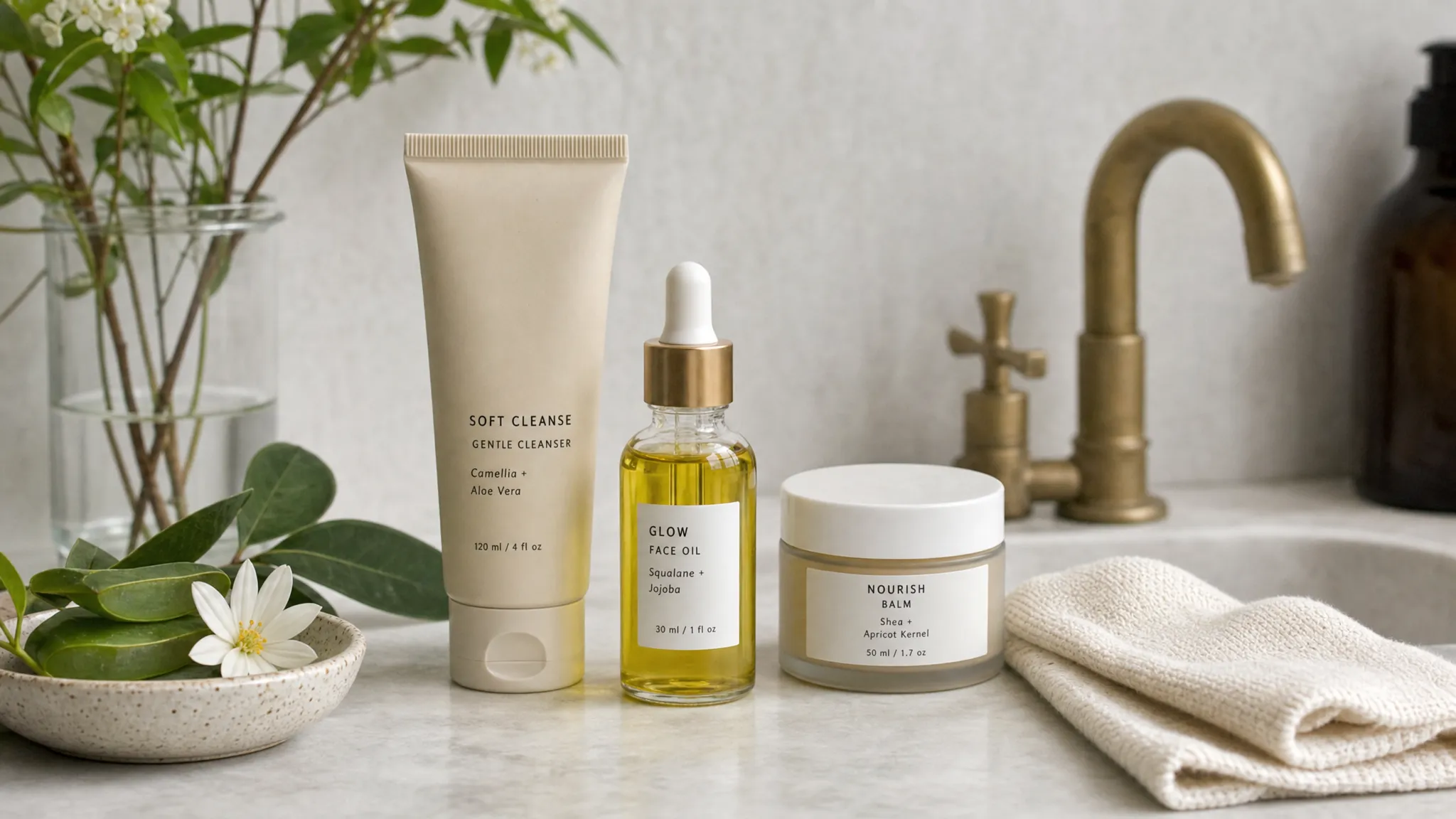
This is the step that brings softness, comfort, and a more cared-for feel to the skin. In a natural routine, this might be a plant oil, a botanical cream, or a balm made with oils, butters, or beeswax.
Face oils can be especially elegant in a simple routine because they are concentrated and versatile. A few drops pressed over damp skin can help seal in hydration and support a supple feel. Balms tend to be richer and more protective, making them useful for cold weather, dry patches, wind exposure, or delicate areas that need extra care.
The best choice depends on your skin. Dry skin may love a richer texture. Combination skin may prefer a lighter oil used only where needed. Sensitive skin may do best with fewer ingredients and a slower introduction. If sensitivity is a recurring issue, Baby le Bébé’s sensitive skin care routine guide offers a more careful way to choose and test products.
A nourishing product is worth keeping when your skin feels better the next morning, not just immediately after application.
4. A daily sunscreen you will actually wear
Sunscreen is one of the few face care products that almost everyone should keep. It helps protect skin from UV damage, uneven tone, premature signs of aging, and sunburn.
The American Academy of Dermatology recommends choosing a broad-spectrum sunscreen with SPF 30 or higher. Its guide on how to select a sunscreen is a useful reference if you are comparing formulas.
The best sunscreen is not only the one with the ideal label. It is the one you like enough to apply generously and reapply when needed. Texture matters. If a sunscreen pills under makeup, stings your eyes, or feels unpleasant, it will likely sit unused.
Sunscreen usually belongs as the final step of your morning routine. At night, remove it with your cleanser so your skin can reset.
5. One targeted product, only if it has a clear job
This is where simple routines often become complicated. Serums, exfoliants, masks, spot treatments, and brightening products can be helpful, but they are not automatically necessary.
A targeted product is worth keeping if it addresses a defined concern, such as clogged pores, rough texture, dryness, dullness, or uneven tone. It should also fit comfortably into your routine without causing frequent irritation.
If you are using several targeted products at once, it becomes harder to know what is helping and what is causing problems. A simpler approach is to use one treatment consistently for a reasonable period, watch how your skin responds, and avoid adding another active product too quickly.
For natural-leaning routines, exfoliation deserves special caution. Harsh scrubs can create micro irritation, especially on sensitive or mature skin. Gentle chemical exfoliation or a very soft physical polish may be preferable for some people, but exfoliation should still be occasional rather than automatic.
6. A multi-use balm for lips, dry patches, and weather stress
A balm is not essential for everyone, but it is one of the most useful extras in a pared-down routine. A small amount can comfort dry lips, soften rough patches, protect cheeks in cold wind, or add a cushion of nourishment where skin feels fragile.
This is where multi-use textures shine. Instead of keeping separate products for every small concern, one carefully chosen balm can cover several needs. For people who prefer minimalist skin care, that flexibility is valuable.
If you choose a balm with beeswax, it may not be vegan, but it can offer a protective, occlusive feel many people enjoy. If you prefer fully vegan products, look for plant waxes and oils instead. Baby le Bébé offers both vegan and beeswax options in its broader approach, so it is worth choosing based on your values and your skin’s comfort.
Morning vs. evening: how simple the routine can be
A simple routine works best when the morning and evening have different purposes. Morning care is about comfort and protection. Evening care is about cleansing, replenishing, and repair-supportive rest.
A streamlined morning routine might look like this:
- Rinse or gently cleanse if needed.
- Apply a hydrating layer if your skin feels tight.
- Use a light face oil, cream, or balm if your skin needs it.
- Finish with broad-spectrum sunscreen.
A streamlined evening routine might look like this:
- Cleanse thoroughly but gently.
- Apply hydration if needed.
- Use a nourishing oil, cream, or balm.
- Add a targeted treatment only on the nights it makes sense.
You can adjust seasonally. In summer, you may prefer lighter textures and less layering. In winter, you may need a richer balm or more consistent hydration. Your routine should respond to your skin, not stay fixed out of habit.
How to choose based on your skin type
Skin type is a useful starting point, but it is not the whole story. Climate, hormones, stress, medications, age, and cleansing habits can all change what your face needs. Still, these guidelines can help you edit your products with more confidence.
If your skin is dry
Keep a gentle cleanser, a hydrating layer, and a richer moisturizer, oil, or balm. Dry skin often benefits from applying nourishing products over slightly damp skin. Avoid foaming cleansers that leave the face tight and be cautious with frequent exfoliation.
If your skin is oily or combination
Do not skip moisture completely. Oily skin can still be dehydrated. Look for lightweight hydration and use oils or balms selectively, often on drier areas only. A gentle cleanser is still important because over-cleansing can make skin feel unbalanced.
If your skin is sensitive
Fewer products are often better. Choose simple formulas, introduce one new product at a time, and patch test before applying all over the face. Be careful with strong exfoliants, intense essential oil blends, and products that tingle or sting.
If your skin is mature
Comfort, hydration, and barrier support become especially important. A simple routine can still feel luxurious when textures are rich, soft, and well chosen. Sunscreen remains essential, and targeted products should be chosen carefully to avoid unnecessary irritation.
If you wear makeup
Keep a cleanser that removes makeup without harsh rubbing. You may need a cleansing oil, balm cleanser, or a two-step cleanse, depending on what you wear. The goal is to remove makeup completely while keeping the skin calm.
What to remove from an overcomplicated routine
If your shelf is crowded, editing can be more powerful than adding. Start by removing duplicate steps. You probably do not need three hydrating serums, two face oils, and multiple exfoliants in the same week.
It may be time to pause or finish a product without replacing it if it falls into one of these categories:
- It stings, burns, or leaves redness that does not settle quickly.
- It has no clear purpose in your current routine.
- It duplicates another product you prefer.
- It pills, feels unpleasant, or discourages consistency.
- It was bought for a trend rather than a real skin need.
This does not mean every product must be plain or joyless. A beautiful texture, botanical scent, or elegant ritual can matter, especially if it helps you care for your skin consistently. The point is to keep pleasure and purpose together.
A simple checklist before buying another face product
Before adding something new, ask a few practical questions. This can prevent impulse purchases and help you build a routine that stays calm over time.
| Question | Why it matters |
|---|---|
| What job will this product do? | Prevents duplicate products and trend buying |
| Where will it fit in my routine? | Helps avoid layering conflicts |
| Does my skin need this now? | Keeps the routine responsive rather than excessive |
| Can I use it consistently? | A product only helps if you actually use it |
| Does it align with my ingredient values? | Supports preferences such as natural, cruelty-free, vegan, or no synthetics |
For many shoppers, ingredient values are part of the decision. If cruelty-free face care matters to you, this guide to cruelty-free face products for calm, healthy skin explains how to think beyond the label and build a barrier-first routine.
Frequently Asked Questions
How many face care products do I really need? Most simple routines can work with three to five products: a gentle cleanser, a moisturizer or face oil, sunscreen, and optional hydration or targeted treatment. The right number depends on your skin type, climate, and daily habits.
Are natural face care products better for a simple routine? Natural products can be a wonderful choice when they are well formulated and suited to your skin. The most important thing is that the product supports your barrier, feels comfortable, and avoids ingredients you personally do not want to use.
Do I need both a face oil and a moisturizer? Not always. Some people use a face oil instead of a moisturizer, while others layer oil over a hydrating product or cream. If your skin feels comfortable and balanced, you do not need to add both.
Should I use cleanser in the morning and at night? It depends on your skin. Many people prefer a gentle morning rinse and a proper evening cleanse. If you wake up very oily or use overnight treatments, a mild morning cleanse may be helpful.
What is the easiest way to simplify my current routine? Stop adding new products for a few weeks, identify which items have a clear purpose, and remove duplicates. Keep the products that make your skin feel calm, clean, protected, and comfortable.
Keep the products that make skin care feel effortless
A simple face routine is not about doing less for the sake of it. It is about choosing better, noticing what your skin actually needs, and keeping only the face care products that earn their place.
If you prefer 100% natural, cruelty-free formulas made with botanical ingredients, explore the curated apothecary at Baby le Bébé. A thoughtful cleanser, oil, balm, or daily essential can turn a crowded routine into something calmer, more beautiful, and easier to repeat.


0 comments