

Your skin barrier is not just a surface layer. It is a living, working shield that helps keep water in, irritants out, and your complexion feeling calm. When that barrier is strong, skin tends to look smoother, feel more comfortable, and recover more easily from everyday stressors like dry air, cleansing, sun exposure, and seasonal changes.
That is why the best skin health products do more than make skin feel soft for a few minutes. They support the barrier by cleansing without stripping, replenishing lipids, reducing moisture loss, and creating the kind of simple routine your skin can actually tolerate every day.
What the Skin Barrier Actually Does
The outermost layer of the skin, called the stratum corneum, is often compared to a brick wall. The skin cells are the bricks, while lipids such as ceramides, cholesterol, and fatty acids act like the mortar that holds everything together. This structure helps protect the body from environmental stress while keeping internal hydration from evaporating too quickly.
When the barrier is healthy, skin feels more resilient. It can handle a cleanser, a moisturizer, a windy day, or a change in humidity without immediately becoming tight or reactive. When the barrier is weakened, the same everyday exposures can lead to dryness, stinging, redness, flaking, rough texture, or that uncomfortable “nothing works on my skin” feeling.
Dermatology research has long recognized the stratum corneum as essential to skin hydration and protection. The National Library of Medicine describes the epidermis as a key barrier structure, helping prevent water loss and protect against outside substances. In plain language: your barrier is not optional. It is the foundation of skin health.
Signs Your Barrier May Need Support
Barrier stress can look different from person to person, but there are common patterns. Skin may feel tight right after cleansing, even before it looks dry. Products that never bothered you before may suddenly sting. Makeup may sit unevenly. You may notice more visible texture, dullness, or sensitivity.
A weakened barrier can also create a cycle. The skin feels rough or congested, so you reach for stronger exfoliation. Then the skin becomes more irritated, so you add more products to calm it. The result is often a longer routine that makes the original problem worse.
Common signs include:
- Tightness after washing
- Stinging when applying skincare
- Flaking, roughness, or visible dry patches
- Increased redness or sensitivity
- A shiny but dehydrated look
- Breakouts that appear alongside irritation
If these signs sound familiar, the goal is not to overwhelm the skin with more steps. It is to choose skin health products that help restore comfort and consistency.
How Skin Health Products Strengthen the Barrier
Barrier-supportive skincare works through a few essential functions. The details of a formula matter, but most helpful products fit into one or more of these categories: cleanse, hydrate, replenish, soften, and protect.
Gentle Cleansing Preserves Natural Lipids
Cleansing is necessary, but over-cleansing is one of the fastest ways to disrupt the barrier. Harsh surfactants, very hot water, and aggressive scrubbing can remove too much of the skin’s natural oil and lipid structure. When that happens, the skin loses water more easily and becomes more vulnerable to irritation.
A barrier-minded cleanser should leave skin feeling clean, not squeaky. That “squeaky clean” sensation is often a sign that too much has been removed. For many skin types, especially dry or sensitive skin, a gentle oil cleanser, balm cleanser, cream cleanser, or low-foam formula can be a better daily choice.
The American Academy of Dermatology recommends using gentle, fragrance-free skincare and applying moisturizer soon after washing to help relieve dry skin, advice that aligns closely with barrier care principles. You can read their dry skin guidance through the American Academy of Dermatology.
Hydrators Help Refill the Water Reservoir
Hydration is about water. A healthy barrier helps retain water, but dehydrated skin needs help bringing that water into the upper layers. Humectants, such as glycerin, aloe vera, honey, and plant-based hydrating extracts, help attract water to the skin’s surface.
Hydrating products can be especially helpful when layered under oils or balms. On their own, humectants may not be enough in dry climates because water can still evaporate. That is why the most effective routines often pair hydration with a lipid-rich or occlusive layer.
Lipid-Rich Products Replenish What the Barrier Needs
The barrier depends on lipids. When skin is dry, over-exfoliated, or irritated, lipid support becomes especially important. Plant oils, butters, and waxes can help soften the skin and reinforce the feeling of comfort by supporting the outer layer.
Fatty acids are especially relevant here. They help nourish the surface and contribute to a smoother, more supple barrier. If you want to go deeper into this topic, Baby le Bébé’s guide to fatty acids in skincare explains how different fatty acids can support hydration, softness, and barrier function.
Balms Help Reduce Moisture Loss
Balms are often misunderstood. They are not simply “heavy moisturizers.” A good balm can act as a protective finishing layer, helping reduce transepidermal water loss, which is the process of water evaporating from the skin.
This is especially useful at night, during winter, after travel, or anytime skin feels exposed. A balm can be applied to the whole face if your skin likes richer textures, or used only on vulnerable areas such as cheeks, lips, hands, elbows, or around the nose.
Ingredient Families That Support Barrier Health
Rather than chasing one miracle ingredient, it is more useful to understand ingredient families. Barrier care is about balance. Skin needs water, lipids, and protection, not a constant stream of actives.
| Ingredient family | What it does for the barrier | Examples often found in natural skincare |
|---|---|---|
| Humectants | Attract water to the skin surface | Aloe vera, glycerin, honey, botanical hydrosols |
| Emollients | Smooth and soften rough texture | Plant oils, butters, squalane from plant sources |
| Occlusives | Help slow moisture loss | Beeswax, plant waxes, rich balms |
| Fatty acids | Support softness and lipid balance | Linoleic, oleic, palmitic, and stearic acid sources |
| Soothing botanicals | Help comfort stressed-looking skin | Calendula, chamomile, marshmallow root, oat extracts |
Natural formulas can be especially appealing for barrier support when they are simple, thoughtfully blended, and free from unnecessary fillers. The key is not that every natural ingredient is automatically right for every person. The key is choosing formulas that respect the skin’s need for calm, consistent care.
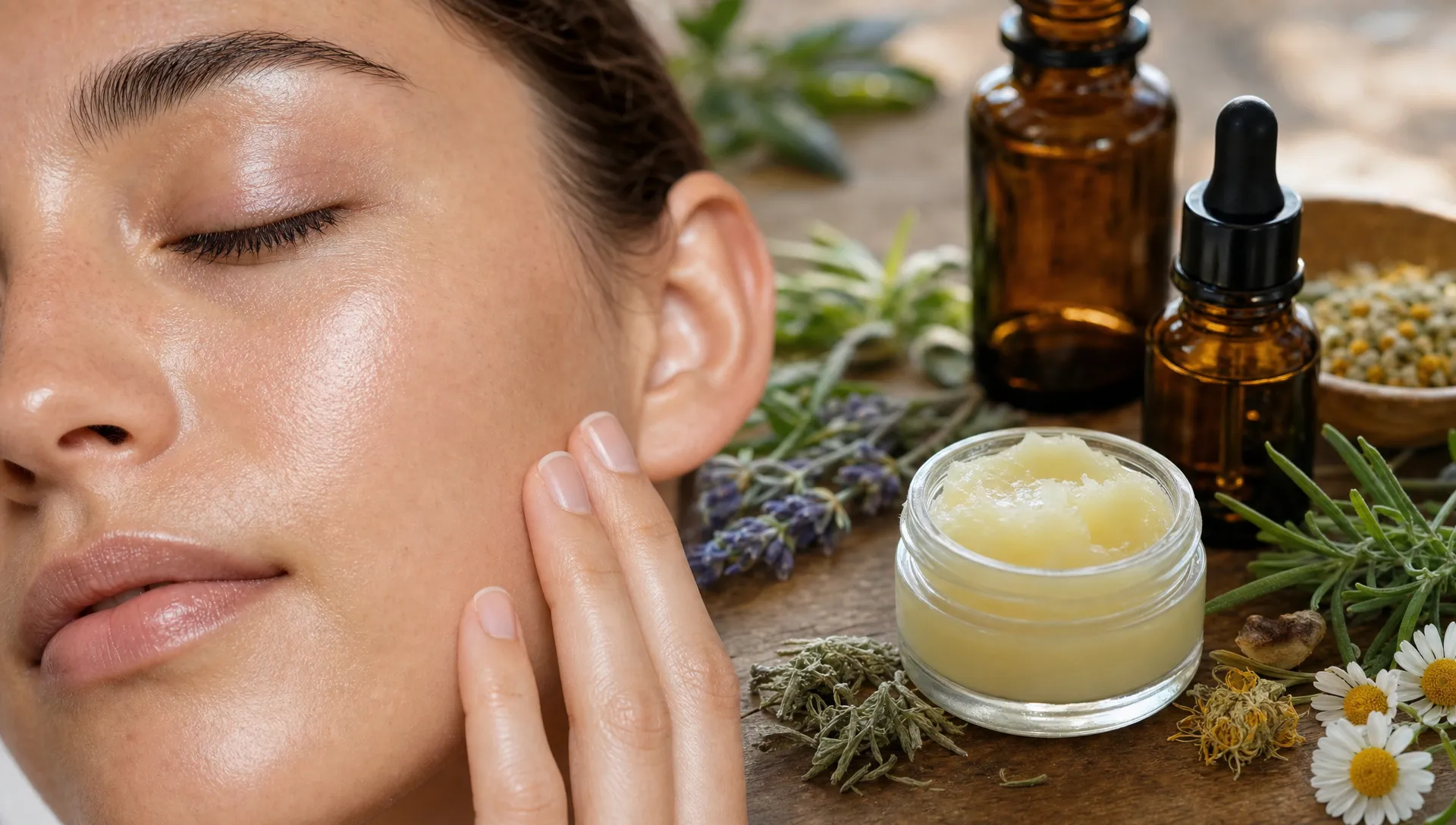
The Barrier-Supportive Routine: Simple Works Best
A stronger barrier usually comes from repeating a few helpful steps consistently, not from using the most complicated routine. If your skin is reactive, pare back first. Then add support slowly.
Morning: Protect and Prepare
In the morning, focus on comfort and protection. Some people do best with a gentle cleanse, while others only need a splash of lukewarm water. Follow with a hydrating layer if your skin feels thirsty, then a moisturizer, oil, or balm depending on your skin type and climate. Sunscreen should be the final step in a daytime routine.
For sensitive or easily irritated skin, the texture of your products matters. Lightweight oils may suit some complexions better than heavy creams, while richer balms may be ideal for dry patches or cold weather. If sensitivity is a major concern, this guide to sensitive skin care products that help without irritating offers a helpful framework for keeping your routine gentle.
Evening: Cleanse and Rebuild
Evening is the best time to remove buildup and support repair. Cleanse gently, especially if you wear sunscreen or makeup. Then apply hydration and finish with a nourishing layer that helps the skin feel sealed and comfortable overnight.
If your barrier feels damaged, avoid stacking exfoliating acids, retinoids, scrubs, and strong treatments all at once. These ingredients can have a place in skincare, but irritated skin often needs a pause. A short reset period with fewer products can help you understand what your skin truly tolerates.
Baby le Bébé has a dedicated guide on how to repair the skin barrier if you are dealing with stinging, redness, or over-processed skin and need a calmer plan.
What to Avoid When Your Barrier Feels Weak
Choosing supportive products is only half the equation. It also helps to remove the habits that keep the barrier stressed.
Over-exfoliation is one of the most common culprits. If skin is already tight, peeling, or stinging, exfoliating more often usually delays recovery. Strong foaming cleansers can also be a problem, especially when used twice daily or paired with hot water.
Fragrance can be another trigger for some people, including natural essential oils. This does not mean every aromatic botanical is harmful, but sensitive skin often does better with fewer potential irritants. If you know your skin reacts easily, patch testing is a smart habit.
Try reducing or pausing:
- Scrubs and cleansing brushes
- Daily exfoliating acids
- Strong retinoids during flare-ups
- Very hot water
- Alcohol-heavy formulas
- Products that sting repeatedly
A product that tingles once may not be a disaster. A product that stings every time is giving you useful information.
How to Choose Better Skin Health Products
A strong barrier starts with careful selection. Marketing language can be confusing, so look beyond the front label and consider how a product fits into your routine.
A good barrier-supportive product should have a clear purpose. Is it cleansing? Hydrating? Replenishing lipids? Sealing in moisture? If you cannot tell what role it plays, it may not need to be in your daily routine.
Ingredient quality matters too. Baby le Bébé’s approach centers on 100% natural formulations, 99% organic ingredients, cruelty-free values, and a curated apothecary of skincare and body care products made with botanical ingredients. For barrier care, that philosophy pairs well with a “less but better” routine: fewer unnecessary steps, more attention to texture, ingredients, and how your skin feels over time.
When evaluating a product, ask yourself:
- Does my skin feel comfortable after using it?
- Does it support hydration without causing tightness?
- Does it make my routine simpler or more confusing?
- Can I use it consistently without irritation?
- Does it pair well with the other products I already use?
The best skin health products are not always the most dramatic. Often, they are the ones you can use every day without your skin complaining.
Barrier Support Changes With the Seasons
Your skin barrier does not live in a vacuum. Weather, humidity, indoor heating, sun exposure, travel, stress, and age can all affect what your skin needs.
In summer, a lighter routine may feel best. You may prefer a gentle cleanser, hydrating layer, lightweight oil, and daily sunscreen. In winter, the same skin may need a richer balm to reduce moisture loss. During seasonal transitions, skin can become unpredictable, so it helps to adjust texture before adding more active ingredients.
Hands, lips, and body skin deserve barrier care too. Frequent washing, sanitizer, cold air, and friction from clothing can leave these areas dry and cracked. A balm or body oil can help support comfort beyond the face, especially when applied after bathing while skin is slightly damp.
Consistency Is the Real Barrier Secret
A stronger barrier is usually built through repetition. One night of a rich balm can help skin feel better, but long-term resilience comes from daily choices: gentle cleansing, enough hydration, replenishing oils, and fewer irritating products.
Think of barrier care as maintenance rather than rescue. When you support the skin before it becomes reactive, you may need fewer emergency fixes later. Skin that is consistently nourished and protected tends to look calmer, feel softer, and tolerate life’s variables more gracefully.
Frequently Asked Questions
What are skin health products? Skin health products are skincare and body care formulas designed to support the skin’s comfort, hydration, resilience, and overall function. Barrier-supportive examples include gentle cleansers, hydrating layers, face oils, moisturizers, and protective balms.
How do I know if my skin barrier is damaged? Common signs include tightness, stinging, redness, flaking, rough texture, and sudden sensitivity to products you previously tolerated. If symptoms are severe, persistent, or painful, it is best to consult a dermatologist.
Are natural products better for the skin barrier? Natural products can be excellent for barrier support when they are well formulated, simple, and suited to your skin type. The most important factors are gentleness, ingredient quality, and whether the product helps your skin feel calm and hydrated.
Can oils repair the skin barrier? Oils can help replenish lipids, soften roughness, and support the outer layer of the skin. They work especially well when applied after hydration. However, barrier repair usually requires a complete routine that includes gentle cleansing and moisture protection.
How long does it take to strengthen the skin barrier? Mild barrier stress may improve within days of simplifying your routine, while more noticeable damage can take several weeks of consistent care. The timeline depends on your skin, the cause of irritation, and the products you use.
Build a Routine That Respects Your Skin
A stronger barrier begins with skincare that works with your skin, not against it. Choose gentle cleansing, steady hydration, nourishing botanicals, and protective textures that help your skin feel calm day after day.
Explore Baby le Bébé’s natural apothecary at babylebebe.com to discover 100% natural, organic, cruelty-free skincare and body care created for healthy, feel-good skin.


0 comments