

To compare clean skincare brands like an expert, start by assuming the front label is only the beginning. Words like clean, natural, botanical, non-toxic, organic, green, and conscious can be useful signals, but they are not all regulated in the same way, and they do not automatically tell you whether a product is right for your skin.
The expert approach is calmer and more specific. Instead of asking, “Is this brand clean?” ask, “What does this brand mean by clean, how transparent is the formula, does it fit my skin, and are the claims supported?”
That distinction matters because clean beauty is not one universal standard. The FDA explains that organic claims in cosmetics are not defined by FDA cosmetic regulations in the same way they are for food, while the FTC Green Guides advise marketers to avoid vague or misleading environmental claims. In practice, this means shoppers need a comparison method, not just a list of buzzwords.
If you want a foundation before you start evaluating brands side by side, Baby le Bébé’s guide to clean beauty brands and safer skincare explains the language, claims, and common greenwashing traps. The framework below goes one step further and shows you how to compare brands with the eye of a careful buyer.
Start with your own skin priorities
Experts do not compare skincare in the abstract. They compare it against a clear need. A beautifully made balm for very dry skin may feel too rich for someone prone to congestion. A highly aromatic botanical oil may delight one person and bother another. A minimalist formula may be perfect for a reactive skin barrier, while someone seeking a more sensorial ritual may want texture, scent, and richness.
Before you judge any brand, define what matters most to you:
- Your skin type and current concerns, such as dryness, sensitivity, dullness, or oiliness
- Ingredients you know you love, avoid, or react to
- Your values, such as cruelty-free, vegan, organic, plastic-conscious, or locally made
- Your routine style, whether you prefer a three-step ritual or one multitasking product
- Your tolerance for scent, essential oils, richer textures, or exfoliating ingredients
This step prevents a common mistake: letting a brand’s identity override your skin’s actual needs. The best clean skincare brands for you are not simply the ones with the prettiest packaging or longest “free-from” list. They are the ones whose philosophy, ingredients, and product experience match your skin and values.
| Your priority | What to compare first | Why it matters |
|---|---|---|
| Sensitive skin | Ingredient count, fragrance, essential oils, known allergens | Simpler and less aromatic formulas are often easier to assess |
| Very dry skin | Oils, butters, waxes, occlusives, balm textures | Dry skin often needs lipid support and moisture protection |
| Organic preference | Certified organic ingredients, sourcing details, brand standards | Organic percentages and definitions vary by brand |
| Ethical shopping | Cruelty-free policy, vegan status, beeswax use, supplier practices | Ethical claims should be clear, not implied |
| Minimal routine | Multipurpose products and clear usage instructions | A focused routine is easier to use consistently |
Compare the brand’s definition of clean
A serious brand should be able to explain what clean means to them in plain language. Some define it mainly by what they exclude, such as parabens, petroleum, synthetic fragrance, or certain preservatives. Others define it by what they include, such as whole plant oils, organic botanicals, mineral ingredients, or minimal processing.
Neither approach is automatically better. What matters is whether the definition is specific and consistent.
A strong clean skincare standard usually answers questions like these:
- Does the brand publish complete ingredient lists before purchase?
- Does it explain why certain ingredients are included or avoided?
- Does it distinguish between natural, naturally derived, organic, and synthetic?
- Does it clarify whether products are vegan, cruelty-free, or made with beeswax?
- Does it avoid fear-based language that suggests every conventional ingredient is harmful?
Be cautious when a brand relies only on vague promises. “Chemical-free,” for example, is not meaningful because all matter, including water and plant oils, is made of chemicals. “Non-toxic” can be reassuring, but it should be supported by ingredient transparency and responsible formulation. “Doctor recommended” or “dermatologist tested” should come with context when possible.
The goal is not to find a brand that uses the most dramatic language. It is to find one that communicates with precision.
Read ingredient lists like a formula, not a poem
Ingredient lists can feel intimidating, especially when botanical names appear in Latin or INCI format. But you do not need to become a cosmetic chemist to compare brands well. You only need to understand the structure of a formula.
Start with the first five ingredients. These usually make up the bulk of the product. In a face oil, you might see plant oils such as jojoba, sunflower, rosehip, or argan. In a balm, you may see butters, waxes, and oils. In a water-based cream, water or aloe might appear first, followed by emulsifiers, humectants, oils, and preservatives.
Then look for the role each ingredient plays. A balanced formula is not just a collection of beautiful plants. Each ingredient should have a reason to be there, whether it softens, seals, hydrates, cleanses, stabilizes, exfoliates, or adds scent.
| What you see | What it can tell you | Expert question to ask |
|---|---|---|
| Full INCI list | The brand is willing to disclose the formula | Is the list easy to find before I buy? |
| Common names beside INCI names | The brand helps shoppers understand ingredients | Is education part of the shopping experience? |
| Many essential oils | The product may be highly aromatic | Is my skin comfortable with scent? |
| Water in the formula | Preservation is usually necessary | Is there an appropriate preservation system? |
| Oil, butter, wax only | The product may be anhydrous | Does the packaging protect freshness and use? |
Pay special attention to formulas that claim to be preservative-free. In oil-based or balm-based products with no water, a conventional preservative may not be necessary. In water-based products, however, preservation is usually important for safety and product integrity. A brand that understands this nuance is more trustworthy than one that uses “preservative-free” as a blanket virtue.
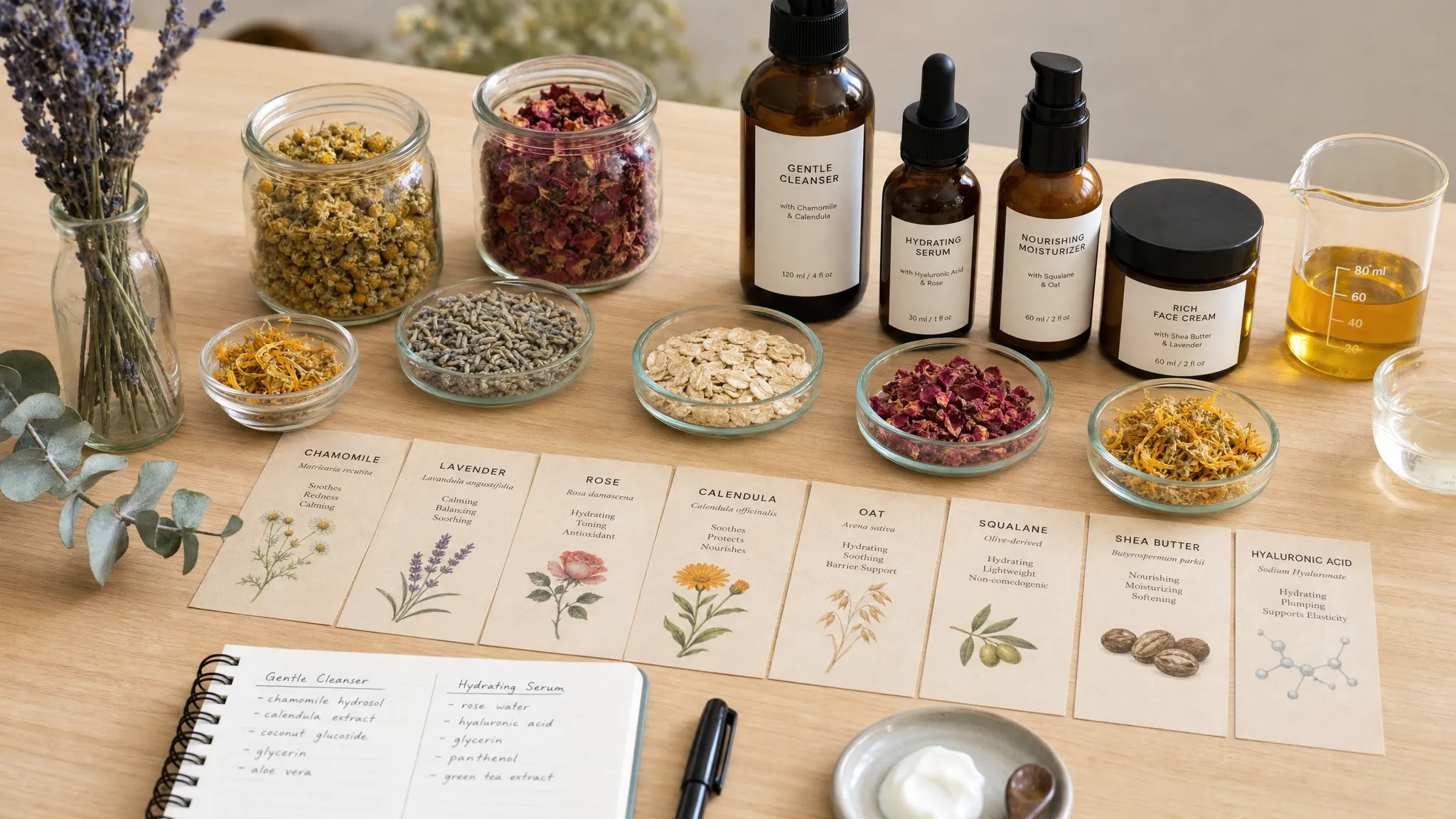
Treat “free-from” claims as clues, not proof
“Free from parabens,” “no petroleum,” “no synthetics,” and “no fillers” can be helpful if those standards matter to you. Baby le Bébé, for example, emphasizes 100% natural formulations, 99% organic ingredients, cruelty-free options, and products made without synthetics, preservatives, petroleum, or fillers.
Still, an expert comparison looks beyond what is missing. A product can be free from many things and still be poorly matched to your skin. It can also have a long “no list” without explaining what the formula uses instead.
Ask what replaces the excluded ingredients. If a cleanser avoids synthetic surfactants, what cleansing agents does it use? If a moisturizer avoids petroleum, which plant oils, waxes, or butters provide the protective layer? If a brand avoids synthetic fragrance, does it use essential oils, botanical extracts, or no scent at all?
This is especially important for sensitive skin. Natural fragrance components can still be irritating for some people. Essential oils can be beautiful and beneficial in the right context, but they are not automatically gentle for every face. When in doubt, choose fewer ingredients, lower scent intensity, and patch test before using a new product widely.
Match the product category to your routine
When shoppers compare clean skincare brands, they often compare brand to brand without comparing product category to product category. That can lead to unfair conclusions. A cleansing oil, a soap-based cleanser, a cream cleanser, and a foaming gel are designed to behave differently. A balm will not feel like a lotion. A face oil will not replace every water-based hydrator for every person.
A better method is to compare similar products side by side. If you want a daily cleanser, compare cleansers. If you want a dry-skin face balm, compare balms. If you want a simple routine, look at how the brand’s products work together without pushing you into unnecessary steps.
For a practical routine perspective, Baby le Bébé’s guide to clean skincare products worth using every day is a helpful next step. It focuses on the kinds of products that earn a regular place on your shelf, not just products that sound impressive once.
Evaluate transparency beyond ingredients
Ingredients are central, but transparency includes more than the label. The best clean skincare brands make it easy to understand how to use a product, who it is best for, and what kind of result is realistic.
Look for clear answers to practical questions. How much should you use? Should it be applied to damp or dry skin? Is it intended for face, body, baby, pregnancy, or general family use? Is it suitable for sensitive skin, or does the brand avoid making broad claims? Is there a shelf life or storage recommendation?
Good brands also set reasonable expectations. Skincare can support comfort, softness, radiance, and barrier care, but it should not promise medical outcomes or instant transformation for complex skin conditions. If a brand claims that one product can cure acne, erase deep wrinkles, heal eczema, and replace every other step, be skeptical.
Transparency also matters at the store level. A trustworthy retailer curates thoughtfully, explains product differences, and helps shoppers make informed choices. If you are comparing not only brands but also where to buy them, this guide to choosing a skincare store you can trust offers useful criteria.
Compare ethics with the same care as ingredients
Clean skincare is often about more than skin feel. Many shoppers also care about animal testing, vegan formulas, beeswax, sourcing, labor, packaging, and environmental impact. These values are personal, so the key is clarity.
Cruelty-free should mean the brand does not test finished products or ingredients on animals and has a policy that addresses suppliers and markets where animal testing may be required. Vegan means no animal-derived ingredients, but some clean brands offer both vegan products and beeswax-based products. Beeswax is not vegan, yet some shoppers value it when sourced responsibly because it gives balms structure and protective texture.
Organic claims deserve the same scrutiny. A brand may use many organic ingredients without every finished product being certified organic. Certification can be valuable, but smaller artisan brands may not always pursue every certification due to cost or complexity. That does not automatically make them untrustworthy. It simply means you should look for ingredient percentages, sourcing clarity, and consistent standards.
Calculate value by use, not by sticker price
Luxury clean skincare can look expensive at first glance, but value depends on concentration, texture, amount used, packaging, and whether the product earns a consistent place in your routine.
A concentrated balm may last longer than a water-rich lotion because you use a smaller amount. A well-made face oil may replace multiple products for someone with dry skin, while someone else may need a separate hydrating layer underneath. A cleanser you love enough to use nightly may be a better value than a trendy treatment that sits untouched.
Compare value using these questions:
- How many ounces or milliliters are included?
- How much product is needed per use?
- Does the formula require another product to work well?
- Is the packaging appropriate for freshness and hygiene?
- Will you realistically use it often enough to finish it?
The expert move is to choose the product with the strongest fit, not always the lowest price or the most expensive presentation.
A simple scorecard for comparing clean skincare brands
Use this scorecard when you are deciding between two or three brands. You do not need to assign perfect numbers, but you should be able to spot which brand gives you the clearest, most skin-compatible, and most trustworthy answer.
| Category | Green flag | Red flag |
|---|---|---|
| Ingredient transparency | Full ingredient lists are easy to find | Key ingredients are hidden behind vague blends |
| Definition of clean | Standards are specific and explained | Clean is used as a vague marketing word |
| Skin fit | Products clearly describe who they suit | Every product is marketed to everyone |
| Preservation logic | Water-based products are responsibly preserved | Preservative-free is promoted without context |
| Scent clarity | Fragrance, essential oils, or unscented status is clear | Scent is minimized or not disclosed |
| Ethical claims | Cruelty-free, vegan, beeswax, and sourcing claims are specific | Values are implied but not explained |
| Value | Product size, use, and routine role make sense | High price is justified only by aesthetic branding |
| Education | The brand helps you choose confidently | The brand relies on fear, urgency, or miracle claims |
If one brand scores higher on transparency, skin fit, and realistic claims, it is usually the safer choice, even if another brand looks more luxurious at first glance.
Frequently Asked Questions
Are clean skincare brands always better for sensitive skin? Not always. Clean formulas can be excellent for sensitive skin, but natural ingredients like essential oils, fragrant extracts, or exfoliating botanicals may bother some people. Look for simple formulas, clear scent information, and patch test first.
What is the most important thing to compare on a skincare label? Start with the full ingredient list and the first five ingredients. They usually reveal the base of the formula and help you understand whether the product is oil-based, water-based, balm-like, aromatic, lightweight, or rich.
Should I only buy certified organic skincare? Certification can be helpful, but it is not the only sign of quality. Some brands use high percentages of organic ingredients without certifying every finished product. Compare ingredient sourcing, transparency, and consistency of claims.
Is preservative-free skincare safer? It depends on the formula. Anhydrous products, such as many oils and balms, may not need traditional preservatives. Water-based products usually need appropriate preservation to stay safe and stable.
How many clean skincare brands should I compare before buying? Two or three is usually enough. Compare similar products, such as cleanser to cleanser or balm to balm, and use a scorecard for ingredients, skin fit, ethics, transparency, and value.
Make your clean skincare choices feel simpler
Comparing clean skincare brands does not have to be overwhelming. Once you know how to read the formula, question vague claims, match products to your skin, and weigh ethics with nuance, the best choices become much easier to see.
If you want a curated place to begin, explore Baby le Bébé, a natural skincare apothecary focused on botanical ingredients, organic sourcing, cruelty-free care, and formulas made without synthetics, petroleum, or fillers.


0 comments