

A natural cure for chapped lips always starts with two simple things: avoiding known irritants and leaning on deeply nourishing botanical ingredients. The most effective remedies I've ever seen combine humectants like honey to pull in moisture, emollients like shea butter to soften the skin, and occlusives like beeswax to lock it all in for real, lasting relief.
Why Your Lips Are Chapped and How Nature Can Help
Chapped lips, or what dermatologists call cheilitis, can feel like a frustrating, endless cycle, especially when the wind bites or the sun beats down. While weather is a huge factor, the real problem is anatomical. The skin on your lips is incredibly thin—far more delicate than anywhere else on your face—and it completely lacks the oil glands that provide natural moisture.
This unique structure makes them vulnerable to a handful of common issues:
- Dehydration: This is the big one. If you’re not drinking enough water, your lips are often the first place it shows.
- Environmental Stress: Sun, cold, and dry air are masters at stripping moisture from your lips, leaving them exposed and prone to cracking.
- The Licking Habit: It feels like a quick fix, right? But saliva evaporates in seconds, taking your lips’ natural moisture along with it. This creates a vicious cycle of dryness that's hard to break.
- Irritating Ingredients: So many conventional lip balms contain camphor, menthol, or artificial fragrances. These can feel tingly and "active," but they often cause low-grade irritation that just makes the problem worse over time.
The Power of Botanical Ingredients
Choosing a natural cure for chapped lips means opting for ingredients that work with your body, not against it. This is a fundamental shift in thinking.
Unlike petroleum-based products that just sit on the surface like plastic wrap, botanical oils and butters deliver vitamins, fatty acids, and antioxidants that actively nourish and repair the skin barrier. You aren't just masking the problem; you're genuinely healing it. For a deeper dive, check out our guide on how to repair your skin's barrier.
This preference for authentic, plant-powered solutions is something we're seeing across the entire skincare world. The organic lip balm market, for example, is projected to grow from USD 3,760 million in 2023 to an impressive USD 7,210 million by 2032.
That surge speaks volumes. It shows a collective move away from synthetic petrochemicals and toward pure, effective botanicals like shea butter and coconut oil—ingredients proven to protect sensitive skin from the elements responsible for up to 90% of moisture loss.
The comparison chart below really puts the difference between natural and synthetic lip care into perspective.
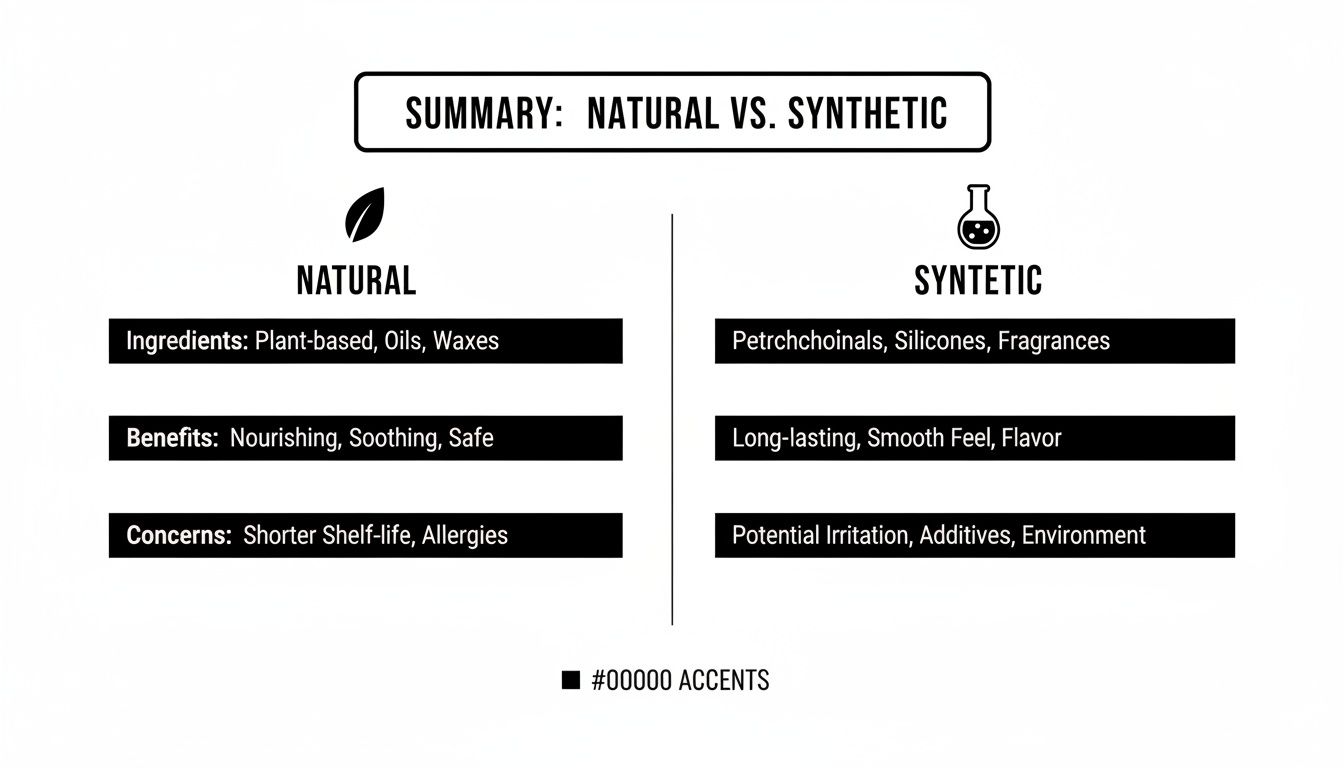
As you can see, natural ingredients are designed to provide true nourishment and healing. Synthetic options, on the other hand, often just create a cycle of dependency without ever addressing the root cause of dryness.
Understanding Natural Lip Hydration
Finding a natural lip balm that genuinely heals goes deeper than just swiping on a waxy stick. True, lasting relief comes from understanding what your lips actually need to repair themselves.
The most effective formulas use a strategic trio of ingredients that work together to attract, soften, and then seal in moisture. It’s like building a tiny, invisible shield for your lips. To do it right, you need three types of builders: humectants, emollients, and occlusives. Once you know what these are, you can glance at any product label and instantly tell if it’s designed to heal or just temporarily coat.
Humectants Attract Moisture
First things first: hydration. Humectants are nature's moisture magnets. Their unique molecular structure lets them pull water vapor right out of the air and draw it into the top layer of your skin. This is what provides that initial surge of relief from that tight, dry feeling.
Common natural humectants you’ll find in effective lip care include:
- Honey: A classic humectant that also happens to be antibacterial, making it a wonderful choice for cracked or broken skin.
- Glycerin: A plant-derived ingredient that is incredibly effective at pulling in moisture.
- Aloe Vera: Known for its soothing, cooling properties, aloe also brings a welcome dose of hydration to irritated lips.
Without a humectant, a lip balm might just sit on the surface. By actively drawing in moisture, these ingredients kickstart the healing process from the inside out.
Emollients Soften and Smooth
Once you’ve got that moisture, you need to deal with the rough, flaky texture of chapped lips. This is where emollients come in. These are the rich, oily substances that fill in the tiny gaps between skin cells, immediately making your lips feel softer, smoother, and more flexible.
Emollients are the key to immediate relief. They work by restoring the lipid barrier, reducing water loss, and improving the overall texture and appearance of your skin.
They’re packed with vitamins and fatty acids that actively nourish delicate skin. If you're curious about the science, you can learn more about what fatty acids do in skincare and why they are so crucial for a healthy barrier.
Look for these powerful, skin-loving emollients:
- Shea Butter: A deeply conditioning butter rich in vitamins A and E.
- Cocoa Butter: Provides a wonderfully smooth texture and is packed with antioxidants.
- Jojoba Oil: Its composition is remarkably similar to our skin’s own sebum, so it absorbs beautifully.
- Coconut Oil: Offers excellent softening properties and a dose of deep nourishment.
Occlusives Seal the Deal
Finally, you need to protect all that hard work. Occlusives are substances that form a physical barrier on the surface of your lips. This barrier does two critical things: it locks in the moisture brought in by the humectants, and it shields your lips from environmental stressors like wind, cold, and dry air.
This final layer is what provides long-lasting protection and keeps your lips from drying out again an hour later.
Effective natural occlusives include:
- Beeswax: A time-tested ingredient that creates a breathable barrier without clogging pores.
- Candelilla Wax: A fantastic vegan alternative that provides a similar protective seal.
- Mango Butter: While it's also a great emollient, its thick, rich texture gives it a strong occlusive benefit.
A truly healing natural lip balm will always contain ingredients from all three categories. This three-pronged approach ensures you aren’t just getting temporary relief, but a genuine, lasting solution for your chapped lips.
Immediate Relief with At-Home Remedies
When your lips are painfully cracked and sore, you need comfort now, not next week. The beautiful thing is that your own kitchen probably holds everything you need for immediate relief. These simple, at-home remedies transform a frustrating problem into a small moment of mindful self-care, offering instant soothing while kickstarting the healing process.
This isn’t just a trend; it's a return to what works. The entire lip care market, now valued at USD 2.47 billion, is shifting back toward natural, authentic solutions. Lip scrubs, for example, are seeing a 5.6% CAGR, as more people realize that gently prepping the lips helps nourishing balms actually sink in and do their job.
Create a Gentle Sugar and Honey Scrub
Before you can truly hydrate your lips, you need a smooth surface. Flaky, dead skin acts like a barrier, preventing all those beautiful, nourishing ingredients from being properly absorbed. Gentle exfoliation is the first real step toward relief.
A homemade scrub is the perfect, gentle cure for chapped lips that feel rough and tight.
- Mix your ingredients: In a small bowl, combine one teaspoon of brown sugar with one teaspoon of raw honey. The sugar acts as a soft, effective exfoliant, while the honey brings its natural antibacterial and humectant magic.
- Apply gently: Using a clean fingertip, massage the mixture onto your lips in slow, circular motions for about 30 seconds. Be mindful not to scrub too hard—that can cause more irritation.
- Rinse and seal: Wipe the scrub away with a warm, damp cloth and gently pat your lips dry. The most important part? Immediately follow up with a deeply nourishing balm to protect that fresh, smooth skin.
Soothe with an Overnight Nourishing Mask
While you sleep, your body enters its natural repair mode, making it the perfect time for an intensive lip treatment. A simple overnight mask can work wonders, letting you wake up to lips that feel noticeably softer and more comfortable.
For immediate relief, remedies often point to the soothing gel from an Aloe Vera plant. Another incredibly powerful option is a simple blend of coconut oil and vitamin E. Just puncture a vitamin E capsule and mix its contents with about half a teaspoon of virgin coconut oil. Apply a generous layer to your lips right before bed.
Pro Tip: This simple mask does more than just moisturize. The coconut oil provides deep emollient properties, while vitamin E, a potent antioxidant, helps repair damaged skin cells as you rest.
Cool and Calm with Cucumber
For lips that feel hot, swollen, or just painfully irritated, a cooling treatment offers instant comfort. Cucumber is a classic for a reason—it’s over 95% water and contains ascorbic acid, which helps calm skin irritation on contact.
Simply place a cool, freshly cut slice of cucumber over your lips for 10-15 minutes. The natural coolness will help reduce inflammation, while the water content delivers a gentle dose of hydration.
Afterward, be sure to lock in that moisture with a protective product, like our Bébé Butter Lip Balm, to keep your lips feeling calm and comfortable.
Building a Daily Ritual to Prevent Chapped Lips
While at-home remedies offer wonderful, immediate relief, the truest way to heal chapped lips is to stop them from happening in the first place. Healing is a great first step, but the goal is to build lips that are resilient and healthy, day after day.
This is where a simple, sustainable daily ritual becomes your most powerful tool. The secret isn't intensity; it's consistency. By weaving a few small, enjoyable habits into your routine, you can make dry, cracked lips a thing of the past. Think of it as a small act of kindness for yourself, one that pays off with lasting comfort.
Morning Hydration and Protection
Your morning sets the tone for your entire day—and that includes your lip health. Before you even reach for a lip balm, start with a big glass of water. Hydrating from the inside out is the foundational step that no topical product can replace.
After your usual skincare, make lip protection the final step. Apply a nourishing balm before you head out the door. This creates a shield against environmental stressors like dry office air, wind, or sun, sealing in moisture from the very start.
Daytime Maintenance
Throughout the day, your lip balm will naturally wear off, especially after eating or drinking. The key is to be mindful and reapply as needed. Don't wait until you feel that familiar tightness; proactive application is what maintains that protective barrier.
Keep a high-quality balm in your bag, at your desk, or in your pocket. This simple habit ensures you’re never caught without it when you need it most. Making reapplication an automatic response—like right after finishing your lunch or a cup of coffee—is a game-changer.
Consistency is more effective than any single miracle product. A simple, nourishing balm applied three to four times a day will do more to prevent chapped lips than an intensive treatment used sporadically.
Nighttime Cleansing and Nourishment
Your nighttime routine is when your body does its most significant repair work, making it a critical time for lip care. Just as you cleanse your face, it's important to gently remove any remaining product or impurities from your lips with a soft, damp cloth.
Once your lips are clean, apply a slightly more generous layer of a rich, emollient balm. This acts as an overnight conditioning mask, allowing nourishing ingredients to deeply penetrate and heal the skin while you sleep. You’ll wake up to lips that feel soft, smooth, and ready for the day. For this step, the rich botanicals in our Every Day Silking Balm are perfect.
The Gentle Weekly Exfoliation
Once a week, take a moment to gently exfoliate. This removes any dry, flaky skin that could prevent your lip balm from absorbing properly. Use a simple honey and sugar scrub, always remembering to be gentle.
This weekly step ensures your lips remain a smooth canvas, ready to soak up all the nourishing goodness from your daily balms. It completes your ritual, transforming lip care from a reactive chore into a proactive, restorative practice.
To make this all feel effortless, here’s a sample schedule to get you started.
Your Daily Lip Care Ritual
Building a new habit is all about making it simple and consistent. This table outlines a straightforward daily and weekly routine to help keep your lips soft, hydrated, and resilient.
| Time of Day | Action | Key Ingredients to Look For | Pro Tip |
|---|---|---|---|
| Morning | Apply balm after brushing teeth & before leaving home. | Emollients & Occlusives (Shea Butter, Beeswax) to protect. | Apply 15 minutes before any lipstick or gloss for a smooth base. |
| Midday | Reapply after lunch or drinking water. | Humectants & Emollients (Glycerin, Botanical Oils) to rehydrate. | Keep a balm at your desk or in your car so it's always within reach. |
| Evening | Reapply after dinner. | Emollients (Avocado Oil, Jojoba Oil) to soften. | If you wear long-lasting lipstick, use an oil-based cleanser to remove it gently first. |
| Bedtime | Apply a generous layer before sleep. | Rich Occlusives (Lanolin, Shea Butter, Plant Butters) to seal in moisture overnight. | This is the most important application of the day for deep healing. |
| Weekly | Gently exfoliate with a sugar scrub. | Natural Sugar & Honey for gentle buffing and antibacterial properties. | Always follow exfoliation with a thick layer of nourishing balm. |
A little consistency goes a long way. After a week or two of following this rhythm, you’ll find that soft, comfortable lips are your new normal.
Lifestyle Habits for Lasting Lip Health
While the right lip balm is an absolute must, a true, lasting cure for chapped lips means looking at the bigger picture. Relief often comes from small, consistent tweaks to your daily habits. What you do throughout the day matters just as much as what you put on your lips.
It all starts from the inside, and that means hydration. Aiming for at least eight glasses of water a day is a foundational step that no topical product can ever replace. Dehydration is one of the biggest culprits behind dryness, and your lips are usually the first place it shows up.
Another common—and surprisingly damaging—habit is licking your lips. It might feel like a quick fix, but that temporary relief is deceptive. Saliva contains digestive enzymes designed to break down food, and they do the same thing to the delicate skin on your lips, stripping away moisture and locking you into a frustrating cycle of dryness and irritation.
Optimize Your Environment
Your surroundings play a huge role in your skin’s moisture levels. Dry air, whether from winter heating or just living in an arid climate, is constantly pulling moisture from your skin.
Using a humidifier in your bedroom at night can make a world of difference. It puts moisture back into the air, creating a less demanding environment for your skin and allowing your lips to hold onto their natural hydration while you sleep.
This kind of holistic approach is gaining serious traction. The global lip care market is projected to hit USD 4.67 billion by 2031, with the natural and organic segment growing at a 6.95% CAGR. This shift shows a deeper understanding that true care involves supporting the body's overall health—a philosophy that echoes ancient practices, like the Egyptians' use of beeswax and almond oil balms around 1500 BCE. You can learn more about the growing demand for natural lip care on Mordor Intelligence.
Nourish from the Inside Out
Your diet can also be a hidden factor in why your chapped lips won't go away. Certain nutritional gaps can directly impact your skin’s health and its ability to repair itself.
Your lips can be an external indicator of your internal health. Deficiencies in B vitamins (especially B2), iron, and zinc are known to contribute to cracked, dry lips, particularly at the corners of the mouth.
To build lasting lip health, focus on bringing more nutrient-dense foods into your meals:
- Leafy Greens: Spinach and kale are fantastic sources of B vitamins.
- Nuts and Seeds: Almonds and pumpkin seeds provide a healthy dose of vitamin E and zinc.
- Legumes: Lentils and beans are packed with iron and other essential minerals.
When you combine these lifestyle habits with a consistent topical routine, you're not just treating the symptoms. You're addressing the root causes and building resilient, healthy lips from the inside out.
A Few Common Questions About Natural Lip Care
When you start exploring a more natural way to care for your lips, it's normal for a few questions to come up. Feeling confident in your routine means having clear, honest answers. Let’s walk through some of the most common things people ask when they're looking for a lasting, natural fix for chapped lips.
How Long Will It Take for My Lips to Heal?
You’ll likely feel some immediate relief from a good, soothing balm, but true healing takes a little time. The timeline really depends on how chapped your lips are and, most importantly, how consistent you are with your new routine.
For mildly flaky or dry lips, you should see a big difference within 3 to 5 days of diligent care. That means drinking plenty of water, applying a nourishing balm throughout the day, and keeping your lips protected from wind and sun. If your lips are severely cracked or peeling, be patient—real healing might take up to two weeks.
The most important part of healing is consistency. A simple, truly nourishing balm applied several times a day will always work better than a heavy-duty treatment you only remember to use once in a while.
Can I Be Allergic to Natural Ingredients?
Yes, it's definitely possible to have a sensitivity to natural ingredients, though it tends to be less common than with synthetic chemicals and fragrances. Just because something grows from the earth doesn’t automatically mean it’s the right fit for everyone’s skin.
Some people might react to certain essential oils, lanolin (which comes from sheep's wool), or even propolis, a component of beeswax. If you know you have sensitive skin or a history of allergies, it’s always a good idea to patch-test a new product. Just apply a tiny bit to your inner arm and wait 24 hours to see if any redness or irritation shows up. Choosing products with simple, minimal ingredient lists is also a great way to lower the risk of a reaction.
Is Petroleum Jelly a Good “Natural” Option?
This is one of the biggest myths in skincare, and it’s one worth clearing up. Many of us grew up with a tub of petroleum jelly in the medicine cabinet, but it's not a natural ingredient—it’s a byproduct of refining crude oil.
It works by creating a thick, non-breathable barrier over your skin. While that barrier can trap existing moisture, it offers zero nutritional value. It doesn't contain any of the vitamins, antioxidants, or fatty acids your skin needs to actually repair itself. Natural alternatives like shea butter or beeswax, on the other hand, create a protective seal and actively nourish your skin, promoting genuine healing instead of just putting a lid on the problem.
What If My Chapped Lips Just Won’t Get Better?
If you’ve been sticking to a consistent, high-quality natural care routine for more than two weeks and aren’t seeing any improvement—or if things are getting worse—it’s time to check in with a doctor or dermatologist.
Sometimes, lips that just won't heal can be a sign of an underlying issue that a balm alone can’t solve. This could be anything from:
- A vitamin deficiency (especially B vitamins, iron, or zinc)
- An allergic reaction to something in your toothpaste, a food, or another product
- A fungal infection or a different medical condition
A professional can help you pinpoint the root cause and figure out the best next steps. Listening to your body is a huge part of any wellness practice, and knowing when to seek an expert opinion is just as important as choosing the right ingredients.
At Baby le Bébé, we believe that the most effective skincare comes from pure, powerful botanicals. Discover our curated collection of truly natural formulas to build a soothing ritual that leaves your lips feeling calm, resilient, and deeply nourished. Explore our products at https://www.babylebebe.com.


0 comments