

Dry, sensitive skin usually asks for two things at once: more comfort and fewer surprises. The challenge is that many body products promise softness, glow, and fragrance, but leave delicate skin feeling tighter, itchier, or more reactive by the end of the day.
That is where organic body care products can be especially useful, when they are chosen thoughtfully. Organic does not automatically mean gentle, and natural does not automatically mean non-irritating. But a well-formulated body oil, balm, cleanser, or bath product made with simple botanical ingredients can help support the skin barrier without the synthetics, heavy fillers, or harsh cleansing agents that often trouble dry, sensitive skin.
This guide explains what to look for, what to avoid, and how to build a calm body care ritual that feels luxurious without overwhelming your skin.
Why dry, sensitive skin needs a different kind of body care
Dry skin is not just a lack of softness. It often means the skin barrier is struggling to hold on to water and lipids. When that barrier is disrupted, moisture escapes more easily, and everyday triggers like hot showers, wool sweaters, body wash, fragrance, cold weather, or even towel friction can feel more irritating.
Sensitive skin adds another layer. It may sting, flush, itch, or become bumpy when exposed to ingredients that other skin types tolerate well. For this reason, the best body care for dry, sensitive skin is not necessarily the richest product on the shelf. It is the product that supports the barrier while keeping the formula simple, balanced, and low in potential irritants.
The American Academy of Dermatology recommends gentle cleansing, moisturizing immediately after bathing, and avoiding fragranced skin care when managing dry skin. For sensitive skin, those basics matter even more.
What makes organic body care products a good fit?
Organic body care products are made with ingredients grown without certain synthetic pesticides, fertilizers, and processing aids. In skincare, the real value is not just the organic label itself. It is the combination of ingredient quality, transparency, and formulation simplicity.
For dry, sensitive skin, organic body care can be helpful because many formulas rely on plant oils, butters, waxes, and botanical infusions rather than petroleum-derived occlusives, synthetic fragrance blends, or harsh surfactants. These ingredients can soften the skin, reduce the feeling of tightness, and create a breathable protective layer that helps seal in moisture.
The key is to look beyond the front label. A product can be organic and still contain a strong essential oil blend. It can be natural and still feel too active for reactive skin. The best formulas are intentional, not crowded.
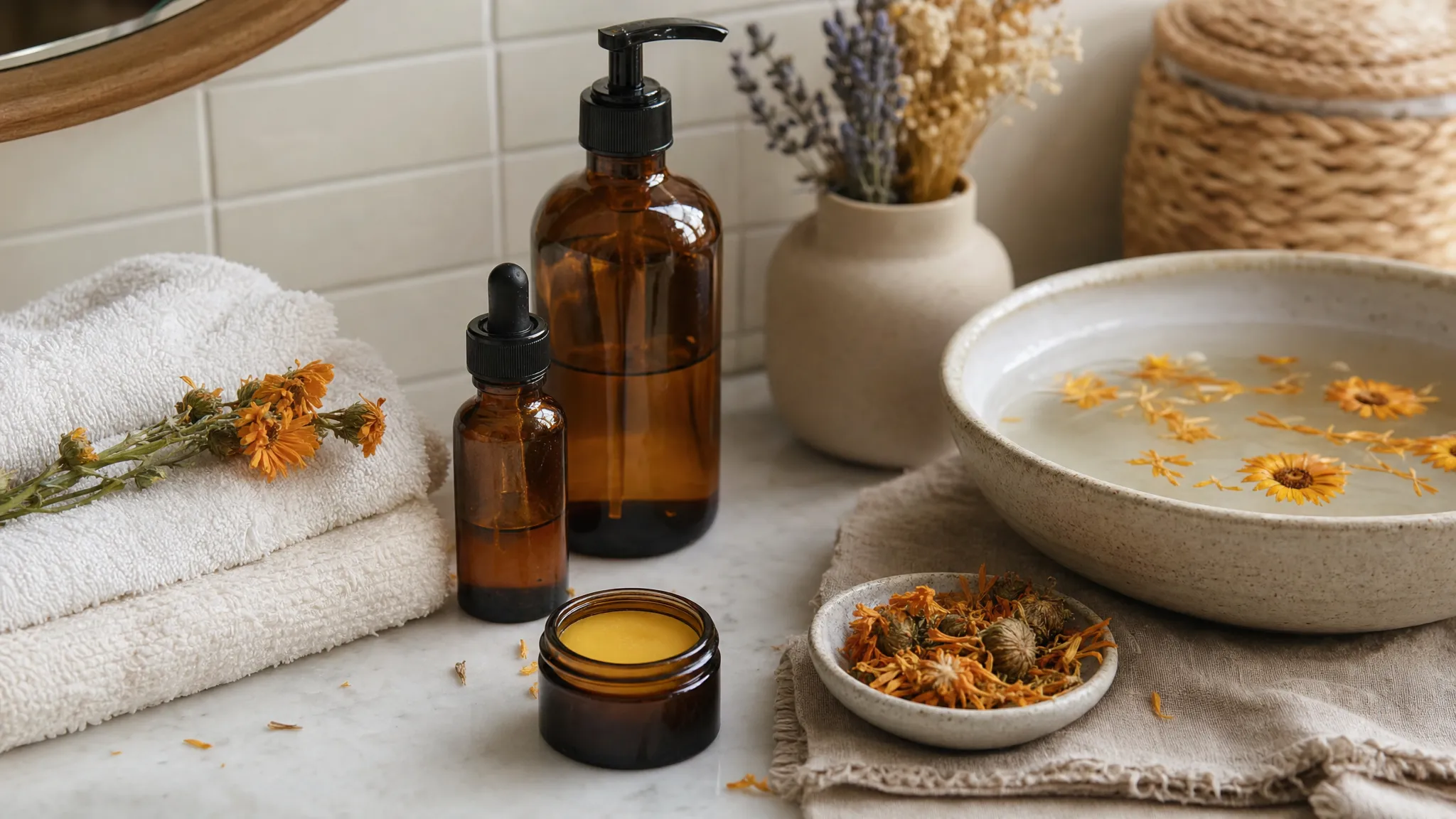
The best product types for dry, sensitive body skin
A complete body care ritual does not need to be complicated. In fact, sensitive skin often does best with fewer products used consistently. The goal is to cleanse without stripping, replenish lipids, and seal moisture where the skin feels most vulnerable.
| Product type | What it does | Best for | Sensitive skin note |
|---|---|---|---|
| Gentle cleanser | Removes sweat, sunscreen, and daily buildup | Daily showering or bathing | Avoid strong foaming agents and heavy fragrance |
| Body oil | Softens and helps reduce moisture loss | After showering, especially on damp skin | Choose simple botanical oil blends |
| Balm | Creates a richer protective layer | Elbows, knees, hands, feet, winter dryness | Patch test if it contains essential oils or beeswax |
| Bath oil | Cushions skin during bathing | Dry, tight, or flaky body skin | Keep bath water warm, not hot |
| Mild body polish | Smooths rough texture | Occasional use on non-irritated skin | Avoid during flare-ups, stinging, or active irritation |
For many people, the most skin-friendly approach is a gentle cleanse followed by a body oil while the skin is still damp. A balm can then be pressed over the driest areas, especially in winter or after frequent handwashing.
Ingredients to look for in organic body care
The best ingredients for dry, sensitive skin tend to fall into a few supportive categories: emollients, occlusives, and calming botanicals. Each plays a different role.
Plant oils that soften and replenish
Botanical oils are rich in fatty acids, which help improve the feel of dry skin and support the lipid layer on the surface. Oils like jojoba, sunflower, argan, rosehip, and olive-derived ingredients are commonly used in natural body care because they soften without the need for a long list of fillers.
For sensitive skin, texture matters. A heavy oil may be wonderful for cracked heels but too rich for the chest or back. A lighter oil may be better for everyday use after showering. If you are prone to clogged pores on the body, especially on the back, shoulders, or upper arms, start with a lightweight formula and apply sparingly.
Butters and waxes for lasting comfort
Plant butters, such as shea butter or cocoa butter, give balms their cushiony texture. They are especially helpful for areas that lose moisture quickly, such as elbows, knees, hands, and feet.
Waxes, including plant waxes and beeswax, can help create a protective finish. This can be beneficial for wind, winter weather, frequent washing, or skin that feels rough and exposed. If you prefer vegan body care, look for plant waxes. If your skin does well with beeswax, it can be a beautiful ingredient in protective balms.
Soothing botanicals for easily upset skin
Calendula, chamomile, oat, aloe, and similar botanicals are often used in body care for their calming reputation. They can be especially lovely in products designed for delicate or family-friendly routines.
Still, sensitive skin is personal. A botanical ingredient can be soothing for one person and irritating for another. This is why patch testing matters, even with natural products.
Ingredients and product habits to avoid
When skin is dry and sensitive, what you leave out can be just as important as what you put in. Many body products feel nice at first because they smell good or foam dramatically, but they may leave skin feeling tight after repeated use.
Be cautious with formulas that include:
- Undisclosed “fragrance” or “parfum,” especially if your skin reacts easily
- Strong essential oil blends used mainly for scent
- Harsh sulfates or very foamy cleansers that leave skin squeaky clean
- Drying alcohols in leave-on products
- Aggressive scrubs with sharp particles or high-friction exfoliants
- Too many actives at once, especially exfoliating acids on already irritated body skin
This does not mean every scented product is bad or every essential oil is unsafe. It means dry, sensitive skin usually prefers restraint. A softly aromatic formula may be fine for some people, while others do best with minimal or no scent.
How to build a gentle organic body care routine
A good routine should leave skin feeling flexible, not coated, sticky, or overheated. You can adjust the richness depending on the season, climate, and how your skin feels that day.
- Cleanse gently: Use lukewarm water and a mild cleanser only where needed. Avoid long, hot showers, which can worsen dryness.
- Do not fully dry off: Pat skin with a towel so it is damp, not dripping. This gives oils and balms moisture to help seal in.
- Apply body oil first: Warm a small amount between your palms and press it over arms, legs, torso, and any dry areas.
- Add balm where skin needs more: Use a richer balm on rough patches, chapped hands, elbows, knees, feet, or anywhere exposed to friction.
- Simplify during flare-ups: If skin is stinging or irritated, pause exfoliation, fragrance, and new products until your skin feels calm again.
If your skin is extremely dry, try applying body oil within three minutes of bathing. This “seal while damp” habit can make a bigger difference than simply applying more product later in the day.
How to read labels without getting overwhelmed
Organic body care labels can be beautiful, but they can also be confusing. Words like clean, natural, botanical, non-toxic, and organic are not always used consistently across the beauty industry.
Start with the ingredient list. The first few ingredients usually tell you what the formula is built around. For a body oil, you should see recognizable oils near the beginning. For a balm, you may see butters, waxes, and oils. For a cleanser, look for mild cleansing ingredients and avoid anything that leaves your skin tight or squeaky.
Here is a simple label-reading framework:
| Label question | Why it matters for dry, sensitive skin |
|---|---|
| Is the ingredient list short and understandable? | Fewer ingredients can reduce exposure to potential triggers |
| Are organic ingredients clearly identified? | Transparency helps you evaluate the quality of the formula |
| Is scent disclosed clearly? | Sensitive skin may react to fragrance or essential oils |
| Is the product water-based or oil-based? | Water-based formulas require preservation, while water-free products need careful storage |
| Does the texture match the body area? | Lightweight oils suit daily use, richer balms suit rough patches |
If you are unsure, introduce one product at a time. Use it on a small area for several days before applying it all over. This is especially important if you have eczema-prone skin, a history of allergies, or skin that reacts unpredictably.
Organic body care for different dry-skin situations
Not all dryness looks the same. Your body care should match the situation rather than follow a one-size-fits-all rule.
For winter dryness, richer balms and body oils are usually more helpful than lightweight lotions alone. Cold air, indoor heat, and heavier clothing can all increase dryness and friction.
For post-shower tightness, focus on your cleanser and water temperature first. If your skin feels tight immediately after bathing, even before you apply moisturizer, your cleansing step may be too stripping.
For rough elbows, knees, and heels, a balm is often more effective than oil alone because it stays put and provides a stronger protective layer.
For itchy, reactive skin, simplify. Stop scrubs, heavily scented products, and new actives. Use a bland, gentle routine and seek medical guidance if itching is persistent, severe, or accompanied by rash, cracking, bleeding, or signs of infection.
For baby or family use, choose especially simple formulas and avoid strong essential oils. Babies and young children have delicate skin, so less is often better.
Where Baby le Bébé fits into a sensitive-skin ritual
Baby le Bébé’s apothecary is built around 100% natural formulations, 99% organic ingredients, cruelty-free standards, and a curated selection of balms, oils, and cleansers. For shoppers who want organic body care products that feel elevated but still simple, that philosophy matters.
The brand also offers both vegan and beeswax options, which is helpful because body care preferences are personal. Some people want a fully plant-based ritual, while others love the protective feel of a beeswax balm on very dry spots.
If you are building a routine from scratch, begin with the essentials: a gentle cleanser, a body oil for damp skin, and a balm for targeted protection. You can explore the Baby le Bébé apothecary to find formulas that align with your skin needs and values.
For deeper reading, the guides on how to repair the skin barrier and how to moisturize skin naturally are helpful companions to this routine.
Frequently Asked Questions
Are organic body care products better for sensitive skin? They can be, especially when they are simple, fragrance-conscious, and made with barrier-supporting oils, butters, and balms. Organic does not guarantee that a product will work for every sensitive skin type, so patch testing is still important.
Should I use body oil or body lotion for dry, sensitive skin? Body oil is especially useful after bathing because it helps seal moisture into damp skin. Lotions can be helpful too, particularly when they contain humectants, but some sensitive skin types prefer water-free oils and balms because they can be simpler.
Can natural essential oils irritate dry skin? Yes. Essential oils are natural, but they are also concentrated aromatic compounds. Some people tolerate them well, while others react with stinging, redness, or itching. If you are very sensitive, choose unscented or lightly scented products and patch test first.
How often should I apply organic body oil? Most dry skin benefits from daily use, ideally after a shower or bath. Very dry areas may need a balm layered over oil or reapplied during the day.
What is the best first step if my body skin is irritated? Simplify your routine. Pause scrubs, fragrance, exfoliating acids, and new products. Use lukewarm water, a gentle cleanser, and a plain moisturizing step. If irritation continues or worsens, consult a dermatologist.
A softer body care ritual starts with fewer, better products
Dry, sensitive skin does not need a complicated shelf. It needs consistency, patience, and formulas that respect the skin barrier. The right organic body care products can turn a daily shower or bath into a small ritual of repair: gentle cleansing, moisture sealed into damp skin, and extra protection where your body needs it most.
If you are ready to simplify your routine with natural, organic, cruelty-free body care, explore Baby le Bébé and build a ritual that feels calm, nourishing, and beautifully uncomplicated.


0 comments