

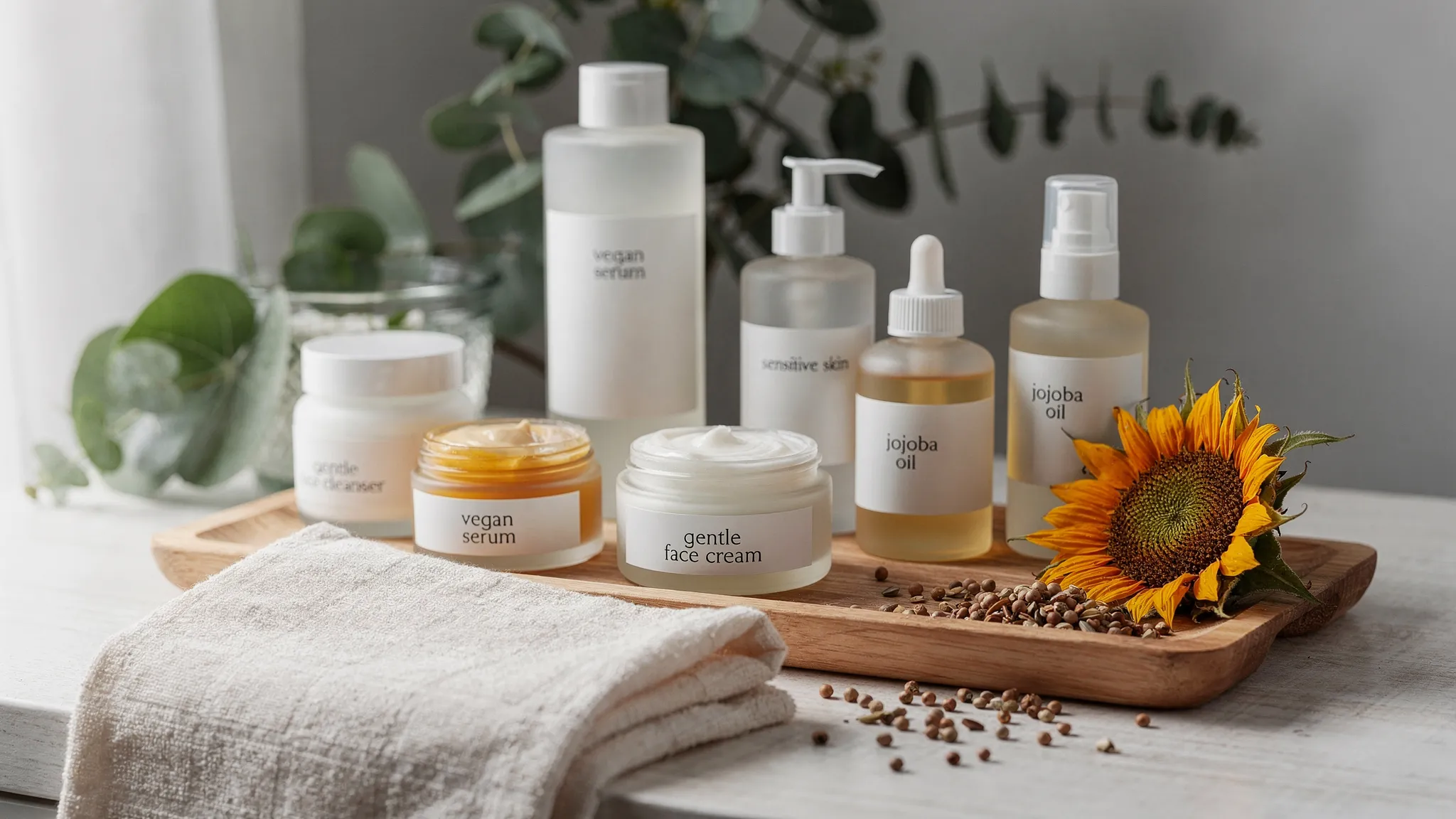
Sensitive skin asks for a quieter kind of skincare. When your face or body reacts easily, every ingredient matters, from the cleanser you use at night to the balm you reach for when the weather changes. That is where thoughtful vegan skincare can be especially helpful.
Vegan does not automatically mean gentle, and it does not automatically mean natural. A vegan product can still contain synthetic fragrance, harsh exfoliating acids, or preservatives that may not suit reactive skin. But when vegan skincare is built around simple botanical ingredients, transparent labels, and barrier-supporting oils, it can offer exactly what sensitive skin needs most: less noise, more nourishment.
Baby le Bébé’s approach is rooted in 100% natural formulations, 99% organic ingredients, cruelty-free standards, and a curated apothecary of plant-based skincare, with vegan options as well as beeswax-based options for those who prefer them. For sensitive skin, that kind of ingredient clarity is not just a preference. It is practical.
What “vegan skincare” really means
Vegan skincare is made without animal-derived ingredients. That means no lanolin from sheep’s wool, no beeswax, no honey, no collagen from animal sources, no carmine, and no animal-derived squalene.
Cruelty-free is related, but not identical. A vegan product avoids animal-derived ingredients, while a cruelty-free product is not tested on animals. A product can be vegan but not cruelty-free, or cruelty-free but not vegan. For sensitive skin shoppers who also care about ethics, the best choice is usually both.
The most important point is this: vegan is a starting point, not the whole standard. Sensitive skin still needs formulas that are low-irritation, fragrance-conscious, and designed to support the skin barrier. If a vegan moisturizer is packed with strong essential oils or aggressive actives, it may still cause stinging, redness, or breakouts.
Why sensitive skin responds well to simpler plant-based formulas
Sensitive skin often has a lower threshold for irritation. It may feel tight, flush easily, sting when products are applied, or become dry and flaky when the barrier is stressed. This can happen because of genetics, weather, over-exfoliation, rosacea, eczema, allergies, or simply a skin barrier that is temporarily compromised.
Dermatologists often recommend reducing potential triggers when caring for reactive skin. The American Academy of Dermatology advises people with sensitive skin to choose gentle, fragrance-free products and avoid unnecessary irritants when possible. That does not mean every botanical ingredient is automatically safe, but it does support a minimalist philosophy: fewer questionable additives, fewer surprises.
High-quality vegan skincare can align beautifully with this approach because many plant-based formulas rely on recognizable ingredients such as jojoba oil, sunflower seed oil, shea butter, aloe vera, rosehip oil, and calendula-infused oils. These ingredients do not need to be loud to be effective. Their strength is in helping the skin feel calmer, softer, and more comfortable over time.
The skin barrier is the real reason vegan skincare can work
Sensitive skin is often barrier-sensitive skin. The outermost layer of skin, the stratum corneum, acts like a protective wall. When that wall is healthy, it helps keep water in and irritants out. When it is weakened, even ordinary products can feel uncomfortable.
Plant oils are especially useful here because many contain fatty acids that help soften the skin and reduce water loss. A scientific review published in the International Journal of Molecular Sciences describes how certain plant oils can support skin barrier repair and reduce inflammation when used topically. Oils rich in linoleic acid, such as sunflower seed oil and safflower oil, are often appreciated in sensitive and dry skin routines because they feel lighter while helping reinforce the lipid layer.
This is one reason oil-based and balm-based natural products can be so comforting. Rather than stripping the skin and then trying to replace moisture afterward, they work with the skin’s lipid structure. For sensitive skin, that can feel very different from a foaming cleanser or lightweight gel full of drying ingredients.
If your skin is currently irritated, you may also find it helpful to read Baby le Bébé’s guide on how to repair the skin barrier, which explains how to simplify your routine during a flare.
Vegan ingredients that make sense for sensitive skin
The best vegan skincare ingredients for sensitive skin tend to fall into a few practical categories: emollients, occlusives, humectants, and soothing botanicals. Each has a different role, and a balanced routine usually includes more than one.
| Vegan ingredient type | What it does for sensitive skin | Examples to look for |
|---|---|---|
| Lightweight plant oils | Soften skin and support the lipid barrier | Jojoba, sunflower, safflower, grapeseed |
| Rich plant butters | Cushion dry, rough, or wind-exposed skin | Shea butter, cocoa butter, mango butter |
| Plant-derived humectants | Help draw water into the upper layers of skin | Aloe vera, glycerin, hyaluronic acid from fermentation |
| Soothing botanicals | Help comfort visible redness and dryness | Calendula, chamomile, oat, marshmallow root |
| Plant waxes | Help seal moisture without beeswax | Candelilla wax, sunflower wax, rice bran wax |
Jojoba oil is especially popular because its texture is close to the skin’s natural sebum, making it feel elegant rather than heavy. Sunflower seed oil is another sensitive-skin favorite because it is lightweight and naturally rich in barrier-supporting fatty acids.
Aloe vera and glycerin are useful when the skin feels dehydrated rather than simply dry. Dehydrated skin lacks water, while dry skin lacks oil. Many sensitive skin types experience both, which is why a good routine often layers hydration first and then seals it with a plant oil or balm.
What vegan skincare avoids, and why that may matter
One reason vegan skincare can be helpful for sensitive skin is that it avoids certain animal-derived ingredients that some people find problematic. This does not mean animal-derived ingredients are always bad. Many people tolerate beeswax or honey beautifully. But some animal-derived ingredients are known triggers for certain individuals.
Lanolin, for example, is a wool-derived wax that can be deeply moisturizing, but it can also cause allergic contact dermatitis in people who are sensitized to it. DermNet notes that lanolin contact reactions can occur, especially in those with damaged or eczematous skin. For someone who has never been able to tolerate lanolin-rich balms, switching to a vegan plant-wax alternative may be a meaningful improvement.
Beeswax and propolis can also be concerns for some allergy-prone users, particularly those sensitive to bee products. Again, this is personal. Some sensitive skin loves beeswax. Some does not. The value of vegan skincare is that it gives people a clear way to avoid these categories when they need or prefer to.
The hidden benefit: better label awareness
People who choose vegan skincare often become better label readers. That is a major advantage for sensitive skin, because front-of-bottle claims can be vague.
The FDA notes that terms like “hypoallergenic” do not have a federal standard that guarantees a product will not cause an allergic reaction. In other words, a sensitive-skin claim is not a promise. You still need to read the ingredient list.
A well-formulated vegan product should make that easier, not harder. Look for ingredient lists that are clear, concise, and specific. “Fragrance” or “parfum” can hide dozens of aromatic compounds, some of which may be irritating for reactive skin. Essential oils should also be treated with care. They are natural, but they are highly concentrated and not always appropriate for sensitive skin, especially on the face.
This is where Baby le Bébé’s philosophy fits naturally. A 100% natural, no-synthetics approach encourages people to understand what they are putting on their skin, instead of relying on vague beauty language.
Vegan does not always mean sensitive-skin safe
This caveat matters. Vegan skincare can be excellent for sensitive skin, but only when the formula is built with sensitivity in mind.
A vegan product may still be irritating if it contains a high percentage of exfoliating acids, strong retinoids, peppermint oil, citrus essential oils, drying alcohols, or synthetic fragrance. A product may also be too active for a damaged barrier, even if every ingredient is plant-derived.
For sensitive skin, the best vegan formulas usually share a few traits:
- Short, understandable ingredient lists
- No synthetic fragrance or undisclosed parfum
- Low or no essential oil content, especially for facial products
- Barrier-supporting oils, butters, or waxes
- No harsh sulfates or stripping cleansers
- Clear guidance on use, storage, and patch testing
If your skin is reactive, introduce only one new product at a time. Apply it to a small area for several days before using it all over your face or body. Patch testing is not glamorous, but it is one of the simplest ways to prevent a full-face reaction.
How to build a vegan sensitive skin routine
A sensitive skin routine does not need ten steps. In fact, it usually gets better when you remove unnecessary steps. The goal is to cleanse without stripping, hydrate without overwhelming, and seal without suffocating.
In the morning, many sensitive skin types do well with a simple rinse or a very gentle cleanser, followed by a light hydrating layer if needed, a plant-based moisturizer or oil, and mineral sunscreen. Sunscreen is especially important because sun exposure can worsen redness, dryness, and barrier damage.
At night, focus on repair. Use a gentle cleanser or oil cleanser to remove sunscreen and daily buildup. Then apply a calming oil, balm, or moisturizer while the skin is slightly damp. This helps trap hydration and supports a softer, more comfortable feel by morning.
If you are building from scratch, start with three essentials: cleanser, moisturizer or oil, and sunscreen. Once your skin is stable, you can consider adding a targeted product such as a mild serum or occasional exfoliant. For more detail, Baby le Bébé’s sensitive skin care routine offers a fuller framework.
The role of oils and balms in vegan skincare
Oils and balms are often misunderstood. People with sensitive or breakout-prone skin sometimes fear that oils will clog pores or feel greasy. The truth depends on the oil, the formula, the amount used, and your skin’s needs.
For sensitive skin, plant oils can be a gentle way to nourish without relying on long lists of emulsifiers, stabilizers, or synthetic additives. Water-based creams often require preservatives because water can support microbial growth. Anhydrous products, meaning water-free products, can sometimes be formulated more simply. That simplicity may appeal to people who react easily, although freshness and storage still matter.
A few drops of oil pressed onto damp skin can be enough. More is not better. If your skin feels slick long after application, you may be using too much or choosing an oil that is too rich for your skin type.
If you are curious about oil textures, Baby le Bébé has a helpful guide on how to use facial oil without overwhelming the skin.
When vegan skincare is especially worth considering
Vegan skincare may be a particularly good fit if your sensitive skin reacts to lanolin, propolis, heavy waxes, or conventional fragrance-heavy formulas. It may also suit you if you prefer plant-based rituals, want cruelty-free products, or are trying to simplify your ingredient exposure.
It is also a thoughtful choice for families who want fewer synthetic additives in daily body care, as long as each product is age-appropriate and patch tested. Babies, children, pregnant people, and people with eczema or rosacea should be especially cautious with essential oils and active ingredients, even when they are natural.
If your skin burns, cracks, weeps, bleeds, or reacts to nearly everything, skincare alone may not be enough. A dermatologist can help identify allergies, eczema, rosacea, perioral dermatitis, or other conditions that need medical care.
Frequently Asked Questions
Is vegan skincare better for sensitive skin? Vegan skincare can be better for sensitive skin when it is made with gentle, barrier-supporting ingredients and avoids common irritants. However, vegan does not automatically mean non-irritating, so the full ingredient list still matters.
Can vegan skincare cause breakouts? Yes, any skincare product can cause breakouts if it does not suit your skin. Some rich oils and butters may feel too heavy for acne-prone skin, while lighter oils such as jojoba or sunflower may be better tolerated.
Is natural vegan skincare always fragrance-free? No. Natural vegan products may still contain essential oils or aromatic extracts. If your skin is highly reactive, look for fragrance-free products or very low-aroma formulas, and patch test before regular use.
What animal-derived skincare ingredients do vegan products avoid? Vegan skincare avoids ingredients such as lanolin, beeswax, honey, propolis, animal-derived collagen, carmine, and animal-derived squalene. Plant-derived or biotech alternatives are often used instead.
How long does it take sensitive skin to improve after switching products? Mild irritation may calm within days after removing triggers, but barrier repair can take several weeks. If symptoms persist, worsen, or include swelling, oozing, or severe burning, consult a dermatologist.
Choose vegan skincare with intention
Vegan skincare works for sensitive skin when it does more than avoid animal-derived ingredients. The real magic is in thoughtful formulation: plant oils that support the barrier, botanicals that comfort, labels that are easy to understand, and a routine that gives your skin room to breathe.
Baby le Bébé’s apothecary is built for people who care about what touches their skin. Explore Baby le Bébé for 100% natural, cruelty-free skincare, including vegan options and carefully crafted botanical formulas for healthy, feel-good skin. If a fully vegan routine is important to you, review each product’s ingredient list, since some natural formulas may include beeswax.


0 comments