

In the world of natural skincare, apricot oil is often held up as a simple, gentle hydrator. It's praised for its lightweight feel and vitamin content, making it a go-to for those just dipping their toes into plant-based routines. But while it offers a basic level of softness, it's worth asking a deeper question: is it truly a high-performance ingredient for long-term skin health? At Baby le Bébé, we believe the answer is no, and this guide explains why.
Untangling the Hype Around Apricot Oil
Apricot oil has certainly earned its spot in the natural skincare conversation. Pressed from the kernels of apricots, it’s full of fatty acids and vitamins that appeal to anyone seeking a straightforward, plant-based addition to their routine. It's easy to see why it's so popular—it’s accessible, feels pleasant, and gives an immediate sense of softness.
That initial appeal is what draws so many people in. The oil absorbs relatively quickly and leaves behind a silky finish that can temporarily soothe dryness and make tired skin look a little better. For someone with already balanced skin, it can work just fine as a simple hydrator.
Beyond Surface-Level Moisture
But does popular always mean best? At Baby le Bébé, we believe in looking past trends and focusing on ingredients that truly build resilient, healthy skin. While apricot oil provides surface-level moisture, it is an inferior choice for those with reactive or congestion-prone skin, or anyone seeking more comprehensive benefits. It simply doesn't meet our standards for high-performance skincare.
True skin wellness isn’t just about temporary softness; it’s about building a strong, balanced, and resilient skin barrier. This requires ingredients that do more than just hydrate—they must protect, nourish, and support the skin's natural functions.
Our philosophy is built on an unwavering commitment to quality and efficacy. We deliberately choose high-performance botanicals that offer a host of benefits beyond simple hydration. This means we carefully evaluate every single ingredient to make sure it meets our strict standards for performance and safety. You can read more about our perspective in our guide debunking the effectiveness myth between natural versus synthetic skincare.
Setting Higher Standards for Your Skin
This critical viewpoint is key to making informed choices about what you put on your skin. An ingredient might be good, but is it the best option available to help you reach your goals? Here are a few principles that guide our formulation process:
- Multi-Benefit Performance: We prioritize ingredients that are true multi-taskers, offering antioxidant protection, barrier repair, and calming properties all at once.
- Suitability for All Skin Types: We choose oils that are exceptionally gentle and non-comedogenic to minimize any risk of irritation or clogged pores.
- Nutrient Density: Our botanicals are packed with a rich spectrum of vitamins, minerals, and fatty acids that actively nourish the skin from the inside out.
This guide will walk you through a deeper look at apricot oil, explaining its scientific profile and why, ultimately, it doesn't make the cut for our formulas. By understanding what makes some botanical oils superior to others, you'll be empowered to choose products that deliver the healthy, radiant skin you deserve.
The Scientific Side of Apricot Oil
To really understand any botanical oil, you have to look past the pretty bottle and get into what it’s actually made of. Think of it like a recipe—the specific ingredients and their ratios determine everything about the final result. For skin, the most important ingredients are fatty acids, and apricot oil’s formula is built around two big ones: oleic acid and linoleic acid.
This balance is what gives the oil its personality. Oleic acid (an omega-9) is generally richer and deeply moisturizing, which is great for dry skin. Linoleic acid (an omega-6), on the other hand, is lighter and helps keep the skin’s protective barrier strong, making it a better friend to oily or acne-prone types. Apricot oil has a good amount of both, which is why it’s often seen as a decent all-around moisturizer.
This combination of fatty acids is why apricot oil can be quite effective for hydration and elasticity. Research even shows that the apricots this oil comes from are a powerhouse of nutrients—just 100 grams can provide about 64% of your daily vitamin A. The oil itself, rich in oleic and linoleic acids, moisturizes without feeling overly greasy and can help with concerns like eczema and dryness. You can read the full study on its benefits to see the data for yourself.
Understanding the Comedogenic Scale
An oil's fatty acid profile is the biggest clue as to where it will land on the comedogenic scale—a handy little system that ranks ingredients from 0 (won't clog pores) to 5 (very likely to clog pores). This rating is something you absolutely want to pay attention to, especially if your skin is sensitive, combination, or even slightly prone to breakouts.
Generally, an oil with more oleic acid will be thicker and can sit on top of the skin, potentially trapping dirt and oil in your pores. Oils higher in linoleic acid tend to be lighter and are far less likely to cause congestion. If you want to go deeper on this, our guide on what fatty acids are in skincare breaks it all down.
Where Does Apricot Oil Stand?
So, with all that in mind, where does apricot oil fit in? It has a comedogenic rating of 2.
This means it has a low-to-moderate chance of clogging pores. For someone with truly dry or unbothered skin, that might be totally fine. But for anyone whose skin leans toward blackheads, blemishes, or just general congestion, a rating of 2 introduces a risk you just don't need to take.
An oil with a comedogenic rating of 2 is like a "sometimes" food for your skin. It might be perfectly fine once in a while, but using it every day in a routine designed for clarity and balance could easily work against you.
This is exactly why we seek out better options. When formulating for calm, resilient skin, the goal is to remove any potential triggers for irritation and congestion, not add them to the mix. A rating of 0 or 1 is our gold standard for a truly supportive facial oil, ensuring it works with your skin's natural processes, not against them.
Here’s a quick breakdown of what those numbers mean in the real world:
- 0 – Non-Comedogenic: Will not clog pores. Think Hemp Seed Oil or Safflower Oil.
- 1 – Slightly Comedogenic: A very low chance of clogging pores. Jojoba Oil is a perfect example.
- 2 – Moderately Comedogenic: A low to moderate chance of clogging pores. This is where Apricot Oil lives.
- 3 – Comedogenic: A pretty high chance of causing issues for many skin types.
- 4 – Highly Comedogenic: Very likely to cause breakouts. Coconut Oil is the classic example here.
This scientific profile—its specific blend of fatty acids and its middle-of-the-road comedogenic score—paints a clear picture. While apricot oil certainly offers some moisturizing benefits, it simply doesn’t meet the high standards needed for formulas designed to support clear, calm, and truly healthy skin for everyone. This insight is central to why we consciously choose other botanicals for our blends.
Why Apricot Oil Doesn't Meet Our Standards
When you’re crafting skincare for truly healthy skin, being selective isn’t just a preference—it's a necessity. While apricot oil is a perfectly fine moisturizer, "fine" simply isn't good enough for our formulas. We’ve made a conscious choice to leave it out for a few critical reasons, ensuring every drop in our products actively works to bring your skin into a state of calm, resilient balance.
Our promise is to create skincare that supports everyone, especially those with the most sensitive and reactive complexions. This is where the concept of comedogenicity becomes non-negotiable. As we mentioned earlier, apricot oil has a moderate comedogenic rating of 2, which can introduce an unnecessary risk for anyone with combination, oily, or congestion-prone skin.
Think of it like building a high-performance engine; you wouldn't use average parts and expect exceptional results. We apply the same logic to our formulations. Why introduce an ingredient with a known potential to cause issues when so many superior botanicals are available—ones that offer incredible benefits without any of the risks?
An Antioxidant Profile That Falls Short
Beyond its comedogenic rating, apricot oil's antioxidant profile, while present, is simply outmatched by more potent alternatives. Antioxidants are your skin's first line of defense against the environmental stressors, like pollution and UV radiation, that contribute to premature aging.
Some studies do highlight its vitamin E content, and science confirms its value in cosmetic creams for protecting dry skin and reducing signs of aging. However, when you place it side-by-side with botanical powerhouses like Rosehip or Sea Buckthorn oil, apricot oil’s protective capacity is simply less impressive. We aim higher.
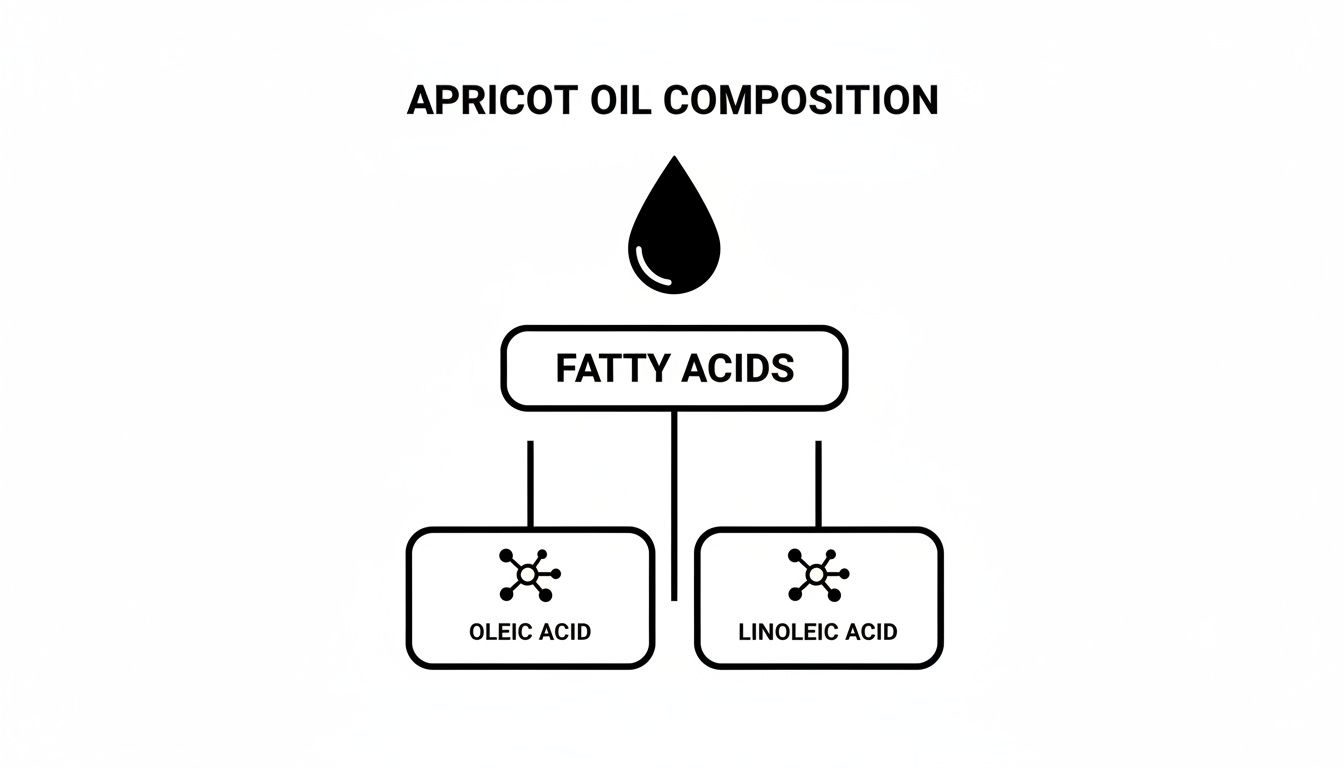
This breakdown shows the oil is primarily composed of oleic and linoleic acids. While these are great for moisture, they don't represent the full spectrum of nutrients needed for optimal skin resilience.
Our Commitment to Multi-Benefit Ingredients
At Baby le Bébé, our philosophy is rooted in the belief that every single ingredient should serve multiple purposes to actively improve skin health. We seek out botanicals that are not only deeply moisturizing but are also brimming with a wide array of vitamins, minerals, and phytonutrients.
We don't just formulate to moisturize. We formulate to nourish, protect, calm, and restore the skin barrier, creating visible, long-lasting results. This requires ingredients that are exceptional, not just acceptable.
This meticulous selection process is what sets our products apart. It's why we choose oils that deliver a comprehensive suite of benefits, ensuring your skin gets everything it needs to thrive.
Here's a look at why we select certain high-performance oils over more basic options like apricot oil.
Apricot Oil vs. High-Performance Botanical Oils
| Feature | Apricot Oil | Our Preferred Oils (e.g., Jojoba, Rosehip, Sea Buckthorn) |
|---|---|---|
| Comedogenic Rating | 2 (Moderate risk of clogging pores) | 0-1 (Very low to no risk) |
| Antioxidant Profile | Contains Vitamin E | Rich in a broad spectrum of antioxidants like carotenoids, lycopene, and flavonoids |
| Key Nutrients | Primarily Oleic & Linoleic Acids | Complex profile including essential fatty acids (Omega 3, 6, 7, 9), vitamins, and rare phytonutrients |
| Skin Benefits | Good moisturizer | Moisturizes, calms inflammation, supports barrier repair, and provides robust environmental protection |
Ultimately, our chosen oils provide a far more complete package for skin health, delivering nourishment that goes well beyond simple hydration.
This commitment to excellence is why you won't find apricot oil in our lineup. Our focus on demystifying natural ingredients and their safety and efficacy guides every single decision we make. By choosing more effective, multi-benefit botanicals, we can confidently deliver the gentle yet powerful results our customers deserve.
Discover the Superior Oils We Choose Instead
Our decision to leave apricot oil out of our formulas isn’t about what it lacks, but about what other botanicals offer in abundance. We see skincare as an active investment in your skin’s long-term health, which is why we meticulously choose ingredients that deliver comprehensive, multi-faceted benefits. Instead of just settling for simple hydration, we champion oils that truly transform the skin's resilience and glow.
Let's shine a spotlight on the heroes that earn their place in our apothecary. These are the ingredients that meet our uncompromising standards for safety, efficacy, and nutrient density. They are the reason our formulas can support even the most sensitive and reactive skin types with total confidence.
Rosehip Oil: The Radiance Restorer
Next, we celebrate Rosehip Oil, a botanical treasure renowned for its regenerative properties. While apricot oil contains some vitamins, Rosehip Oil is a veritable powerhouse, packed with a rich concentration of essential fatty acids (Omega-3 and Omega-6) and, most notably, natural Vitamin A (trans-retinoic acid).
This naturally occurring Vitamin A is what makes Rosehip Oil so effective at promoting cell turnover and refining skin texture. It works gently to encourage the shedding of old, dull skin cells, revealing a brighter, smoother, and more even-toned complexion underneath.
Here's why Rosehip Oil stands out as a superior choice for visible results:
- Promotes a Healthy Glow: Its nutrient profile actively works to diminish dullness and restore luminosity.
- Supports Skin Repair: It is celebrated for its ability to improve the appearance of scars and hyperpigmentation.
- Provides Antioxidant Defense: Rich in antioxidants like lycopene and beta-carotene, it helps protect skin from environmental damage.
Choosing Rosehip Oil is a commitment to not just moisturizing the skin, but actively improving its texture and radiance over time.
Sea Buckthorn Oil: The Nutrient Supernova
Finally, we feature Sea Buckthorn Oil, an ingredient that is truly in a league of its own. This vibrant, deep-orange oil is one of the most nutritionally complete botanicals on the planet. Its profile is astonishingly complex, containing over 190 bioactive nutrients.
What makes Sea Buckthorn Oil exceptional is its rare combination of fatty acids, including the elusive Omega-7 (palmitoleic acid). Omega-7 is a fundamental building block of healthy skin that supports cell regeneration and barrier function, making this oil incredibly healing and restorative.
The spectrum of benefits is vast, showcasing why it far surpasses simpler oils. To truly discover superior oils for skincare, consider understanding the comprehensive olive oil benefits for skin, which also offers a rich profile. Similarly, Sea Buckthorn's potent combination of vitamins, antioxidants, and rare nutrients provides unparalleled support for skin health.
Each of these oils—Jojoba, Rosehip, and Sea Buckthorn—was chosen for its unique ability to nourish, protect, and balance the skin in a way that basic moisturizers cannot. By formulating with these superior botanicals, we ensure that every drop of our products contributes to calmer, healthier, and more resilient skin for you.
Building Your Ultimate Skincare Ritual with Better Botanicals
Knowing why we choose certain botanicals is the first step. Now, let’s put that knowledge into practice. A truly nourishing skincare ritual isn’t about a dozen complicated steps; it's about using a few exceptional products with intention and consistency.
This is where thoughtful formulation comes to life. By focusing on superior, non-comedogenic oils, we can create a simple yet deeply effective system that cleanses, nourishes, and protects your skin. It’s all about building a foundation of true resilience and glow.
Step 1: Start with a Gentle and Effective Cleanse
The cornerstone of any healthy routine is a cleanser that lifts away impurities without stripping your skin of its natural, protective oils. Those harsh, foaming cleansers can disrupt the delicate acid mantle, often leading to irritation, dryness, and even more oil as your skin tries to overcompensate.
Our Rinse-Away Oil Cleanser is designed to work in harmony with your skin. The principle is simple: like dissolves like. This luxurious blend of oils effortlessly melts away makeup, sunscreen, and daily grime while leaving your skin’s barrier perfectly intact.
To use it, just massage 1-2 pumps onto dry skin, letting the oils break down everything. Then, add a splash of warm water to emulsify the cleanser before rinsing it all away. You’re left with skin that feels soft, hydrated, and perfectly prepped for what’s next.
Step 2: Deliver Potent Nutrients with a Face Oil
Once your skin is clean, it's ready to drink in concentrated nourishment. This is where a high-quality face oil, rich in vitamins and antioxidants, becomes your most powerful ally. While apricot oil provides simple moisture, our Nourishing Face Oil goes far beyond that.
This blend features botanicals specifically chosen to calm, repair, and protect. Just a few drops deliver a potent dose of nutrients that support barrier function and promote a healthy, even-toned glow.
The anti-inflammatory properties of well-chosen botanicals are crucial for calming sensitive skin. Even though we don't use it, some oils like apricot kernel oil are noted for soothing eczema and dermatitis. Recent reviews highlight these effects, with clinical data showing over 80% of sensitive-skin users saw irritation drop with the right lightweight hydration and vitamin E. To understand more about these properties, you can review the 2023 findings on its anti-inflammatory effects.
To apply, warm 3-5 drops of oil between your palms and gently press it into your face and neck. This pressing motion ensures even distribution and helps the oil absorb beautifully, without pulling or stretching the skin.
Step 3: Seal in Moisture and Protect Your Barrier
The final, essential step is to lock in all that goodness and create a protective shield against environmental stress. This is especially important in dry or cold climates, or for anyone whose skin barrier feels a little compromised. Our Silking Balm acts as a breathable, protective layer.
Formulated with rich butters and waxes, it prevents transepidermal water loss (TEWL)—the natural process of moisture evaporating from your skin—keeping it hydrated and comfortable all day long. A small, pea-sized amount is all you need.
Radiant skin often involves more than just what you put on it; understanding how to balance hormones naturally can also play a huge role in your overall skin health. Your daily ritual is a perfect moment to check in with your body's needs.
Here’s a quick recap of the three-step ritual:
- Cleanse: Use the Rinse-Away Oil Cleanser to dissolve impurities without stripping the skin.
- Nourish: Apply the Silking Balm to deliver a megadose of vitamins and hydration.
-
Protect: finish with the Nourishing Face Oil to seal in moisture and shield your skin from the elements.
This intentional, three-step process transforms a daily chore into a moment of true self-care. It’s a simple yet powerful way to build a strong, radiant complexion using botanicals that truly work with your skin, not against it.
Frequently Asked Questions About Botanical Oils
Diving into the world of botanical oils can feel a little overwhelming. There's so much information out there, and it's easy to get turned around. We've gathered some of the questions we hear most often to clear things up and share our philosophy on choosing superior, non-comedogenic ingredients for truly healthy skin.
Our goal is always to empower you with knowledge, so you can feel confident in the choices you make for your unique complexion.
So Is Apricot Oil Bad for Your Face?
It’s not that apricot oil is inherently "bad"—it's more that it might not be the best choice, especially if your skin is prone to congestion or breakouts. With a moderate comedogenic rating of 2, there's a real risk of it clogging pores for many people. Think of it as a basic moisturizer; it offers simple surface hydration but lacks the powerful, multi-faceted benefits of other botanicals.
We choose to formulate with oils that are both exceptionally gentle and highly effective. This way, you get maximum nourishment without introducing potential drawbacks or the risk of irritation.
What Makes an Oil a Better Choice Than Apricot Oil?
A superior oil does so much more than just moisturize. The best botanicals are true multi-taskers, chosen for specific, targeted benefits that work in harmony with your skin's own biology.
For us, a "better choice" has to meet a few key criteria:
- A Non-Comedogenic Profile: It must have a rating of 0 or 1 to eliminate the risk of clogged pores.
- Rich Nutrient Density: It should be packed with a wide spectrum of vitamins, antioxidants, and essential fatty acids to actively repair and protect.
- Barrier Support: The oil should strengthen the skin’s natural lipid barrier, helping it lock in moisture and defend against environmental stress.
For sensitive or reactive skin, we prioritize oils like Jojoba, which closely mimics your skin's natural sebum, making it incredibly balancing. For promoting skin renewal and radiance, Rosehip oil's rich nutrient profile is unmatched. These oils don't just sit on the surface; they actively improve your skin's health.
Can I Use Face Oil if I Have Oily Skin?
Absolutely! This is one of the biggest and most persistent myths in skincare. Using the right non-comedogenic oil can actually be one of the best things you do to help balance an oily complexion.
Often, oily skin is just a sign of a compromised barrier. When you use harsh, stripping cleansers, your skin panics and overproduces oil to compensate for the moisture it just lost. By nourishing it with a high-quality, lightweight oil like Jojoba, you send a signal that it's hydrated and protected. Over time, this helps regulate sebum production, leading to a less shiny, more balanced complexion.
Why Does Your Brand Focus So Heavily on Oils?
We believe that pure, high-quality botanical oils are the foundation of resilient, glowing skin. Unlike many conventional creams and lotions that are mostly water, synthetic emulsifiers, and preservatives, our oil-based formulas are concentrated with 100% active, skin-loving ingredients.
Oils are biocompatible, meaning they work with your skin's natural systems. They’re brilliant at dissolving impurities without stripping the acid mantle, deeply nourishing the lipid barrier, and effectively locking in moisture. Our carefully curated oil blends are designed to deliver calm, healthy results by giving your skin everything it needs and nothing it doesn’t.
At Baby le Bébé, our mission is to provide you with skincare that is as gentle as it is effective. By choosing superior botanicals over common fillers, we craft rituals that support your skin's long-term health and radiance.
Explore our collection of thoughtfully formulated botanical skincare products today.


0 comments