


When you're searching for the best non toxic body oil, you’re really looking for simplicity. It’s about choosing pure, plant-based formulas that are free from things like synthetic fragrances, harsh preservatives, and petroleum-derived ingredients. It’s a quiet commitment to purity—prioritizing oils that truly nourish your skin without any hidden irritants.
What Makes a Body Oil Genuinely Non Toxic
Let's cut through all the marketing noise. The term 'non-toxic' gets thrown around so much, but what does it actually mean when it comes to your skincare?
Think of it less as a buzzword and more as a promise. A genuinely non-toxic body oil is made with ingredients that work with your skin, not against it. This means the formula is intentionally created without any substances known or even suspected to cause irritation, disrupt hormones, or throw your body’s natural balance out of whack. The focus shifts from complicated chemical cocktails to simple, powerful botanicals.
The Philosophy of Purity
At its heart, a non-toxic approach is about radical transparency. It’s about being able to glance at an ingredient list and recognize the names as things that come from nature.
This philosophy is gaining serious traction. In fact, the global body oil market is projected to grow from $4.08 billion to $4.34 billion in a single year—a clear sign that people are choosing plant-based goodness over synthetic chemicals.
A true non-toxic commitment means prioritizing:
- Plant-Based Ingredients: Sourcing oils directly from seeds, nuts, and fruits.
- Minimal Processing: Keeping the natural integrity and nutrient profile of the oils intact.
- Absence of Synthetics: Stepping away from artificial fragrances, colors, and harsh preservatives.
A truly non-toxic body oil doesn’t just sit on the surface; it delivers concentrated nutrients from nature to support your skin’s long-term health and resilience. It's about building a foundation for genuinely radiant skin.
Beyond Skincare: A Holistic View
This commitment to avoiding toxins doesn't have to stop with what you put on your skin. For a more holistic approach to a healthier home, an ultimate guide to non toxic bedding can offer some really valuable insights. The same principles of purity and ingredient transparency apply to so many areas of our lives.
Choosing a product like ours at Baby le Bébé, which is 100% natural and 99% organic, means you're investing in a formula that is both incredibly gentle and highly effective.
If you'd like to go a little deeper, you might be interested in our guide on demystifying natural ingredients in skincare. Think of it as your first step toward making confident, informed choices for your healthiest skin.
Decoding Your Ingredient List What to Look For and What to Avoid
Stepping into the world of non-toxic body oil is a little like becoming a skincare detective. The real secret isn’t hidden in clever marketing slogans; it’s printed right on the back of the bottle, waiting to be read.
Knowing the difference between skin-loving botanicals and potential irritants is what gives you the power to choose well. Think of an ingredient list as a recipe for your skin. You want it filled with whole, recognizable ingredients, not a long list of synthetic chemicals you can’t pronounce. Often, a short, clear list is the first sign of a truly beautiful product.
Ingredients to Embrace for Healthy Skin
The foundation of any exceptional non-toxic body oil is its carrier oils. These are the workhorses of the formula, pressed from the seeds, nuts, and fruits of plants. They are absolutely packed with the good stuff—essential fatty acids, vitamins, and antioxidants that hydrate, protect, and repair the skin barrier.
These are the kinds of pure, effective botanicals you’ll find in thoughtfully crafted formulas, like the blend in our Smoothing Body Oil. They provide deep nourishment you can see and feel. For a closer look at how these tiny molecules work, you can explore the role of fatty acids in skincare and what they mean for skin health.
This visual guide breaks down the core principles of what we consider a truly non-toxic formulation.
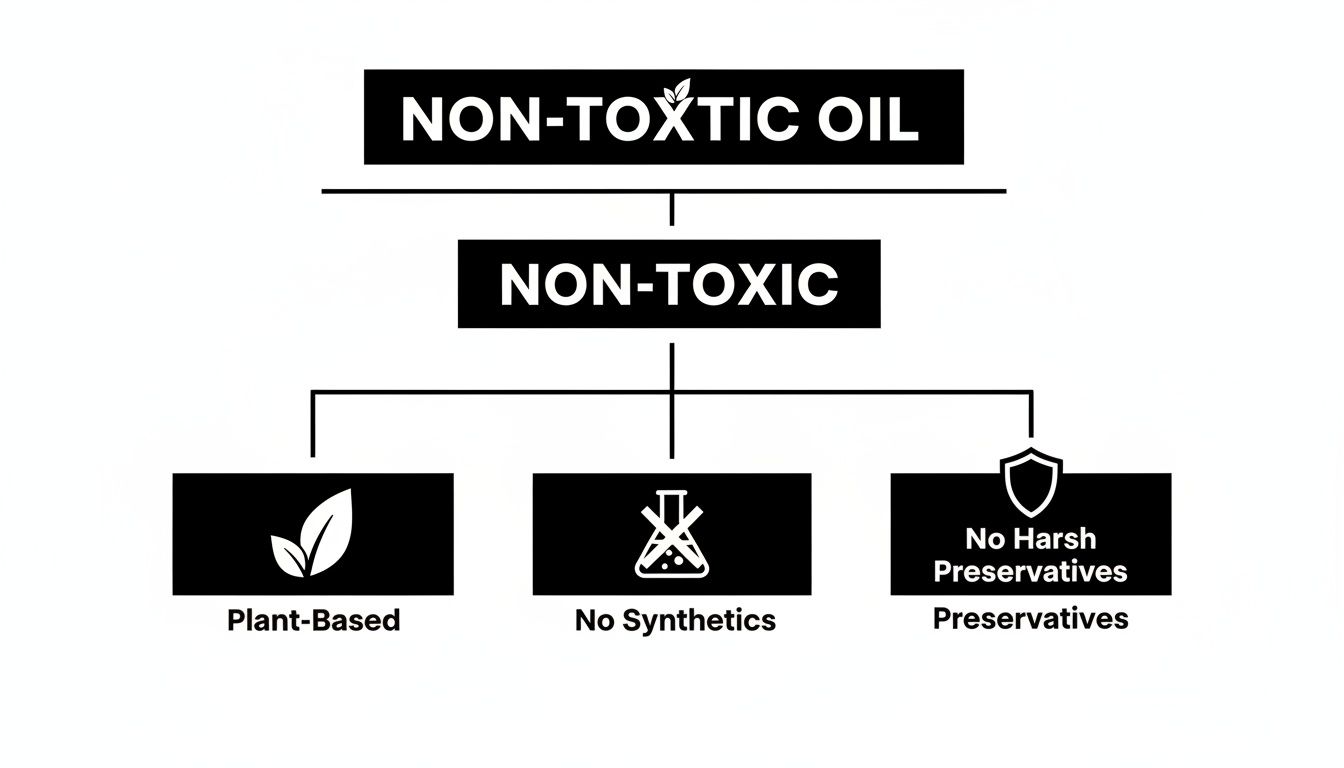
The diagram highlights that a superior non-toxic oil is defined as much by what it leaves out—like synthetic chemicals and harsh preservatives—as by what it contains.
Ingredients to Avoid for a Cleaner Routine
Just as important as knowing what to look for is knowing what to avoid. Many conventional body oils are bulked up with fillers, synthetic compounds, and harsh preservatives that can do more harm than good, leading to irritation, dryness, and sensitivity over time.
Think of these as the red flags on your label:
- Fragrance/Parfum: This one little word can hide a cocktail of hundreds of undisclosed chemicals, including phthalates, which are known endocrine disruptors. "Fragrance" earns a very high toxicity score of 8 out of 10 on the EWG Skin Deep database.
- Parabens (Methylparaben, Propylparaben, etc.): Used as preservatives, parabens can mimic estrogen in the body and have been linked to hormonal disruption. They also absorb easily through the skin.
- Mineral Oil & Petroleum: These are byproducts of the petroleum industry. While they create a slick barrier on the skin, they offer zero nutritional value and can clog pores, trapping bacteria and sweat underneath.
The goal is always to nourish your skin, not just coat it. Choosing formulas free from these synthetics allows the potent botanical ingredients to work their magic without interference, leading to healthier, more resilient skin.
Beyond the main ingredients, it's also helpful to distinguish between different types of preservatives. For those interested, understanding preservatives in skincare offers a deeper insight into making safer choices.
The Clean Ingredient Checklist Embrace vs Avoid
Making the right choice is so much easier when you can see the difference side-by-side. Here’s a quick-reference table to help you compare ingredients at a glance, empowering you to read any label with confidence.
| Ingredient Type | Embrace These Skin-Loving Naturals | Avoid These Common Toxins |
|---|---|---|
| Moisturizing Oils | Plant-derived oils like Jojoba, Sunflower Seed, Apricot Kernel, Avocado, and Rosehip Oil. These are rich in vitamins and fatty acids. | Mineral Oil, Petrolatum, and other petroleum byproducts. These coat the skin without providing any actual nutrients. |
| Scent | Essential oils (used safely and in proper dilution) or unscented formulas. Natural scents can offer therapeutic benefits. | "Fragrance," "Parfum," and Phthalates. These umbrella terms can hide hundreds of synthetic, potentially irritating chemicals. |
| Preservatives | Vitamin E (Tocopherol) and Rosemary Extract. These are natural antioxidants that help extend shelf life without harsh effects. | Parabens (e.g., methylparaben) and Formaldehyde-releasing agents. These are linked to skin irritation and hormonal disruption. |
| Colorants | Natural color from the botanical oils themselves. The rich, natural hue is a sign of a minimally processed product. | Artificial colors and dyes, often listed as "CI" followed by a number (e.g., CI 75470). These can cause skin sensitivity. |
By using this simple checklist, you shift from being a passive consumer to an informed advocate for your own skin's health. The next time you pick up a bottle, you'll know exactly what you’re looking at, ensuring you choose the best non-toxic body oil for a truly radiant glow.
How to Read Skincare Labels and Certifications Like a Pro
Navigating the skincare aisle can feel like trying to translate a foreign language, especially when so many brands use beautiful but misleading terms. This is often called "greenwashing"—marketing a product as natural or eco-friendly without the credentials to actually back it up. But with a little know-how, you can learn to cut through the noise and read a label with confidence.
The secret? Ignore the flashy marketing on the front of the bottle and turn it around. Your best friend in finding a truly non-toxic body oil is the ingredient list, officially known as the INCI (International Nomenclature of Cosmetic Ingredients). A transparent, high-quality product will almost always have a short, recognizable list filled with botanical names you can actually pronounce.
Spotting Trustworthy Signals of Quality
Think of the ingredient list as the product’s real story. Ingredients are listed in descending order by concentration, which means the first few names make up the bulk of what’s inside. If you see nourishing oils like Helianthus Annuus (Sunflower) or Simmondsia Chinensis (Jojoba) right at the top, you’re on the right track.
This shift toward ingredient transparency is more than just a trend; it's a genuine consumer movement. The demand for chemical-free rituals is driving serious growth, with the natural and organic personal care market projected to nearly double in value in the coming years. A big reason for this is that studies have linked synthetic ingredients to skin irritation in up to 20% of users. You can learn more about this market shift and its drivers here.
To build your confidence, just focus on these clear indicators:
- Short and Simple Lists: A shorter ingredient list often means fewer fillers and a more potent, focused formula.
- Recognizable Botanicals: Look for plant names. It's one of the strongest signs of a natural formulation.
- Clarity in Sourcing: Brands committed to quality, like Baby le Bébé with its 99% organic ingredients, are proud to tell you where their ingredients come from.
Understanding Key Certifications
While buzzy terms like "natural" and "clean" aren't officially regulated, third-party certifications are. These seals are your shortcut to verifying a brand's claims, acting as a trusted stamp of approval that does the vetting for you.
Think of certifications as a background check for your skincare. They prove that a product has met strict, independent standards for safety, purity, and ethical practices, so you don't just have to take the brand's word for it.
Here are a few of the most reliable certifications to look for when choosing the best non-toxic body oil:
- USDA Organic: This is a tough certification to get, focused on agricultural ingredients. If an oil like sunflower or jojoba is listed as USDA Organic, it means it was grown and processed without synthetic pesticides, fertilizers, or GMOs.
- Leaping Bunny Certified: This is the gold standard for cruelty-free products. A Leaping Bunny logo is your guarantee that no animal testing was performed at any stage of product development—from the raw ingredients to the final formula.
- EWG VERIFIED™: The Environmental Working Group (EWG) verification means a product avoids ingredients on their "unacceptable" list, meets strict safety standards for contaminants, and provides full ingredient transparency.
Seeing these logos is a powerful signal that you're choosing something that’s not only good for your skin but also aligns with ethical and environmental values. By learning to prioritize the ingredient list and recognize trusted certifications, you can confidently pick a body oil that truly delivers on its promise of purity and nourishment.
Matching the Right Body Oil to Your Unique Skin Type
Finding the best non-toxic body oil isn't a one-size-fits-all journey. Your skin is entirely unique, with its own history, sensitivities, and needs. Think of it like a gardener choosing specific nutrients for different plants—the key to radiant, happy skin is selecting a botanical oil that perfectly aligns with your skin type.
Generic advice often falls short because what works wonders for dry skin might feel too heavy for an oilier complexion. By understanding your skin's natural tendencies, you can move beyond guessing and choose a formula that brings it into beautiful, healthy balance. This is where a little bit of knowledge transforms your daily routine into a truly personal and effective ritual.
For Dry or Dehydrated Skin
If your skin often feels tight, flaky, or just plain thirsty, it's crying out for deep, lasting hydration. The goal here is to replenish its natural lipid barrier, which is responsible for locking in moisture and keeping irritants out. For this, you need rich, nourishing oils packed with something called oleic acid.
Look for these powerhouse oils:
- Avocado Oil: A deeply penetrating oil that delivers a surge of vitamins and fatty acids to soften and repair parched skin.
- Sweet Almond Oil: Known for its emollient properties, it soothes irritation and provides a protective layer to prevent moisture loss.
- Olive Oil: An ancient beauty secret, this oil is exceptionally moisturizing and loaded with antioxidants to shield the skin from environmental stress.
These heavier oils act like a cozy blanket for your skin, sealing in hydration and restoring a soft, supple feel.
For Oily or Acne-Prone Skin
I know it seems backward to put oil on oily skin, but it’s one of the most effective ways to find balance. When you strip your skin of its natural oils with harsh products, it often overcompensates by producing even more sebum, leading to clogged pores and breakouts. It's a vicious cycle.
The trick is to use a non-comedogenic oil that mimics your skin's own sebum.
Jojoba oil is the undisputed champion here. Its molecular structure is remarkably similar to our skin's natural oils. This essentially tricks the skin into believing it has produced enough sebum, which helps regulate oil production over time without clogging pores.
Other great choices are lightweight oils like grapeseed and sunflower oil. They absorb quickly and deliver nutrients without leaving behind a greasy feel.
For Sensitive or Reactive Skin
Sensitive skin requires the gentlest touch. The focus here should be on calming inflammation, soothing redness, and strengthening a compromised skin barrier. You want oils that are exceptionally gentle and free from potential irritants—especially synthetic fragrances.
Your best allies are oils known for their soothing properties:
- Apricot Kernel Oil: A very mild, lightweight oil that is fantastic for reducing irritation and calming reactive skin.
- Calendula Oil: Often infused into a carrier oil, calendula is celebrated for its powerful anti-inflammatory and healing capabilities.
- Chamomile Oil: Another soothing botanical that helps reduce redness and calm skin conditions like eczema or rosacea.
A thoughtfully formulated product like Baby le Bébé’s Smoothing Body Oil is an excellent choice for many, including those with sensitive skin. Its balanced blend is designed to hydrate and calm, offering a gentle yet effective solution.
For Mature or Combination Skin
Mature skin benefits immensely from oils rich in antioxidants and vitamins that promote cell regeneration and improve elasticity. Rosehip seed oil, packed with vitamins A and C, is a celebrated ingredient for its ability to help reduce the appearance of fine lines and scars.
Combination skin can be tricky, with both oily and dry patches on the same canvas. The key is balance. Jojoba oil is once again a hero here, as it can hydrate dry areas while regulating sebum in the T-zone. A versatile, well-rounded formula is your best bet to address your skin's varying needs all at once.
Mastering the Art of Your Daily Body Oil Ritual
Turning your daily moisturizing from a quick chore into a mindful self-care ritual is simpler than you might think. It’s not just what you use, but how you use it. With just a few small shifts in your routine, you can elevate the entire experience and unlock the full potential of every single drop of your non-toxic body oil.
The secret to truly effective hydration isn’t just about the oil itself; it’s about timing. Your skin is most receptive right after a shower or bath when it’s still warm, soft, and slightly damp.
Think of your skin like a thirsty sponge. Trying to hydrate a dry sponge doesn’t work very well—the water just beads up on the surface. But when that sponge is damp, it soaks everything right up. Your skin is the same. The warmth and moisture open up your pores, allowing the oil to penetrate deeply and seal all that precious water in.
Creating Your Perfect Application Ritual
Ready to turn your application into a moment of calm? Follow this simple, effective process to get the most out of your body oil.
- Pat, Don’t Rub: After you shower, gently pat your skin with a towel, leaving it a little bit damp. Avoid rubbing vigorously—that can cause irritation and strip away the very moisture you’re trying to keep.
- Warm the Oil: Dispense a few drops of oil into your palm. Rub your hands together to gently warm it up. This small step makes the oil feel more luxurious and helps it spread with a beautiful, even slip.
- Apply with Intention: Massage the oil into your skin using long, sweeping upward strokes. This motion helps boost circulation and encourages lymphatic drainage, turning a simple application into a mini-massage.
- Allow a Moment to Absorb: Give the oil a minute or two to sink in before getting dressed. A high-quality, non-toxic formula will absorb beautifully without leaving a greasy residue.
For a deeper dive, check out our complete guide on how to use body oil after a shower for more tips.
Beyond the Daily Application
Your body oil is a versatile tool for wellness that extends far beyond your post-shower routine. In fact, this multi-functional nature is a huge reason why so many people are drawn to pure, plant-based formulas.
Non-toxic body oils are a major force in the skincare world, with the cosmetic oil market projected to more than triple over the next decade. This incredible growth is driven by plant-based stars like rosehip and avocado oils, as people increasingly seek out products that hydrate and soothe without any synthetic additives.
Here are a few other ways to incorporate this liquid gold into your life:
- Elevate Your Bath: Add a few drops to warm bathwater for a deeply hydrating and aromatic soak. It’s a beautiful way to experience the benefits of products like Baby le Bébé’s popular bath oils.
- Targeted Treatment: Use a small amount on extra-dry spots like elbows, knees, and heels for concentrated nourishment.
- Soothing Self-Massage: Dedicate a few minutes to massaging the oil into tired muscles or tense shoulders to release stress and moisturize at the same time.
Preserving the Purity of Your Oil
To keep your body oil potent and effective, proper storage is key. The delicate botanical compounds in natural oils can be degraded by heat, light, and air.
Think of your non-toxic body oil like a fine culinary oil. You wouldn't leave your best olive oil sitting in a sunny window, and the same rule applies here. Storing it correctly protects its integrity and ensures it delivers maximum benefits every time you use it.
Always store your oil in a cool, dark place, like a medicine cabinet or a drawer. Keep it away from direct sunlight and the steam of the shower. This simple habit preserves its freshness and efficacy, so you can enjoy your ritual for months to come.
A Few Final Questions About Non Toxic Body Oils
Stepping into the world of natural skincare always brings up a few questions. As you start swapping out conventional products for cleaner, simpler ones, it’s completely normal to want to feel confident in your new routine. Think of this as the final piece of the puzzle—a place for clear answers to the most common things we get asked about making the switch.
Our goal is to leave you feeling totally empowered and excited about what you’ve learned.
Is Body Oil Really Better Than Lotion?
This is such a common question, and the answer comes down to how they each work. Lotions are mostly water-based, so while they give you that immediate feeling of hydration, they often need emulsifiers and preservatives to keep the water and oil from separating.
A pure body oil, on the other hand, is occlusive. It works by creating a gentle, breathable barrier on your skin that seals moisture in. When you apply it to damp skin right after a shower, it traps that water that would otherwise evaporate, all while delivering concentrated plant nutrients without a single filler. For deep, lasting hydration from pure ingredients, oil is almost always the more effective choice.
Can I Use Body Oil if I Have Oily or Acne-Prone Skin?
Yes! And honestly, it might be the best thing you ever do for your skin. It’s all about choosing the right kind of oil. So many people with oily skin are stuck in a cycle of using harsh, stripping cleansers. This damages the skin barrier and signals your skin to produce even more oil to compensate.
Using a non-comedogenic (non-pore-clogging) oil helps break that cycle.
- Jojoba Oil: This is the master balancer. It beautifully mimics your skin’s own sebum, helping to regulate oil production.
- Grapeseed Oil: Incredibly lightweight and absorbs in a flash, so you never feel greasy.
- Sunflower Oil: Rich in linoleic acid, which is essential for a strong, healthy skin barrier.
These intelligent botanicals don’t fight your skin; they work with it to find its natural equilibrium, which can often lead to calmer skin and fewer breakouts over time.
A short, understandable ingredient list is often the best sign of a high-quality, transparent product. It means the formula is focused on potent botanicals without unnecessary fillers or synthetic fragrances. If you can recognize most of the names as plants, you're on the right track.
How Long Do Natural Body Oils Last Without Preservatives?
You can expect high-quality botanical oils to have a natural shelf life of over two years. Many formulas, including ours, also include ingredients with natural preservative properties. Vitamin E (tocopherol) and rosemary extract are two great examples—they’re powerful antioxidants that naturally prevent the delicate oils from oxidizing and going rancid.
To get the most out of your body oil, proper storage is key. Keep the bottle in a cool, dark place, away from direct sunlight. It’s also wise to keep it out of the direct steam of your shower, which can degrade the beautiful botanical compounds over time.
Ready to embrace a skincare ritual that’s truly pure and deeply nourishing? Discover the thoughtful, plant-based formulas at Baby le Bébé, crafted with 100% natural and 99% organic ingredients to bring your skin into beautiful balance. Explore our collection today at https://www.babylebebe.com.


0 comments