

A healthy facial skin care routine does not have to be complicated, expensive, or packed with active ingredients. In fact, many skin concerns begin when the routine becomes too aggressive: too much exfoliation, too many new products at once, or cleansing so thoroughly that the skin barrier never gets a chance to recover.
The basics are simple: cleanse gently, hydrate consistently, protect your skin during the day, and support the barrier at night. Once those steps feel steady, you can personalize your routine based on your skin type, season, and goals.
This guide breaks down the essentials of daily facial skin care so you can build a routine that feels calming, practical, and easy to keep.
Why the basics matter more than a crowded shelf
Your skin is not just a surface to smooth and brighten. It is a living barrier that helps reduce water loss, defend against environmental stress, and maintain balance. When that barrier is supported, skin often looks more even, feels more comfortable, and responds better to treatment products.
When it is disrupted, skin may feel tight, flaky, oily, reactive, or dull. Sometimes the problem is not a lack of products, but a lack of consistency with the right few products.
A basic routine gives your skin structure. It helps you understand what is working, what is irritating, and what your skin actually needs. It also makes it easier to introduce new products slowly instead of overwhelming your face all at once.
If you are trying to simplify your shelf, Baby le Bébé’s guide to clean skincare products worth using every day is a helpful companion to this routine-first approach.
Step 1: Know your skin type, but do not over-label it
Skin type is a useful starting point, not a permanent identity. Your face can shift with weather, hormones, stress, travel, medication, age, and even the cleanser you use.
Most people fall somewhere within these broad categories:
| Skin type | How it often feels | Routine focus |
|---|---|---|
| Dry | Tight, flaky, rough, or easily dull | Gentle cleansing, richer moisture, barrier support |
| Oily | Shiny quickly, especially through the T-zone | Balanced cleansing, lightweight hydration, non-heavy layers |
| Combination | Oily in some areas, dry or normal in others | Flexible layering by area |
| Sensitive | Stings, flushes, itches, or reacts easily | Fewer products, fragrance awareness, patch testing |
| Normal | Generally comfortable and balanced | Maintenance, protection, seasonal adjustments |
A simple way to observe your skin is to wash your face with a gentle cleanser, wait about an hour without applying anything, then notice how your skin feels. Tightness often points to dryness or barrier disruption. Shine may point to oiliness. Redness, burning, or itching suggests sensitivity.
The goal is not to chase a perfect category. The goal is to choose textures and habits that help your skin feel calm, comfortable, and resilient.
Step 2: Build a simple morning facial skin care routine
Morning skin care should prepare your face for the day. That means refreshing the skin, adding hydration, sealing in comfort where needed, and protecting against UV exposure.
Cleanse gently, or rinse if that is enough
Not everyone needs a full cleanse in the morning. If your skin is dry or sensitive, a lukewarm water rinse may be enough. If you wake up oily, sweaty, or with residue from a nighttime balm or oil, use a gentle cleanser.
Avoid hot water, harsh scrubbing, and that “squeaky clean” feeling. Squeaky clean usually means the skin has been stripped of natural lipids, which can make it feel tight at first and oilier later.
Add hydration while skin is slightly damp
Hydration is about water content, while moisture and occlusion help keep that water from evaporating too quickly. Many people benefit from applying a hydrating layer to slightly damp skin, then sealing it with a cream, oil, or balm depending on skin type.
Ingredients like glycerin, aloe, and hyaluronic acid are often used to attract water to the skin. If you use hyaluronic acid, remember that it works best when paired with moisture and applied thoughtfully. For a deeper explanation, see this guide to a skincare routine with hyaluronic acid.
Moisturize according to your skin’s needs
A moisturizer does not need to feel heavy to be effective. Oily skin may prefer a light layer. Dry skin may need a richer cream or a small amount of facial oil layered over hydration. Combination skin may need more product on the cheeks and less through the T-zone.
Natural oils and balms can be especially helpful when the skin feels dry, wind-exposed, or depleted. The key is using the right amount. Start small, then add more only where your face needs it.
Finish with sunscreen during daylight hours
Daily sun protection is one of the most important long-term skin care habits. The American Academy of Dermatology recommends choosing a broad-spectrum sunscreen with SPF 30 or higher and using it consistently.
Even the most beautiful natural routine cannot replace sunscreen. Cleansers, oils, balms, and botanical ingredients can support the skin, but UV protection is its own essential step.
Step 3: Keep your evening routine focused on repair
Your evening routine should remove the day and help the skin settle. This is when you clear away sunscreen, makeup, sweat, pollution, and excess oil, then replenish moisture before sleep.
Cleanse thoroughly, but kindly
If you wear sunscreen or makeup, cleansing at night matters. Some people like a single gentle cleanse. Others prefer a two-step cleanse, starting with an oil-based cleanser or balm to loosen makeup and sunscreen, followed by a mild cleanser.
The best method is the one that leaves your skin clean but not tight. If your face feels raw after cleansing, the routine is too harsh.
Treat only if your skin needs it
Treatment products can be helpful, but they are not required for everyone every night. Exfoliating acids, retinoids, acne treatments, and brightening serums can all be useful, but they can also irritate the skin if layered too often or introduced too quickly.
If you are new to treatments, add one product at a time and use it a few nights per week before increasing. On the other nights, focus on hydration and barrier support.
Seal in moisture before bed
Nighttime is a good moment for richer textures. A nourishing balm or facial oil can help soften the feel of dry skin and reduce overnight moisture loss, especially in cold weather, dry indoor air, or after travel.
For oily or blemish-prone skin, this does not mean skipping moisture. Dehydrated oily skin can still feel tight and produce excess shine. Choose lighter layers and apply richer products only where needed.
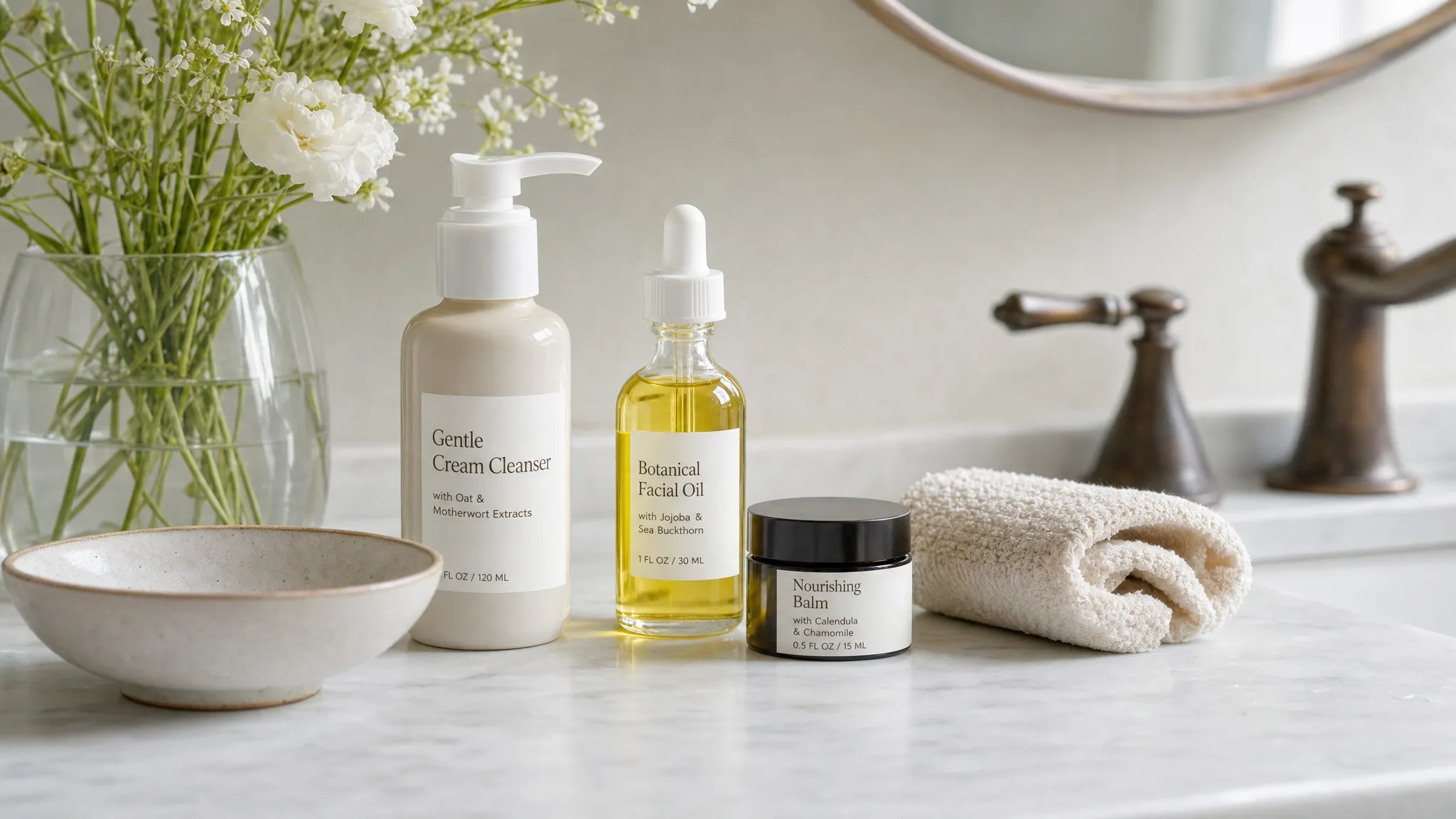
Morning vs. evening routine at a glance
A basic daily routine becomes easier when you understand the purpose of each step. Think of morning as protection and evening as reset.
| Routine step | Morning purpose | Evening purpose |
|---|---|---|
| Cleanse | Refresh skin or remove overnight oil | Remove sunscreen, makeup, sweat, and pollution |
| Hydrate | Keep skin comfortable through the day | Replenish after cleansing |
| Moisturize | Support the barrier under sunscreen | Reduce overnight dryness and tightness |
| Protect | Use sunscreen during daylight | Not needed unless directed by a specific product |
| Treat | Optional, depending on product and tolerance | Often best for exfoliants, retinoids, or targeted care |
You do not need every possible step. You need the right steps, in the right order, repeated consistently.
How to choose facial skin care products wisely
Product labels can be confusing. Terms like natural, organic, clean, vegan, cruelty-free, non-toxic, and hypoallergenic are often used in different ways, and not all of them are regulated equally.
A practical approach is to look beyond the front of the bottle. Read the ingredient list, consider the texture, and think about your skin’s tolerance. For people who want a more botanical, minimalist routine, Baby le Bébé’s apothecary approach centers on natural formulations, organic ingredients, cruelty-free values, and products made without synthetics, preservatives, petroleum, or fillers.
When comparing products, focus on these questions:
- Does this product fit the step I actually need, such as cleansing, moisturizing, or sealing?
- Is the ingredient list compatible with my skin’s sensitivities?
- Does the texture suit my skin type and climate?
- Am I adding this product for a clear reason, or just because it is trending?
- Can I patch test it before applying it all over my face?
If you are specifically trying to avoid synthetic irritants and simplify your ingredient choices, this guide to a non-toxic skincare routine offers a helpful framework.
Common mistakes that make a routine less effective
Even a good routine can become irritating if the habits around it are too harsh. The most common issues are usually simple to correct.
Over-cleansing is one of the biggest. Washing too often or using a cleanser that leaves the face tight can weaken the barrier. If your skin feels dry immediately after cleansing, switch to a gentler formula, use less product, or cleanse only once in the morning.
Another common mistake is using too many active ingredients at the same time. A brightening serum, exfoliating toner, retinoid, and acne treatment may all sound useful, but together they can lead to stinging, peeling, and redness. More activity does not always mean better results.
Skipping moisturizer because your skin is oily can also backfire. Oil and water are not the same. Oily skin can still be dehydrated, and a light moisturizer may help it feel more balanced.
Finally, changing products too frequently makes it hard to know what works. Give a basic routine several weeks before judging it, unless a product causes burning, swelling, hives, or persistent irritation.
How to adjust your routine by season
Your facial skin care routine should be steady, but not rigid. Seasonal changes can affect how much cleansing, hydration, and occlusion your skin needs.
In winter, cold air and indoor heat can make skin feel dry and tight. You may need a creamier cleanser, a richer moisturizer, or a few drops of facial oil over damp skin. Wind exposure can also make balm textures feel especially comforting.
In summer, sweat, sunscreen, and humidity may call for a more thorough evening cleanse and lighter daytime layers. You may still need moisturizer, but the texture can change. A heavy layer that feels perfect in January may feel too occlusive in July.
During transitional seasons, pay attention to your cheeks, lips, and around the nose. These areas often show dryness first. You can apply richer products only to those spots instead of changing your entire routine.
Patch testing: the basic safety step many people skip
Patch testing is especially important if your skin is sensitive, reactive, acne-prone, or recovering from irritation. It is also useful when trying concentrated botanical products, essential oil-containing formulas, exfoliants, or anything new to your routine.
Apply a small amount of product to a discreet area, such as the side of the neck or behind the ear. Watch for redness, itching, burning, bumps, or swelling over the next day or two. If your skin reacts, do not apply it to your face.
A patch test cannot guarantee that a product will work perfectly everywhere, but it can help reduce the risk of a full-face reaction.
What “healthy skin” really looks like
Healthy skin is not poreless, perfectly matte, or permanently glowing. Real skin has texture, pores, expression lines, occasional blemishes, and changes from day to day.
A healthy routine should help your skin feel more comfortable and predictable. Signs that your routine is supporting your skin include less tightness after cleansing, fewer episodes of stinging, smoother makeup application if you wear makeup, and a more balanced feel throughout the day.
If you have persistent acne, rosacea, eczema, sudden rashes, painful cysts, or unexplained changes in moles or pigmentation, it is wise to speak with a board-certified dermatologist. Daily skin care can support the skin, but it is not a substitute for medical care when symptoms need diagnosis or treatment.
Frequently Asked Questions
What are the basic steps in facial skin care? The core steps are gentle cleansing, hydration, moisturizing, and daily sunscreen in the morning. At night, cleanse to remove the day, then hydrate and moisturize. Treatments are optional and should be added slowly.
Should I wash my face twice a day? It depends on your skin. Many people do well cleansing morning and night, but dry or sensitive skin may prefer a morning water rinse and a proper cleanse in the evening.
Can I use facial oil instead of moisturizer? Facial oil can help soften skin and seal in moisture, but it does not hydrate on its own. For best results, apply it over damp skin or over a hydrating layer.
How long does it take to see results from a new routine? Comfort and reduced tightness may improve quickly, but visible changes often take several weeks. Introduce products one at a time so you can tell what is helping.
Is natural facial skin care good for sensitive skin? It can be, especially when formulas are simple and barrier-friendly. However, natural ingredients can still cause reactions for some people, so patch testing is important.
Start with less, then listen to your skin
The best facial skin care routine is not the longest one. It is the one you can repeat comfortably, with products that respect your skin barrier and fit your real life.
Start with the essentials: a gentle cleanse, thoughtful hydration, moisture where you need it, and daily sun protection. From there, add only what serves your skin.
If you are drawn to natural, botanical, cruelty-free care, explore the curated apothecary at Baby le Bébé, where simple daily rituals meet luxurious, feel-good ingredients.


0 comments