


A non-toxic skincare routine is all about choosing products made with pure, plant-derived ingredients and consciously avoiding the synthetic chemicals that can harm your skin and body. It’s a decision to nourish your skin with gentle, effective formulas rather than stripping it with harsh, potentially disruptive compounds. This approach works with your body’s natural functions to build long-term skin health, not against them.
What a Non-Toxic Skincare Routine Really Means
Switching to a non-toxic routine is more than just a trend; it's a fundamental shift in how you care for your skin's well-being. It means stepping away from complicated, multi-step regimens filled with synthetic fillers and fragrances and embracing a simpler, more intentional practice. The whole idea is to support your skin's natural barrier, not fight it.
This philosophy is built on transparency and knowing your ingredients. Instead of just trusting marketing claims, you learn to recognize what truly benefits your skin. Brands like Baby le Bébé are at the forefront of this movement, focusing on beautiful botanical actives to craft formulas that are both safe and results-driven—without ever relying on petroleum or unnecessary synthetics.
The Principles of Clean Beauty
At its heart, a non-toxic skincare routine is guided by a few core principles. Think of them as a filter to help you cut through the noise and make choices that align with your skin’s health and your own values.
- Ingredient Purity: Choosing products with recognizable, plant-based ingredients. Think jojoba oil and calendula extract instead of polyethylene glycol.
- Supporting Skin Function: Using formulas that hydrate, nourish, and protect the skin's lipid barrier—the gatekeeper responsible for retaining moisture and keeping irritants out.
- Avoiding Harmful Additives: Actively eliminating known irritants and potentially toxic chemicals like parabens, sulfates, phthalates, and artificial fragrances from your daily ritual.
- Less is More: Often called 'skinimalism,' this principle reminds us that using fewer, higher-quality products is often far more effective than a cabinet overflowing with specialized treatments.
This isn't just a niche movement; it's a massive shift in consumer awareness, and the numbers prove it. The global natural skincare market is projected to jump from USD 8.5 billion in 2025 to an incredible USD 16.0 billion by 2035. This boom is driven by a growing understanding of the risks tied to synthetic chemicals, with a 2021 survey showing that over 34% of U.S. consumers now actively prefer organic options.
A truly non-toxic routine isn't about perfection; it's about progress. It’s the daily practice of choosing what feels good for your skin and the earth, building a ritual that calms your mind as much as it cares for your complexion.
Making the Conscious Switch
Embracing this approach means becoming a more informed consumer. It’s about internalizing the simple truth that what you put on your skin is absorbed into your body. This is exactly why brands that prioritize organic ingredients and transparent labeling are becoming so essential. They offer the peace of mind that comes from knowing your skincare is genuinely clean.
The beauty of a non-toxic routine lies in its inherent gentleness, making it a perfect fit for all skin types—especially sensitive or reactive skin. By eliminating the common triggers found in conventional products, you dramatically reduce the risk of inflammation, redness, and irritation.
Ultimately, building your non-toxic skincare routine is a journey back to basics, where simple, powerful ingredients from nature deliver calm, resilient, and glowing skin. You can learn more about why it's worth making the switch to organic and natural skincare in our detailed guide.
How to Read Labels and Spot Hidden Toxins
Looking at the back of a skincare bottle can feel like trying to decipher a secret code. But once you know what to look for, you get to choose what really nourishes your skin. Building a non-toxic skincare routine starts right here, with becoming a confident label reader. It's much simpler than you think.
The goal isn't to memorize every single chemical compound. It's about recognizing the most common offenders that can disrupt your skin's health. This one skill changes everything—you're no longer just a consumer, but an advocate for your own well-being.
The Big Four Ingredients to Avoid
When you first start scanning labels, just focus on spotting the "big four." These are synthetic additives you’ll find in countless conventional products, and they're often linked to irritation, dryness, and other skin issues. Getting these out of your routine is a huge first step.
- Parabens (e.g., Methylparaben, Propylparaben): These are preservatives designed to stop mold and bacteria, extending a product's shelf life. The problem? They are known endocrine disruptors, which means they can mimic estrogen and potentially interfere with your hormonal balance.
- Sulfates (e.g., Sodium Lauryl Sulfate, Sodium Laureth Sulfate): Found in most cleansers that foam up, sulfates are harsh detergents. That satisfying lather comes at a cost—it strips your skin of its natural, protective oils, leaving it feeling tight, dry, and irritated. This is especially true for sensitive skin types.
- Phthalates (e.g., DBP, DEP): These chemicals are used to make fragrances last longer. Like parabens, they’re also considered endocrine disruptors. The tricky part is they’re often hidden under the vague term "fragrance" or "parfum" on the ingredient list.
- Synthetic Fragrances: This one little word—"fragrance" or "parfum"—can legally hide a cocktail of hundreds of undisclosed chemicals. Many of them are common allergens and irritants. Choosing products scented only with pure essential oils (or none at all) is a much safer bet.
People are catching on. The global natural and organic personal care market is projected to hit US$ 65.2 billion by 2033, and it’s driven by health-conscious people just like you. A 2021 survey even found that 34% of U.S. consumers now actively seek out organic products specifically to avoid chemicals like these.
Understanding Certifications and Claims
Beyond the ingredient list, you’ll see symbols and logos meant to build trust. But not all of them are created equal. Knowing what these certifications actually mean is the key to making truly informed choices.
Key Takeaway: Certifications are your shortcut to trust. They provide third-party validation that a brand’s claims about being organic, cruelty-free, or truly natural are legitimate and not just clever marketing.
- USDA Organic: This is one of the strictest certifications out there. If you see this seal, it means at least 95% of the product's ingredients are certified organic, grown without synthetic pesticides, fertilizers, or GMOs.
- ECOCERT: A globally recognized certification for organic and natural cosmetics. It ensures products are made with environmentally friendly practices and a high percentage of natural and organic ingredients.
- Leaping Bunny (Cruelty-Free): This symbol is your guarantee that no new animal testing was used at any stage of product development—not by the company, its labs, or its suppliers.
- Vegan: This simply means a product contains no animal-derived ingredients. That includes common ones like honey, beeswax, or lanolin.
Real-World Label Sleuthing
Let's put this into practice. Imagine you're in an aisle comparing two body moisturizers.
One lists "fragrance" as an ingredient, while the other lists "Lavandula Angustifolia (Lavender) Oil." The first is a red flag for hidden phthalates and mystery chemicals. The second transparently tells you its natural scent source. Simple, right?
Likewise, a product might scream "natural" on the front, but flip it over and you see Sodium Laureth Sulfate high on the ingredient list. A truly non-toxic alternative, like a nourishing body oil, would feature recognizable, plant-based oils as its foundation.
Understanding these small but critical distinctions is how you build a routine that truly supports your skin. For inspiration, check out our guide on finding the best non-toxic body oil for your needs.
Building Your Daily AM and PM Skincare Rituals
Alright, this is where all the label-reading and ingredient-vetting pays off. Creating a daily ritual isn't about following a rigid, ten-step plan; it’s about listening to your skin and understanding what it needs at different times of the day.
A truly effective non-toxic routine is built on four core pillars: Cleanse, Hydrate, Nourish, and Protect. Your morning and evening rituals will lean on these pillars differently, each with a distinct goal.
Think of it this way: your morning routine is for gentle prep and defense against everything the day throws at you. Your evening routine, on the other hand, is all about deep cleansing, repair, and replenishment while your body is in its natural restorative state. You’re setting your skin up for success in the AM and helping it recover and regenerate in the PM.
Designing Your Morning Ritual
Your morning routine should be simple, effective, and focused on protection. You don’t need a harsh, deep cleanse first thing—your skin has been resting all night. The goal is to gently refresh your complexion, infuse it with antioxidants, and shield it from UV rays and pollution.
- Gentle Cleanse: A simple splash of cool water is often enough, especially for dry or sensitive skin, as it preserves your natural oils. If you have oily skin, a light gel or cream cleanser can help remove any excess sebum that built up overnight.
- Hydrate and Nourish: This is where you layer in moisture. A hydrating toner or floral water can balance your skin's pH. Follow that with a lightweight serum rich in antioxidants like Vitamin C, and finish with a moisturizer suited to your skin type to lock it all in.
- Protect: This is the most critical morning step and your non-negotiable shield against premature aging. Apply a broad-spectrum mineral sunscreen with at least SPF 30. Look for zinc oxide or titanium dioxide on the ingredient list.
This straightforward approach preps your skin without stripping its essential moisture barrier, ensuring it stays calm and balanced all day long.
Crafting Your Evening Ritual
Nighttime is when your skin does its most important work—repairing cellular damage and regenerating. Your evening routine should support this natural process by first clearing away the day's grime, then delivering potent, nourishing ingredients for your skin to absorb while you sleep.
This is the perfect time to bring in richer textures and treatment-focused products. The key is to thoroughly cleanse away makeup, sunscreen, and pollutants so your reparative products can actually penetrate and do their job.
This is where a double cleanse really shines. Start with an oil-based cleanser, like our Baby le Bébé Rinse-Away Oil Cleanser, to dissolve makeup and sebum. Follow it with a gentle cream or gel cleanser to wash everything away, leaving your skin perfectly prepped for what comes next.
Your evening routine is an opportunity to truly connect with your skin. Pay attention to how it feels. Does it feel tight? It might need more hydration. A little dull? Perhaps it’s time for a gentle exfoliating treatment.
After cleansing, you can apply targeted serums or treatments. This is also the ideal time to introduce a facial oil—a powerhouse in any non-toxic routine. A good oil can seal in moisture, deliver essential fatty acids, and support your skin’s barrier function. If you’re new to this step, you can learn more about how to use facial oil correctly for the best results. Finish with a nourishing balm or a richer night cream to seal everything in.
The infographic below shows the simple process of checking labels to make sure every product you use is genuinely clean.
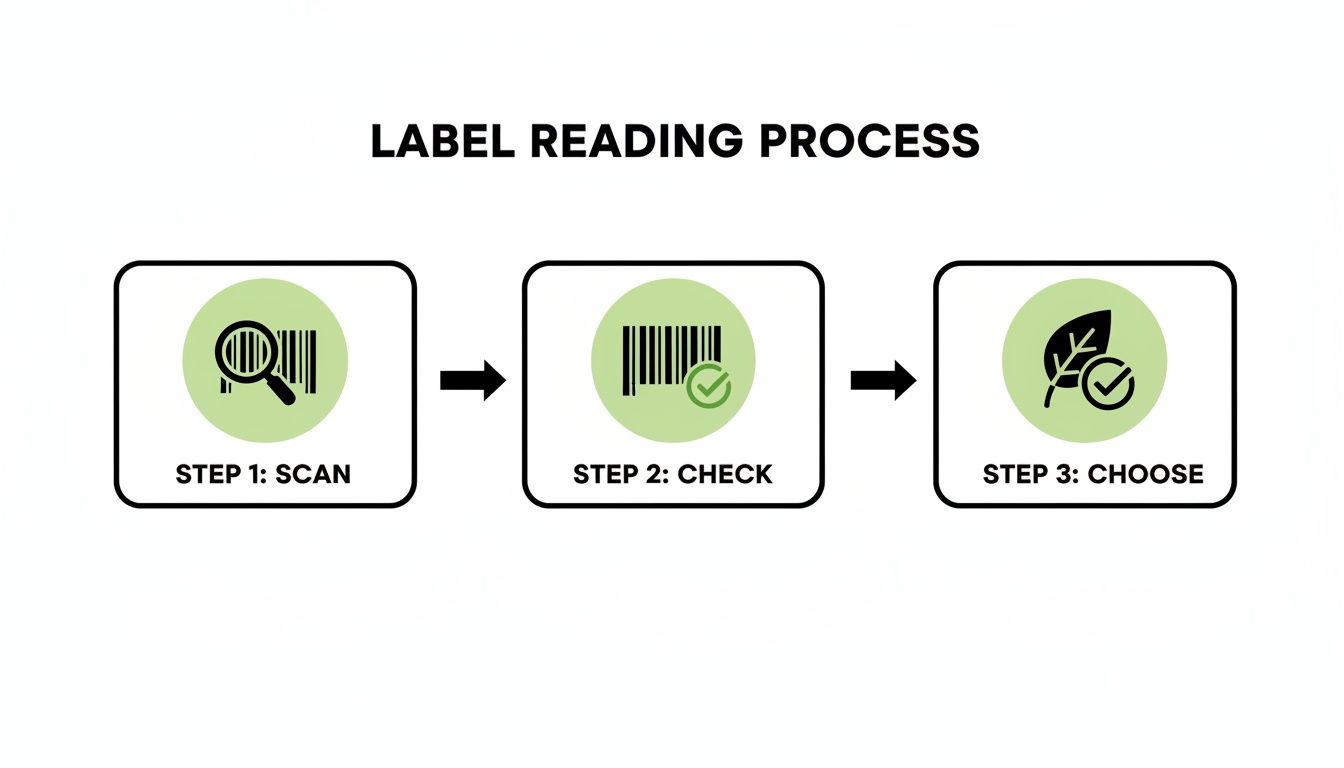
This three-step method—scan, check, and choose—is a great way to confidently pick products for your daily rituals.
Sample AM/PM Non-Toxic Routines by Skin Type
A successful non-toxic skincare routine is never one-size-fits-all. While the framework of cleansing, hydrating, and nourishing remains the same, the specific products you choose should cater to your skin's unique characteristics.
The table below offers a starting point, showing how you can tailor your AM and PM rituals for dry, oily, or sensitive skin.
| Routine Step | Dry Skin Recommendation | Oily Skin Recommendation | Sensitive Skin Recommendation |
|---|---|---|---|
| AM Cleanse | Splash with cool water or use a creamy, hydrating cleanser. | Gentle gel or foaming cleanser to remove excess oil. | Cool water rinse or a minimal, fragrance-free cleanser. |
| AM Hydrate & Nourish | Hydrating toner, hyaluronic acid serum, and a rich moisturizer. | Lightweight, water-based serum and a non-comedogenic lotion. | Calming floral water (rose or chamomile) and a simple, soothing moisturizer. |
| AM Protect | Mineral SPF 30+ with moisturizing properties. | Oil-free or matte-finish mineral SPF 30+. | Mineral SPF 30+ formulated for sensitive skin (zinc oxide is best). |
| PM Cleanse | Double cleanse: Start with an oil cleanser, follow with a cream cleanser. | Double cleanse: Oil cleanser followed by a clarifying gel cleanser. | Double cleanse: Gentle oil cleanser followed by a minimal cream cleanser. |
| PM Treatment | Hydrating serum followed by a nourishing facial oil or balm. | A balancing serum (like niacinamide) and a lightweight oil like jojoba. | A simple, calming serum. Patch-test any active ingredients. |
| PM Moisturize | Rich night cream or a sealing balm like our Silking Balm. | A light, non-comedogenic lotion or gel-cream. | A fragrance-free, barrier-repairing cream with minimal ingredients. |
Remember, these are just templates. The best routine is the one that makes your skin feel balanced, comfortable, and healthy. Don't be afraid to adjust based on the season, your environment, or how your skin is feeling on any given day.
How to Transition to a Clean Routine Without the Waste
The idea of a clean slate can be so appealing. You imagine tossing out all your old skincare and starting fresh with beautiful, non toxic skincare routine essentials. But in reality? That approach is often unrealistic, expensive, and incredibly wasteful.
A true commitment to clean beauty shouldn't start by filling up a landfill. Instead, think of it as a gradual, mindful transition—a process that’s kinder to your wallet, gentler on your skin, and far more sustainable in the long run.
The One-In, One-Out Method
This is the simplest, most effective way to begin. Instead of a massive overhaul, just wait until a product runs out. When your cleanser is empty, replace it with a clean one. Finished your moisturizer? Time to find a non-toxic alternative. That’s it.
This one-in, one-out strategy removes all the pressure. It lets you research each new product thoughtfully and allows your skin to adjust to new formulas one at a time, minimizing the chance of surprise reactions or breakouts. Your routine evolves naturally.
Prioritizing Your First Swaps
So, where should you begin? It’s all about impact. Start with the products that stay on your skin the longest, since those are the ones your body absorbs the most.
- Leave-On Products: Your moisturizer, serum, or facial oil sits on your skin all day or all night. Swapping these first makes the biggest immediate difference in reducing your exposure to unwanted synthetics. A nourishing formula like the Baby le Bébé Silking Balm is the perfect replacement for a conventional night cream or heavy moisturizer.
- Cleansers: What you wash your face with matters. Many conventional cleansers use harsh sulfates that strip your skin's protective barrier, leading to that tight, dry, irritated feeling. Switching to a gentle, oil-based cleanser can help restore balance from the very first step.
- Body Moisturizers: Your skin is your largest organ, after all. The lotions and oils you smooth over your entire body are prime candidates for an early, impactful swap to a cleaner formula.
Don’t stress about the occasional face mask or spot treatment right away. Focus on systematically replacing your daily essentials. That’s how you’ll see and feel the biggest change.
The Importance of Patch Testing
Even the most natural, gentle products can cause a reaction if your skin isn’t used to a particular botanical. A patch test is a simple, non-negotiable step that can save you from the headache of a full-face irritation.
Here’s the right way to do it:
- Apply a tiny amount of the new product to a discreet patch of skin—the inside of your wrist or just behind your ear are perfect spots.
- Wait a full 24 hours. Keep an eye out for any redness, itchiness, or irritation.
- If your skin is calm and happy after a day, you can feel confident welcoming it into your routine.
Storing Your Preservative-Free Products
Many truly non-toxic products skip the strong synthetic preservatives found in mass-market skincare. This is wonderful for your skin, but it does mean you need to be a little more mindful about storage to keep them fresh and potent.
The best practice is to store your products in a cool, dark place, away from direct sunlight and the steam from your shower. A bedroom cabinet or drawer is often a better choice than a bathroom counter.
Always make sure to tighten the caps and lids securely after each use. This simple habit limits air exposure, which can degrade those beautiful, delicate botanical ingredients and ensures you get the full benefit from every last drop.
Troubleshooting Your New Skincare Journey
Making the switch to a non-toxic skincare routine is an exciting move towards healthier skin, but let’s be honest—it isn't always a perfectly smooth ride. Just like your body adjusts to a cleaner diet, your skin can go through an initial “what is happening?” phase. Understanding what’s normal, and what’s not, is the key to staying the course and getting that clear, balanced glow you’re after.
Even with the purest, most gentle ingredients, your skin might react in ways you don't expect at first. This isn't a sign that clean beauty isn’t for you. More often than not, it's just your skin recalibrating after years of dealing with synthetic chemicals, harsh detergents, and preservatives.
Is It Purging or a Reaction?
One of the most common worries is a sudden breakout after starting new products. The big question is always: is my skin "purging" or is this a genuine allergic reaction? Knowing how to tell the difference will help you decide whether to push through or pull back.
-
Skin Purging: This is a temporary flare-up of breakouts that can happen when you start using a product that speeds up skin cell turnover. It’s basically bringing all the underlying gunk to the surface, but faster than usual. Purging typically happens in your usual breakout spots and should clear up within one skin cycle—about 28 days.
-
An Allergic Reaction: This is your skin waving a red flag, telling you it dislikes a specific ingredient. Reactions often look like redness, persistent itching, rashes, or tiny bumps in areas where you don't normally break out. If you ever feel burning or itching, stop using the product immediately.
It's so important to listen to your skin's signals. A purge is a temporary detox that ultimately leads to clearer skin. A reaction, however, is a clear sign to stop and reassess what you're using.
Adjusting to Your Skin's Needs
Your skin isn't static. Its needs change with the seasons, your stress levels, and even your hormones. A product that felt like a dream in the dead of winter might feel too heavy in summer humidity. This is where you get to become your own skin expert, making small tweaks to keep your routine effective.
If a moisturizer feels too rich, try using just a tiny bit or switching to a lighter lotion for daytime. On the flip side, if your skin feels tight or dry, it might be asking for an extra layer of nourishment, like a facial oil or a soothing balm.
For example, our Silking Balm is a rich, protective layer that’s perfect for dry winter nights, but it can also be used as a spot treatment on dry patches during warmer months.
Embrace Skinimalism When in Doubt
Sometimes, the best solution is simply to do less. If your skin feels overwhelmed, irritated, or just plain confused, pare your routine back to the absolute basics. This idea, often called 'skinimalism,' gives your skin's natural barrier a chance to reset and recover.
Try a simple two-step process for a few days:
- Cleanse: Use a gentle oil cleanser to melt away impurities without stripping your skin.
- Soothe: Follow up with a minimal, calming balm to hydrate and protect.
This minimalist approach can be incredibly effective. It removes potential irritants and gives your skin the space it needs to find its equilibrium. By simplifying, you can often pinpoint what your skin truly needs, building back your non toxic skincare routine with intention and confidence.
Your Top Non-Toxic Skincare Questions, Answered
Making the switch to non-toxic skincare is a journey, and it’s totally normal for a few questions to pop up along the way. As you start swapping out old products and getting to know new ingredients, a little guidance can make all the difference.
Think of this as your quick-reference guide for the most common queries we hear. It’s here to turn any confusion into confidence, so your new routine feels empowering, not overwhelming.
How Long Does My Skin Need to Adjust?
Patience is probably the most important ingredient in a new non-toxic skincare routine. Your skin works in cycles, and it typically needs about 28 days—one full skin cell turnover—to really acclimate to a new set of formulas.
During this time, you might notice a few temporary breakouts as your skin detoxifies from lingering synthetic ingredients. This is often called "purging," and it’s a good sign that your skin is clearing out congestion from deep within. However, if you experience itching, redness, or a burning sensation, that’s a reaction, not a purge. In that case, it’s best to stop using the product.
Are "Natural" and "Organic" the Same Thing?
This is one of the most common points of confusion, and the short answer is no, they aren’t the same. Understanding the difference is key to making truly informed choices for your skin.
- Natural: This term generally means ingredients are derived from nature. The problem is, it’s not regulated, so brands can use it pretty loosely in their marketing.
- Organic: This is a legally regulated term. For a product to be certified organic by a body like the USDA, its ingredients have to be grown and processed without synthetic pesticides, fertilizers, or GMOs.
Always look for official certification seals on the packaging. It’s your best guarantee that a product’s claims are legitimate and that it meets strict standards for purity and sourcing.
When you choose a certified organic product, you're not just getting a clean formula; you're supporting a system of agriculture that is better for your skin and for the planet.
Can I Mix Non-Toxic and Conventional Products?
Absolutely—in fact, it’s often the most practical way to start. There's no harm in using a clean, botanical face oil alongside your go-to conventional sunscreen, for example. The goal is a gradual, sustainable transition, not an all-or-nothing approach that leads to waste.
A great strategy is to start by swapping out the products that stay on your skin the longest, like your daily moisturizer, body lotion, or serum. This move gives you the biggest immediate impact by cutting down your exposure to synthetic chemicals. As you use up your other products, you can simply replace them with cleaner alternatives. If you're looking for new ideas, the insights from trusted skin care influencers can be a great place to discover new brands and products.
Is a Non-Toxic Routine More Expensive?
While some high-quality, certified organic ingredients can come with a higher price tag, a non-toxic routine isn't automatically more expensive. Over time, it can actually save you money.
Many wonderful and affordable clean beauty brands are now widely available. Even better, the philosophy of "skinimalism"—using fewer, more effective, multi-purpose products—is at the heart of many non-toxic routines. Instead of a complicated 10-step regimen, you might find that a simple cleanser, a nourishing oil, and a protective balm are all your skin truly needs to thrive. This intentional approach means you buy less, which is kinder to your budget in the long run.
Ready to simplify your ritual with truly clean, botanical skincare? The Baby le Bébé collection is crafted with 100% natural and 99% organic ingredients to bring calm and resilience to your skin. Discover our gentle, effective formulas and build your own non-toxic routine at https://www.babylebebe.com.


0 comments