

Trying to find the right gentle cleanser for sensitive skin can feel like an impossible task. It’s an exhausting cycle of trial and error, reading promising labels only to end up with more redness and irritation than you started with. But what if the answer isn't another "miracle" product? What if it's about learning a new way to care for your skin?
Your Journey to Calm, Healthy Skin
If you’re tired of the constant flare-ups and that tight, uncomfortable feeling, you’re not alone. What was once a niche concern has become a global conversation. The numbers don't lie—our collective skin is calling for gentler solutions.
The global face wash market is set to hit USD 32.55 billion by 2030, but the real story is in the details. The sensitive skin category is growing at a faster rate of 9.72%. This boom is driven by a massive 71% of consumers worldwide who now say they have sensitive skin, a trend accelerated by environmental stressors like pollution. As a result, the demand for cleansers that are both hypoallergenic and barrier-supportive has never been higher. You can explore more on this market shift at Mordor Intelligence.
This guide is designed to cut through that noise. Instead of viewing sensitive skin as a problem, we invite you to see it as a dialogue—a chance to finally listen to what your skin is asking for.
Redefining Your Approach to Cleansing
Think of your skin barrier less like a wall and more like a delicate ecosystem. A harsh cleanser barges in, disrupting that fragile balance and leaving your skin exposed and vulnerable. A truly gentle cleanser, on the other hand, works with that ecosystem. Its only job is to lift away impurities without stripping the essential lipids and moisture that keep your skin calm and resilient.
The goal is to stop "fighting" your skin and start nurturing it. This means:
- Understanding the Basics: Learning what "gentle" really means, from pH balance to the types of cleansing agents that respect your skin.
- Embracing Botanical Allies: Discovering how calming, plant-derived ingredients can soothe and support your skin’s natural strength.
- Mastering the Right Technique: Realizing that how you wash your face is just as important as what you use to wash it.
This is about more than just finding a new cleanser; it's about building confidence. It's about turning your daily routine from a source of anxiety into a peaceful ritual that leaves your skin feeling comfortable, hydrated, and genuinely healthy.
Throughout this guide, we'll break down these ideas into simple, actionable steps. We'll explore everything from decoding ingredient labels to choosing the right type of cleanser for your skin's unique needs. By the end, you'll have the knowledge to make informed choices, finally ending the guesswork and starting a real journey toward lasting skin wellness.
Understanding What Makes a Cleanser Gentle
The word "gentle" is everywhere in skincare, but what does it actually mean for sensitive skin?
Think of it this way: you wouldn't wash a delicate silk blouse with a harsh industrial degreaser. It would ruin the fabric. Your skin is just as delicate. A harsh cleanser strips it, but a truly gentle cleanser for sensitive skin respects its fragile structure, cleaning it without causing collateral damage.
This all comes down to two key ideas: maintaining the right pH balance and using mild cleansing agents (called surfactants). Getting these right is the difference between a cleanser that leaves your skin feeling tight and irritated versus one that feels calm, soft, and comfortable.
A great cleanser cleans without compromising your skin's first line of defense: the acid mantle.
The Importance of Skin pH Balance
Your skin is naturally acidic, with an average pH somewhere between 4.7 and 5.75. This acidity creates a protective film called the acid mantle, which is responsible for keeping moisture in and harmful bacteria out. It’s a critical part of your skin’s microbiome—the community of tiny organisms that helps keep your skin healthy.
When you use a cleanser that’s too alkaline (like many old-school bar soaps), you disrupt this delicate environment. It’s like leaving the front door wide open. The barrier weakens, which can lead to:
- Increased Dryness and Tightness: An alkaline state allows moisture to evaporate from your skin much more easily.
- More Irritation and Redness: The skin becomes more vulnerable to environmental triggers.
- Potential for Breakouts: An imbalanced pH can create an environment where acne-causing bacteria thrive.
A gentle cleanser is pH-balanced, meaning its acidity is similar to your skin's. It works in harmony with your natural state instead of fighting against it. This simple alignment is fundamental for preventing irritation and maintaining a healthy, resilient skin barrier.
Understanding Surfactants: The Cleaning Agents
The second piece of the puzzle is the surfactants. These are the ingredients that do the actual cleaning, binding to oil, dirt, and makeup so they can be rinsed away with water.
But not all surfactants are created equal. Aggressive ones, like Sodium Lauryl Sulfate (SLS), are incredibly effective at cleaning—almost too effective. They’re that industrial degreaser, stripping away not just the day's grime but also your skin’s essential, protective oils. This is what causes that “squeaky clean” feeling, which is actually a cry for help from a compromised barrier.
A gentle cleanser forgoes these harsh agents in favor of milder, often plant-derived alternatives. These modern surfactants create a soft, creamy lather (or sometimes no lather at all) and are designed to lift away impurities without disrupting your skin's natural moisture.
For example, many gentle formulas use surfactants derived from coconut or sugar that are effective yet mild. An oil cleanser takes a different approach entirely, using the "like dissolves like" principle. Nourishing oils bind to the excess oil, makeup, and sunscreen on your skin, melting them away so they can be gently rinsed off. This leaves your skin’s lipid barrier totally intact, ensuring your face is clean but never stripped—a non-negotiable for sensitive skin.
Decoding Cleanser Ingredient Labels
Walking down the skincare aisle can feel overwhelming. The ingredient lists are long, the scientific names are confusing, and it’s hard to know what’s a real benefit versus just good marketing. But learning to read a label is the single most powerful thing you can do to find a gentle cleanser for sensitive skin.
Think of it like learning a new language. At first, the words look unfamiliar, but soon you’ll start recognizing patterns—spotting the heroes that calm your skin and the villains that cause trouble. This knowledge transforms you from a passive consumer into a confident advocate for your skin.
The idea is simple: look for ingredients that soothe, hydrate, and support your skin's natural barrier, while steering clear of anything known to strip, irritate, or disrupt it.
A truly gentle cleanser nails two key things: it respects your skin's natural pH and uses mild cleansing agents that don't cause damage.
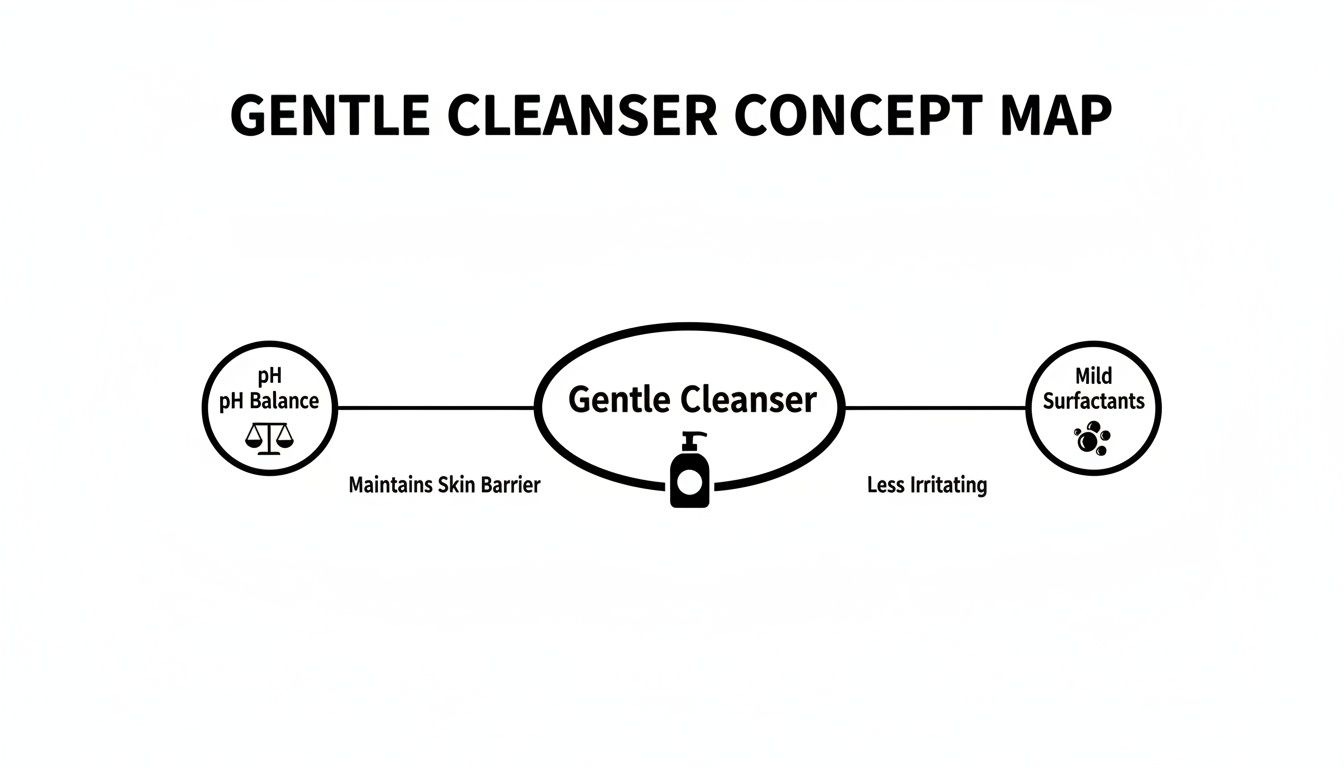
This visual breaks down how both elements have to work together. It’s all about cleaning your skin without compromising its health.
Ingredients to Welcome Into Your Routine
When you scan an ingredient list, look for names that sound like they belong in a garden. These botanicals and plant-derived compounds are often packed with the calming, nourishing properties that sensitive skin craves.
Key Soothing Ingredients:
- Chamomile (Chamomilla Recutita Flower Extract): Famous for its anti-inflammatory properties that help dial down redness and calm irritation.
- Calendula (Calendula Officinalis Flower Extract): A gentle botanical that soothes and supports the skin’s own healing process.
- Green Tea (Camellia Sinensis Leaf Extract): A powerful antioxidant that helps protect skin from daily environmental stressors while calming it.
- Aloe Vera: Delivers a cooling sensation and lightweight hydration, making it perfect for angry, reactive skin.
Beyond these calming extracts, look for nourishing oils that cleanse effectively while replenishing moisture. Jojoba oil is a standout because its structure is remarkably similar to your skin's own sebum. Sunflower and safflower oils are also brilliant choices, rich in fatty acids that help maintain a strong, healthy skin barrier. You can learn more about the efficacy of natural ingredients in our detailed guide to their safety and efficacy.
Common Irritants to Avoid
Just as important as knowing what to look for is knowing what to leave on the shelf. Certain ingredients are notorious for triggering reactions in sensitive skin, even in tiny amounts.
These are the ingredients responsible for that "squeaky clean" feeling—a sensation that actually means your skin's protective barrier has been stripped. A gentle cleanser should leave your skin feeling soft and hydrated, never tight or dry.
Here are the main culprits to watch out for:
- Sulfates (SLS & SLES): Sodium Lauryl Sulfate and Sodium Laureth Sulfate are harsh detergents. They create a big, satisfying lather but strip away your skin’s natural, protective oils.
- Synthetic Fragrance: Often listed just as "Parfum" or "Fragrance," this is one of the most common causes of allergic reactions and irritation.
- Drying Alcohols: While some fatty alcohols are beneficial, avoid SD alcohol, denatured alcohol, and isopropyl alcohol. They can be incredibly drying and irritating.
- Parabens: These are preservatives that, for some people, can cause skin sensitization over time.
Sensitive Skin Ingredient Cheat Sheet
Here's a quick reference guide to help you spot the good from the bad when you're checking labels.
| Seek These Gentle Ingredients | Why They Work For Sensitive Skin | Avoid These Common Irritants | Why They Can Cause Reactions |
|---|---|---|---|
| Chamomile, Calendula, Aloe | Plant-based soothers that calm redness and inflammation. | Sulfates (SLS/SLES) | Harsh detergents that strip the skin's natural moisture barrier. |
| Glycerin, Hyaluronic Acid | Humectants that draw moisture into the skin, keeping it hydrated. | Synthetic Fragrance/Parfum | A leading cause of allergic contact dermatitis and irritation. |
| Natural, non-comedogenic Oils | Gentle oils that dissolve grime without disrupting the skin's lipid layer. | Drying Alcohols | Can cause dryness, tightness, and damage the skin barrier over time. |
| Coco-Glucoside, Decyl Glucoside | Mild, plant-derived surfactants that cleanse without stripping. | Parabens | Preservatives that may trigger sensitivity or allergic reactions for some. |
This isn't just a niche concern anymore—it's a massive shift in the skincare world. Market analysis shows the global Sensitive Skin Solutions Market is projected to more than double, reaching USD 23,901.10 million by 2035. A huge part of this growth is driven by consumers actively seeking out fragrance-free options, which are expected to capture over 57% of the market. It’s clear proof that gentle, barrier-friendly formulas are the future.
Choosing The Right Cleanser Type For Your Skin
Once you know which ingredients your skin loves, the next step is finding the right texture. The world of gentle cleansers is surprisingly diverse, offering everything from silky oils to plush creams. A gentle cleanser for sensitive skin isn't a one-size-fits-all product, and the format you choose can completely change how your skin feels after you wash it.
Think of it this way: the same vegetable can be roasted, steamed, or pureed, and each method creates a totally different experience. The texture of your cleanser works the same way. It determines how the formula interacts with your skin to lift away impurities while keeping your delicate moisture barrier happy and intact.
This growing variety in cleansers isn't just a trend; it's a huge shift in what people want for their skin. The global market for sensitive skin products recently hit USD 42,278 million and is expected to climb to USD 71,028 million by 2032. It's clear that more and more of us are moving away from harsh, stripping formulas and embracing routines that support our skin barrier.
Navigating all the options—oils, balms, creams, gels—can feel a bit overwhelming. Let’s break down what each type does best, so you can find the perfect match for your sensitive skin.
Cleanser Types For Sensitive Skin Compared
Choosing the right format is all about matching the cleanser’s texture and cleansing power to your specific skin needs—whether that’s melting away makeup or just getting a simple, refreshing wash.
| Cleanser Type | Best For | Pros for Sensitive Skin | Cons for Sensitive Skin |
|---|---|---|---|
| Oil & Balm | Dry, mature, or makeup-wearing skin | Melts away SPF & makeup without scrubbing. Deeply nourishing and won't strip natural oils. | Can feel heavy for some and requires thorough rinsing to avoid residue. |
| Cream | Dry, reactive, or easily dehydrated skin | Hydrating, lotion-like feel. Soothes and cleanses simultaneously. Low-foaming and very gentle. | May not provide a "deep clean" feeling for those with oilier skin. |
| Gel | Combination, oily, or blemish-prone sensitive skin | Offers a refreshing, clean feel. Can effectively remove excess oil without over-drying. | Must be sulfate-free. Poorly formulated gels can be very stripping and irritating. |
Ultimately, the best choice is the one your skin feels calmest and most comfortable with after you rinse it off.
H3: Oil and Balm Cleansers
Oil and balm cleansers are true heroes for sensitive skin, especially if you wear makeup or sunscreen daily. They work on a beautifully simple principle: like dissolves like. The nourishing oils in the cleanser grab onto the oils in your makeup, SPF, and sebum, melting everything away without any need for harsh rubbing.
This approach is incredibly gentle because it respects your skin's natural lipid barrier. Instead of stripping it, an oil cleanse effectively purifies while leaving skin feeling soft, calm, and hydrated. Many oil cleansers also have minimal ingredient lists, which lowers the risk of a reaction. Our guide on the best organic face cleanser offers some more insight here.
An oil or balm cleanser feels less like a chore and more like a calming ritual. It turns makeup removal into a gentle, soothing moment that truly supports your skin's health.
H3: Cream Cleansers
Cream cleansers are a classic choice for sensitive complexions, and for good reason. Their hydrating, lotion-like texture is usually low-foaming and packed with moisturizing ingredients like glycerin and fatty acids, which clean the skin while depositing hydration right back into it.
This makes them a fantastic option if your skin often feels tight, dry, or irritated after washing. They give you a comforting, purifying cleanse that feels soothing from start to finish. If you love that skin-softening, creamy feel, you might also find some great affordable options among these Tatcha Rice Wash dupes.
H3: Gel Cleansers
Gel cleansers offer that more traditional, refreshing wash, often with a light lather. While some gel formulas can be too harsh for sensitive skin (especially those with sulfates), many modern gels are formulated with mild, plant-derived surfactants and hydrating botanicals.
A well-made gentle gel cleanser can be a great choice for sensitive skin that's also on the combination or acne-prone side. It gives you that lightweight, clean feeling without the risk of stripping your skin. The key is to always check the ingredient list—steer clear of formulas with harsh sulfates or drying alcohols, as they can easily trigger irritation.
How to Properly Cleanse Sensitive Skin
Choosing the right formula is only half the battle. You could have the most beautiful gentle cleanser for sensitive skin, but if your technique is too aggressive, it can still leave your face feeling tight and unhappy. How you wash your face—from the water temperature to the way you dry it—is just as crucial as the product itself.
Think of it like caring for a delicate silk scarf. You wouldn't toss it in a hot wash with harsh detergent. Your sensitive skin requires that same thoughtful, gentle handling to stay calm, clear, and healthy.
Adopting the right method prevents unnecessary irritation and ensures you get all the soothing benefits from your cleanser. Small adjustments here can make a world of difference, dramatically reducing redness, tightness, and reactivity.
Your Step-by-Step Gentle Cleansing Ritual
This simple, five-step process is designed to clean your skin beautifully while protecting its delicate barrier. Following this ritual consistently will help keep your complexion calm, balanced, and comfortable.
-
Start with Clean Hands: Before anything touches your face, wash your hands thoroughly. This simple step prevents transferring dirt and bacteria onto your already-sensitive skin.
-
Use Lukewarm Water: Temperature matters more than you think. Hot water strips the skin of its essential lipids, leading to dryness and irritation, while icy cold water can be a shock to the system. Always use lukewarm water to create a soothing, balanced environment for your skin.
-
Apply with Gentle Motions: Dispense a small amount of cleanser into your damp hands and warm it up. Instead of scrubbing, apply it to your face using gentle, circular massaging motions with your fingertips for about 30 to 60 seconds. This is enough to lift impurities without causing friction or stress.
The goal is to purify, not punish. Vigorous rubbing can disrupt the skin barrier, leading to micro-tears and inflammation. Treat your skin with kindness, and it will respond in kind.
-
Rinse Thoroughly but Gently: Splash your face with lukewarm water until every trace of the cleanser is gone. Pay special attention to your hairline, jaw, and around your nose, as leftover residue can lead to clogged pores or irritation.
-
Pat, Don’t Rub, Dry: This last step is non-negotiable for sensitive skin. Rubbing your face with a towel creates friction that can easily trigger redness and sensitivity. Instead, gently pat your skin dry with a soft, clean towel.
Mastering the Double Cleanse for Sensitive Skin
The idea of washing your face twice might sound like overkill, but a gentle double cleanse can be transformative—especially if you wear makeup or SPF. This method ensures your skin is perfectly clean without ever feeling stripped.
Here’s how it works:
-
First Cleanse (Oil-Based): Start with an oil cleanser to dissolve and lift away oil-based impurities like makeup, sunscreen, and excess sebum. Massage it onto dry skin, then add a little water to emulsify it into a milky liquid before rinsing. For more on this, check out our guide to finding the best oil cleanser for dry skin.
-
Second Cleanse (Water-Based): Follow up with your gentle cream, gel, or balm cleanser. This step removes any remaining water-based debris like sweat and dirt, leaving your skin perfectly clean and prepped for the rest of your routine.
This two-part approach is incredibly effective because each cleanser can do its specific job without having to work overtime, ensuring a deep clean that remains exceptionally gentle.
Building a Complete Sensitive Skin Routine
Finding the right gentle cleanser for sensitive skin is a huge win, but it’s really just the beginning. Think of your cleanser as the foundation of a house—it’s absolutely essential, but it can’t do the whole job on its own. The products you layer on top are the walls and roof, giving your skin the hydration, nourishment, and protection it needs to feel truly comfortable.
A smart routine makes sure that the calm, clean canvas your cleanser creates is immediately followed by soothing, barrier-supporting ingredients. This turns a simple wash into a complete ritual that builds resilient, healthy-looking skin. Each step works with the one before it, creating a system that keeps your skin happy.
The Critical Post-Cleanse Window
Right after you cleanse is when your skin is most open to whatever you apply next. This is the moment to act, locking in moisture before it has a chance to evaporate off your freshly washed skin. If you wait too long, that tight, dehydrated feeling can creep in, undoing all the good your gentle cleanser just did.
The goal is to move quickly—but gently—from cleansing to the next phase of your routine. It’s a simple habit that makes a world of difference in keeping your skin comfortable and hydrated all day.
Your post-cleanse routine isn't just about adding more products. It’s about sealing in the benefits of your wash and making sure your skin barrier stays strong and protected.
Essential Steps After Cleansing
Building out your routine doesn’t have to be complicated. In fact, a few key, high-quality steps will do far more for your skin than a dozen mediocre ones. Here’s a simple framework for what should come after your gentle cleanser.
-
Soothe and Hydrate with a Toner or Mist: Your first layer should be light and hydrating. On still-damp skin, apply an alcohol-free toner or a calming botanical mist. This helps rebalance your skin's pH and gives it an initial wave of moisture, prepping it perfectly for what’s next.
-
Add Targeted Support with a Serum: Serums are concentrated formulas designed to address specific concerns. For sensitive skin, look for serums with ingredients like hyaluronic acid for a dose of hydration, niacinamide to support the skin barrier, or calming botanicals like chamomile and calendula. Gently press it into your skin.
-
Lock It All In with a Moisturizer: This is non-negotiable. A great moisturizer for sensitive skin will be free of fragrance and other common irritants. Instead, it should be packed with barrier-repairing ingredients like ceramides, fatty acids, and nourishing plant butters. This step creates a protective seal, locking in the hydration from the previous steps and shielding your skin from daily stressors.
If you need an extra layer of comfort, especially in a dry climate or during winter, you can finish by gently pressing a few drops of a nourishing face oil over your moisturizer. This final step acts as a soft, occlusive barrier, preventing moisture loss and keeping your skin feeling supple all day long.
A Few Common Questions About Gentle Cleansers
Diving into the world of gentle skincare can feel a bit like learning a new language. You start to get the hang of ingredients and techniques, but then the practical, day-to-day questions pop up. Let's walk through some of the most common ones.
Think of this as your go-to guide for building a cleansing routine that feels truly intuitive and supportive for your sensitive skin.
How Often Should I Wash My Face with a Gentle Cleanser?
For most people with sensitive skin, cleansing twice a day is the perfect rhythm—once in the morning and once at night. Your evening cleanse is non-negotiable. It’s essential for removing makeup, sunscreen, pollution, and the general grime that accumulates on your skin.
The morning cleanse, however, can be more flexible. If you wake up and your skin feels calm and balanced, a simple splash of lukewarm water might be all you need. But if you feel a bit oily or want to rinse away last night’s products, a light morning wash creates a fresh canvas for your daytime routine.
The golden rule? Listen to your skin. If it feels fragile, maybe you skip the morning lather. If it feels a little congested, cleansing twice is probably the way to go.
Can a Gentle Cleanser Actually Remove My Makeup?
Yes, absolutely—but it’s all about the right technique. A gentle cream or gel cleanser can handle light makeup on its own, but it might not be enough for that waterproof mascara or long-wear foundation. This is where double cleansing becomes a game-changer.
- Step 1: Oil Cleanse. Start with an oil or balm cleanser on dry skin. The oil will melt away heavy makeup and SPF without any harsh scrubbing. It’s incredibly effective and surprisingly gentle.
- Step 2: Water-Based Cleanse. Follow up with your regular gentle cleanser. This step washes away any lingering oil and residue, leaving your skin perfectly clean but never stripped.
This two-step ritual is far kinder to your skin’s barrier than trying to get everything off in one aggressive wash.
Will My Skin Still Feel Clean Without a Rich Lather?
Many of us were taught to associate a big, bubbly lather with being clean. But that "squeaky clean" feeling is often a red flag—it means your skin's protective barrier has been stripped of its natural, healthy oils. Those huge bubbles are usually created by sulfates, a major irritant for sensitive skin.
A truly gentle cleanser skips these harsh detergents. It might create a soft, creamy lather or no lather at all. After rinsing, your skin should feel soft, hydrated, and comfortable. Never tight or dry. That feeling of calm balance is the real sign of a good cleanse. It takes a little getting used to, but your skin will thank you for it.
At Baby le Bébé, we believe that a true clean comes from formulas that respect your skin's natural wisdom. Our rinse-away oil cleanser is crafted with nourishing botanicals to dissolve impurities gently, leaving your skin feeling calm and resilient. Discover a more peaceful cleansing ritual.


0 comments