

Calm, happy skin rarely comes from having the most complicated routine. It usually comes from choosing facial products that respect your skin barrier, feel comfortable, and do not force your face to “adapt” to irritation. If your skin often feels tight, flushed, itchy, bumpy, or unpredictable, the goal is not to buy more. The goal is to choose better.
The right facial products should do three things well: cleanse without stripping, hydrate without stinging, and protect the skin’s natural moisture barrier. This guide will help you evaluate products with a calmer, more intentional mindset, especially if you prefer natural, botanical skincare and want a routine that feels gentle rather than aggressive.
Start with your skin’s current mood, not just your skin type
Skin type can be useful, but it does not tell the whole story. “Dry,” “oily,” “combination,” and “sensitive” are broad labels. Your skin’s current condition matters just as much. For example, oily skin can still be dehydrated, and dry skin can still break out if the barrier is stressed.
Before choosing new facial products, look at what your skin is asking for right now. Is it tight after cleansing? Does it flush easily? Do products burn when they used to feel fine? Are you seeing rough patches, flakes, or sudden congestion? These clues help you choose products that support your skin instead of overwhelming it.
| What you notice | What your skin may need | What to avoid for now |
|---|---|---|
| Tightness after washing | Gentler cleansing and more barrier support | Foaming cleansers that leave skin squeaky |
| Redness or stinging | Fewer actives and simpler formulas | Strong acids, retinoids, and heavy fragrance |
| Flaking or rough texture | Moisture, oils, and protective balms | Frequent exfoliation |
| Oily shine with dehydration | Lightweight hydration plus balanced cleansing | Drying alcohols and harsh scrubs |
| Random bumps or congestion | Non-heavy textures and slow product changes | Layering many new products at once |
This approach keeps you from treating every skin concern as a separate emergency. Often, when the barrier is calmer, the rest of the complexion begins to look more even, soft, and comfortable.
Think barrier-first when choosing facial products
Your skin barrier is the outermost protective layer of your skin. It helps hold in water and keep irritants out. When it is compromised, even a beautifully packaged product can sting, and even normal environmental changes can make skin feel reactive.
A barrier-first routine is not boring. It is strategic. It prioritizes products that support comfort, hydration, and resilience before adding anything more intensive. This matters because many common skincare frustrations, including tightness, redness, roughness, and sensitivity, can become worse when the skin is over-cleansed or over-exfoliated.
For calm skin, your core facial products should include:
- A gentle cleanser that removes daily buildup without leaving skin tight
- A hydrating step if your skin feels thirsty or easily dehydrated
- A moisturizer, oil, or balm that helps soften and protect the skin
- Daily sun protection during the day, especially if your skin is prone to redness or discoloration
If you are unsure where to begin, start with the product that touches your skin first: cleanser. A soothing cleanse sets the tone for the rest of your routine. Baby le Bébé’s guide to choosing a gentle cleanser for sensitive skin is a helpful next read if cleansing often leaves your face feeling dry or reactive.
Read the ingredient list like a calm-skin detective
Marketing language can be inspiring, but the ingredient list tells the real story. When choosing facial products, especially natural ones, look for formulas that are transparent and purposeful. A long ingredient list is not automatically bad, and a short one is not automatically good, but every ingredient should seem to have a reason for being there.
Ingredients that often support calm, comfortable skin include plant oils, butters, waxes, aloe, glycerin, oat, calendula, chamomile, and other soothing botanicals. These ingredients can help soften the skin, reduce the feeling of dryness, and support a more comfortable barrier.
At the same time, “natural” does not always mean non-irritating for every person. Essential oils, fragrant botanicals, and certain plant extracts can be lovely for some skin types and too stimulating for others. If your skin is very reactive, choose simpler formulas and introduce aromatic products cautiously.
The American Academy of Dermatology recommends testing skincare products before using them widely, especially if you have sensitive skin. That small step can help you avoid a full-face reaction from an ingredient your skin does not love.
For a deeper look at label reading and ingredient transparency, see Baby le Bébé’s guide on what to look for in non toxic facial products.
Choose texture as carefully as ingredients
Texture can make or break a skincare routine. A product may have beautiful ingredients, but if the texture does not suit your skin or climate, you may not get the comfort you want.
Lightweight lotions and oils can be ideal when skin needs nourishment without heaviness. Creams can be helpful when skin feels dry and needs more cushion. Balms are often useful when the skin feels exposed, wind-chapped, or extra dry, because they create a protective layer that helps reduce moisture loss.
| Product texture | Best suited for | Calm-skin tip |
|---|---|---|
| Gel or light fluid | Dehydrated or combination skin | Use under oil or moisturizer if skin still feels tight |
| Lotion or cream | Normal to dry skin | Look for a comfortable finish, not a greasy film |
| Face oil | Dry, dull, or mature-feeling skin | Press onto damp skin or layer over hydration |
| Balm | Very dry patches or harsh weather | Use a small amount where skin needs extra protection |
| Cream cleanser | Dry or sensitive skin | Remove gently without scrubbing |
Do not be afraid to adjust texture by season. In humid weather, your skin may prefer lighter facial products. In cold, dry, or windy weather, it may need richer oils or balms. Calm skin is not about following one rigid routine forever. It is about responding thoughtfully.
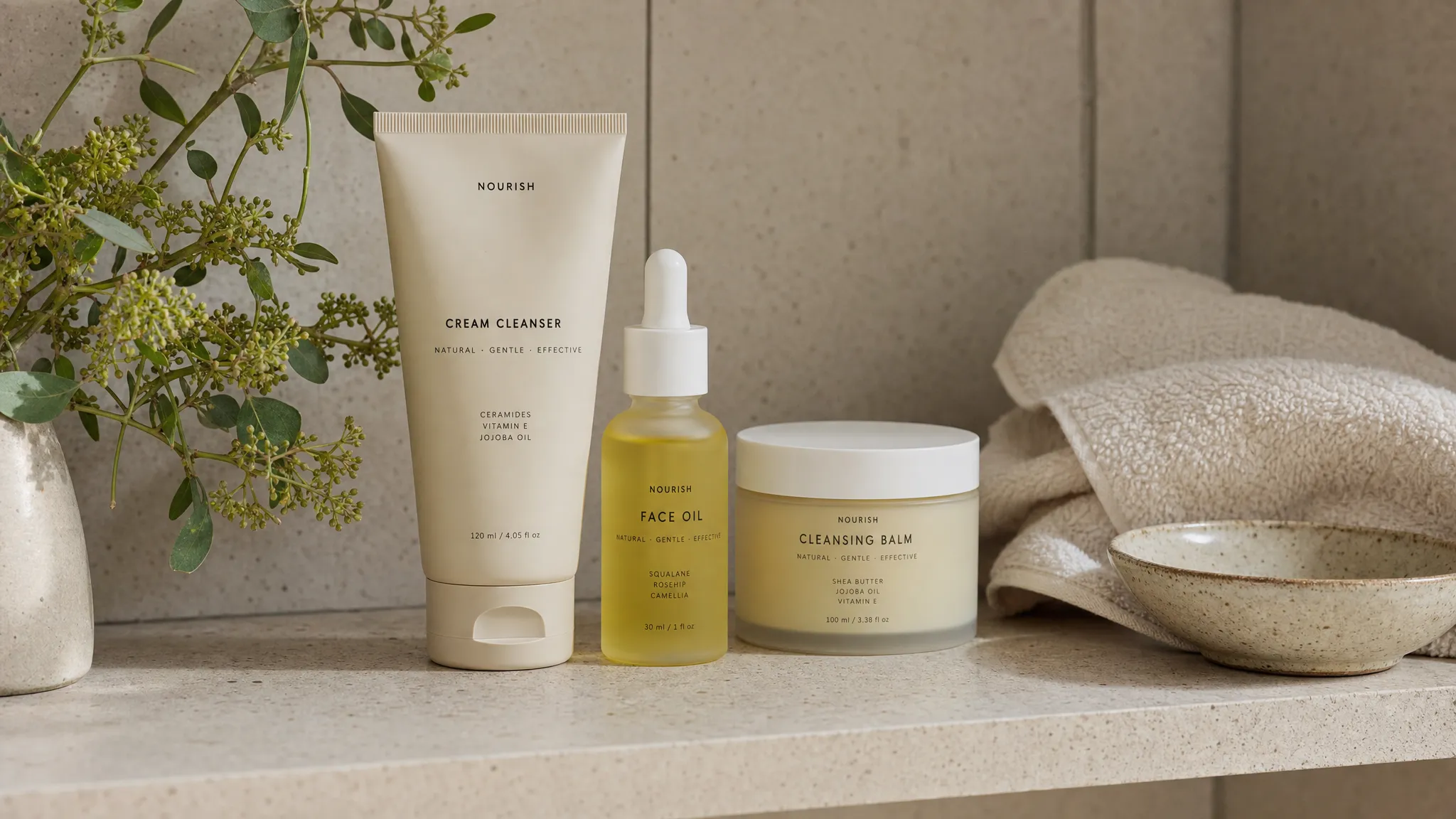
Build a simple routine before adding extras
A calm-skin routine should be easy to repeat. If your shelf is crowded with products you use randomly, it becomes harder to know what is helping and what is causing trouble.
Start with a simple morning and evening rhythm. In the morning, cleanse lightly if needed, hydrate or moisturize, then apply sunscreen. In the evening, cleanse more thoroughly to remove sunscreen, makeup, sweat, and pollution, then apply your nourishing product while skin is still slightly damp.
Once your skin feels steady for a few weeks, you can consider extras. This might include a mask, gentle exfoliant, or targeted treatment. But if your skin is already irritated, wait. Adding more active steps to stressed skin is like turning up the volume in a room that is already too loud.
A minimalist routine does not mean sacrificing luxury. It means choosing facial products that feel beautiful, serve a clear purpose, and fit naturally into your life. Baby le Bébé’s article on natural skin products that keep routines simple explores this philosophy in more detail.
Introduce one new product at a time
This is one of the most underrated skincare rules. If you start a new cleanser, oil, mask, and serum in the same week, you will not know which one helped or which one caused irritation. Introduce one new facial product at a time and give your skin space to respond.
A practical approach is to patch test first, then use the product every other day or a few times a week before making it daily. This is especially important for leave-on products, since they stay in contact with the skin longer than cleansers.
Watch for early signs of mismatch. A slight adjustment period can happen with certain active products, but burning, persistent itching, swelling, rash-like bumps, or worsening redness are signs to stop and reassess. When in doubt, simplify your routine and speak with a dermatologist, especially if symptoms are painful or persistent.
Know which ingredients and habits can disturb calm skin
Sometimes the problem is not one “bad” product. It is the combined effect of too many stimulating choices. A scrub on Monday, a strong exfoliating toner on Tuesday, a retinoid on Wednesday, and a new mask on Thursday can leave the skin feeling raw by the weekend.
If your goal is calm, happy skin, be cautious with:
- Harsh physical scrubs, especially on redness-prone skin
- Strong exfoliating acids used too often
- High-strength retinoids without proper barrier support
- Drying alcohols in leave-on products
- Heavy fragrance when your skin is already reactive
- Very hot water, rough towels, and aggressive cleansing tools
This does not mean every active ingredient is bad. It means your skin needs the right dose, the right timing, and enough support around it. Calm skin thrives when your routine has rhythm rather than intensity.
Match facial products to your real lifestyle
The best skincare routine is one you can actually follow. If you are busy, tired, traveling, parenting, or simply not interested in a ten-step ritual, choose facial products that do more with less. A gentle cleanser, nourishing oil, and protective balm may serve you better than a cabinet full of half-used bottles.
Your environment matters too. Dry indoor heat, cold wind, city pollution, hard water, and frequent sun exposure can all affect how your face feels. If you live in a dry climate or spend time outdoors, a richer balm may become a seasonal essential. If you exercise often, you may need a cleanser that removes sweat without stripping.
Also consider sensory comfort. A product that smells too strong, feels too sticky, or takes too long to absorb may sit unused, even if the formula is excellent. Calm skincare should feel inviting enough that you want to return to it every day.
How to tell if your facial products are working
Good skincare results are not always dramatic at first. For calm skin, the best signs are often subtle. Your face feels less tight after washing. Redness settles more quickly. Makeup, if you wear it, sits more smoothly. Dry patches become less obvious. You stop thinking about your skin so much because it feels comfortable.
Give supportive products time. Hydrating and moisturizing products can feel soothing quickly, but barrier improvement may take consistent care over several weeks. If you change too many things too fast, you may interrupt the progress.
Signs that your routine is moving in the right direction include:
- Skin feels comfortable after cleansing
- Less stinging when applying products
- Fewer dry, flaky, or rough areas
- A softer, more flexible feel
- More predictable skin from week to week
If a product makes your skin feel calmer, softer, and more balanced without creating new irritation, that is valuable. Skincare does not need to be extreme to be effective.
A simple checklist before buying any facial product
Before adding something new to your shelf, pause and ask a few practical questions. This helps you shop with intention instead of reacting to trends.
| Question | Why it matters |
|---|---|
| What role will this product play in my routine? | Prevents duplicate products and clutter |
| Does the ingredient list look transparent? | Helps you avoid vague or unnecessary additives |
| Is the texture right for my skin right now? | Improves comfort and consistency |
| Am I introducing it slowly? | Makes irritation easier to identify |
| Does it support my barrier? | Keeps the routine focused on long-term calm |
If you cannot answer what a product is supposed to do for your skin, you probably do not need it yet. Calm skin often improves when you remove confusion from the routine.
Frequently Asked Questions
How many facial products do I really need? Most people can start with three to four essentials: a gentle cleanser, a moisturizer or face oil, sunscreen for daytime, and a balm or richer product if the skin is very dry. Add extras only after your skin feels stable.
Are natural facial products always better for sensitive skin? Not always. Natural formulas can be wonderful, but sensitive skin can react to botanical extracts or essential oils. Choose transparent formulas, patch test first, and favor products that support the skin barrier.
How long should I try a new facial product before deciding if it works? If there is no irritation, give a basic cleanser or moisturizer at least two to four weeks of consistent use. Stop sooner if you experience burning, swelling, rash-like bumps, or persistent discomfort.
Should I exfoliate if my skin feels rough? Sometimes roughness comes from dryness or a stressed barrier, not buildup. If your skin is irritated, focus on hydration and moisture first. Once calm, you can consider gentle exfoliation sparingly.
What should I do if every product suddenly stings? Simplify immediately. Stop new actives, cleanse gently, moisturize with a bland supportive product, and avoid hot water. If stinging continues or your skin looks inflamed, consult a dermatologist.
Choose calm over complicated
The best facial products for calm, happy skin are not necessarily the trendiest or most expensive. They are the ones your skin recognizes as supportive: gentle, nourishing, transparent, and easy to use consistently.
If you are ready to simplify what touches your face, explore Baby le Bébé, a curated apothecary of 100% natural, organic, cruelty-free skincare and body care crafted with botanical ingredients. Calm skin begins with thoughtful choices, and a routine that feels as good as it looks.


0 comments