

A product earns daily space in your bathroom when you reach for it without negotiating with yourself. It feels good, works well with your skin, and does not complicate the rest of your routine. That is the real standard for organic skin care products: not just a better-looking label, but a formula that supports your skin day after day.
The word organic can be meaningful, but it is not a magic guarantee. A beautiful botanical oil can be too rich for one person and perfect for another. A cleanser can be natural and still too stripping. A balm can be luxurious and still need to suit your climate, skin type, and habits. Daily use asks more of a product than occasional use does.
So instead of asking which organic formula sounds the purest, it helps to ask a more practical question: which products deserve to stay in the routine because they make your skin feel consistently cared for?
What organic means in skincare, and what it does not
In food, the term organic is more familiar. In cosmetics, it can be more nuanced. The U.S. Food and Drug Administration explains that FDA does not define or regulate the term organic for cosmetics in the same way it regulates cosmetic safety and labeling. When agricultural ingredients are involved, organic claims may relate to the USDA National Organic Program.
For shoppers, the takeaway is simple: organic is a valuable signal, but it should be read alongside the full ingredient list, the formula type, and your skin’s response. If you want a deeper label-reading framework, Baby le Bébé’s guide to shopping natural and organic skin care products is a helpful companion.
The best daily products tend to combine ingredient integrity with skin compatibility. That means thoughtful plant oils, butters, waxes, botanical extracts, and mineral ingredients, without unnecessary fillers or harsh extras. It also means respecting that even natural materials can be potent. Essential oils, exfoliating particles, clays, and rich occlusives all have a place, but not every one belongs on every face every morning.
The daily-worthy test for organic skin care products
A product does not need a long ingredient list to be effective. In fact, daily skincare often benefits from restraint. When you use something every day, small qualities matter more: how it rinses, how it layers, how it smells, how your skin feels at 3 p.m., and whether you still like it after two weeks.
Use this simple test before giving a product permanent shelf space.
| Daily-worthy question | Why it matters | What to look for |
|---|---|---|
| Does it have a clear job? | Every daily product should justify its place. | Cleanse, soften, seal moisture, calm the feel of dryness, or protect. |
| Does your skin feel comfortable after use? | Tightness, stinging, or persistent redness can signal mismatch. | Skin that feels settled, supple, and not overly coated. |
| Is the texture realistic for your life? | A product only works if you use it consistently. | Fast-absorbing oils, gentle balms, easy cleansers, or richer textures for evening. |
| Does it layer well? | Daily routines fail when products pill, feel greasy, or conflict. | Formulas that sit comfortably under makeup, SPF, or clothing. |
| Is the ingredient list purposeful? | More ingredients do not always mean better results. | Botanical ingredients chosen for a reason, with minimal unnecessary extras. |
This is where Baby le Bébé’s philosophy fits naturally: 100% natural formulations, 99% organic ingredients, cruelty-free standards, and a curated apothecary approach. Instead of building a crowded routine, the goal is to choose fewer products that feel special enough and reliable enough to use often.
The routine roles that deserve daily consideration
Most people do not need a ten-step routine. They need a few well-chosen products that cover the essentials. The American Academy of Dermatology emphasizes simple basics such as gentle cleansing, moisturizing, and sun protection. Organic and natural skincare can fit beautifully into that structure when each product has a defined role.
A cleanser that leaves skin calm
A daily cleanser should remove what needs to go without taking too much with it. For the face, that means cleansing away sweat, makeup, sunscreen, or excess oil while preserving the skin’s comfortable feel. If your skin feels squeaky, tight, or shiny in a strained way afterward, the cleanser may be too aggressive for daily use.
For dry or sensitive skin, a creamy, oil-based, or very gentle cleanser may be more supportive than a high-foam wash. For oilier skin, the goal is balance rather than punishment. Over-cleansing can make skin feel temporarily fresh, then leave it reactive or more oily later.
A nourishing layer that helps skin feel flexible
Moisture support can come from different product types. Water-based products help hydrate, while oils and balms help soften and reduce the feeling of dryness by supporting the skin’s surface. A face oil or balm can be daily-worthy when it absorbs comfortably, does not leave you feeling congested, and helps your skin feel more flexible.
This is especially important for the skin barrier, the outer layer that helps keep moisture in and irritants out. If barrier comfort is your main concern, you may also want to read more about choosing organic products that support the skin barrier.
A body product you will actually apply
Body care is often where good intentions disappear. The product may be beautiful, but if it takes too long to apply, feels sticky under clothing, or only lives in a drawer, it will not become daily care.
The best organic body oils and balms feel like a small ritual, not a chore. Apply them after bathing while skin is still slightly damp, when they can spread easily and leave the skin feeling soft. If your daily shower is the one moment you can reliably care for your body, let the product live where you will use it. For more ideas on making that habit pleasurable, Baby le Bébé’s article on how to make body care feel like a ritual offers a gentle approach.
A sunscreen that completes the morning routine
Sun protection is a daily essential, even if the rest of your routine is organic, natural, or minimal. Sunscreen is regulated differently from cosmetic skincare, so it should be chosen based on proper broad-spectrum protection, comfort, and your skin’s needs. Many people like mineral sunscreens, especially if they prefer a simpler ingredient philosophy, but the key is finding one you will apply generously and consistently.
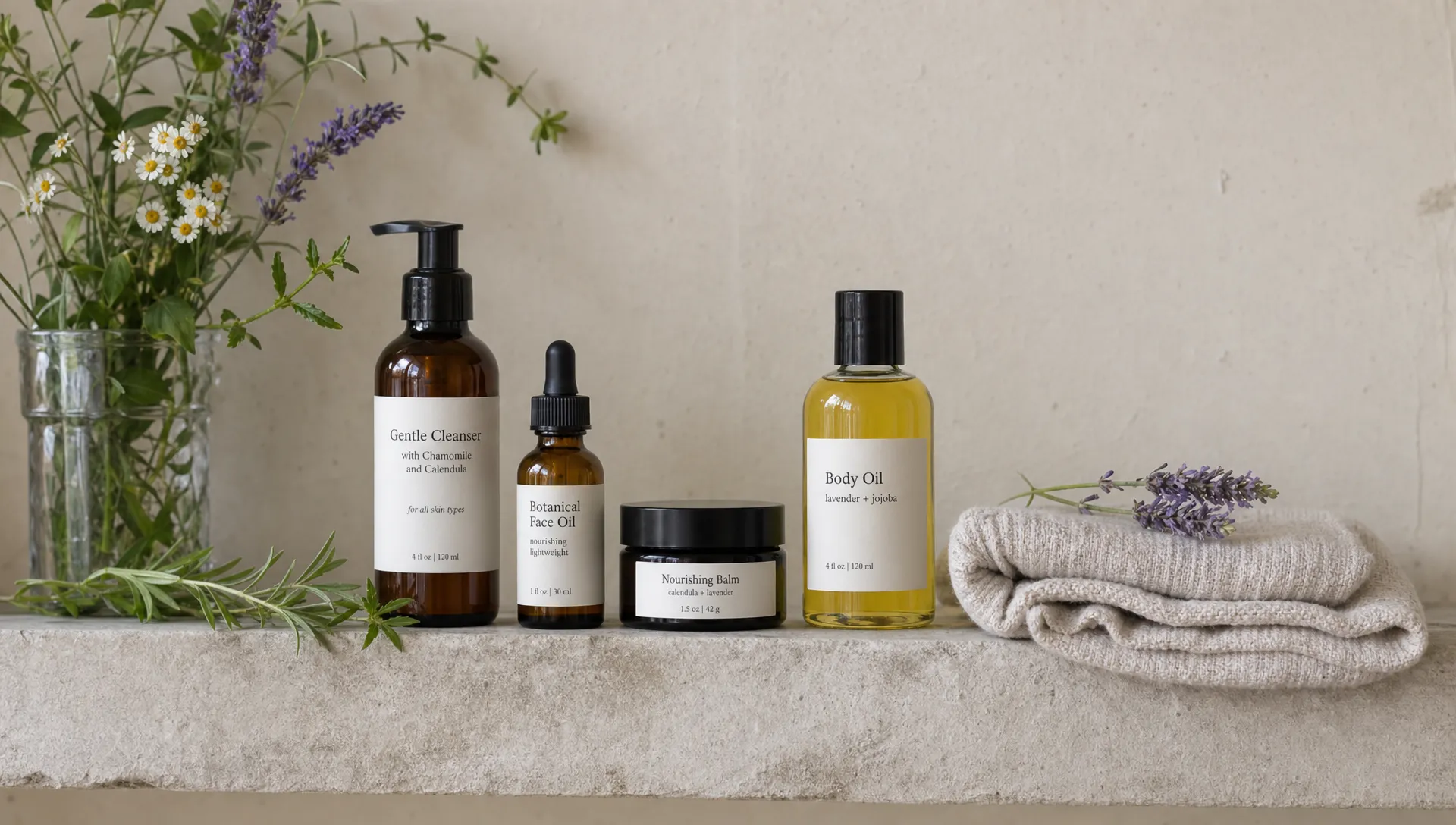
Ingredients that often make daily formulas feel better
Daily organic skincare is not about chasing every trending botanical. It is about choosing ingredients that have a reason to be there. The most dependable formulas usually focus on comfort, nourishment, and texture.
Plant oils are a common foundation because they can soften the skin and support a smoother surface feel. Lighter oils may suit morning use or combination skin, while richer oils can be better at night or on dry areas. Butters add cushion and comfort, especially in balms for lips, hands, elbows, heels, and winter-dry skin. Beeswax or plant-based waxes can help create a protective feel, depending on whether you prefer vegan formulas or are comfortable with beeswax.
Botanical extracts can add character and skin-comfort benefits, but they should not overwhelm the formula. A daily product should not feel like a botanical cocktail with no clear purpose. If your skin is easily irritated, be especially cautious with strong aromatic ingredients. Natural fragrance can still be fragrance, and essential oils can be too much for some skin types.
The best test is not whether an ingredient sounds impressive. It is whether the formula makes your skin more comfortable in real life.
How to know a product has earned its place
When you add a new organic product, give it enough time to show you how it behaves, but do not ignore early warning signs. Burning, persistent itching, swelling, or a rash are reasons to stop and reassess. For sensitive skin, patch testing on a small area before regular use is a smart habit.
For everyday products, look for steady improvements rather than dramatic overnight change. Your skin may feel less tight after washing. Dry patches may look softer. Your body skin may feel more comfortable between showers. You may notice that you need fewer rescue products because your daily basics are doing their job.
Here is a simple way to evaluate a product after one to three weeks of use.
| What you notice | What it may mean |
|---|---|
| Skin feels calm after application | The formula may be a good compatibility match. |
| You use less product over time | Your skin may be staying more comfortable between applications. |
| Makeup or SPF layers smoothly | The texture may fit your morning routine well. |
| You avoid using it | The scent, texture, or finish may not suit daily life. |
| Skin feels tight, itchy, or congested | The product may be too stripping, too active, or too rich for you. |
Daily-worthy products are often quiet performers. They may not create a dramatic before-and-after moment, but they make your skin feel cared for more consistently.
Adjust your organic routine by season and skin type
A product can earn a daily place in one season and step back in another. In summer, you may prefer a lighter oil, a simpler cleanser, and a balm used only on lips or dry spots. In winter, richer textures often become more useful, especially on hands, feet, and areas exposed to cold air.
Dry skin usually appreciates cushion and consistency. A gentle cleanser, nourishing oil, and balm for targeted sealing can make daily care feel more protective. Oily or combination skin may still benefit from organic oils, but lighter textures and smaller amounts are often better. Sensitive skin benefits from short ingredient lists, low-fragrance or fragrance-free choices, and slow product introductions.
Mature skin often needs comfort and flexibility rather than harsh correction. A daily product that softens, supports the skin’s surface, and makes cleansing feel gentle can be more valuable than an aggressive formula used inconsistently.
The point is not to keep every product forever. It is to let your routine evolve while keeping your standards high.
A simple daily shelf that feels complete
If your bathroom shelf feels crowded, start with roles instead of product names. A complete daily routine can be surprisingly small.
- Gentle cleanser: Use when needed to remove the day, sunscreen, sweat, or makeup without leaving skin tight.
- Nourishing face product: Choose an oil, balm, or moisturizer texture that keeps skin feeling comfortable and layers well.
- Body oil or balm: Apply after bathing or before bed to make body care consistent.
- Broad-spectrum sunscreen: Use during the day as your final morning step.
- Occasional treatment: Keep exfoliating products, masks, or polishes occasional rather than automatic daily steps.
This kind of routine leaves room for pleasure. A beautiful balm can turn dry hands into a pause. A body oil can make an ordinary shower feel restored. A cleanser can mark the transition from day to evening. Organic skin care products earn their place not only by what they exclude, but by how they make daily care feel.
Frequently Asked Questions
Are organic skin care products always better for sensitive skin? Not always. Organic ingredients can be excellent, but sensitive skin can still react to botanicals, essential oils, exfoliants, or rich textures. Look for simple formulas, patch test first, and pay attention to how your skin feels after repeated use.
How many organic products do I need in a daily routine? Most people can start with a gentle cleanser, a nourishing moisturizer, oil, or balm, a body care product, and daily sunscreen. Add treatments only when there is a clear reason.
Can I use a face oil every day? Yes, if the texture suits your skin. Face oils work best when used in the right amount, often after a hydrating step or on slightly damp skin. If you notice congestion or heaviness, use less or switch to a lighter formula.
Should organic skincare be fragrance-free? It depends on your skin. If you are reactive, fragrance-free or low-aroma products are often easier to tolerate. If you enjoy naturally aromatic formulas and your skin responds well, they may be part of the sensory pleasure of your routine.
How long should I try a product before deciding if it belongs in my routine? Comfort or discomfort often appears quickly, while improvements in dryness, texture, or routine consistency may take one to three weeks. Stop sooner if you experience irritation, burning, or a rash.
Let your daily products do more with less
The best daily routine is not the fullest one. It is the one you trust, enjoy, and repeat. When organic formulas are thoughtfully made, they can bring together ingredient integrity, skin comfort, and a sense of ritual that makes everyday care feel generous rather than complicated.
Explore the curated apothecary at Baby le Bébé to find natural, organic, cruelty-free skincare and body care products designed to make daily care feel beautifully simple.


0 comments