

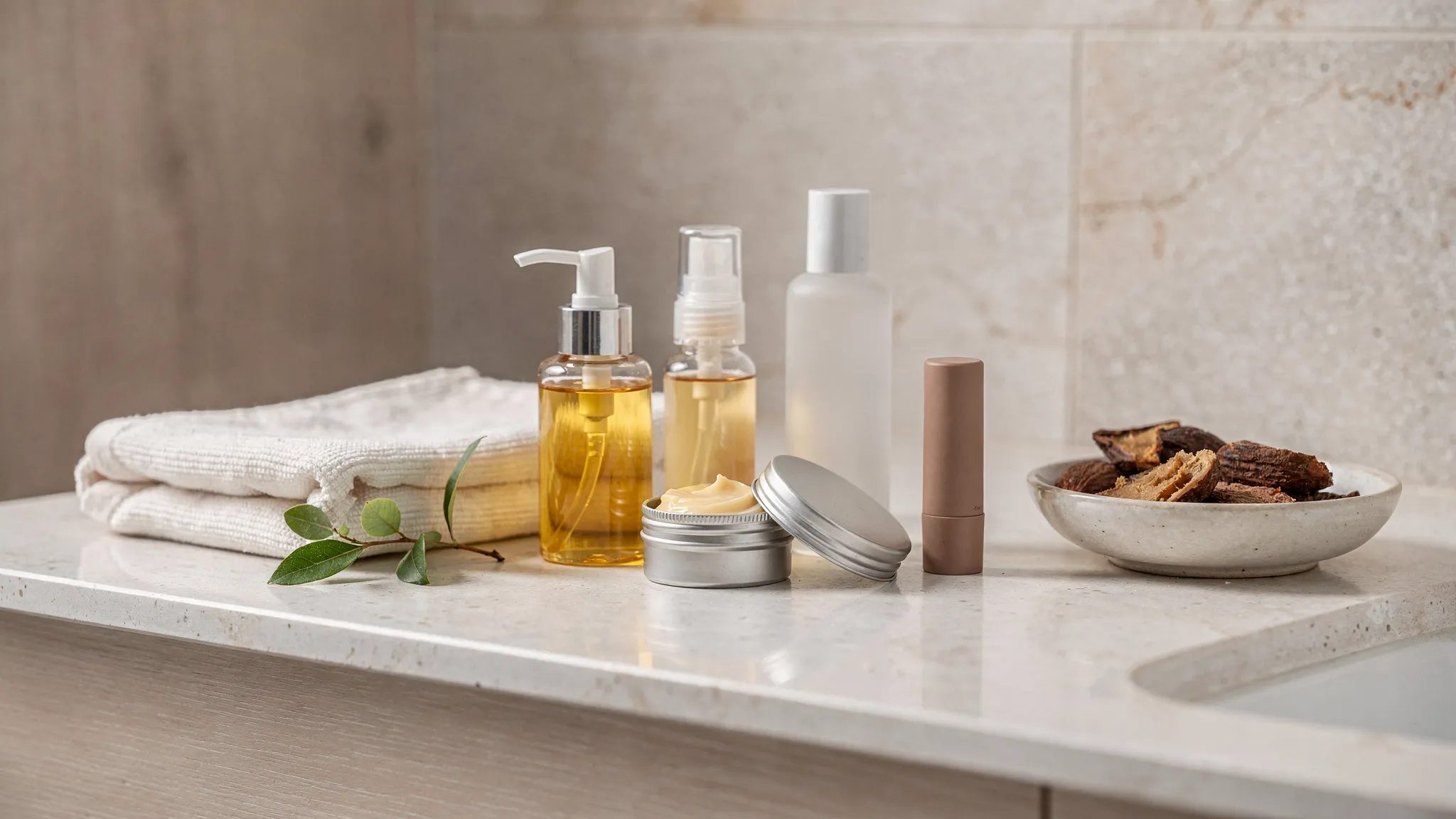
Choosing vegan skin products should make your routine simpler, not more complicated. The goal is not to collect a shelf full of “clean” bottles. It is to choose a few thoughtful products that cleanse without stripping, replenish moisture, support the skin barrier, and fit your values.
A simple daily routine can work beautifully with plant-based skincare because many botanical oils, butters, waxes, and extracts naturally provide the fatty acids and antioxidants skin uses to stay comfortable. The key is knowing which product types matter, which ingredients to look for, and where vegan claims need a second look.
What “vegan skin products” really means
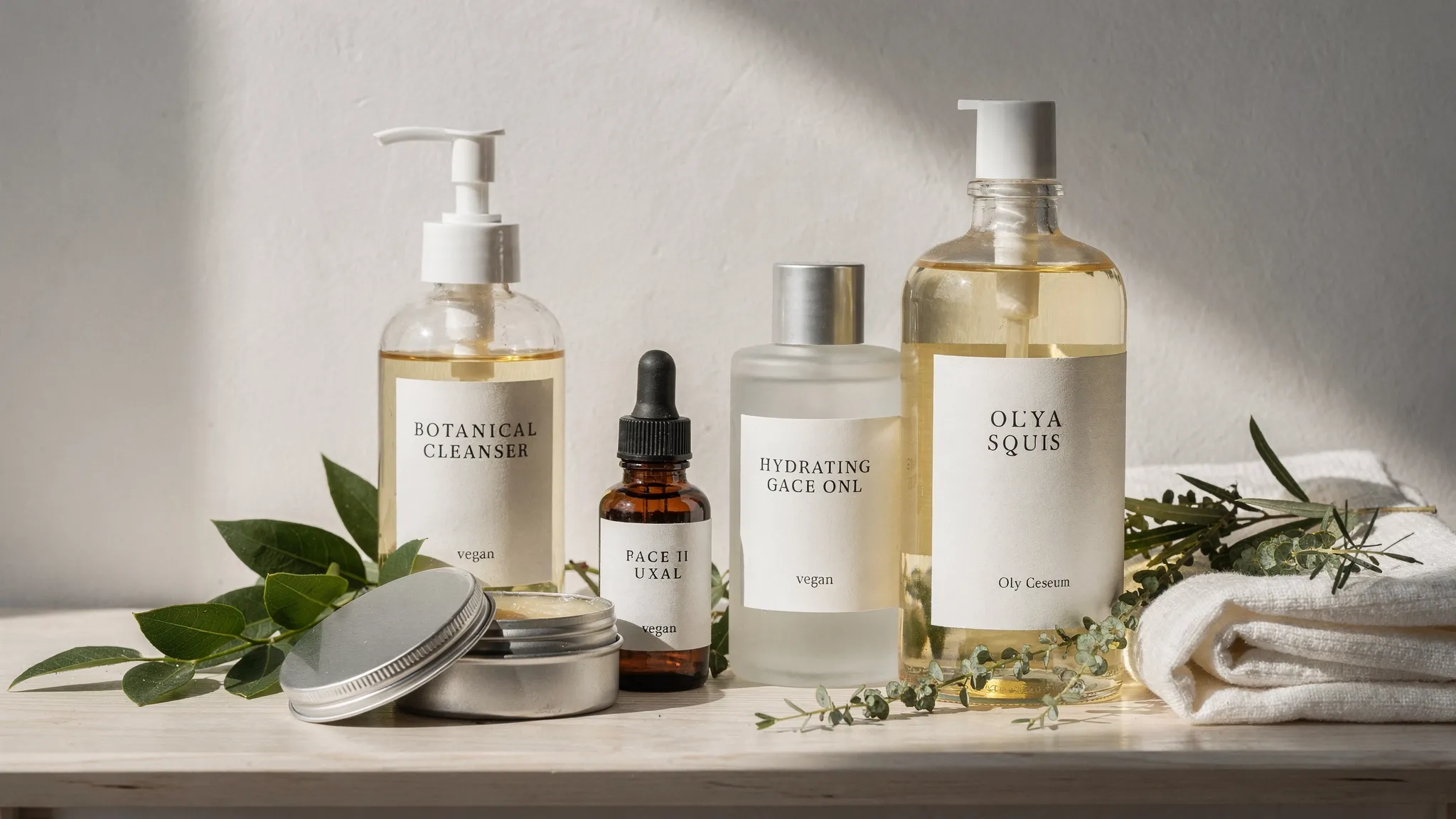
A vegan skincare product is made without animal-derived ingredients. That means no beeswax, lanolin, honey, collagen, elastin, keratin, carmine, guanine, or animal-derived squalene. Many modern formulas use plant or biotech alternatives, such as candelilla wax instead of beeswax, plant-derived squalane instead of animal-derived squalene, and botanical oils instead of lanolin.
Still, “vegan” is not the same as “cruelty-free,” “natural,” or “organic.” A vegan product can still contain synthetic fragrance, harsh surfactants, or ingredients that irritate sensitive skin. A cruelty-free product may not be vegan if it contains beeswax or honey. This is why label reading matters.
| Claim | What it means | What to verify |
|---|---|---|
| Vegan | No animal-derived ingredients | Check for beeswax, lanolin, honey, collagen, carmine, and ingredient source notes |
| Cruelty-free | Not tested on animals according to the brand or certifier | Look for trusted standards such as [Leaping Bunny](https://www.leapingbunny.org/) |
| Natural | Made with ingredients from plant, mineral, or naturally derived sources | The term is not tightly regulated, so read the full ingredient list |
| Organic | Ingredients are grown under organic standards | Look for certification or a clear percentage of organic ingredients |
If you want a verified vegan claim, certifications like The Vegan Society Vegan Trademark can help. If you are shopping from a small-batch natural apothecary, read each product page carefully, since some lines may include both vegan options and beeswax-based options.
Top vegan skin products for a simple daily routine
The best vegan skin products are not necessarily the most elaborate. For everyday skin, a streamlined routine usually needs only a cleanser, a hydrating layer, a moisturizer or face oil, sunscreen, and one or two body-care essentials.
1. A gentle cleanser that does not strip the skin
A cleanser is the foundation of a simple routine. Its job is to remove sunscreen, makeup, sweat, excess oil, and daily buildup without leaving skin tight or squeaky. For many skin types, oil cleansers, balm cleansers, cream cleansers, and low-foam gels are gentler than strong foaming washes.
In a vegan cleanser, look for plant oils such as sunflower, jojoba, grapeseed, or castor oil, plus mild emulsifiers that help the product rinse cleanly. Avoid harsh sulfates, synthetic fragrance, and drying alcohols if your skin is sensitive or easily flushed.
If you prefer natural oil cleansing, Baby le Bébé’s approach to botanical skincare aligns well with this barrier-friendly philosophy. You can also read more about choosing a natural face cleanser if you want to understand cleanser textures and ingredient labels in more depth.
2. A lightweight hydrating serum or essence
Vegan routines still need hydration. Oils and balms soften and seal, but they do not add water to the skin. That is where a hydrating serum, essence, or mist can help, especially if your skin feels tight after washing.
Look for vegan-friendly humectants such as plant-derived glycerin, hyaluronic acid from fermentation, aloe vera, beta-glucan, or panthenol. Apply this step while your skin is slightly damp, then follow with oil, cream, or balm to reduce water loss.
If you keep your routine very minimal, this step can be optional in humid weather or for naturally balanced skin. For dry, mature, dehydrated, or barrier-damaged skin, it can make a noticeable difference.
3. A botanical face oil for nourishment
A well-formulated face oil is one of the most useful vegan skin products because it delivers plant lipids that help soften, smooth, and support the skin barrier. Botanical oils contain different fatty acid profiles, which influence how they feel and which skin types they suit.
A review published in the International Journal of Molecular Sciences notes that certain topical plant oils may support barrier repair, reduce inflammation, and provide antioxidant benefits depending on their composition and quality. You can explore the research in this review of topical plant oils and skin barrier effects.
For dry or mature skin, look for richer oils such as argan, avocado, rosehip, or sea buckthorn. For oily or combination skin, lighter oils like jojoba, grapeseed, sunflower, or plant-derived squalane often feel more comfortable. For sensitive skin, choose simple formulas with minimal essential oils and a fresh, well-protected oil base.
Use two to four drops on damp skin. Warm the oil between your palms, then press it over the face instead of rubbing aggressively. If you are new to oils, start at night and adjust the amount based on how your skin feels in the morning.
4. A plant-based moisturizer or balm for dry areas
A moisturizer or balm helps protect the skin from moisture loss. In vegan formulas, this often means plant butters, botanical oils, and plant waxes instead of beeswax or lanolin.
Look for shea butter, cocoa butter, mango butter, candelilla wax, carnauba wax, jojoba oil, sunflower oil, and vitamin E. These ingredients can be especially helpful around dry cheeks, the mouth, elbows, knees, hands, and any area that becomes rough in cold or windy weather.
This is the category where label reading matters most. Many natural balms use beeswax, which is not vegan. Baby le Bébé offers both vegan and beeswax options, so strict vegan shoppers should check each product’s ingredient list before adding it to a routine.
5. A broad-spectrum mineral sunscreen
Sunscreen is the one daily product that should not be skipped in a morning routine. Oils, antioxidants, and botanical extracts can support skin health, but they do not replace sun protection.
The American Academy of Dermatology recommends choosing a broad-spectrum sunscreen with SPF 30 or higher. If you prefer vegan and cruelty-free skincare, look for a mineral sunscreen that clearly states its vegan status and uses zinc oxide or titanium dioxide as the active UV filters.
Apply sunscreen as the final step in the morning, after moisturizer or face oil has settled. Reapply as directed, especially when outdoors, sweating, or swimming.
6. A simple botanical body oil
A body oil is one of the easiest ways to simplify body care. Instead of layering multiple lotions, apply a botanical oil to damp skin after showering. The water left on the skin supplies hydration, while the oil helps soften and seal it in.
For a vegan body oil, look for plant oils such as jojoba, sunflower, argan, grapeseed, or olive oil, and avoid formulas that rely on mineral oil, undisclosed fragrance, or unnecessary fillers. If your skin is sensitive, a low-scent or fragrance-free option is usually safest.
Baby le Bébé’s 100% natural, 99% organic, cruelty-free apothecary philosophy is especially suited to this kind of body ritual. For technique, see this guide on how to use body oil after showering.
7. A vegan lip balm
Lip balm is a small product, but it is one of the most common places animal-derived ingredients appear. Traditional natural lip balms often use beeswax, lanolin, or honey.
For a vegan lip balm, look for candelilla wax, carnauba wax, sunflower wax, shea butter, cocoa butter, jojoba oil, or castor oil. The best formulas create a flexible seal without feeling sticky or waxy. If your lips are cracked or reactive, avoid strong mint, cinnamon, or citrus essential oils, which can sting and worsen dryness for some people.
A simple AM and PM vegan skincare routine
You do not need a different product for every concern. Most people can build a consistent routine from a few essentials and adjust texture seasonally.
| Step | Morning | Evening |
|---|---|---|
| Cleanse | Rinse with water or use a gentle cleanser if oily | Use a gentle cleanser to remove sunscreen, makeup, and buildup |
| Hydrate | Apply a hydrating serum, essence, or mist to damp skin | Repeat if skin feels tight or dehydrated |
| Nourish | Use a light face oil or moisturizer | Use face oil, moisturizer, or a richer balm on dry areas |
| Protect | Finish with broad-spectrum SPF 30 or higher | Skip sunscreen, focus on barrier support |
| Body care | Apply body oil after showering | Add balm to hands, elbows, feet, or rough patches |
If your skin is sensitive, start with the smallest version of this routine: cleanser, moisturizer or oil, and sunscreen in the morning, then cleanser and moisturizer or oil at night. Add a hydrating serum only if your skin still feels tight.
How to match vegan skin products to your skin type
Dry skin usually benefits from richer oils and butters. Look for shea, argan, avocado, rosehip, and a hydrating serum underneath. Applying oil to damp skin is especially important, since dry skin often lacks both water and lipids.
Oily or acne-prone skin often does better with lighter textures. Jojoba, grapeseed, sunflower, and plant-derived squalane are good ingredients to consider. Avoid assuming that “natural” automatically means non-comedogenic. Coconut oil, for example, can feel wonderful on the body but may be too heavy for acne-prone facial skin.
Sensitive skin needs simplicity. Choose short ingredient lists, avoid synthetic fragrance, and be cautious with strong essential oils. If you want a deeper sensitive-skin approach, Baby le Bébé’s guide to vegan skincare for sensitive skin is a useful next read.
Combination skin may need two textures. A light oil or moisturizer can work on the T-zone, while a balm can be pressed only onto dry cheeks or flaky spots. This keeps the routine simple without forcing one product to do everything.
Quick label checklist for vegan skin products
The easiest way to shop is to scan the label twice: once for animal-derived ingredients, then again for skin comfort.
| Choose | Be cautious with |
|---|---|
| Clearly labeled vegan formulas | Beeswax, lanolin, honey, collagen, keratin, carmine, guanine |
| Full ingredient lists with recognizable sources | “Fragrance” or “parfum” with no explanation |
| Plant oils, plant butters, and plant waxes | Harsh sulfates and drying alcohols |
| Cruelty-free transparency or certification | Vague “clean” claims without ingredient details |
| Fresh, protected packaging for natural oils | Products stored in clear packaging with high light exposure |
For a values-based routine, vegan and cruelty-free claims are both worth checking. Baby le Bébé’s article on cruelty-free and vegan skincare explains the distinction in more detail.
Where Baby le Bébé fits into a simple vegan routine
Baby le Bébé is rooted in 100% natural, luxury skincare from the Catskill Mountains, with formulas made without synthetics, preservatives, petroleum, parabens, or fillers. The apothecary includes botanical balms, oils, and cleansers designed for healthy, feel-good skin.
Because the collection includes vegan options as well as beeswax options, the best approach is to choose by both skin need and ingredient preference. If you are building a strictly vegan routine, read each product page and select formulas without bee-derived ingredients. If you are comfortable with beeswax, you may prefer certain balm textures for extra protection.
Either way, the routine can stay beautifully simple: cleanse gently, hydrate when needed, nourish with botanical oils, protect with sunscreen during the day, and seal dry areas with the right balm.
Frequently Asked Questions
Are vegan skin products better for sensitive skin? Not automatically. Vegan products can be gentle, but they can also contain fragrance, strong essential oils, or harsh surfactants. Sensitive skin usually does best with simple formulas, minimal scent, and careful patch testing.
What ingredients make skincare not vegan? Common non-vegan skincare ingredients include beeswax, honey, lanolin, collagen, elastin, keratin, carmine, guanine, and animal-derived squalene. When in doubt, check whether the brand identifies the ingredient source.
Can I use face oil instead of moisturizer? Sometimes, but face oil works best on damp skin or over a hydrating serum. Oils help nourish and seal, while water-based products add hydration. Very dry skin may need both.
Do I still need sunscreen in a vegan skincare routine? Yes. Sunscreen is essential in the morning, even if your routine is natural, organic, or plant-based. Choose a broad-spectrum SPF 30 or higher and verify that the formula is vegan if that is important to you.
How many vegan skin products do I really need? Most daily routines need three to five face products: cleanser, hydrating layer if needed, moisturizer or face oil, sunscreen, and an optional balm for dry spots. Body oil and lip balm can round out the routine without making it complicated.
Build a simpler botanical routine
If you want vegan skin products that feel intentional rather than overwhelming, start with a few high-quality essentials and let your skin respond. Explore the Baby le Bébé apothecary for natural, cruelty-free oils, cleansers, and balms, and choose the vegan or beeswax option that best fits your skin and values.


0 comments