

If your skin is easily irritated, the best skincare is not the product that sounds the most powerful. It is the one your skin can actually tolerate, day after day, without tightness, heat, itching, or that uncomfortable “why is my face buzzing?” feeling.
That is where clean vegan skincare can be a beautiful fit, but only when the formula is thoughtfully made. Vegan does not automatically mean gentle. Clean does not automatically mean non-irritating. Sensitive skin needs more than a label. It needs simple textures, careful ingredient choices, and a routine that protects the skin barrier instead of constantly challenging it.
Here is how to choose clean, plant-based skincare that feels good on sensitive skin, from the first cleanse to the final layer of moisture.
What clean vegan skincare really means for sensitive skin
In skincare, “vegan” means a product is made without animal-derived ingredients. Common non-vegan cosmetic ingredients can include beeswax, lanolin, collagen, honey, milk proteins, and carmine. “Cruelty-free” is related, but different. It generally refers to whether animal testing was used, not whether the formula contains animal-derived ingredients.
“Clean” is more fluid. In the United States, the term is not regulated in a single official way for cosmetics, which is why ingredient transparency matters. The FDA’s cosmetics labeling resources are a useful reminder that beauty claims should be read carefully, especially when your skin reacts easily.
For sensitive skin, the most useful definition of clean vegan skincare is practical: formulas made with recognizable, skin-supportive ingredients, without unnecessary synthetics, heavy fillers, harsh surfactants, or aggressive actives that can overwhelm the barrier.
A clean vegan product should not just align with your values. It should also leave your skin feeling calm, cushioned, and comfortable.
Why sensitive skin needs a barrier-first approach
Sensitive skin often reacts when the outermost layer of the skin, the barrier, is disrupted. This barrier helps hold water in and keep irritants out. When it is stressed, skin may feel dry, hot, itchy, rough, flushed, or unusually reactive to products that once felt fine.
That is why the best routine for sensitive skin is usually not complicated. It is consistent. It uses gentle cleansing, steady moisture, and fewer potential triggers. The American Academy of Dermatology recommends using gentle, fragrance-free products and applying moisturizer after washing to help relieve dry skin, guidance that also fits many sensitive-skin routines. You can see their dry-skin care tips from the American Academy of Dermatology.
Clean vegan skincare can support this barrier-first approach when it leans on plant oils, butters, botanical extracts, and softening textures rather than high-intensity exfoliation or a long list of trendy actives.
The feel-good test: what your skin should experience
A product for sensitive skin should feel good during application and after it sinks in. This does not mean every formula must feel rich or heavy. It means the skin should not feel stripped, prickly, tight, or coated in a way that traps heat.
A gentle cleanser should remove daily buildup without leaving the face squeaky. “Squeaky clean” often means the skin has been stripped of too much natural oil. If cleansing is the step that most often triggers tightness for you, it may help to explore how to choose natural facial cleansers for sensitive skin and build a softer cleansing ritual.
A facial oil should glide easily and leave the skin more supple, not greasy or suffocated. A balm should melt with body warmth and reduce roughness without requiring tugging. A body product should comfort larger dry areas, especially after bathing, without making skin itch under clothing.
The right clean vegan skincare routine feels almost quiet. Skin looks cared for, but it does not feel like it is being pushed.
Ingredients and textures that tend to suit sensitive skin
No ingredient is perfect for everyone, and even natural botanicals can cause reactions in some people. Still, certain ingredient types and product formats are often better aligned with sensitive skin because they help soften, cushion, and reduce moisture loss.
| What to look for | Why it can feel good on sensitive skin | How to use it wisely |
|---|---|---|
| Plant oils such as jojoba, sunflower, or squalane from plant sources | Help soften skin and support a smoother feel | Apply a few drops to damp skin or layer over a light moisturizer |
| Rich butters such as shea or cocoa butter | Add cushion and comfort to dry, rough areas | Use sparingly on the face if you clog easily, or reserve for body and dry patches |
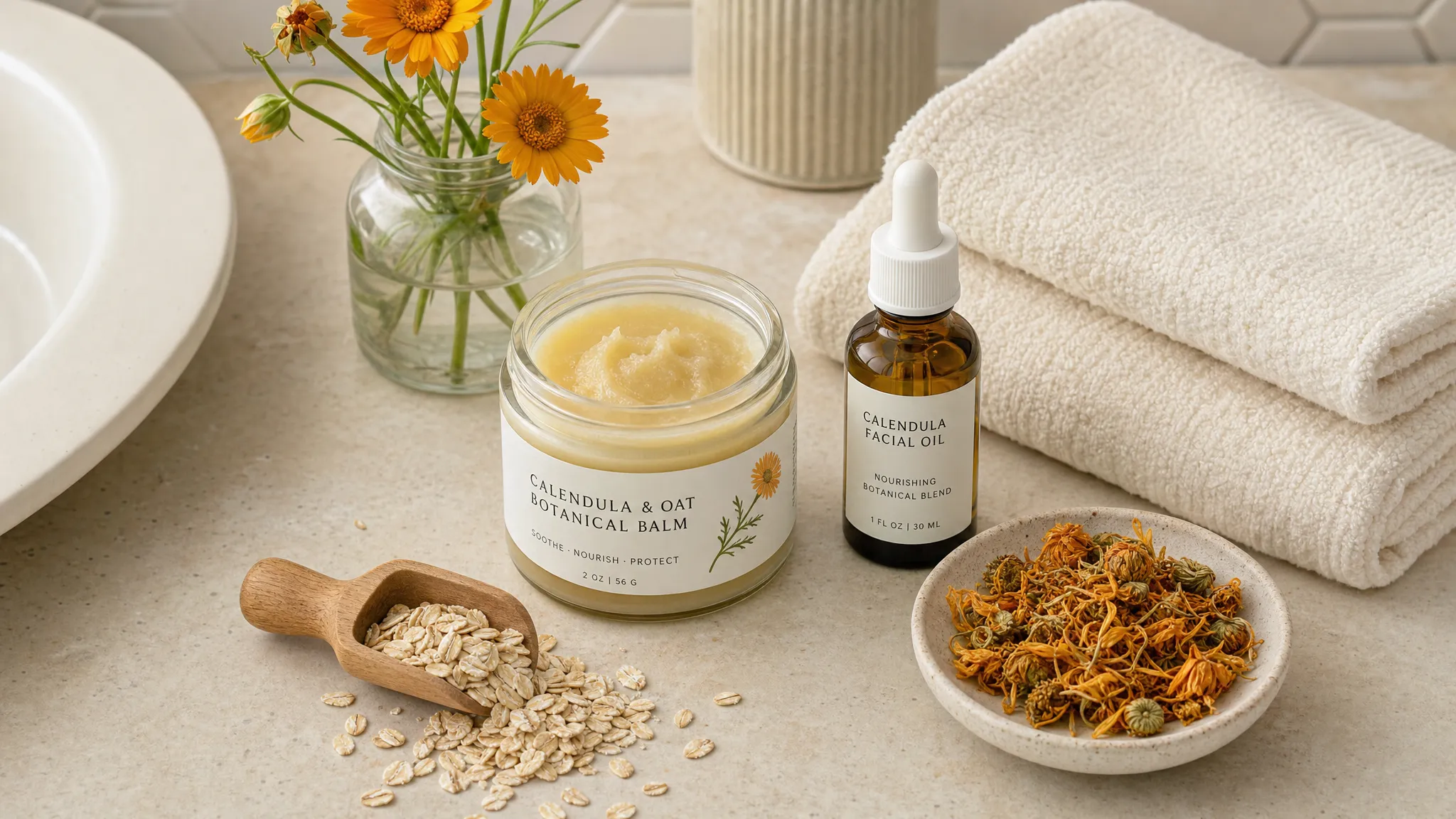
| Aloe, calendula, chamomile, or oat-inspired ingredients | Often chosen for calming routines | Patch test first, especially if you react to botanicals |
| Balm and oil formats | Can be ideal for dry, sensitive skin because they reduce friction | Keep water out of jars and use clean hands or a spatula |
| Shorter ingredient lists | Fewer ingredients can mean fewer chances for irritation | Still check each ingredient, since simple does not always mean suitable |
For a deeper look at why plant-based textures can feel more compatible with reactive skin, Baby le Bébé’s guide to botanical skincare for sensitive skin explores the role of plant lipids, simpler formulas, and barrier comfort.
What to avoid when clean vegan products still sting
One of the biggest mistakes sensitive-skin shoppers make is assuming that natural means automatically gentle. Many beautiful botanical ingredients are powerful, and some are not ideal when the skin barrier is already stressed.
If your skin stings easily, be cautious with strong essential oils, heavy fragrance blends, harsh foaming agents, alcohol-heavy mists, abrasive scrubs, and frequent exfoliating acids. Retinoids and strong vitamin C products can also be too much during a reactive phase, even if they are popular in clean beauty routines.
Preservatives deserve a nuanced mention. They are not automatically bad. Water-based products generally need preservation to remain safe. However, some sensitive skin types do better with simpler anhydrous products, meaning water-free products such as oils and balms, because these formulas can often avoid traditional preservation systems. If you use waterless products, keep them clean, sealed, and away from shower spray.
Also watch the “too many good things” problem. A cleanser, toner, serum, oil, balm, mask, and exfoliant may all be clean and vegan on their own, but together they can overload sensitive skin. Comfort often comes from editing, not adding.
A simple clean vegan routine for sensitive skin
A sensitive-skin routine should have a clear purpose: cleanse gently, replenish moisture, seal comfort where needed, and protect skin from daily stress.
In the morning, many sensitive skin types do not need a full cleanse. A rinse with lukewarm water may be enough, especially if the skin is dry. If you prefer a cleanser, choose something soft, non-stripping, and easy to remove. Follow with a light layer of moisture or a few drops of facial oil if your skin feels dry. During the day, sunscreen is still essential, so choose a separate broad-spectrum SPF that your skin tolerates.
In the evening, cleanse more intentionally to remove sunscreen, makeup, sweat, and pollution. This is where a gentle oil, balm, cream, or low-foam cleanser can help reduce friction. After cleansing, apply your moisturizing step while skin is slightly damp. If you are dry or flaky, a balm can help seal in comfort on cheeks, lips, hands, elbows, or any area that feels rough.
When your skin is actively irritated, simplify even more. Pause exfoliants, strong actives, new masks, and heavily scented products. Return to the few products your skin trusts. Once skin feels stable for at least a week, introduce anything new slowly.
How to shop for clean vegan skincare without guessing
Start with the full ingredient list, not the front label. The most sensitive-skin-friendly products are often the ones that tell a clear story: what softens, what soothes, what gives texture, and what is there for stability.
If you are strictly vegan, check individual product pages carefully. Some natural skincare brands offer both vegan products and beeswax-based options. Beeswax can be loved in natural balms, but it is not vegan, so label reading matters.
Patch testing is especially important. The American Academy of Dermatology recommends testing a new skincare product on a small area before using it more widely, especially if you have sensitive skin. Their guide on how to test skincare products suggests applying the product to a small test spot twice daily for 7 to 10 days to check for a reaction.
Season and climate matter too. In humid weather, a few drops of oil may be enough. In cold, dry air, skin may need a richer balm. If you live with indoor heating, frequent handwashing, or wind exposure, your barrier may need extra support even if your routine worked perfectly in summer.
For body care, the same rules apply on a larger scale. Choose formulas that soften without itching, apply after bathing, and avoid over-cleansing. If you are building a plant-based routine beyond the face, this guide to vegan body care products for soft, balanced skin can help you think through texture, barrier support, and ingredient choices.
When to stop experimenting and ask for help
Sensitive skin is common, but persistent burning, swelling, cracking, oozing, or rash-like irritation should not be treated as a normal skincare adjustment period. If your skin reacts to nearly everything, or if irritation keeps returning, speak with a board-certified dermatologist or qualified healthcare professional.
Skin conditions such as eczema, rosacea, allergic contact dermatitis, and perioral dermatitis can all make skin feel sensitive, but they may need different approaches. Clean vegan skincare can still be part of a gentle routine, but diagnosis matters when symptoms are ongoing.
Frequently Asked Questions
Is clean vegan skincare always good for sensitive skin? Not always. Vegan skincare avoids animal-derived ingredients, but it can still contain strong fragrance, essential oils, exfoliants, or actives that irritate sensitive skin. The best choice is a simple, barrier-supportive formula.
What is the difference between vegan and cruelty-free skincare? Vegan skincare does not contain animal-derived ingredients. Cruelty-free skincare refers to products that are not tested on animals. A product can be one, both, or neither, so it is worth checking labels carefully.
Can botanical skincare irritate sensitive skin? Yes, it can. Many botanical ingredients feel wonderful on sensitive skin, but natural ingredients can still trigger reactions. Patch testing is the safest way to introduce a new product.
Should sensitive skin avoid all fragrance? Many dermatologists recommend fragrance-free products for reactive skin. If you enjoy naturally aromatic products, use caution, choose lower-aroma formulas when possible, and avoid applying them to already irritated skin.
Are balms good for sensitive skin? Balms can be excellent for dry, sensitive areas because they reduce moisture loss and cushion the skin. If you are acne-prone, use richer balms selectively and watch how your skin responds.
Make your sensitive-skin routine feel calmer
Clean vegan skincare should feel like relief, not a risk. Look for simple botanical formulas, choose textures that reduce friction, patch test slowly, and give your skin time to settle before adding more.
If you are ready to build a more intentional natural routine, explore the Baby le Bébé curated apothecary for 100% natural, cruelty-free skincare and body care, including vegan options and beeswax-based formulas for those who prefer them. Sensitive skin does not need more noise. It needs care that feels good enough to keep using every day.


0 comments