

The truth is, the search for the "best" organic body oil usually ends with a simple realization: the right choice is deeply personal. It’s the one formulated with pure, certified organic ingredients that feel right for your skin, align with your values, and give you the results you’re looking for. A truly great oil does more than just moisturize—it delivers intentional, plant-powered nourishment.
Finding Your Ideal Organic Body Oil
Navigating the world of natural skincare can feel like a lot, but finding your perfect organic body oil gets much easier once you know what to look for. The journey starts with understanding that not all oils are created equal. Real quality is in the details—from the farm where the ingredients were grown to the bottle that sits on your shelf.
This guide is designed to give you a clear framework for making a confident choice. We'll explore the core criteria that define a truly exceptional product, moving past marketing claims to focus on what actually matters. By understanding these pillars, you can find an oil that leaves your skin feeling radiant, healthy, and deeply hydrated.
Core Pillars of a Superior Organic Body Oil
The best formulas are built on a foundation of integrity and performance. Here are the key things I always look for:
- Ingredient Purity and Integrity: This is non-negotiable. Look for oils that are 100% natural and have a high percentage of certified organic ingredients. This guarantees the plants were grown without synthetic pesticides or fertilizers, which means a cleaner, more nutrient-rich final product for your skin.
- Ethical and Sustainable Sourcing: Where do the ingredients actually come from? Brands committed to ethical sourcing prioritize fair labor practices and environmentally responsible harvesting. You want a product that’s good for your skin and the planet.
- Thoughtful Formulation Science: A great organic body oil is more than just one ingredient in a bottle. It’s a carefully balanced blend of carrier oils chosen for their specific benefits, all working together to address different skin concerns.
The ultimate goal is to find a product where every single ingredient serves a purpose. A truly clean formula is free from fillers, synthetic preservatives, parabens, and petroleum, letting the power of botanicals shine.
This approach turns your search from a guessing game into an informed decision. When you prioritize these elements, you set yourself up to find a product that aligns with your values and delivers real results. Let’s compare two different philosophies for creating an organic body oil.
Formulation Philosophy Quick Comparison
| Feature | Single-Ingredient Focus | Multi-Ingredient Blend |
|---|---|---|
| The Approach | Highlights the purity and specific benefits of one single carrier oil, like 100% argan or jojoba oil. | Combines multiple carrier oils to create a balanced, multi-benefit formula for broader skin support. |
| Best For | Someone targeting a very specific concern (like using pure rosehip for scarring) or anyone with known sensitivities. | Users looking for comprehensive nourishment, hydration, and protection in a single, well-rounded product. |
| Real-World Example | Using only pure jojoba oil because its composition is incredibly similar to the skin's natural sebum. | A blend like Baby le Bébé's Smoothing Body Oil, which combines castor, argan, and rosehip oils for a fast-absorbing, vitamin-rich experience. |
Understanding these fundamental differences helps clarify what you really need. Whether you prefer the simplicity of a single-source oil or the layered benefits of a masterful blend, the principles of purity, ethics, and clean formulation are always your most reliable guides.
What Actually Makes an Organic Body Oil Great?
Walk down any beauty aisle, and you’ll see dozens of body oils promising natural, glowing skin. But the difference between an average oil and a truly exceptional one comes down to a few details that matter—a lot. Knowing what to look for helps you see past the marketing hype and choose a product that delivers real, clean nourishment.
First things first: what does "organic" even mean in skincare? It’s more than a trendy label. It means the plants were grown without synthetic pesticides, herbicides, or GMOs. The result is a cleaner, more nutrient-rich oil, free from the chemical residues you’d rather not have soaking into your skin.
This desire for cleaner ingredients isn't just a niche movement; it's changing the entire industry. In the U.S. alone, 34% of consumers now say they prefer organic beauty products, specifically to avoid irritants like parabens and sulfates. It’s a clear signal that people want formulas that are both gentle and powerful. You can dig deeper into the rise of natural skincare by exploring market research.
The Power of Certifications
To know if a product is legit, look for third-party seals. A logo like USDA Organic isn’t just for decoration; it’s a legally binding promise. For a product to earn that seal, it must contain at least 95% organic ingredients, with the few remaining ingredients being from an approved, safe list.
A USDA Organic certification is your shortcut to trust. It’s an immediate, reliable sign of purity that confirms the product has met strict standards from the farm all the way to the bottle. It gives you confidence in what you’re putting on your skin.
Without that little seal, the word "organic" can be used pretty loosely, leaving you to wonder what’s really inside. A credible certification is the best way to know for sure.
Cold-Pressed and Unrefined: The Gold Standard
Just as important as how the plant was grown is how the oil was taken from it. The best body oils are almost always made from cold-pressed and unrefined oils. This is a gentle, heat-free process where the seeds or nuts are simply crushed to release their oil, keeping all the delicate vitamins, antioxidants, and essential fatty acids intact.
On the other hand, oils extracted with high heat or chemical solvents are often stripped of their best parts. These refined oils might last longer on the shelf, but they’re missing the potent, skin-loving compounds that make organic oils so effective in the first place.
Here’s a quick breakdown of the difference:
- Cold-Pressed/Unrefined Oils: Keep their natural color, scent, and a full spectrum of nutrients. They deliver the maximum benefits for skin health, from deep hydration to cellular repair.
- Refined Oils: Are often bleached and deodorized, which seriously compromises their effectiveness. The harsh processing can destroy the very vitamins and antioxidants you’re looking for.
Choosing cold-pressed and unrefined ensures you’re getting the oil in its most powerful, whole state.
A Formula Free From Junk
Finally, a truly superior organic body oil is defined by what it doesn’t have in it. A clean formula should be simple. When you scan the ingredient list, you should recognize everything as coming directly from a plant.
Keep an eye out for these common additives to avoid:
- Parabens: Synthetic preservatives that have been linked to skin irritation and other health concerns.
- Synthetic Fragrances: A catch-all term for what can be hundreds of undisclosed chemicals that often trigger allergies and sensitivities.
- Petroleum and Mineral Oil: Byproducts of the oil industry that sit on top of the skin, can clog pores, and offer zero nutritional value.
The best organic body oils let their plant ingredients do the work without interference. By prioritizing certified organic, cold-pressed oils in clean, simple formulas, you can be sure your skin is getting the pure, potent nourishment it deserves.
Comparing the Best Carrier Oils for Every Skin Concern
The heart of any truly great organic body oil is its carrier oil—the pure, plant-derived ingredients that do most of the heavy lifting. While a thoughtful blend creates balanced nourishment, knowing the individual oils helps you decode an ingredient list and choose the formula that’s truly right for your skin. Not all oils are created equal; some are light and clarifying, while others offer deep, restorative moisture.
Let's break down some of the most beautiful and effective organic carrier oils. We’ll look at what they do, how they feel, and which skin types love them most.
This desire for ingredient-level knowledge is a huge part of why so many of us are reaching for natural skincare in the first place.
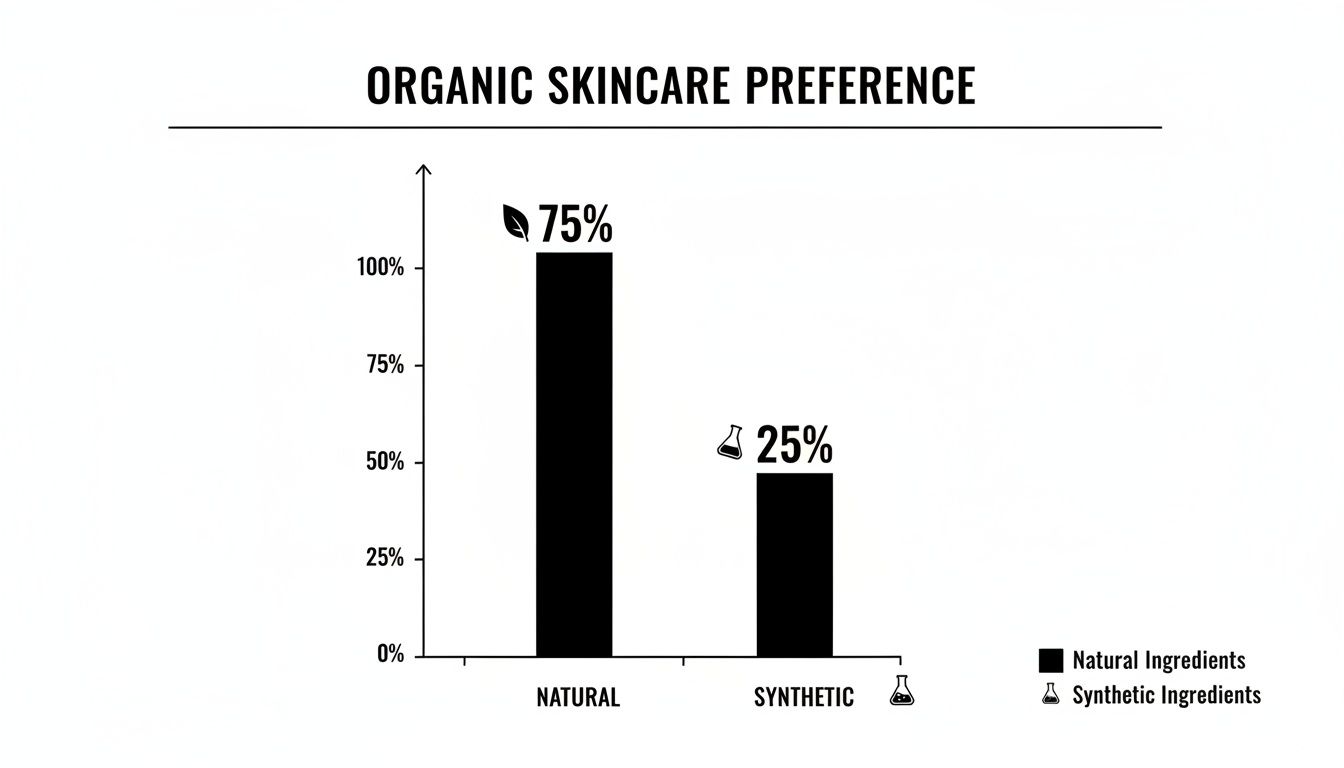
As the data shows, the preference is clear: modern skincare users overwhelmingly choose natural ingredients over synthetic alternatives.
For Oily and Blemish-Prone Skin
It sounds counterintuitive, but using the right oil on oily skin is a game-changer. Lightweight, non-comedogenic oils can actually help balance your skin’s own sebum production, reducing shine and preventing clogged pores without ever stripping your skin’s moisture barrier.
Grapeseed Oil is a superstar here. It’s incredibly light, sinks in almost instantly, and has a comedogenic rating of 1, meaning it’s highly unlikely to cause congestion. It also has natural astringent properties that can help tighten skin and minimize the appearance of pores.
Jojoba Oil is another brilliant choice, famous for its molecular structure that closely mimics our skin's own sebum. This unique trait helps regulate oil production, making it perfect for skin that’s simultaneously oily and dehydrated. It has a low comedogenic rating of 2.
For Dry and Mature Skin
Dry and mature skin types crave rich, nourishing oils packed with antioxidants and essential fatty acids. These oils work to repair the skin’s moisture barrier, lock in hydration, and improve elasticity for a smoother, more supple feel.
Argan Oil is often called “liquid gold,” and for good reason. It’s dense with Vitamin E and both oleic and linoleic acids, which provide intense hydration and support barrier function. With a comedogenic rating of 0, it’s deeply moisturizing without ever feeling heavy.
Castor Oil is a surprisingly powerful hydrator, especially high-linoleic varieties that are fantastic for barrier repair. It has a comedogenic rating of 0-2, making it a versatile option that absorbs beautifully. To learn more about how these components work, explore our guide to fatty acids in skincare in our detailed guide.
For Sensitive and Reactive Skin
Sensitive skin needs gentle, soothing ingredients that calm inflammation and reduce redness. Oils with natural anti-inflammatory properties are ideal for bringing comfort and reinforcing a compromised skin barrier without causing further irritation.
Calendula-Infused Oil is a top-tier choice for calming distressed skin. The calendula flower is legendary for its powerful anti-inflammatory and healing properties, making it perfect for soothing everything from general redness to eczema flare-ups.
Sweet Almond Oil is another gentle hero. It's rich in vitamins and known for being hypoallergenic. With a low comedogenic rating of 2, it provides soft moisture and helps soothe irritation, making it a safe bet for highly reactive skin.
Key Insight: The best organic body oil for you depends entirely on your primary skin concern. While many oils offer general moisturizing benefits, choosing one that specifically targets dryness, oiliness, or sensitivity will deliver far superior results.
To make it even easier to spot the right ingredients on a label, here's a quick comparison of these beautiful carrier oils.
A Comparison of Organic Carrier Oils for Different Skin Needs
| Carrier Oil | Key Benefit | Comedogenic Rating (0-5) | Ideal For Skin Type |
|---|---|---|---|
| Grapeseed Oil | Fast-absorbing and clarifying | 1 | Oily, Acne-Prone |
| Jojoba Oil | Balances sebum production | 2 | Oily, Combination, Acne-Prone |
| Argan Oil | Deeply nourishes and improves elasticity | 0 | Dry, Mature, Normal |
| Castor | Supports and repairs the skin barrier | 0-2 | All Skin Types, especially Dry |
| Rosehip Oil | promotes healing | 0 | Sensitive, Dry, Normal |
Hopefully, this table helps you feel more confident reading an ingredient list and choosing an oil that’s perfectly matched to your skincare goals.
How to Maximize Your Body Oil Ritual
Choosing the right organic body oil is just the beginning. How you use it is what transforms a simple moisturizing step into a restorative ritual, unlocking the full potential of its botanical ingredients.
The most important detail? Timing. The absolute best moment to apply body oil is right after a shower or bath, while your skin is still warm and slightly damp.
Water acts as a carrier, helping the oil spread evenly and absorb more deeply. This small shift makes a huge difference, turning the oil into a potent hydrator that seals in moisture and leaves your skin feeling supple and dewy for hours.
The Art of Mindful Application
Once you’ve timed it right, focus on how you apply it. Instead of just rubbing it in, warm a few drops between your palms first. Then, press it gently into your skin.
Use long, upward strokes on your arms and legs to help boost circulation. For drier areas like elbows, knees, and heels, use small, circular motions to massage the oil in more thoroughly. This not only softens rough patches but also helps release a bit of tension.
By making your application a gentle massage, you’re doing more than just moisturizing. You’re stimulating blood flow, promoting lymphatic drainage, and creating a sensory experience that calms the mind while nourishing the body.
This simple practice is at the heart of the modern wellness movement, which views daily rituals as essential for wellbeing. Pure, botanical body oils are a perfect fit, offering a way to connect with your body through calming, fortifying ingredients.
Creative Ways to Use Your Body Oil
A high-quality organic body oil is incredibly versatile. Don't just save it for after your shower—think of it as a multipurpose addition to your entire self-care practice.
Here are a few other ways we love to use it:
- Elevate Your Bath: Add a tablespoon of body oil to warm bathwater. It creates a beautiful, fragrant emulsion that leaves a light veil of moisture on your skin, so you feel silky-soft right out of the tub.
- Create a Custom Body Scrub: Mix your oil with a gentle exfoliant like fine sea salt or organic sugar. Use this blend in the shower to slough away dead skin cells while delivering deep hydration at the same time.
- As a Cuticle Treatment: Massage a single drop of oil into your cuticles and nails. The fatty acids and vitamins will help soften rough skin and strengthen brittle nails.
- For Targeted Moisture: Use it as a spot treatment whenever you need it. A tiny amount on elbows or knees can instantly soothe and comfort dry, tight skin throughout the day.
Adopting these simple techniques ensures you get the most from your investment in the best organic body oil. For a deeper dive into post-shower application, check out our guide on how to use body oil after your shower for even better results.
Why Ingredient Purity and Sourcing Matter
Reading a list of ingredients is one thing, but understanding a brand’s philosophy is what really tells you what’s in the bottle. A company’s commitment to purity, ethics, and thoughtful formulation isn’t just marketing speak; it’s the foundation of a product you can actually feel the difference with. This is where a brand like Baby le Bébé sets a clear standard.
By committing to 100% natural and 99% organic ingredients, they move beyond basic claims. This dedication ensures every drop is packed with potent, plant-derived nutrients—and free from the synthetic fillers or pesticides that have no place in a clean skincare ritual. The focus is on what is in the bottle, not just what's been left out.
This isn't a niche concern anymore. The global body oil market is seeing incredible growth, driven largely by a massive shift toward organic and plant-based formulas. Shoppers, especially in major markets like North America, are actively seeking out natural skincare over synthetic options. It's a clear signal that ingredient integrity matters more than ever.
From Apothecary Roots to Modern Rituals
A brand's story often reveals its values. Baby le Bébé’s origin as a botanical apothecary in the Catskills Mountains says it all—it points to a deep respect for traditional plant wisdom, where ingredients are chosen for their time-tested gentleness and efficacy.
This heritage translates directly into preservative-free formulations. While many brands rely on synthetic preservatives to extend shelf life, a true apothecary approach uses the natural stability of high-quality oils and antioxidants like Vitamin E. The result is a fresher, more potent product that works in harmony with your skin.
A brand's commitment to cruelty-free practices is another critical piece of the puzzle. When a company guarantees no animal testing, it reflects a broader ethical awareness that often extends to sustainable sourcing and mindful production from start to finish.
This philosophy isn’t just about ethics; it directly shapes the final product. An oil crafted with this level of intention feels more luxurious and delivers more noticeable results, because every single element has been carefully considered.
Of Course, You Have Questions
Even when you know what to look for in a beautiful, clean body oil, a few practical questions always pop up. It’s smart to wonder how a new product will fit into your daily life. We get it.
So, let’s clear up a few of the most common curiosities we hear. Think of it as the practical side of these lovely botanical formulas.
Can I Use Organic Body Oil On My Face?
While our body oils are made with gorgeous, high-quality ingredients, they’re formulated specifically for the skin on your body, which is a bit thicker and more resilient. Facial skin is far more delicate and can be prone to congestion if the wrong oil is used.
It’s always best to use a dedicated face oil designed for that unique environment. That said, if a body oil is explicitly marked as safe for the face, just be sure to patch-test it on a small area first to see how your skin responds.
How Long Does an Organic Body Oil Last?
Because true organic body oils are free from synthetic preservatives, their shelf life is naturally shorter than a conventional lotion. Most will stay fresh for 6 to 12 months after you open them.
To get the most out of every drop, store your bottle in a cool, dark place away from direct sunlight. Heat and light can cause those beautiful natural ingredients to break down faster. Always look for the little "period after opening" (PAO) symbol on the packaging—it looks like an open jar with a number inside—for the most accurate timeline.
A shorter shelf life is actually a good sign. It’s proof that you’re getting a truly clean, preservative-free formula—trading synthetic longevity for a fresher, more potent product that works with your skin, not against it.
Will Using a Body Oil Make My Skin Feel Greasy?
This is probably the biggest myth we hear! A high-quality organic body oil should sink in beautifully, leaving your skin feeling supple and dewy, never greasy. The secret is in the formula and the application.
Oils like grapeseed, jojoba, and pumpkin seed are known for being incredibly lightweight and fast-absorbing. But the most important tip is to apply a small amount to damp skin, right after a shower or bath. The water helps the oil spread easily and absorb deeply, locking in hydration for a velvety finish.
Is Organic Body Oil a Better Choice for Sensitive Skin?
Yes, in most cases, it’s an excellent choice. Organic body oils are inherently gentler because they’re made without the common irritants found in many lotions—think synthetic fragrances, parabens, and sulfates.
Many of these plant oils also have incredible anti-inflammatory properties that can actively soothe redness and calm irritation. Of course, it’s still possible to be sensitive to a natural ingredient, so we always recommend doing a quick patch test on a small area of skin before you dive in.
Ready to feel the difference a truly pure, botanical oil can make? The Baby le Bébé Smoothing Body Oil is crafted with 100% natural and 99% organic ingredients to give your skin the gentle, effective nourishment it deserves. Discover your new daily ritual today.


0 comments