


If you’re stuck in an endless cycle of reapplying lotion only to find your skin flaky and tight again an hour later, you’re not alone. An organic body oil offers something different—deep, lasting hydration that actually helps repair your skin’s natural barrier. It goes beyond the temporary fix of surface moisture, delivering nutrient-rich plant oils that lock in hydration and begin to heal persistent dryness from the inside out.
Why Your Dry Skin Needs More Than Just Lotion
While conventional creams and lotions provide a fleeting sense of relief, they often fall short of solving the root problem. They’re designed to add a quick layer of moisture that can evaporate, leaving your skin thirsty again in just a few hours.
Think of your skin's protective outer layer—the stratum corneum—as a sturdy brick wall. Your skin cells are the bricks, and the natural lipids (fats) are the mortar holding everything together. For those of us with dry skin, that mortar has developed cracks, allowing precious moisture to escape.
The Problem with Surface-Level Solutions
Most lotions are water-based emulsions. They feel soothing at first, but they act more like a thin coat of paint on that cracked wall. They cover the problem temporarily but do nothing to rebuild the crumbling mortar. This leads to a persistent issue known as transepidermal water loss (TEWL), where water continuously evaporates from the deeper layers of your skin.
This is where the unique power of a high-quality organic body oil comes in. Instead of just painting over the cracks, these oils get to work rebuilding the wall.
An organic body oil doesn't just sit on the surface; it integrates with your skin's natural lipids. It reinforces the 'mortar' between your skin cells, effectively sealing cracks to prevent moisture from escaping and providing deep, lasting nourishment.
Repairing the Barrier for Lasting Hydration
Rich in essential fatty acids, vitamins, and antioxidants, plant-based oils deliver the exact building blocks your skin needs to repair its compromised barrier. They create a protective, or occlusive, layer that physically stops water from escaping, giving your skin the time and resources it needs to heal itself.
This shift in strategy is being embraced by more and more people. Natural oils now dominate a huge share of the global body oil market, a clear sign that consumers are choosing pure, plant-powered solutions over synthetic alternatives. These oils can reduce transepidermal water loss by up to 20-30%, penetrating deeper than creams to provide genuine relief. To see the data for yourself, you can learn more about the rise of natural body oils.
By focusing on barrier repair instead of just surface hydration, you move from a cycle of constant reapplication to a state of resilient, truly moisturized skin.
How Natural Oils Heal Your Skin Barrier
To really get how an organic body oil works its magic on dry skin, let's go back to that skin barrier analogy. Think of your skin cells as tiny bricks. The "mortar" holding them all together is a delicate mix of lipids—fats that are absolutely essential for keeping your skin healthy and happy. This lipid mortar is mostly made of ceramides, cholesterol, and free fatty acids.
When this mortar is strong and tightly packed, it does two critical jobs: it locks moisture in, and it keeps irritants, allergens, and bacteria out. But things like harsh soaps, cold weather, or even just the natural aging process can start to break down that mortar, creating microscopic cracks. It's through these little gaps that water escapes, leading directly to that tight, dry, irritated feeling we all know too well.
Replenishing What Your Skin Has Lost
This is where a beautifully formulated organic oil steps in. It doesn't just sit on top of your skin; it actively works to replenish the very lipids your barrier has lost. Plant oils are naturally brimming with fatty acids, which are the fundamental building blocks of your skin’s mortar. You can learn more about what fatty acids in skincare do for your skin barrier in our deep-dive.
Oils like Castor are especially brilliant because their molecular structure is compatible with your skin’s own natural oil. This means your skin recognizes it, allowing it to sink in and seamlessly patch up those cracks without clogging pores. Argan oil is another hero here, packed with linoleic acid—a fatty acid that your skin needs to create its own ceramides.
And just as adult skin needs more than a basic lotion, understanding the principles for soothing dry skin offers a great blueprint for gentle care at any age. The core idea is the same: use pure, lipid-rich ingredients to give the skin what it needs to repair itself.
The Two Types of Oil Your Dry Skin Needs
Not all oils do the same thing. A truly intelligent organic body oil will blend two types of oils to give your skin comprehensive support.
- Emollient Oils: Think of these as the softeners. They sink into the top layers of your skin, filling in the gaps between cells. This is what smooths away roughness, reduces flaking, and makes your skin feel flexible and comfortable again. Argan and Sunflower oils are fantastic emollients.
- Occlusive Oils: These are the sealants. They form a super-thin, breathable layer on the surface that physically blocks water from evaporating. Avocado and Olive oils offer gentle occlusive benefits, making sure all that precious moisture stays put.
The real secret to breaking the cycle of dryness lies in combining the deep, reparative work of emollients with the protective seal of occlusives. This dual-action approach doesn't just add temporary moisture; it helps teach your skin how to hold onto its own hydration, building a stronger, more resilient barrier over time.
Decoding Labels: What to Look For and What to Avoid
Navigating the world of skincare ingredients can feel like learning a new language. But when you’re looking for an organic body oil for dry skin, that label is your most important tool. Knowing what to embrace—and what to run from—is the key to finding a product that genuinely heals and nourishes your skin, rather than just masking the problem.
The goal is simple: find clean, plant-derived ingredients that work with your skin, not against it. So many conventional products are loaded with fillers and synthetics that can do more harm than good in the long run.
The Power Players Your Skin Loves
Your skin is hungry for ingredients rich in essential fatty acids, vitamins, and antioxidants. These are the literal building blocks for a healthy, resilient skin barrier. When you’re scanning a label, keep an eye out for cold-pressed, unrefined, and organic botanical oils.
These are the all-stars you want to see at the top of the ingredient list:
- Castor Oil: This is incredible stuff. It penetrates skin deeply and is non-comedogenic. It’s a master at balancing moisture without ever feeling heavy.
- Argan Oil: Packed with Vitamin E and oleic acid, Argan oil is a powerhouse for softening rough patches and giving skin back its bounce and elasticity.
- Rosehip Oil: Celebrated for its high Vitamin A and C content, Rosehip oil is fantastic for encouraging cell regeneration and can improve skin tone and texture over time.
This visual really captures the journey from a compromised barrier to one that’s been repaired by nourishing oils.
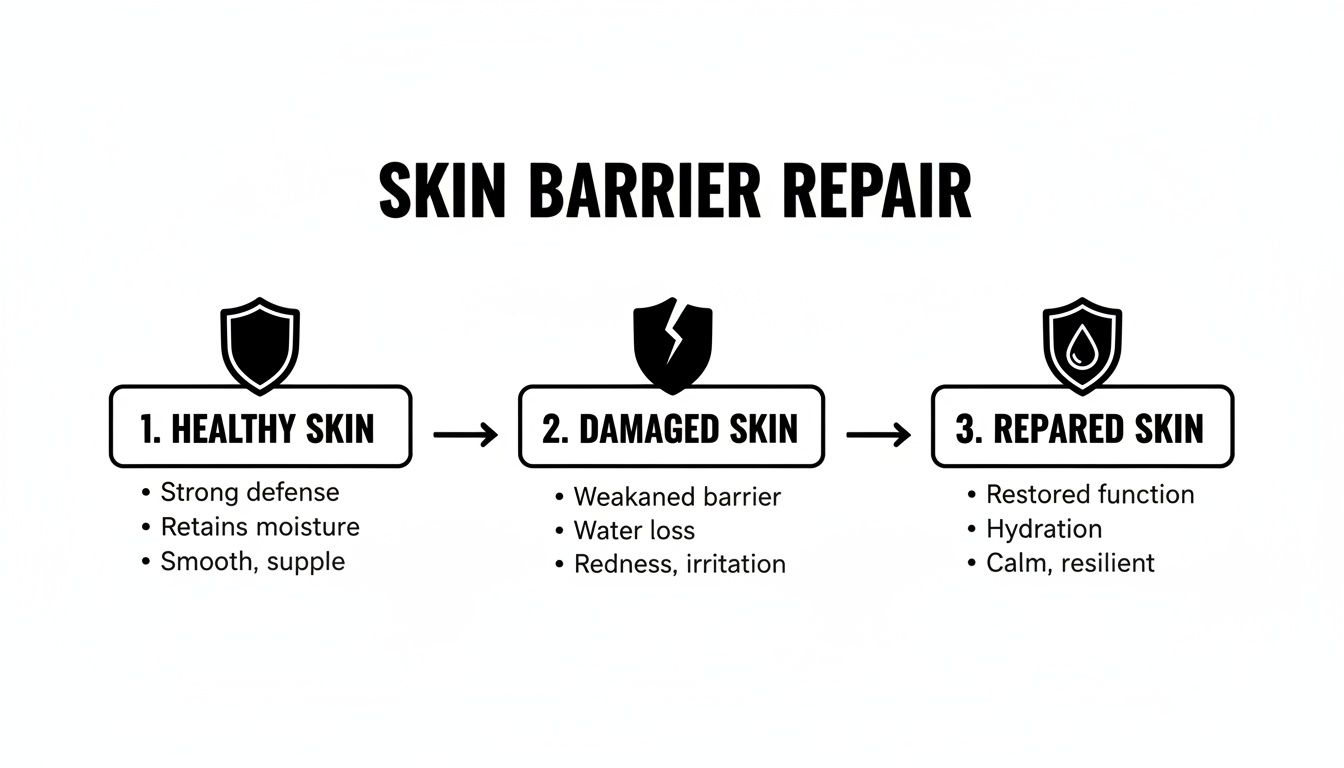
You can see how applying the right organic oils directly helps restore the skin's protective shield, finally sealing in that precious moisture.
Ingredients to Avoid for Healthy Skin
Just as important as knowing what to look for is knowing what to leave on the shelf. Certain common additives can irritate already-dry skin or create a slick illusion of moisture while offering zero real nutritional benefit.
Many synthetic ingredients, like mineral oil, essentially act as plastic wrap on the skin. They can trap debris and prevent the skin from breathing, all while failing to deliver the fatty acids needed for true barrier repair.
Here's a quick look at the ingredients that don't belong in your body oil. Think of it as your cheat sheet for reading labels.
Nourishing Botanicals vs. Common Synthetics
A direct comparison of skin-loving organic ingredients to look for on a label versus common chemical additives to avoid for healthy, hydrated skin.
| Ingredient Type | What to Embrace (And Why) | What to Avoid (And Why) |
|---|---|---|
| Moisturizers | Plant Oils (Castor, Argan): These are biomimetic, meaning they mimic skin's natural lipids to repair the barrier and provide deep, lasting nourishment. | Mineral Oil & Petroleum: These are byproducts of gasoline production. They are purely occlusive, offering no vitamins or fatty acids, and can clog pores. |
| Texture Enhancers | Natural Emollients (Shea, Cocoa Butter): These plant-based fats soften skin and are rich in vitamins and antioxidants, actively improving skin health. | Silicones (Dimethicone): These plastics create a slippery, smooth feel but offer no skincare benefits and can prevent other ingredients from absorbing. |
| Fragrance | Essential Oils: When used properly, they can provide a beautiful natural scent along with therapeutic benefits for the skin and mind. | "Fragrance" or "Parfum": This is a catch-all term that can hide hundreds of undisclosed, potentially irritating chemicals and allergens. |
Understanding what you’re putting on your body is empowering. You can learn more by demystifying natural ingredients in skincare in our detailed guide. Choosing wisely ensures your daily ritual is both a moment of pleasure and a real step toward healthier, happier skin.
Mastering Your Daily Hydration Ritual
Using an organic body oil for dry skin is less about the chore of moisturizing and more about creating a small, grounding moment of self-care. The real secret isn't just what you're using, but how you're using it. Mastering a few simple application techniques makes sure every single drop works its hardest to hydrate, nourish, and support your skin barrier.
The most important rule? Always apply to damp skin. Think of your skin like a sponge. A dry sponge will just push water away, but a damp one eagerly soaks up whatever you give it. Your skin works the same way. Applying oil right after a shower or bath, while your skin is still warm and holding onto a bit of water, helps trap that precious moisture, locking it in for hours.

This simple shift in timing can dramatically boost how well the oil absorbs and how effective it is. You can learn even more about this little trick in our guide on how to use body oil after a shower.
A Step-by-Step Application Guide
Making your application feel like a ritual doesn't just improve your skin—it gives you a quiet moment to connect with your body. This move toward wellness-focused routines is a huge part of why so many people are seeking out better skincare. In fact, the organic skincare market is projected to more than double by 2030, growing at an impressive 8.9% CAGR as people increasingly choose chemical-free, holistic hydration. By 2035, individual consumers are expected to make up 88.4% of this market, which shows a clear demand for products that nourish both skin and self.
Follow these steps for the perfect application every time:
- Warm the Oil: Put a small amount of oil into your palms and gently rub them together. This warms the oil just enough to help it spread beautifully and feel more luxurious on your skin.
- Apply with Gentle Motions: Start with your legs and work your way up, massaging the oil into your damp skin using long, sweeping strokes. Use gentle, circular motions around your joints, like your knees and shoulders, to help encourage circulation.
- Be Mindful: Take a moment to notice the feeling of the oil on your skin. This simple act of mindfulness can turn a routine task into a restorative practice.
Pro Tips for Advanced Layering
For those extra-dry spots that always seem to need more attention—think elbows, knees, and heels—layering your products can be a game-changer.
Use your body oil as the foundational layer of moisture. Think of it as the primer that prepares your skin. Apply it first to damp skin to deliver deep nourishment and repair the lipid barrier.
After the oil has had a minute to sink in, you can smooth a thicker balm or cream over those particularly dry patches. The oil works from within to replenish lost lipids, while the balm creates an extra protective seal on the surface. This locks in all the goodness and provides long-lasting comfort. It’s the ultimate defense against stubborn dryness and flaky skin.
Choosing a Gentle Body Oil for the Whole Family
When you're choosing skincare for sensitive complexions, little ones, or during pregnancy, the golden rule is "less is more." The skin is naturally more reactive during these times, making purity and simplicity your best friends. A beautiful organic body oil for dry skin should be a source of pure comfort, never a cause for concern.
This is exactly why minimally formulated oils are often the safest and most effective choice. When you opt for single-ingredient oils or simple botanical blends, you completely sidestep the long, confusing ingredient lists that hide synthetic fragrances, harsh preservatives, and other potential irritants.
This move toward gentle, non-toxic hydration isn't just a small trend—it's a massive shift. People with dry, sensitive skin are a huge reason the natural personal care market is projected to nearly double by 2033, with an impressive 9.6% growth rate. Families everywhere are seeking clean, effective moisture from beautiful botanicals like jojoba and argan. You can read the full research on the natural personal care boom to see just how quickly things are changing.
Soothing Botanicals for Delicate Skin
Certain plant oils are true standouts, known for being exceptionally calming and gentle enough for everyone in the family. They work with the skin to soothe inflammation and support its natural healing rhythm without any harshness.
- Calendula-Infused Oil: Often called “liquid gold,” calendula is celebrated for its incredible ability to calm down redness and irritation. It’s a go-to for soothing everything from stubborn dry patches to general sensitivity.
- Chamomile-Infused Oil: Think of it as a cup of chamomile tea for your skin. This oil is a powerhouse anti-inflammatory, helping to ease discomfort and bring a sense of peace to reactive skin.
- Castor Oil: This one is a marvel. It penetrates deeply and is incredibly well-tolerated, offering balanced moisture without disrupting the skin's natural harmony.
By choosing oils with short, recognizable ingredient lists, you’re doing more than just moisturizing. You’re providing pure, targeted nourishment that respects the skin's delicate balance and offers true peace of mind.
Of course, a thoughtful routine doesn't stop with oil. Creating a complete hydration ritual means choosing the best baby bath products and cleansers that also prioritize gentle, supportive ingredients. This ensures every single step of your family's routine is safe, soothing, and effective.
Still Have Questions About Organic Body Oil?
It’s completely normal to have a few questions before welcoming a new product into your daily routine. Even when you know the benefits, a little clarity goes a long way.
Let’s walk through some of the most common curiosities about using an organic body oil for dry skin, so you can feel confident and ready for deeply hydrated, happy skin.
Will Organic Body Oil Make My Skin Feel Greasy?
This is probably the number one question we hear, and it’s a fair one. The word "oil" can bring to mind a heavy, slick feeling that just sits on top of your skin. But a well-formulated organic body oil is a world away from that experience. It’s designed to leave your skin feeling like velvet, not an oil slick.
The secret is in the science. High-quality formulas use non-comedogenic oils like castor and argan, which have a molecular structure that’s incredibly similar to your skin’s own natural sebum. This means your skin recognizes them, allowing them to sink in quickly and get to work, rather than just sitting on the surface.
Application matters, too. Applying your oil to damp, warm skin helps it spread into a micro-fine layer, trapping that precious water underneath for a silky, dewy finish. It’s a completely different feel from synthetic ingredients like mineral oil, which can only coat the skin.
Can I Use Organic Body Oil On My Face?
While many pure plant oils are wonderfully gentle, it's always smart to be cautious here. The skin on your face is much thinner and more delicate than the skin on your body, and it often has different needs—and a different tendency toward congestion.
If your body oil is a very simple, single-ingredient formula—like pure, cold-pressed argan oil—it’s likely safe to try. That said, the golden rule is always to patch test first. Apply a small amount to a discreet spot, like just behind your ear or along the jawline, and wait 24 hours to see how your skin responds.
For anyone with acne-prone or highly sensitive facial skin, we always recommend reaching for a product specifically formulated and tested for the face. It’s the best way to avoid potential clogged pores or irritation from oils that might be perfect for the body but a bit too rich for the face.
How Often Should I Apply Body Oil for Dry Skin?
For the best, most lasting results, think of your body oil as a daily dose of nourishment for your skin barrier. Consistency is everything.
We recommend making body oil a daily ritual, ideally right after you shower or bathe. This is when your skin is warm, receptive, and slightly damp—the perfect conditions for the oil to lock in maximum moisture for the day ahead.
For most people, this daily application is enough to keep dry skin feeling comfortable and resilient. But your skin’s needs can shift with the seasons. During harsh winter months or in a very dry climate, you might notice your skin asking for a little more. If that’s the case, adding a second application to extra-thirsty spots—like elbows, knees, and heels—before bed can make a world of difference. Your skin is smart; it will tell you what it needs.
What Is the Difference Between a Body Oil and a Lotion?
This is a great question, and understanding the answer is key to finding real, lasting relief for dryness. The core difference is in their very makeup and how they interact with your skin.
- Lotions are emulsions, meaning they are a mix of water and oil bound together by emulsifiers. They feel instantly hydrating because of their high water content, but that water can evaporate quickly, often leaving your skin feeling dry again just a few hours later.
- Body oils are anhydrous (water-free). They are made from pure, concentrated plant extracts rich in lipids. Their primary jobs are to soften the skin (as an emollient) and, crucially, to prevent water from escaping by repairing your skin’s natural barrier (as an occlusive).
For truly tackling the cycle of dryness, a high-quality organic body oil for dry skin is often the more effective choice. It works on the root cause—a compromised skin barrier—instead of just offering a temporary surface fix.
Ready to embrace a daily ritual that delivers calm, resilient skin? The curated collection at Baby le Bébé is crafted with 100% natural and 99% organic ingredients to cleanse, hydrate, and seal in moisture. Discover our smoothing body oils and build your perfect routine today.


0 comments