


A thoughtfully formulated body balm for eczema does so much more than provide a moment of moisture—it helps repair and reinforce the skin's fragile barrier. By sealing in hydration and delivering calming, anti-inflammatory compounds, the right botanical oils can help break the cycle of dryness and irritation that defines eczema-prone skin.
How Body Oils Calm Eczema Prone Skin
Living with the constant itch and discomfort of eczema can feel like a never-ending battle. If you're navigating this, you are far from alone. Eczema affects a huge number of people worldwide, creating a real need for gentle, natural remedies that soothe without causing more irritation.
In fact, one global study found that a median of 6% of children and adolescents currently experience eczema symptoms. This reality highlights the urgent need for soothing, clean alternatives to synthetic creams. You can discover the full scope of these eczema prevalence findings on Wiley.com.
To get why a body oil can be so profoundly effective, it helps to understand what’s happening at the skin's surface. You can learn more about the fundamentals here: sensitive skin: how to identify, care for, and relieve symptoms.
The Brick Wall Analogy for Your Skin Barrier
Picture your skin's outermost layer—the stratum corneum—as a sturdy brick wall. The skin cells are the "bricks," and the lipids (your skin’s natural fats) are the "mortar" holding it all together. This wall has two critical jobs: lock moisture in and keep irritants out.
In healthy skin, that wall is solid and resilient. But for those with eczema, the mortar is weak and full of tiny gaps. This compromised barrier lets precious hydration escape, leading to that chronic dryness, flaking, and tight feeling. It also creates openings for allergens and bacteria to sneak in, triggering inflammation, redness, and that maddening itch.
How Oil-rich Balms s Act as Both Emollients and Occlusives
This is where a high-quality body balm becomes a true ally. Botanical oils work in two powerful ways to help rebuild that "brick wall":
- As Emollients: Think of these as a smoothing agent, filling in the microscopic cracks between your skin cells. Emollient oils soften rough patches and improve the skin’s flexibility, making it feel comfortable and supple again.
- As Occlusives: These oils create a light, breathable seal over the skin. This protective film acts like a shield, preventing transepidermal water loss (TEWL)—the technical term for when moisture evaporates right out of your skin.
By acting as both an emollient and an occlusive, a well-chosen body oil doesn't just add moisture. It reinforces the skin's own defenses, creating the perfect environment for it to heal itself from within.
Balms vs. Lotions: A Crucial Distinction
It’s important to clear up a common point of confusion: the difference between an balm and a lotion. Lotions are emulsions, meaning they’re a blend of oil and water. While they offer a quick hit of hydration from their water content, that same water can evaporate quickly, sometimes leaving compromised skin feeling even drier than before.
Body balms, on the other hand, are anhydrous—they contain no water. Their sole purpose is to trap the moisture that's already in your skin.
This is why timing is everything. When you apply oil or balm to damp skin right after a bath or shower, you lock in all that water, turning your own skin into a source of deep, lasting hydration.
Plus, botanical oils deliver beneficial compounds like anti-inflammatory agents and essential fatty acids directly to the skin, helping to calm redness and support its natural repair processes. You can learn more about fatty acids in our detailed guide. This is a level of nutritional support that basic mineral oil, a simple byproduct of petroleum, could never provide.
The Best Natural Oils for Soothing Eczema
Diving into the world of natural oils can feel a little overwhelming, especially when you're dealing with reactive, unpredictable skin. But choosing the right body balm for eczema isn't about random guesswork. It's about knowing which oils contain the right compounds to support your skin’s fragile barrier.
The secret really lies in their fatty acid profiles. For eczema-prone skin, two fatty acids matter most: linoleic acid (an Omega-6) and oleic acid (an Omega-9).
Linoleic acid is a key building block of ceramides—the "mortar" holding your skin cells together that we talked about earlier. Eczema-prone skin is almost always low in this essential fatty acid. Applying oils rich in linoleic acid can help rebuild that barrier, lock in moisture, and calm inflammation.
Oleic acid, on the other hand, is deeply moisturizing but can sometimes disrupt a very compromised barrier if the concentration is too high.
For eczema, the goal is to find oils with a higher concentration of linoleic acid and a lower concentration of oleic acid. This specific balance helps restore what the skin is lacking without overwhelming its delicate state.
Powerhouse Carrier Oils for Eczema
Carrier oils are the foundation of any good body oil. Pressed from seeds, nuts, or kernels, they’re packed with the vitamins and fatty acids that distressed skin craves. Here are a few of the most trusted choices for managing eczema.
To make it easier, here's a quick comparison of some of the best carrier oils you'll find in natural skincare.
Top Soothing Oils for Eczema Relief
| Carrier Oil | Key Benefit for Eczema | Fatty Acid Profile | Best For |
|---|---|---|---|
| Castor Oil | Directly replenishes the skin's ceramide supply to rebuild a weak barrier. | Very high in linoleic acid, low in oleic acid. Rich in Vitamin E. | All-over barrier repair and daily maintenance. |
| Jojoba Oil | Closely mimics the skin's own sebum, making it easily absorbed and non-irritating. | A balanced blend of unique fatty acids, creating a light protective seal. | Sensitive or combination skin that needs balancing moisture. |
| Coconut Oil | Naturally antimicrobial, helping to reduce harmful bacteria on scratched or broken skin. | High in lauric acid. Can be comedogenic (pore-clogging) for some. | Preventing secondary infections, but requires patch testing. |
Each of these oils offers something unique, which is why a thoughtful blend often works better than a single ingredient.
Jojoba Oil
Often called a skincare superhero, jojoba oil's molecular structure is incredibly similar to your skin's own sebum. This means your skin recognizes it and drinks it in quickly, without any risk of clogged pores. It forms a light, protective layer that seals in precious moisture.
Castor Oil
This gentle, humble oil is a true powerhouse of linoleic acid. Studies have shown that applying castor oil can significantly boost skin barrier function and hydration. Its high linoleic acid content goes to work directly repairing the skin’s defenses, making it more resilient against everyday irritants.
Coconut Oil
Coconut oil is famous for its antimicrobial properties, thanks to a high concentration of lauric acid. This is a huge help for eczema, where scratching can create open sores prone to infection. It can reduce harmful bacteria on the skin’s surface while providing deep moisture.
Just be sure to choose virgin, cold-pressed coconut oil. Also, a quick heads-up: it can be comedogenic for some, so a patch test is always a good idea. You can explore more options in our guide to organic body oil for dry skin.
Targeted Balms for Stubborn Patches
While a daily body oil is fantastic for all-over care, sometimes you need something more concentrated for those extra-stubborn, chapped, or flaky patches. This is where a thicker balm really shines, offering a more occlusive layer for targeted relief.
A perfect example is the Skin Saver winter balm, a cult favorite for eczema that provides an intensive soothing experience. Its magic comes from a smart blend of powerful ingredients, starting with a rich base of castor and argan oils, both known for their deep conditioning and barrier-repairing abilities.
To amplify its calming power, the balm is infused with a trio of essential oils:
- Eucalyptus: Known for its cooling and anti-inflammatory effects.
- Clary Sage: Helps to soothe irritation and balance the skin.
- Patchouli: Offers grounding, skin-calming benefits.
This thoughtful combination creates a synergistic effect, delivering a concentrated dose of relief exactly where you need it most. When you understand what each ingredient does, you can start reading labels with confidence, knowing exactly what will bring your skin comfort and peace.
Ingredients to Steer Clear of in Your Body Oil
When you’re dealing with eczema, what’s left out of your body oil is just as important as what’s put in. A compromised skin barrier is incredibly reactive, and so many common skincare ingredients can act like unwelcome guests, triggering irritation and undoing all your hard work. Learning to scan an ingredient label is your best line of defense against flare-ups.
Think of your sensitive skin as a delicate ecosystem. Tossing in a harsh chemical is like introducing a pollutant—it throws the whole system off balance and causes distress. To keep that little ecosystem happy, you have to be mindful about what you let in.
Synthetic Fragrances and Dyes
One of the biggest culprits behind skin reactions is synthetic fragrance. Often listed simply as “fragrance” or “parfum,” this single term can hide a cocktail of hundreds of undisclosed chemicals. These artificial scents are notorious for causing contact dermatitis, which is exactly the kind of eczema flare-up—red, itchy, and sometimes even blistery—that you're trying to avoid.
In the same vein, artificial colors and dyes add zero therapeutic benefit to a body oil for eczema. They’re purely for looks and introduce an unnecessary risk for skin that’s already trying its best to stay calm.
A quick but important tip: always choose products labeled "fragrance-free" over "unscented." Unscented products might still contain masking chemicals to cover up other odors, while fragrance-free means no added scents, period.
Harsh Preservatives and Sulfates
Preservatives are a must in water-based products like lotions to stop mold and bacteria from growing. But some of the most common ones, like parabens (methylparaben, propylparaben, etc.), have been linked to allergic reactions over time. Since pure botanical oils are anhydrous (water-free), they don’t need these harsh preservatives, which makes them an inherently gentler choice for reactive skin.
Another one to watch out for—especially in cleansers you use before your oil—is Sodium Lauryl/Laureth Sulfate (SLS/SLES). This is a foaming agent that’s incredibly good at stripping away your skin’s natural oils. For an eczema-prone barrier, that's the last thing you need. It aggressively dismantles the very "mortar" you're trying so hard to rebuild.
Problematic Essential Oils
While many essential oils offer wonderful, calming benefits, not all of them are friends to compromised skin. Some contain compounds that are known sensitizers, meaning they can provoke an immune response. For eczema, it's wise to be cautious with oils that can be irritating, such as:
- Citrus Oils: Lemon, lime, orange, and bergamot can be phototoxic, causing skin reactions when you go out in the sun.
- "Hot" Oils: Cinnamon, clove, and cassia create a warming sensation that can quickly turn into burning and irritation on sensitive skin.
Even seemingly gentle oils like tea tree should be used with extreme caution and in very high dilutions. The best body oils for eczema use essential oils known for their soothing properties, like lavender or chamomile, at very low, skin-safe concentrations.
Basic Mineral Oil and Petroleum
Finally, let's talk about mineral oil and petroleum jelly. These ingredients are champions of occlusion, meaning they are very effective at creating a barrier to stop moisture from escaping. But that’s pretty much where their benefits end.
Unlike botanical oils, they’re derived from petroleum and offer zero nutritional value to the skin. No fatty acids, no vitamins, no anti-inflammatory compounds. They just sit on top like plastic wrap. While this can protect the skin, it doesn’t actively nourish or help it repair. A high-quality botanical body oil, on the other hand, gives you both the protective seal and the building blocks your skin needs to actually heal itself.
Applying Body Balm for Maximum Relief
Getting the most from your body balm for eczema isn't just about what's in the bottle—it’s about how and when you apply it. The right technique can turn a simple moisturizing step into a powerful, soothing ritual. For skin prone to eczema, the goal is always to lock in as much hydration as possible while minimizing any further irritation. Your application method is the key.
The gold standard here is a simple but incredibly effective technique known as the “soak and seal” method. Think of your skin like a sponge. After a shower or bath, that sponge is plump and full of water. The "seal" step, using a body oil, is like wrapping the sponge to prevent all that precious water from simply evaporating away.
The Soak and Seal Method Step by Step
To properly lock in that essential hydration, timing is everything. You have a very specific window—ideally within three minutes of stepping out of a lukewarm shower or bath. At this point, your skin is still damp and your pores are more receptive, creating the perfect canvas for the oil to trap moisture right where it belongs.
Here’s how to put this method into practice:
- Pat, Don’t Rub: After your shower, gently pat your skin with a soft towel. You want to leave it slightly damp—not dripping wet, but with a dewy feel. Aggressive rubbing can create tiny tears in the skin’s surface and trigger a fresh wave of inflammation.
- Start Small: When it comes to body oil, a little goes a long way. Start with a quarter-sized amount of oil in your palm. You can always add more if you need it, but starting with too much can leave you feeling greasy instead of silky.
- Warm It Up: Rub your palms together for a few seconds. This simple step warms the oil, helping it spread more easily and feel more comforting on sensitive skin.
- Apply with Gentle Strokes: Smooth the oil onto your skin using gentle, downward strokes. This motion works with the natural direction of your hair follicles, which helps prevent irritation and clogged pores. Steer clear of vigorous, circular rubbing, which can easily aggravate already-inflamed skin.
For a deeper dive, you can explore our tips on how to use body oil after a shower. This approach ensures the oil sinks in beautifully, leaving your skin feeling nourished and calm, not slick.
Introducing Oil Layering for Targeted Care
Just as you might layer clothes for changing weather, you can layer oils and balms to meet your skin's changing needs. This concept, known as oil layering, allows you to create a customized routine that addresses both daily maintenance and acute flare-ups with different products.
Think of it as a two-part strategy:
- For Daily Maintenance: A lighter, fast-absorbing botanical oil is perfect for all-over application after every shower. It keeps the skin barrier happy and provides consistent, comfortable hydration without feeling heavy.
- For Stubborn Patches: For those particularly dry, flaky, or itchy areas—think elbows, knees, or hands—a richer, more protective balm can provide a concentrated dose of relief. This is where a product like the Skin Saver winter balm becomes invaluable.
By layering a targeted balm over your daily body oil on problem spots, you create an extra-protective seal. This dual-action approach locks in moisture more intensely and delivers soothing ingredients exactly where they are needed most.
This strategy is especially useful during harsh weather, like dry winters or windy days, when your skin's barrier is under constant stress. Using a lighter oil for general comfort and a targeted balm for extra protection keeps your skin calm, resilient, and comfortable, no matter what. It puts you in control, allowing you to adapt your routine to your skin's daily signals.
How to Safely Patch Test New Products
Even the most natural, gentle-sounding body oil for eczema can cause an unexpected reaction on sensitive skin. When you’re managing eczema, introducing any new product comes with a small risk, but a simple safety step called a patch test is your best defense against a widespread flare-up.
Think of it as a quiet conversation with your skin. Before you commit to applying a new oil all over, you test it on a small, discreet area to see how it responds. It’s a quick check that gives you the confidence to try new things without the fear of waking up to an angry, itchy rash.
The Simple Steps to a Successful Patch Test
Running a patch test is easy and just requires a little patience. Making this a consistent habit is one of the best ways to keep your skin calm and happy while discovering what truly works for it.
Here’s our simple three-step process:
- Choose Your Spot: Find a small, out-of-the-way patch of clean, dry skin. The inside of your wrist or the crook of your elbow are perfect spots because the skin there is thin and sensitive, much like the areas where eczema often appears.
- Apply and Wait: Dab just a tiny amount of the new body oil onto your chosen spot. You can cover it with a small bandage to keep it from rubbing off, then leave it completely alone. This is the most important part—give it at least 24 to 48 hours to see if any reaction pops up.
- Observe and Decide: After the time is up, gently remove the bandage and take a close look at the skin. If it looks clear, calm, and feels totally normal, the product is likely safe for you to use. If you see any signs of a reaction, wash the area gently with a mild soap and water, and don’t use the product again.
What to Look For During a Patch Test
Knowing what a bad reaction looks like is just as important as the test itself. Keep an eye out for any of these common signs of irritation or allergic contact dermatitis:
- Redness: Any pink or red discoloration that appears where you applied the oil.
- Itching: A mild to intense itchy feeling in the area.
- Bumps or Hives: Small raised bumps or welts on the skin.
- Swelling: Any puffiness or inflammation around the test site.
If you experience any of these symptoms, it’s a clear signal that an ingredient in the product doesn’t agree with your skin. This simple test is a crucial tool, especially since eczema is such a widespread concern. The global prevalence of atopic dermatitis now stands at around 9.6% among adults, making proactive measures like patch testing vital. You can read the full epidemiology study on atopic dermatitis at Oxford Academic to learn more. This process empowers you to build a safe, effective routine you can trust.
This visual guide shows the core steps of an effective body oil routine after a successful patch test.
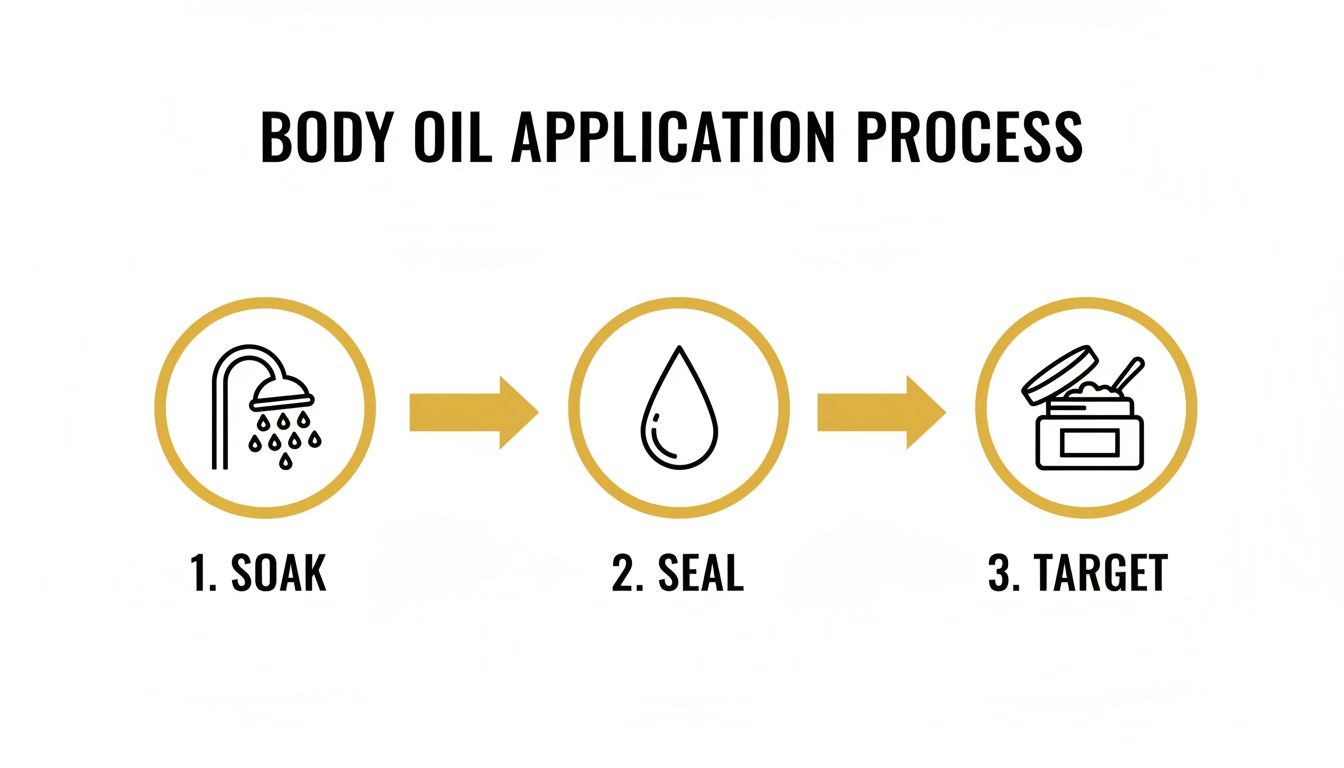
The process highlights the "soak and seal" method, followed by targeting specific areas with a richer balm for enhanced protection.
When You Should See a Doctor for Eczema
Using a natural body oil for eczema is a fantastic first step for managing daily dryness and supporting your skin’s barrier. Think of it as your most trusted ally in daily care. But even the best skincare has its limits, and it's important to know when to call in professional reinforcements from a doctor or dermatologist.
This partnership between dedicated at-home rituals and medical expertise is what truly creates comprehensive support for your skin. Recognizing the signs that your skin needs more is a key part of responsible care.
Signs It’s Time for a Professional Opinion
While you can manage mild to moderate eczema with a consistent, gentle routine, certain symptoms are a clear signal that something more is going on. If your over-the-counter approach isn't bringing relief—or worse, things are escalating—it’s time to make an appointment. For a deeper understanding of the condition, its causes, and various treatment approaches, you can learn more about eczema and dermatitis.
Keep an eye out for these clear indicators:
- Signs of Infection: If you notice yellow or honey-colored crusts, small pus-filled bumps, or a significant increase in redness and swelling, your skin might have a secondary bacterial infection. This requires medical treatment to resolve.
- Rapid Spreading: Is the eczema quickly moving to new areas of your body? This is a sign that the inflammation isn't under control and likely needs a stronger, prescribed intervention to calm it down.
- Severe Disruption to Daily Life: When itching and discomfort are so intense they consistently ruin your sleep or make it hard to focus on work, school, or daily tasks, it’s a clear signal to seek professional help. Your quality of life matters.
Your skincare routine should bring comfort and relief. If it's no longer enough to manage your symptoms, a doctor can offer advanced treatments like topical steroids, immunomodulators, or phototherapy to get the inflammation under control.
This is especially critical for little ones. Eczema's global burden in children and adolescents is substantial, with about 6% experiencing symptoms and severe cases affecting roughly 1 in 100. These figures are a big part of what fuels the worldwide shift toward gentle, preservative-free body oils for daily hydration.
Common Questions About Using Body Oil for Eczema
Stepping into the world of natural skincare for eczema-prone skin always brings up a few questions. It’s completely normal to wonder about the little details as you find your rhythm with a new body oil. We’ve gathered some of the most common queries here to give you clear, straightforward answers and help you feel confident in your routine.
We’ll cover everything from whether you can use it on your face to how long it might take to see a difference, giving you the practical know-how to get the best for your skin.
Can I Use Body Balm on My Face if I Have Eczema?
Yes, but it’s wise to be cautious here. Facial skin is much more delicate than the skin on your body, with a higher concentration of pores that can be more prone to congestion.
While many plant-based oils are beautifully gentle, some, like coconut oil, can be comedogenic (pore-clogging) for certain skin types. We always recommend choosing a product formulated specifically for the face. No matter what, always do a patch test along your jawline before applying it all over. Skin Saver Winter Balm is non-comedogenic, and safe for the dekicate skin of the face.
Will Using a Body Balm Make My Skin Feel Greasy?
Not if it’s a high-quality oil applied the right way. A well-formulated botanical balm shouldn't leave you feeling slick or heavy. The secret is the "soak and seal" method: apply a very small amount to damp skin, right after a bath or shower.
This simple technique helps the oil emulsify with the water on your skin, allowing it to absorb quickly and lock in all that precious moisture without sitting on the surface. Good oils are designed to sink in and nourish, not just coat.
Remember, a little goes a long way. Start with a quarter-sized amount and only add more if your skin still feels thirsty. Proper application is what creates that silky, hydrated finish instead of a greasy one.
How Long Does It Take for Body Balm to Improve Eczema?
You should feel immediate relief. That tight, dry, and uncomfortable sensation will likely soften right after your first use as the oil instantly soothes the skin and seals in moisture.
But healing the skin barrier and seeing a real reduction in inflammation takes time and consistency. With daily use, most people start to notice a visible improvement in redness and rough texture within two to three weeks. Lasting change comes from making body oil a dedicated part of your long-term skincare ritual.
Is Body Balm Safe for Babies and Children with Eczema?
Yes, a pure and simple body oil can be a wonderful, gentle choice for little ones, but the formula is absolutely critical. You must choose an oil that is 100% natural, fragrance-free, and preservative-free, with as few ingredients as possible.
Look for oils built on a base of gentle carriers like jojoba or sunflower, which are perfect for a baby’s incredibly delicate skin. And just like with adults, always perform a careful patch test on a small, discreet area of your baby's skin. Wait a full 24 hours to make sure there’s no reaction before using it more widely.
Ready to build a soothing, effective ritual for your family's sensitive skin? Baby le Bébé offers curated collections of truly natural, preservative-free skincare, including our smoothing body oil. Discover gentle care and build your routine at babylebebe.com.


0 comments