

Sensitive skin rarely asks for more. More steps, more actives, more exfoliation, and more fragrance can turn a well-intended routine into a cycle of redness, tightness, stinging, and uncertainty. The calmest approach is usually the most edited one.
That is why natural skincare for sensitive skin works best when it is treated as a long-term calm strategy, not a hunt for the newest miracle ingredient. The goal is simple: support the skin barrier, reduce avoidable triggers, and choose plant-based formulas with the same care you would use for any reactive skin type.
Natural can be beautiful, nourishing, and effective. It can also be too much if a formula is overloaded with strong essential oils, grainy scrubs, or highly active botanicals. Sensitive skin does not need to be shocked into radiance. It needs consistency, softness, and ingredients that help it feel safe.
What calm sensitive skin really needs
Sensitive skin is not one single condition. It can show up as burning, itching, flushing, dryness, rough patches, breakouts, or a feeling that your skin dislikes almost everything. Some people are sensitive all the time, while others become reactive after over-exfoliating, using harsh cleansers, traveling, spending time in cold weather, or experiencing stress.
The common thread is the skin barrier. When the barrier is healthy, it helps keep water in and irritants out. When it is disrupted, even gentle products can suddenly sting. The American Academy of Dermatology recommends fragrance-free, gentle products and regular moisturizing for dry, easily irritated skin, which aligns with a barrier-first approach.
A calm routine should focus on three priorities:
- Cleanse without stripping: Remove daily buildup while preserving the skin’s natural lipids.
- Replenish comfort: Use oils, balms, or moisturizers that reduce dryness and tightness.
- Limit surprise triggers: Introduce new formulas slowly and avoid unnecessary complexity.
This is not about doing nothing. It is about doing the right things repeatedly, with enough restraint to let the skin settle.
Natural does not always mean gentle
One of the biggest misconceptions in sensitive skincare is that natural ingredients are automatically safe for every face. Poison ivy is natural. So are potent citrus oils, rough walnut shell particles, and strong herbal extracts that can be irritating when used too often or at high concentrations.
For sensitive skin, the question is not simply, Is it natural? The better question is, Is it calm, well-formulated, and appropriate for my current skin state?
The FDA notes that fragrance ingredients in cosmetics can be associated with allergic reactions or sensitivities in some people. This matters because natural scent compounds, including some essential oils, can still be fragrance triggers. If your skin is very reactive, unscented or minimal-scent formulas are often a safer starting point.
This does not mean all botanical ingredients are a problem. Many plant oils, waxes, and extracts can be deeply supportive. The key is choosing formulas that are simple, stable, and made with sensitive skin in mind.
The calm-keeping ingredient framework
When evaluating natural skincare, think in categories rather than chasing one perfect ingredient. Sensitive skin usually responds best when a formula includes barrier-supporting emollients, gentle occlusives, and low-irritation soothing ingredients.
| Ingredient category | What it can do for sensitive skin | What to watch for |
|---|---|---|
| Plant oils | Help soften roughness and reduce the feeling of tightness | Some oils may feel too heavy for acne-prone skin |
| Botanical butters | Provide cushion and comfort for dry, compromised areas | Rich textures can overwhelm very oily skin |
| Beeswax or plant waxes | Help seal in moisture and protect against dryness | Choose based on vegan preferences and skin feel |
| Oat, calendula, chamomile, or aloe | Commonly used for calming and comfort-focused care | Botanical allergies are possible, so patch test |
| Essential oils | Can provide natural aroma and a sensorial experience | May irritate highly reactive skin, especially during flares |
| Physical exfoliants | Can smooth texture when extremely gentle | Scrubs can worsen redness or barrier damage |
If you want a deeper ingredient-by-ingredient breakdown, Baby le Bébé’s guide to the best ingredients for sensitive skin is a helpful companion to this calm-first approach.
Build a routine that gives skin fewer reasons to react
A sensitive skin routine does not need ten steps. In fact, a shorter routine is often easier to troubleshoot. If something causes redness or stinging, you can identify the likely culprit faster.
A calm morning routine can be as simple as a gentle cleanse or water rinse, a soothing oil or moisturizer if your skin feels dry, and a broad-spectrum sunscreen. Sunscreen is not optional for sensitive skin, since UV exposure can worsen redness, dryness, and visible irritation. Many reactive skin types prefer mineral sunscreens with zinc oxide or titanium dioxide, but personal tolerance varies.
At night, cleanse gently and replenish moisture while your skin rests. If your face feels tight immediately after washing, your cleanser may be too strong, your water may be too hot, or you may be cleansing for too long. Baby le Bébé has a dedicated guide to natural cleansers for sensitive face skin if cleansing is where your irritation tends to start.
For many people, the calmest routine looks like this:
- Morning: Rinse or cleanse gently, moisturize if needed, then apply sunscreen.
- Evening: Cleanse gently, apply a nourishing oil, balm, or moisturizer, then leave the skin alone.
- Weekly: Skip harsh exfoliation and focus on barrier support, especially if the skin feels tight or reactive.
The hardest part is often resisting the urge to add more when skin is unhappy. But sensitive skin frequently improves when you remove unnecessary steps before adding new ones.
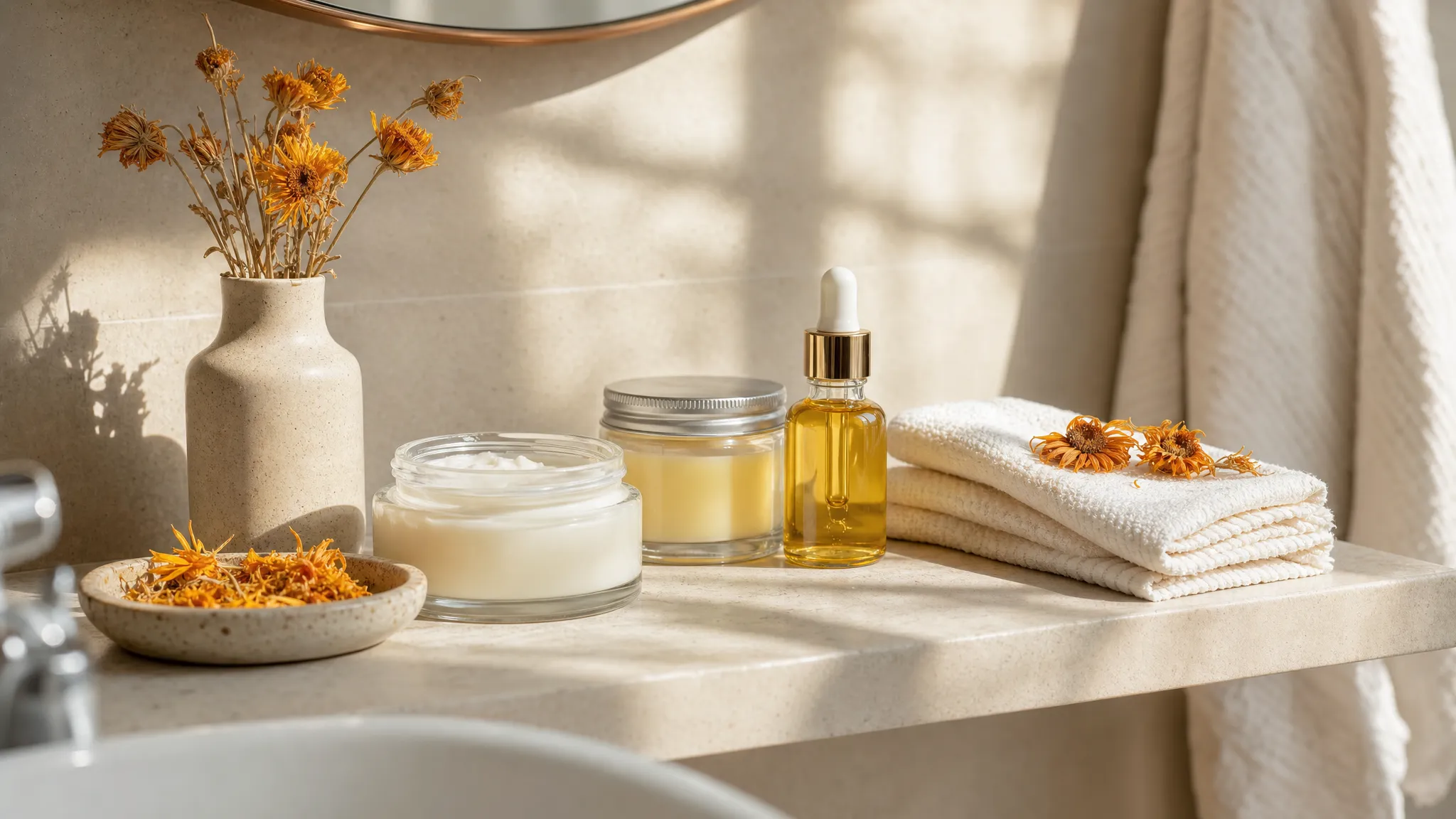
Patch testing is the habit that keeps calm going
Patch testing is not glamorous, but it is one of the most useful habits for sensitive skin. A product can be beautifully formulated and still not agree with you. Skin history, allergies, climate, hormones, medications, and barrier condition all influence tolerance.
Before applying a new product to your entire face, test a small amount on a discreet area, such as the inner arm, behind the ear, or along the jawline. Use it once daily for several days if your skin does not react immediately. If you notice burning, swelling, persistent itching, or a rash, stop using it.
When adding something new to your routine, introduce one product at a time. Give your skin at least a week, and often longer if you are highly reactive, before adding another formula. This slow pace may feel inconvenient, but it prevents the common problem of changing five things at once and not knowing what caused the flare.
Patch testing is especially important with natural products that contain botanicals, nut oils, essential oils, or bee-derived ingredients. Natural sensitivity is still sensitivity.
Keep a trigger map, not just a product shelf
If your skin seems unpredictable, your products may not be the only variable. Sensitive skin often reacts to a combination of triggers. Cold wind, hot showers, low humidity, stress, over-cleansing, alcohol, spicy food, hormonal changes, and laundry detergent can all contribute to a flare-prone pattern.
A simple trigger map can help. For two to four weeks, track what your skin looked and felt like, what you used, the weather, any unusual foods or drinks, and whether you were stressed or sleep-deprived. You do not need a complicated spreadsheet. A few notes in your phone can reveal patterns.
For example, you may discover that your skin tolerates a botanical oil well in humid weather but feels congested when you layer it heavily during summer. Or you may notice that redness appears after hot showers, not after your cleanser. This information helps you make calmer choices instead of blaming every product.
The best sensitive skin routine is not static. It adapts gently. In winter, you may need richer balms and less cleansing. In summer, you may prefer lighter oils or smaller amounts of moisturizer. During a flare, you may need to pause everything except the essentials.
What to stop doing when your skin is already upset
When skin is actively irritated, the goal is not to perfect your glow. The goal is to stop the spiral. That often means pausing the products and habits that demand too much from the barrier.
Avoid exfoliating, scrubbing, using hot water, applying strong masks, layering multiple new products, or trying to dry out redness with astringent ingredients. Even natural clay masks or herbal treatments can be too stimulating when the skin is already inflamed or stinging.
Instead, return to basics. Use cool or lukewarm water, cleanse only if needed, moisturize with a bland and comforting formula your skin already tolerates, and protect the area from wind and sun. If irritation is severe, painful, spreading, or recurring, it is time to check in with a board-certified dermatologist.
For step-by-step support during a flare, the guide on how to calm irritated skin goes deeper into gentle, natural methods for reducing discomfort without overcorrecting.
How to choose natural skincare that stays calm over time
The best natural skincare for sensitive skin should feel boring in the best possible way. It should not tingle dramatically. It should not leave your face squeaky clean. It should not make you wonder whether redness is part of the process.
Look for formulas with short, understandable ingredient lists and a clear purpose. A cleanser should cleanse. A balm should protect and soften. An oil should nourish and help reduce the feeling of dryness. Sensitive skin often struggles when every product tries to cleanse, exfoliate, brighten, fragrance, tighten, and treat all at once.
Texture matters too. A rich balm may be ideal for dry cheeks, windburn, or rough hands, while a lighter oil may suit a face that becomes congested easily. If you are prone to breakouts, introduce heavier products sparingly and watch how your skin responds.
It is also worth considering your values. Baby le Bébé focuses on 100% natural skincare, 99% organic ingredients, cruelty-free choices, and formulas made without synthetics, parabens, petroleum, preservatives, or fillers. If those standards matter to you, choosing from a curated apothecary can make the search feel less overwhelming.
A calm skin checklist before you buy
Before choosing your next product, pause and ask a few practical questions. This helps prevent impulse purchases that look beautiful on the shelf but do not fit your skin’s needs.
- Does this product solve a current problem, or am I adding it out of frustration?
- Is the ingredient list simple enough for me to identify likely triggers?
- Does it contain fragrance or essential oils, and does my skin usually tolerate them?
- Can I patch test it before using it all over my face?
- Does the texture match my skin type, climate, and season?
- Am I introducing it at a calm time, or during an active flare?
Sensitive skin care is less about finding a perfect product and more about making a series of calm decisions. Over time, those decisions compound. Your skin spends less energy recovering and more time simply functioning well.
Frequently Asked Questions
Is natural skincare better for sensitive skin? Natural skincare can be a good fit for sensitive skin when the formulas are simple, gentle, and barrier-supportive. However, natural does not automatically mean non-irritating. Strong essential oils, abrasive scrubs, and highly active botanicals can still trigger sensitivity.
What ingredients should sensitive skin avoid? Many sensitive skin types do better with less fragrance, fewer essential oils, no harsh exfoliants, and no drying alcohols. Personal triggers vary, so patch testing is important even with natural products.
How long does it take for sensitive skin to calm down? Mild irritation may improve within a few days after simplifying your routine, while a damaged barrier can take several weeks to feel stable. If symptoms are painful, persistent, or worsening, seek medical advice.
Can I use facial oils if I have sensitive skin? Yes, many sensitive skin types enjoy facial oils, especially when dryness and tightness are concerns. Start with a small amount, patch test first, and adjust based on whether your skin is dry, oily, acne-prone, or seasonally reactive.
Should sensitive skin exfoliate? Sensitive skin can exfoliate, but often less frequently and more gently than other skin types. During irritation, skip exfoliation entirely and focus on barrier repair before reintroducing any smoothing step.
Keep your routine calm, natural, and intentional
Sensitive skin does not need a louder routine. It needs a quieter one, built around trust, patience, and ingredients that respect the barrier.
If you are ready to simplify your shelf with natural, organic, cruelty-free skincare, explore Baby le Bébé’s curated apothecary. Start with the essentials your skin will actually use, then introduce each new formula slowly. Calm skin is not a one-time result. It is a rhythm you can return to every day.


0 comments