

Typing “skin care store near me” into Google can bring up dozens of options in seconds. The harder part is knowing which store will actually help your skin, respect your values, and guide you toward products you will enjoy using every day.
A great skin care store is not just a place with pretty shelves. It is a place where ingredient transparency, thoughtful curation, clean product handling, and honest guidance all come together. Whether you want a gentle cleanser, a botanical body oil, a barrier-supporting balm, or a full routine reset, the right store should make skincare feel calmer, not more confusing.
A great skin care store solves a skin problem, not just a shopping problem
Many shoppers start with location because convenience matters. But proximity is only the first filter. The best local skincare shop should help you answer a more important question: “What does my skin actually need right now?”
That distinction matters because skincare claims can be overwhelming. In the United States, the FDA explains that cosmetic products and ingredients, except color additives, generally do not need FDA approval before going to market. That means shoppers benefit from stores that do their own careful vetting and explain formulas clearly. You can read more from the FDA’s overview of cosmetic regulation.
A strong store should help you sort marketing from substance. It should be able to explain why a product is gentle, how it fits into your routine, what ingredients may be unsuitable for your skin type, and how to introduce it safely.
Search smarter before you visit
Local search results are useful, but they do not always tell the full story. A store may rank well because it is close, popular, or well optimized online, not necessarily because it is the best match for sensitive skin, organic skincare, cruelty-free products, or a minimalist routine.
Try pairing your location search with more specific terms that reflect your priorities. Instead of stopping at “skin care store near me,” you might also search for natural skincare boutique, organic skin care store, cruelty-free beauty shop, sensitive skin products near me, or natural apothecary near me.
Then look beyond the star rating. Read the store’s website, browse product pages, scan ingredient lists, and look for educational resources. A thoughtful store will usually explain its philosophy before it asks you to buy.
| Online signal | What it can tell you | Green flag to look for |
|---|---|---|
| Ingredient pages | Whether formulas are transparent | Full ingredient lists, not vague “proprietary blend” claims |
| Blog or education section | Whether the store teaches, not just sells | Practical guidance on skin types, routines, and product safety |
| Customer reviews | How people feel after shopping there | Mentions of helpful staff, gentle products, and no-pressure guidance |
| Product photos | How curated the selection feels | Clear labels, organized categories, and consistent product standards |
| Brand values | Whether ethics match your own | Cruelty-free practices, organic sourcing, vegan options, or low-waste thinking |
For a deeper look at natural shopping standards, Baby le Bébé’s guide on how to shop natural and organic skin care products is a useful next read.
What to notice when you walk into the store
The in-store experience tells you a lot. A great skincare shop should feel calm, clean, and easy to navigate. Products should be arranged in a way that helps you understand what they do, not in a way that pressures you to buy the most expensive option first.
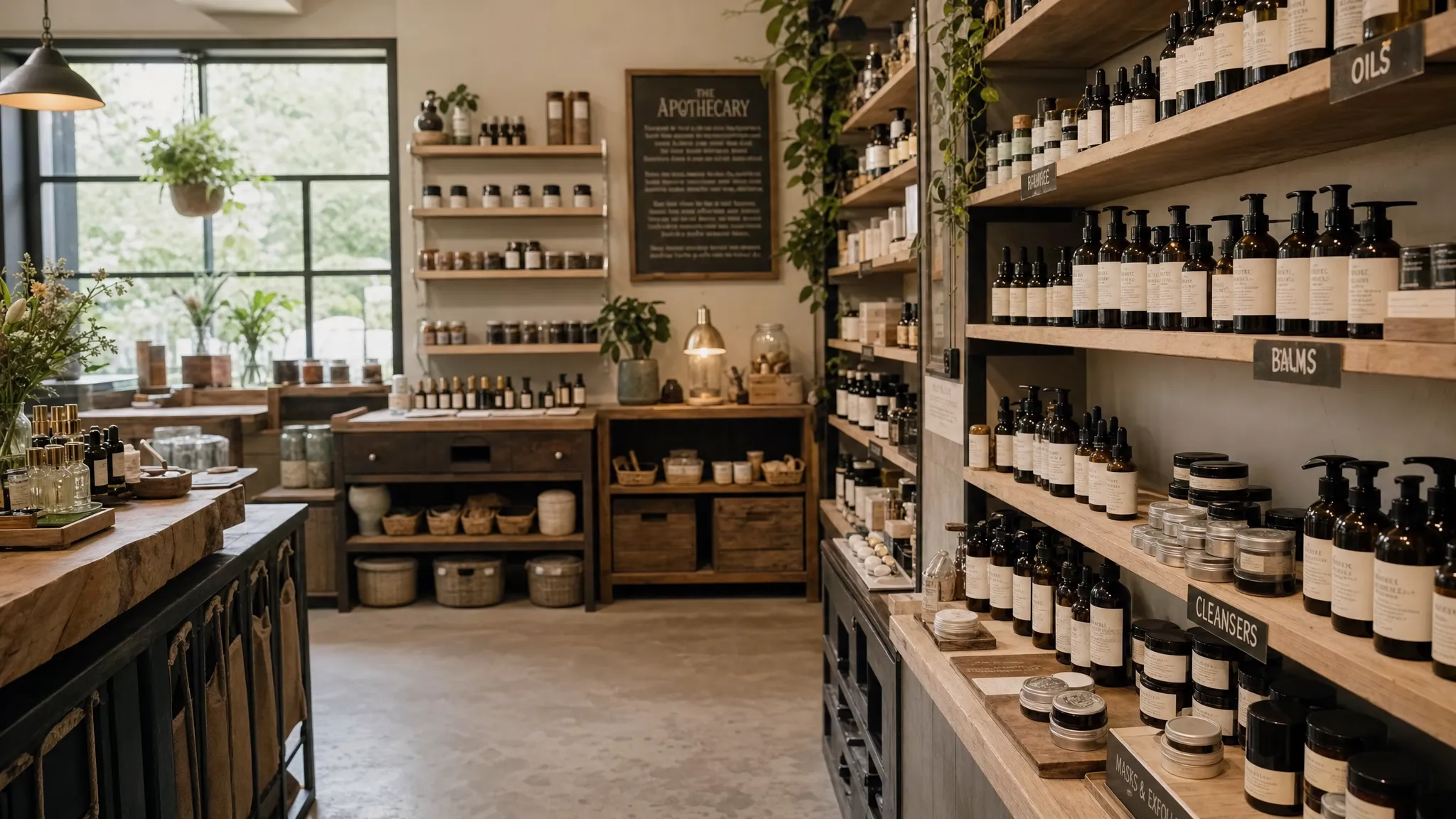
Pay attention to how the staff asks questions. Do they ask about your skin type, sensitivities, current routine, climate, lifestyle, and goals? Or do they immediately recommend a full shelf of products? Good guidance starts with listening.
A strong store should also be honest about limits. Skincare can support dryness, comfort, texture, and the appearance of healthy skin, but it should not replace medical care for persistent rashes, infected skin, severe acne, eczema flares, or sudden changes in moles or lesions.
Read labels before you fall in love with packaging
Beautiful packaging can be part of the pleasure of skincare, especially in a luxury apothecary setting. But the label is where trust begins.
Look for complete ingredient lists, clear usage instructions, and storage guidance. If you prefer natural products, pay close attention to whether the store distinguishes between natural, naturally derived, organic, vegan, and cruelty-free. These terms are not all interchangeable.
For example, a product can be cruelty-free but not vegan if it contains beeswax. A product can be natural but still contain essential oils that may bother reactive skin. A formula can be preservative-free because it is anhydrous, meaning water-free, while a water-based product typically needs an appropriate preservation system to remain safe.
This is why a good store should never make “natural” sound like a guarantee that every product will work for every person. Natural ingredients can be beautiful and effective, but sensitive skin still deserves caution, patch testing, and a slow introduction.
If you want a more detailed standard for evaluating formulas, read Baby le Bébé’s guide to what high-quality skin care really means today.
Ask better questions in the store
The right questions can quickly reveal whether a shop is genuinely helpful or simply good at selling. You do not need to know chemistry to shop well. You just need to ask for clarity.
- What skin type or concern is this product best suited for?
- Are there any ingredients here that sensitive or acne-prone skin should patch test carefully?
- Is this formula water-based or oil-based, and does that affect storage or shelf life?
- How much should I use, and how often should I start?
- Where does this fit in my current routine?
- If I only buy one product today, which one would make the biggest difference?
- Do you offer vegan options, beeswax-based options, or fragrance-free options?
- What should I stop using while I test this product?
A trustworthy store will welcome these questions. Even better, the staff will usually suggest starting slowly rather than replacing your entire routine in one visit.
Match the store to your actual skin priorities
Not every skin care store is right for every shopper. A med spa, a dermatologist-recommended retail counter, a clean beauty boutique, and a natural apothecary may all have value, but they serve different needs.
If your skin is easily irritated, look for a store that talks about barrier support, gentle cleansing, and patch testing. If your skin is very dry, look for oils, balms, and creams that focus on emollients and occlusives. If you are shopping for a baby or child, prioritize simplicity, mildness, and clear ingredient lists.
| Your priority | What a good store should offer |
|---|---|
| Sensitive skin | Gentle formulas, patch-testing advice, and staff who do not push too many actives |
| Dry or winter-stressed skin | Barrier-supporting oils, balms, and cleansers that avoid harsh stripping |
| Acne-prone skin | Lightweight textures, non-comedogenic guidance, and realistic expectations |
| Natural or organic values | Transparent sourcing, clear ingredient percentages, and honest labeling |
| Vegan or cruelty-free shopping | Clear distinction between vegan, beeswax, and cruelty-free products |
| Gifting | Curated sets, elegant packaging, and help matching scent or texture preferences |
A store earns trust when it helps you choose what fits your skin, not just what is trending.
Watch for red flags
Some warning signs are easy to miss when a store looks beautiful. Be cautious if a shop cannot provide full ingredient lists, makes dramatic cure-all promises, or tells you that natural products can never irritate skin.
Other red flags include dusty testers, open jars that many shoppers touch directly, products stored in hot sunny windows, staff who discourage patch testing, or aggressive recommendations to buy a complicated routine immediately.
Be especially careful with stores that position skincare as a replacement for medical advice. If you have painful irritation, swelling, oozing, sudden severe breakouts, or a condition such as eczema, psoriasis, rosacea, or dermatitis that is not improving, a dermatologist or qualified medical professional is the right next step.
Try products without overwhelming your skin
Even when a store is excellent, your skin still needs time to adjust. The American Academy of Dermatology recommends testing skincare products before applying them broadly, especially if you are prone to reactions. Their guide on how to test skin care products is a helpful reference.
A simple rule is to introduce one new product at a time. Use it consistently for several days or weeks, depending on your skin’s sensitivity, before adding another. This makes it much easier to identify what is helping and what is not.
If the store offers samples or travel sizes, use them strategically. Test texture, scent, absorption, and comfort before committing to a full-size product. A product that feels luxurious in-store should still make sense in your real morning or evening routine.
Build a simple routine first
The best skin care stores do not make you feel like you need ten steps. For most people, a strong routine starts with a few reliable categories: a gentle cleanser, a hydration step if needed, a moisturizer or oil to support the barrier, and daily sunscreen in the morning.
If you prefer natural, oil-forward, or preservative-conscious products, ask how to layer them correctly. Oils and balms are often best used after water-based hydration or on slightly damp skin, since they help seal in moisture rather than create water by themselves.
This is also where a knowledgeable store can be invaluable. It can help you avoid common mistakes, such as using too much product, layering incompatible actives, choosing a cleanser that leaves skin tight, or buying a rich balm when your skin would prefer a lighter oil.
Consider a local apothecary if you value ingredient-led skincare
If your ideal store feels more like a calm, curated ritual space than a crowded beauty aisle, a natural apothecary may be the right fit. Apothecary-style stores often emphasize botanical ingredients, smaller selections, tactile guidance, and products that feel connected to daily care rather than quick fixes.
Baby le Bébé’s approach is rooted in that spirit: 100% natural formulations, 99% organic ingredients, cruelty-free standards, no synthetics, no petroleum, no fillers, and a curated selection of oils, balms, cleansers, and body care. The apothecary includes vegan options as well as beeswax-based options, so shoppers can choose according to their preferences and skin needs.
If you are near the Catskills, Baby le Bébé’s flagship physical store offers a way to experience the brand in person. If you are not nearby, the online shop and educational resources can still help you shop with the same ingredient-first mindset. You can also read more about what to look for in a natural apothecary near you.
Frequently Asked Questions
What should I look for in a skin care store near me? Look for ingredient transparency, knowledgeable staff, clean testers, clear product instructions, ethical standards, and guidance that matches your skin type rather than generic trends.
Is a natural skin care store better than a regular beauty store? It depends on your priorities. A natural store can be a wonderful fit if you value botanical ingredients, organic sourcing, cruelty-free practices, and simpler formulas. The best choice is the store that explains its products clearly and helps you shop safely.
How do I know if a skincare product is truly natural or organic? Read the full ingredient list, look for certification details when relevant, and be cautious with vague claims. A trustworthy store should explain what “natural,” “organic,” “clean,” “vegan,” and “cruelty-free” mean for each product.
Should I buy a full skincare routine in one visit? Usually, no. It is better to start with one or two products that address your main concern, then introduce new steps gradually. This helps you avoid irritation and makes results easier to track.
What if I have sensitive skin? Choose a store that encourages patch testing, simple routines, gentle cleansing, and fragrance-aware shopping. Avoid stores that dismiss sensitivity or insist that a product cannot irritate because it is natural.
Find skincare that feels as good as it looks
A great skin care store near you should leave you feeling informed, not overwhelmed. It should help you understand ingredients, choose textures that suit your skin, and build a routine you can actually keep.
If you are looking for natural, luxury skincare made with botanical ingredients and a careful apothecary philosophy, explore Baby le Bébé. Whether you visit in person or shop online, start with what your skin needs most, then choose products with intention.


0 comments