

When you hear the term organic bath and body products, what comes to mind? The simplest way to think about it is like the difference between shopping at a conventional grocery store and visiting a local farmers market. One is full of things that might have been grown with synthetic pesticides and processed with artificial additives; the other is pure, vibrant, and closer to the earth.
Organic skincare applies that same farmers market philosophy to what you put on your body. It’s a commitment to using ingredients that are grown, harvested, and processed without harsh chemicals, GMOs, or synthetic fertilizers.
What "Organic" Really Means for Your Skin
Choosing an organic body oil or balm isn't just about avoiding a few questionable ingredients. It’s about embracing a whole philosophy that values purity from the soil all the way to your shelf.
Imagine an apricot orchard where the trees are nourished with rich, natural compost instead of chemical sprays. The fruit is picked at its peak, and the oil is gently extracted without using harsh industrial solvents. That entire, thoughtful process is the essence of organic skincare. It ensures the final product is as clean and potent as nature intended.
The Foundation of Purity
At its core, the word "organic" promises a rigorous standard of care. It’s not a vague marketing term but a commitment built on a few key principles that set these products miles apart from their conventional counterparts.
- No Synthetic Pesticides or Herbicides: The plants are grown on farms that use natural, regenerative methods to manage pests and weeds. This keeps the soil healthy, the waterways clean, and the final botanical extracts pure.
- GMO-Free: Every plant-based ingredient must come from non-genetically modified seeds, preserving the natural integrity and potency of the botanicals.
- Sustainable Farming Practices: Organic agriculture is all about giving back to the earth. It focuses on building healthy soil, conserving water, and promoting biodiversity for the long haul.
This clean, conscious approach isn't just a niche interest anymore. It's a massive shift in how we think about personal care. The global demand for chemical-free products is soaring, with the organic personal care market projected to jump from USD 34.2 billion in 2025 to an incredible USD 76.4 billion by 2035. You can read more about why making the switch is so important. People are waking up to the fact that what we put on our bodies matters just as much as what we put in them.
The true beauty of organic skincare is in its simplicity. When you remove all the synthetic fillers, fragrances, and harsh chemicals, you allow the potent, nourishing properties of the plants to do their work. The result is something you can actually see and feel.
For anyone just starting to explore this world, understanding the difference between "natural" and "organic" is a great first step. Ultimately, choosing organic products is an investment in your skin's long-term health. It's why brands like Baby le Bébé build their entire collection on 100% natural and 99% organic ingredients—because pure, effective, and transparent formulas are always the right choice.
How to Read Labels Like a Pro
Walking down the skincare aisle can feel completely overwhelming. Labels shout claims like “natural,” “pure,” and “eco-friendly,” but these terms often mean very little without official backing.
Learning to see past the marketing and understand the ingredient list is the single most powerful skill you can develop. It’s like learning the difference between a flashy book cover and the story inside—what really matters is the content.
The front of the bottle is for marketing; the back is for facts. Your first step should always be to ignore the buzzwords on the front and flip the product over to the ingredient list. This simple habit helps you cut through the noise and focus on what’s truly inside.
Decoding Organic Claims and Certifications
In the United States, the word “organic” has a specific, regulated meaning when it appears on a label. But not all organic claims are created equal, and understanding the hierarchy is key to knowing what you're really getting.
Here’s a quick reference guide to what those different claims actually mean for you.
Decoding Common Label Claims
| Label Claim | What It Means for You | What to Look For |
|---|---|---|
| 100% Organic | This is the highest standard. Every single ingredient (including processing aids) is certified organic. | The official USDA Organic seal. |
| Organic | A very strong guarantee. At least 95% of the ingredients are certified organic. | The official USDA Organic seal. |
| Made with Organic Ingredients | A good, but less strict, standard. At least 70% of the ingredients are certified organic. | The front label can list up to three specific organic ingredients, but it cannot use the USDA seal. |
As you can see, a certification seal is your most reliable shortcut to verifying a product's integrity. It's a clear signal that the brand has met strict federal guidelines.
This visual breaks down the core promises behind a certified organic product.
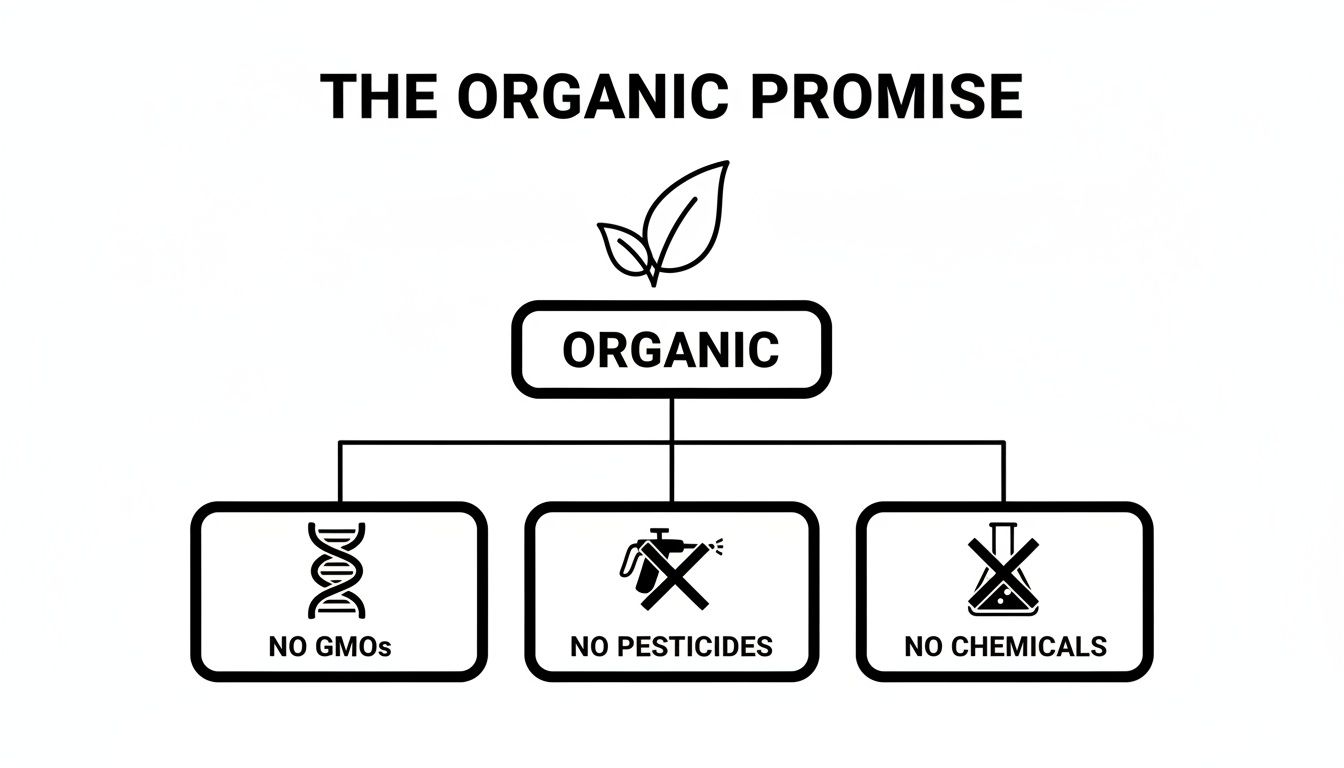
The organic promise isn't just about one thing; it's a multi-faceted commitment to keeping the formula free from GMOs, synthetic pesticides, and harsh chemicals from farm to bottle.
Spotting Red Flags and Greenwashing
"Greenwashing" is a marketing tactic where brands use misleading claims to imply their products are more natural or eco-friendly than they really are. A product might be packaged in earthy tones with pictures of leaves, but a quick look at the ingredients could reveal synthetic fragrances, parabens, or sulfates.
The ingredient list, or INCI (International Nomenclature of Cosmetic Ingredients), is your best tool for uncovering the truth. Ingredients are listed in descending order of concentration, so the first few items make up the bulk of the formula.
If you see recognizable botanical oils, plant butters, and water (aqua) at the top of the list, that’s a great sign. If the top is crowded with hard-to-pronounce chemicals, it’s worth a second look. For example, if you're searching for the best non-toxic body oil, the very first ingredient should be a high-quality carrier oil like apricot kernel or jojoba—not a synthetic filler.
Your Quick Guide to Clean Labels
When you're short on time, you don't need to analyze every single word. Focusing on a few key things can help you make a confident choice in seconds.
- Look for a Certification Seal: The USDA Organic seal is the most reliable shortcut. It immediately tells you the product has met strict federal guidelines.
- Scan the First Five Ingredients: Since they make up most of the product, these should be simple, recognizable, and ideally organic. Think Prunus Armeniaca (Apricot) Kernel Oil, not Dimethicone.
- Check for "Fragrance" or "Parfum": This single term can hide hundreds of unlisted, potentially irritating chemicals. Opt for products scented only with pure essential oils, which will be listed by their specific botanical names (e.g., Lavandula Angustifolia Oil).
- Know the Preservatives: True organic products often use natural preservatives like vitamin E (tocopherol) or rosemary extract. Be cautious of synthetic preservatives like parabens and formaldehyde-releasers.
By adopting these habits, you move from being a passive consumer to an empowered advocate for your own health. You'll quickly learn to spot the brands that truly value transparency and ingredient integrity, ensuring the products you choose are as pure and effective as they claim to be.
Powerful Ingredients from Nature's Pantry
Stepping into the world of organic bath and body products is like opening a well-stocked pantry filled with nature's smartest solutions. Instead of complex synthetics, you find pure, potent botanicals that have nourished skin for centuries. These ingredients aren’t just nice alternatives; they are the gold standard for creating calm, resilient, and healthy skin.
The real beauty of organic skincare is its blend of simplicity and potency. A thoughtfully chosen lineup of high-quality plant oils, butters, and extracts can easily outperform a long list of lab-made chemicals. Each ingredient is selected for a specific job—to cleanse, moisturize, soothe, or protect—all while working in harmony with your skin.
The Workhorses: Carrier Oils
Carrier oils are the unsung heroes of organic body care. These nutrient-rich oils, pressed from seeds and nuts, are the foundation of products like body oils, oil cleansers, and balms. They’re called "carriers" because they help deliver the benefits of other ingredients, like essential oils, deep into the skin.
Think of them as the base of a nourishing soup—they provide the substance and carry all the other flavors.
- Apricot Kernel Oil (Prunus Armeniaca): This lightweight, fast-absorbing oil is packed with vitamins A and E. It’s fantastic for softening skin without leaving a greasy residue, making it a perfect choice for daily body oils.
- Jojoba Oil (Simmondsia Chinensis): Technically a liquid wax, jojoba oil has a molecular structure remarkably similar to our skin's own sebum. This allows it to absorb beautifully, helping to balance both dry and oily skin by moisturizing without clogging pores.
These oils do more than just hydrate; they deliver essential fatty acids and antioxidants that support the skin's barrier, keeping it strong and protected.
The Protective Power of Plant Butters
When your skin needs a deeper level of protection and moisture—especially in harsh weather or on dry spots like elbows and knees—plant butters are your best friend. Extracted from the nuts of trees, these rich, emollient butters create a breathable barrier that seals in hydration.
Unlike petroleum-based ingredients that just sit on top of the skin, organic butters melt at body temperature, allowing their vitamins and fatty acids to be fully absorbed. They provide true nourishment, not just a surface-level fix.
These butters are the heart of rich body balms and creams, giving them a comforting, velvety texture.
- Shea Butter (Butyrospermum Parkii): Harvested from the nuts of the African shea tree, this butter is a powerhouse of vitamins A, E, and F. It’s known for its ability to soothe inflammation, heal dryness, and improve skin elasticity.
- Cocoa Butter (Theobroma Cacao): Famous for its delicious, subtle scent, cocoa butter is rich in antioxidants that help fight free radical damage. It forms a protective layer that holds moisture in, making it exceptional for preventing dryness and healing chapped skin.
When you see these butters high up on an ingredient list, you know the product is designed for deep, lasting hydration.
The Aromatic Essence: Essential Oils
Essential oils are the concentrated, aromatic soul of a plant. Extracted through methods like steam distillation, these potent oils offer both therapeutic benefits for the skin and a sensory experience that can calm the mind. In organic formulas, they provide natural fragrance and targeted skin support.
They are the final touch—the fragrant herbs that complete the soup, adding both aroma and wellness benefits.
- Lavender Oil (Lavandula Angustifolia): Celebrated for its calming and soothing properties, lavender is a gentle giant in skincare. It helps reduce redness, soothe irritation, and promotes a sense of tranquility, making it ideal for bath oils and bedtime rituals.
- Geranium Oil (Pelargonium Graveolens): This beautiful floral oil is a master at promoting balance. It can help regulate oil production, tone the skin, and its uplifting scent is known to reduce feelings of stress.
Brands like Baby le Bébé harness these powerful botanicals to create formulas that are both gentle and highly effective. By focusing on a simple pantry of nature's best ingredients, their products deliver everything your skin needs to feel calm, nourished, and beautifully resilient—proving that true luxury comes from purity.
Key Ingredients to Avoid in Your Routine
Knowing which beautiful botanicals to look for is only half the story. Just as important is learning to spot the synthetic additives in conventional products that can throw your skin’s balance out of whack.
Many of these synthetics were invented to improve a product's shelf life, texture, or scent, but they often come with a hidden cost to our skin and the environment. This isn’t about scare tactics; it’s about making informed choices. When you understand why certain ingredients are used, you can confidently choose healthier, plant-based alternatives that do the job better.
The Big Four to Sidestep
While the list of synthetic chemicals can feel endless, a few common culprits show up again and again in mass-market lotions, washes, and soaps. Just by focusing on these four, you can immediately clean up your daily routine.
- Parabens (e.g., methylparaben, propylparaben): These are preservatives used to prevent bacteria and mold from growing in a product. The big issue? Their potential to mimic estrogen in the body has raised significant health concerns.
- Phthalates (e.g., DEP, DBP): Often hiding under the generic term "fragrance," phthalates are plasticizers used to make scents last longer. They’ve been linked to a host of health issues.
- Sulfates (e.g., Sodium Lauryl Sulfate - SLS): These are aggressive detergents that create that rich, foamy lather we’ve been taught to associate with being clean. The problem is they’re too good at their job, stripping the skin of its natural protective oils and leading to dryness, irritation, and sensitivity.
- Synthetic Fragrance or "Parfum": This one term on a label can legally hide a cocktail of hundreds of different chemicals, including phthalates. Because brands aren’t required to disclose what’s in their fragrance mix, it’s a major red flag for anyone seeking pure, transparent skincare.
This growing awareness isn’t just a passing trend. A staggering 71% of global consumers now actively avoid parabens, phthalates, and synthetic fragrances, with skin sensitivity and long-term health being their top concerns. That statistic alone shows why so many people are turning toward gentle, non-toxic options. You can explore more data on this consumer shift and the rise of organic personal care.
Why Plant-Based Alternatives Are Better
Choosing products free from these synthetics doesn’t mean you have to sacrifice performance. Far from it. Nature already provides everything we need for effective, luxurious body care.
Instead of harsh sulfates, organic cleansers use the gentle cleansing power of saponified plant oils. Instead of synthetic fragrances, they capture the complex, beautiful aromas of pure essential oils. It’s a return to what has always worked.
Brands like Baby le Bébé champion this philosophy, building their formulas exclusively around 100% natural and 99% organic ingredients. By sidestepping synthetics entirely, they ensure every single product works in harmony with your skin, not against it.
Your Quick Checklist for Clean Ingredients
When you’re scanning a label, here is what to look for instead:
- For cleansing: Look for saponified oils like olive or coconut oil.
- For preservation: Seek out natural preservatives like vitamin E (tocopherol) or rosemary extract.
- For scent: Make sure the label lists specific essential oils by name (e.g., Lavandula Angustifolia Oil).
By keeping an eye out for these common synthetics and opting for their botanical counterparts, you empower yourself to build a routine that is truly nurturing. This simple knowledge transforms you from a consumer into a conscious curator of your own well-being.
Building Your Simple Organic Body Care Ritual
Switching to organic bath and body products isn’t just about swapping out a bottle or two. It’s an invitation to turn your daily routine into something mindful and restorative.
A body care ritual isn’t about adding a dozen steps to your already busy day. It’s about elevating the small moments you already have—turning a quick shower or a swipe of lotion into a true act of self-care. It’s a way to reconnect with your body through touch and scent, letting pure botanicals soothe your skin and your mind. This simple act of presence can set a calm tone for your morning or help you fully unwind at night.
Your Simple Morning Ritual to Awaken Skin
A morning ritual should be quick, energizing, and effective. The goal is to gently cleanse your skin and lock in a protective layer of moisture for the day ahead.
- Start with an Oil Cleanse: Instead of a harsh soap that can strip your skin, try an oil cleanser. The trick is to massage it onto dry skin before you turn on the shower. This lets the oil grab onto dirt and impurities. When you rinse, it emulsifies into a light, milky lather that cleanses without disrupting your skin’s delicate moisture barrier.
- Hydrate Immediately: Right after you step out of the shower, gently pat your skin with a towel, leaving it just slightly damp. This is the perfect moment to apply a smoothing body oil. Warm a few drops between your palms to release the botanical scent, then massage it in using upward strokes toward your heart. This simple motion helps boost circulation and leaves your skin feeling incredible.
This two-step process takes only a few minutes but leaves your skin soft, hydrated, and ready to face the day.
Your Soothing Evening Ritual to Unwind
Nighttime is your chance to wash away the day's stress and give your skin some deep nourishment. This is where you can take a little more time to truly indulge your senses and signal to your body that it’s time to rest.
The real power of an evening ritual is its ability to tell your mind and body it’s time to wind down. The consistency of scent, warmth, and touch becomes a powerful cue for deeper, more restorative sleep.
To build out your own practice, you might look into the pure Jojoba Oil benefits and simple rituals for inspiration. It’s this kind of mindful approach that’s driving the massive shift toward clean beauty. North America is the powerhouse for organic bath and body growth, and it's all propelled by this clean-label fervor. The US organic personal care market hit USD 6.4 billion in 2024 and is expected to soar to USD 16.0 billion by 2034 as more of us ditch synthetics for sustainable, plant-based rituals.
Here’s a simple evening sequence to try:
- Indulge in a Ritual Bath: Add a few droppers of a beautiful bath oil, like Baby le Bébé’s Veranium or Mountain Haze, to a warm, running bath. The steam creates a gorgeous, spa-like atmosphere, while the oils work to soften your skin and calm your mind.
- Deeply Moisturize with a Balm: After your bath, while your skin is still warm and receptive, apply a rich body balm. Focus on areas that need extra love, like your elbows, knees, and feet. The concentrated butters and oils provide intense, lasting hydration that repairs and soothes overnight.
- Final Touch for Hands and Lips: Before you settle into bed, apply a nourishing lip balm and massage a tiny bit of body balm into your hands and cuticles. It’s a final, comforting gesture to complete your day.
By embracing these simple steps, you’re not just going through the motions. You’re transforming everyday moments into acts of true nourishment and forging a powerful connection between your well-being and the pure botanicals you choose.
Keeping Your Natural Products Fresh
Think of your organic bath and body products like fresh food from a farmers market. A ripe peach is best enjoyed quickly and stored with care, and in the same way, formulas made without synthetic preservatives need a little extra attention to stay potent and fresh.
This isn’t a flaw; it's a feature. The absence of harsh, artificial preservatives is exactly what makes these products so gentle on your skin. It just means you need a few simple habits to protect the delicate botanicals inside each bottle.
Simple Storage for Maximum Potency
Where you keep your products matters just as much as how you use them. Heat, light, and air are the primary enemies of natural formulas, as they can speed up the breakdown of sensitive oils and plant extracts.
Your bathroom cabinet is a far better home for your organic body oil than a sunny windowsill. Consistent, cool, and dark conditions are key to preserving a product’s integrity from the first drop to the last.
Think of it like creating a mini pantry for your skincare. By protecting your products from these environmental stressors, you ensure they stay effective for their entire lifespan.
A few easy habits can make all the difference:
- Avoid Direct Sunlight: UV rays can degrade precious essential oils and antioxidants, making the product less effective. Always store bottles in a closed cabinet or drawer.
- Keep It Cool: Steam and heat from a shower can change the texture and stability of balms and butters. It’s best to keep them away from direct heat sources.
- Seal Lids Tightly: Oxygen contributes to oxidation, which can cause oils to go rancid. Always make sure you've closed the lid securely after each use to keep air out.
- Use Clean Hands or Tools: To avoid introducing bacteria into your jars, always use clean, dry hands. For balms and creams, a small, dedicated spatula is an even better practice.
These simple steps extend the life of your favorite formulas, ensuring you get all the benefits nature intended. To learn more, check out our guide on the shelf life secrets of natural products.
Your Organic Skincare Questions Answered
Making the shift to organic bath and body products can bring up a few questions. That’s completely natural. This is more than just buying something new—it’s about changing your mindset around what you put on your skin. Below are some straightforward answers to the most common queries, so you can move forward with total confidence.
Think of it as your final checklist before fully embracing a cleaner, more intentional way of caring for your body.
How Long Do Organic Products Last Without Preservatives?
This is easily one of the most common questions. Because true organic products skip synthetic preservatives like parabens, they are more delicate by nature, much like fresh food. But that doesn’t mean they’ll spoil in a few weeks.
Most water-free formulas, like body oils and balms, have a generous shelf life of 12 to 24 months when stored correctly. The best brands use smart, natural preservation methods to keep their formulas stable.
- Antioxidant-Rich Oils: Ingredients like vitamin E (tocopherol) and rosemary extract are powerful antioxidants. They naturally prevent the other oils in the formula from oxidizing or going rancid.
- Anhydrous Formulas: Any product made without water (anhydrous) is far less welcoming to bacteria. This is why oils and balms are naturally so much more stable than water-based lotions.
Just keep your products in a cool, dark place and always use clean hands, and you’ll enjoy them to the very last drop.
Can Organic Body Products Help with Acne-Prone Skin?
Yes, absolutely. For many people dealing with breakouts, switching to organic products can be a game-changer. Conventional body lotions and washes are often loaded with pore-clogging silicones, mineral oil, or harsh sulfates that strip the skin. This can trigger it to produce even more oil, leading to a frustrating cycle of breakouts.
Organic formulas take the opposite approach. They focus on bringing the skin back into balance using non-comedogenic oils that work with your natural sebum, not against it.
Jojoba oil is a perfect example. Its molecular structure is incredibly similar to our skin’s own oil, which means it can actually help regulate sebum production. It moisturizes deeply without clogging pores, helping to calm inflammation and prevent future breakouts.
By avoiding harsh, stripping ingredients and nourishing your skin with botanicals that support its natural barrier, you can often break the cycle of irritation and body acne for good.
How Do I Start a Routine Without Feeling Overwhelmed?
Starting a new routine shouldn't feel like a massive overhaul. The key is to begin with one or two high-impact products that you can easily swap into your existing habits. A great place to start is with the products you use most often on the largest surface of your body.
Here’s a simple, two-step approach:
- Replace Your Body Wash: Start by switching your daily shower gel with a gentle, rinse-away oil cleanser. This single change eliminates harsh sulfates and immediately improves your skin's hydration.
- Upgrade Your Moisturizer: Next, swap your conventional lotion for a high-quality organic body oil. Applying it to damp skin right after a shower takes no extra time but delivers far superior nourishment.
With just those two simple swaps, you’ve built a foundational organic routine. From there, you can slowly introduce other beautiful products—like a rich body balm or a therapeutic bath oil—as you feel ready to elevate your ritual. The goal is progress, not perfection.
Experience the calming difference of a truly natural ritual. The Baby le Bébé collection is crafted with 100% natural and 99% organic ingredients to bring balance and resilience to your skin. Discover your new daily essentials today.


0 comments