

A good organic cream should not make skin care feel like a project. When your skin feels tight, flaky, or easily irritated, the goal is simple: add comfort, slow water loss, and keep the routine calm enough to repeat every day.
That is where organic creams, balms, and richer botanical moisturizers can shine. The best ones are not necessarily the longest ingredient lists or the most fragrant jars. They are formulas that combine plant oils, butters, and waxes in a way that helps seal in moisture without heaviness, guesswork, or a ten-step ritual.
If you are trying to choose a cream for dry or sensitive skin, it helps to understand what “sealing in moisture” actually means, what ingredients do the work, and how to apply them so they perform better.
What it really means to seal in moisture
Your skin is designed to keep water in and irritants out. The outer layer, called the stratum corneum, works a little like brick and mortar. Skin cells are the bricks, while lipids such as ceramides, cholesterol, and fatty acids act like the mortar between them.
When that barrier is strong, skin feels supple and resilient. When it is depleted, water evaporates more easily, which can leave skin feeling tight, rough, or itchy. Moisturizers help by supporting three related jobs:
- Humectants attract water to the upper layers of skin.
- Emollients soften roughness and replenish a smoother feel.
- Occlusives create a light protective layer that slows moisture loss.
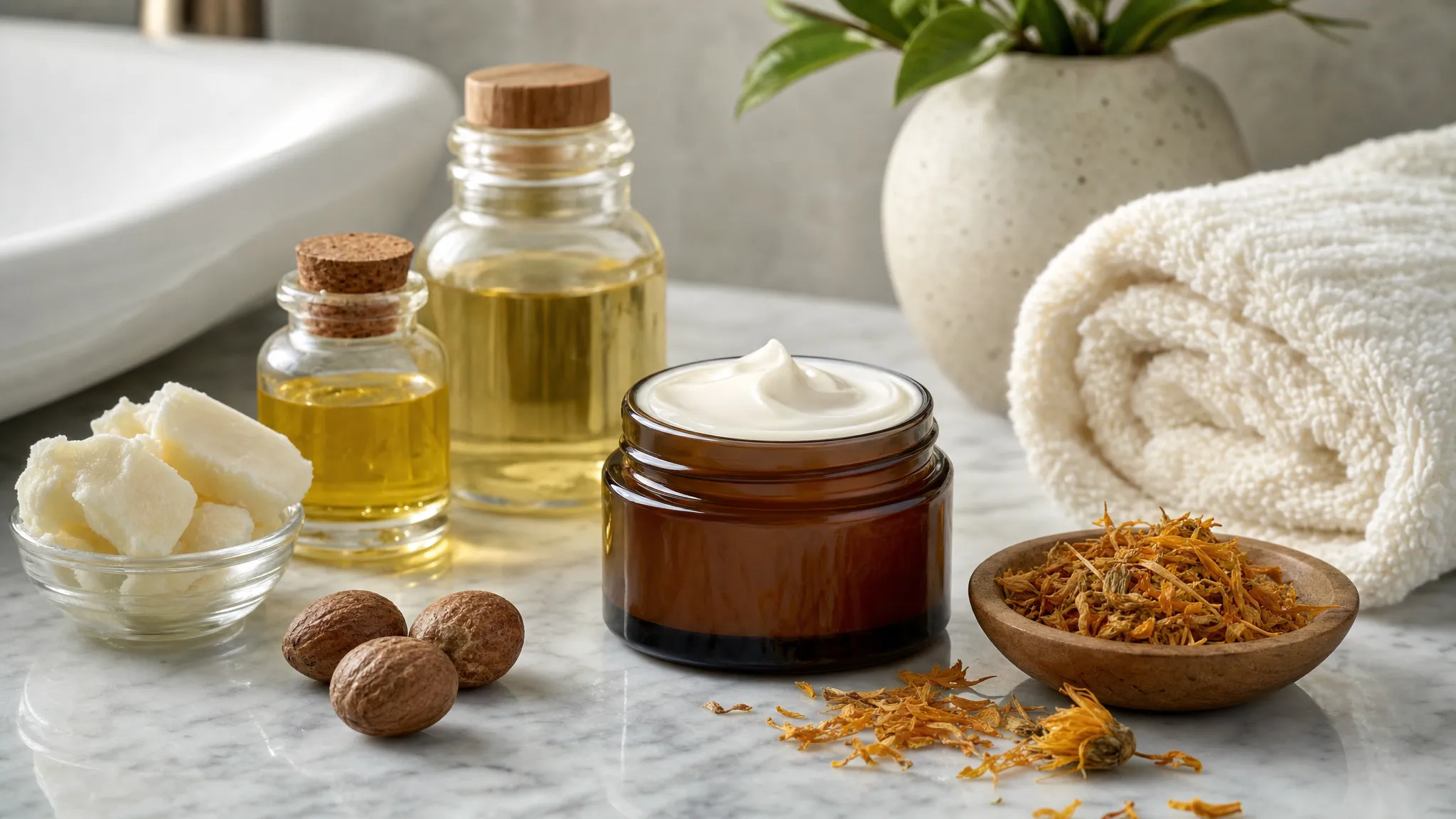
Organic creams that seal in moisture tend to lean heavily on the emollient and occlusive side. Think shea butter, jojoba oil, sunflower seed oil, cocoa butter, beeswax, or plant waxes. These ingredients do not “add water” in the same way a water-based lotion does, but they can help keep existing hydration from escaping.
For a deeper look at how the skin barrier works, Baby le Bébé has a helpful guide to organic skin products that support your skin barrier.
Why no-fuss organic creams are different from typical lotions
Many conventional lotions are mostly water, with emulsifiers, preservatives, fragrance, and texture enhancers added to create a light feel. That is not automatically bad, and well-formulated products can be effective. But if your skin is reactive, you may prefer simpler formulas with fewer potential irritants.
Organic creams and balm-like moisturizers often use concentrated botanical oils, butters, and waxes. Some are waterless, which means they do not need the same kind of preservation system as a water-based cream. That can be appealing if you are looking for a formula that avoids synthetics, fillers, petroleum-derived occlusives, or unnecessary fragrance.
The tradeoff is texture. A rich organic cream may feel more substantial than a lotion. The secret is using less than you think and applying it at the right moment, ideally over slightly damp skin.
The American Academy of Dermatology recommends applying moisturizer immediately after washing to help trap existing moisture. This simple timing change can make a rich cream feel more effective and less greasy.
Ingredients that help organic creams lock in comfort
The ingredient list does not need to be complicated. In fact, if your skin is dry, sensitive, or easily overwhelmed, simple is often better. Look for ingredients that have a clear purpose.
| Ingredient type | What it does | Common organic examples | Best for |
|---|---|---|---|
| Plant butters | Cushion skin and reduce rough texture | Shea butter, cocoa butter, mango butter | Very dry areas, elbows, knees, hands |
| Botanical oils | Soften and support the skin’s lipid layer | Jojoba, sunflower, olive, avocado, coconut | Daily body moisture, face or body depending on skin type |
| Natural waxes | Help form a breathable protective seal | Beeswax, candelilla wax | Chapped patches, wind-exposed skin, overnight care |
| Gentle botanicals | Calm the feel of stressed skin | Calendula, chamomile, aloe in preserved formulas | Sensitive or easily irritated skin |
| Humectant support | Helps draw hydration into the surface | Vegetable glycerin, aloe, honey in non-vegan formulas | Layering under a richer cream |
A quick note on water-based “organic creams”: if a product contains water, aloe juice, hydrosols, or other water-rich ingredients, it needs an appropriate preservation system to remain safe. A truly preservative-free moisturizer is usually oil-based or waterless, such as a balm, salve, or whipped butter. That is not a flaw. It is simply a different style of moisturizing.
The simplest way to use an organic cream
A rich cream works best when you treat it as the sealing step, not the whole hydration routine. If skin is bone-dry before application, a butter-heavy formula may sit on top and feel waxy. If skin is slightly damp, the same formula can glide better and help hold that water in.
Try this no-fuss method:
- Cleanse gently: Use lukewarm water and avoid harsh scrubbing. Hot water can make dry skin feel worse.
- Leave skin slightly damp: Pat with a towel, but do not dry completely.
- Warm a small amount: Rub a pea-sized amount between your palms until it softens.
- Press, then smooth: Press onto dry areas first, then smooth outward in thin layers.
- Add only where needed: Use more on hands, feet, elbows, and knees, less on the face or chest.
If you want the full routine logic behind this, from hydration to sealing, the guide on how to moisturize skin naturally breaks down the process in practical terms.
Organic cream, body oil, or balm: which one do you need?
The easiest way to choose is by matching the texture to your skin’s current need. You do not always need the richest formula everywhere.
| If your skin feels... | Choose this texture | Why it helps |
|---|---|---|
| Tight right after showering | Cream or oil over damp skin | Helps reduce the dry feeling before it starts |
| Rough and flaky | Rich cream or balm | Cushions texture and supports a longer-lasting seal |
| Itchy from dryness | Fragrance-free cream or balm | Minimizes extra irritation while protecting the barrier |
| Normal but dull | Lightweight body oil | Adds glow and softness without too much weight |
| Chapped in small areas | Balm with waxes or butters | Gives targeted protection where skin loses moisture fast |
Body oil is especially useful when you want slip, glow, and fast application after bathing. A cream or balm is better when you need more cushion or when the skin has a visibly dry, weathered feel. If you are deciding between textures, this guide to organic body oil for dry skin explains when oil may be the better fit.
What to avoid if your skin is dry or sensitive
“Organic” is a helpful signal, but it does not guarantee a product will suit your skin. Some natural ingredients can still be irritating, especially when used in high amounts or applied to compromised skin.
Be cautious with:
- Strong essential oil blends, especially on the face or around eczema-prone areas.
- Heavy fragrance, even if it is natural.
- Grainy scrubs or exfoliating additives in a daily moisturizer.
- Very long ingredient lists if your skin reacts easily.
- Products that make medical claims without clear evidence.
Also remember that not all alcohols are drying. Fatty alcohols such as cetyl alcohol or cetearyl alcohol can be moisturizing in conventional creams, while denatured alcohol can be more drying for some people. Label reading is more useful when you look at the whole formula rather than judging one word in isolation.
How much cream is enough?
With a concentrated organic cream, more is not always better. If skin looks shiny for hours, transfers onto clothing, or feels sticky, you may be using too much. Start small and build only where your skin asks for more.
For the face, try a rice-grain to pea-sized amount, depending on texture and dryness. For hands, use a pea-sized amount after washing and a thicker layer before bed. For the body, apply in sections while skin is damp so the cream spreads easily.
A good rule: your skin should feel comfortable within a few minutes, not coated. If you like a richer overnight feel, save the heavier layer for bedtime and keep daytime application thinner.
Seasonal adjustments that keep the routine easy
Dry skin is often seasonal. In colder months, low humidity, indoor heat, and hot showers can increase moisture loss. In summer, sweat, sun exposure, and frequent washing can create a different kind of dehydration and irritation.
You do not need a new routine every season. Adjust the amount and timing first.
In winter, apply cream immediately after bathing and use a second thin layer on exposed areas before going outside. At night, add extra balm to hands, feet, or any patch that cracks easily. In warmer months, switch to a lighter application or use a body oil on damp skin for areas that do not need a heavy seal.
The no-fuss approach is not about doing less care. It is about removing unnecessary steps so the essentials can work consistently.
Signs your organic cream is doing its job
A well-chosen cream will not transform skin overnight, but you should notice small improvements fairly quickly. Skin may feel less tight after washing, look less ashy or flaky, and stay comfortable for longer between applications.
Over a week or two, the texture may feel smoother because the barrier is losing less moisture day after day. If you still feel dry immediately after applying, the formula may be too wax-heavy for your skin, or you may need to apply it over a hydrating layer. If you see redness, burning, bumps, or itching, stop using the product and consider whether fragrance, essential oils, or a specific botanical could be the issue.
For persistent cracking, bleeding, severe itching, or suspected eczema, it is best to check in with a dermatologist or qualified health professional. Natural skin care can support comfort, but it should not replace medical care when the skin is inflamed or injured.
Frequently Asked Questions
Are organic creams better for sealing in moisture? Organic creams can be excellent for sealing in moisture when they contain lipid-rich oils, butters, and waxes. The key is the formula, not just the organic label. A simple, well-balanced cream used on damp skin is often more effective than a complicated product used inconsistently.
Should I apply organic cream to wet or dry skin? Apply it to slightly damp skin. This helps the cream spread more easily and allows the oils, butters, or waxes to trap some of that surface moisture. If your skin is fully dry, a rich cream may feel heavier and less comfortable.
Can organic creams clog pores? Some rich creams may feel too heavy for acne-prone or very oily areas, especially if they contain dense butters or coconut oil. Use a smaller amount on the face, patch test first, and reserve heavier balms for the body or targeted dry patches.
What is the difference between an organic cream and a balm? A cream often contains both water and oil, while a balm is usually waterless and made from oils, butters, and waxes. Many people use the word “cream” casually for any rich moisturizer, but waterless balms are especially good at sealing in moisture.
How often should I use an organic cream for dry skin? Once daily after bathing is a good baseline. If your skin is very dry, apply again before bed or after handwashing. Consistency matters more than using a large amount at one time.
Make moisture sealing feel effortless
The best organic creams are quiet workhorses. They do not need synthetic fragrance, a complicated routine, or an oversized scoop to be effective. They simply help your skin hold onto comfort with clean, nourishing ingredients and a protective finish.
If you are building a simpler dry-skin ritual, explore the curated natural skin care at Baby le Bébé. Choose textures that match your skin, apply them while skin is damp, and let a few well-chosen botanicals do the work without fuss.


0 comments