

A useful everyday skin care kit is not a crowded shelf of products. It is a small, dependable set of essentials you can reach for morning and night without overthinking your routine.
For most people, the best kit does four things well: cleanses without stripping, replenishes moisture, protects the skin during the day, and gives you a way to soothe dry or stressed areas when they appear. If you prefer natural skincare, the same principle applies. Choose fewer products, but make each one purposeful, gentle, and compatible with your skin.
Below is a practical guide to what to put in a skin care kit for everyday use, how to adapt it to your skin type, and what you can safely leave out.
What an everyday skin care kit should actually do
Your skin care kit should make consistency easier. That matters because skin tends to respond better to a steady, simple routine than to frequent product changes. A cleanser used every evening, a moisturizer that keeps the barrier comfortable, and daily sunscreen will usually do more for everyday skin health than a rotating lineup of trendy treatments.
Think of the kit as your daily skin support system. It should contain products you can use even when you are tired, traveling, or trying to calm your skin after a stressful week. The best versions are compact enough to keep on a bathroom shelf or in a travel pouch, but complete enough that you are not skipping the basics.
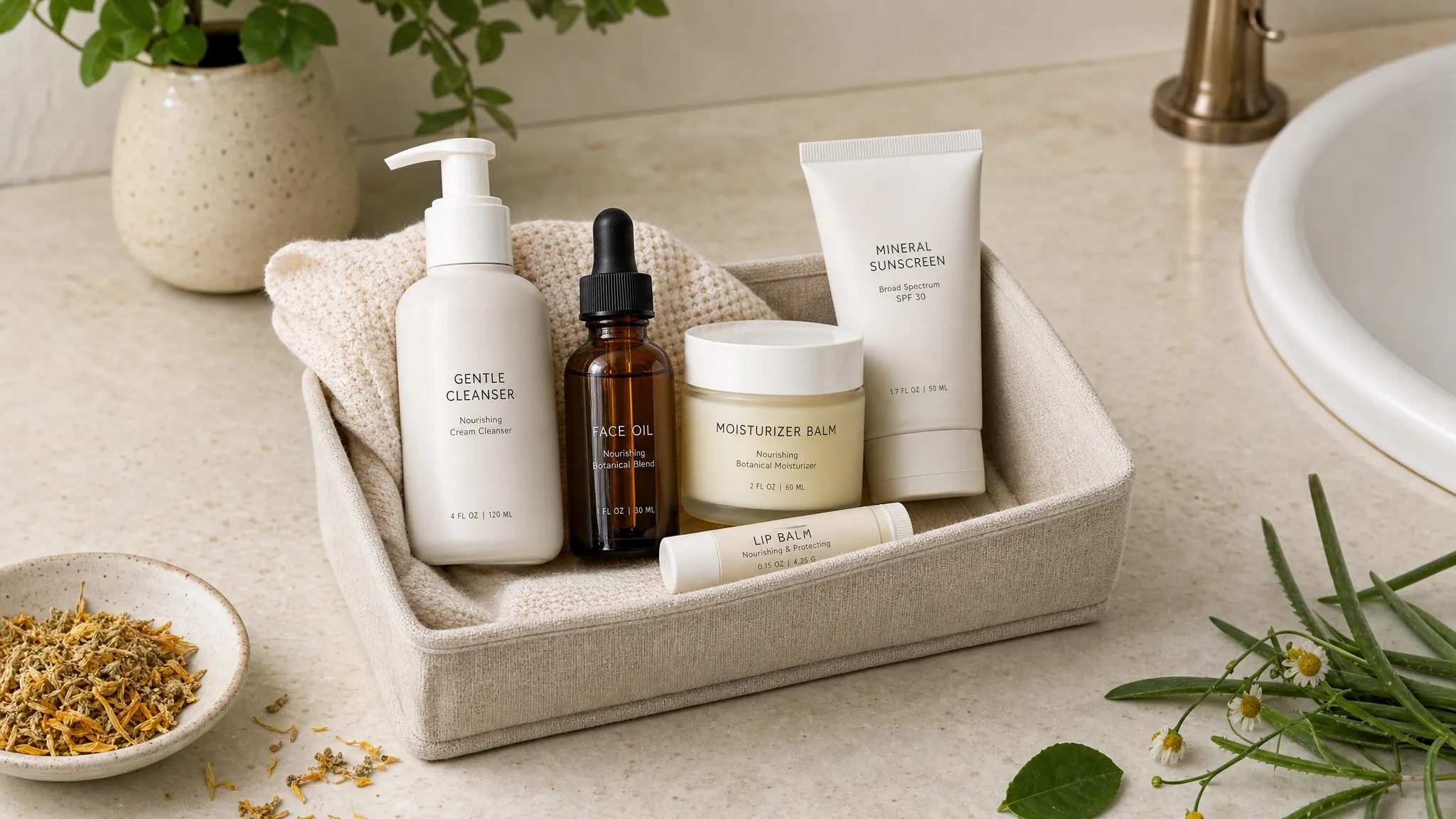
A strong everyday kit usually includes:
- A gentle cleanser
- A moisturizing or nourishing step
- A face oil, balm, or cream for barrier comfort
- A broad-spectrum sunscreen for daytime
- Lip care
- One or two optional extras for your skin type
You can add more later, but these are the pieces that keep the routine functional.
The essential products to put in your skin care kit
Use this table as a simple checklist. You do not need every possible product category, but each item should serve a clear purpose.
| Kit item | Why it belongs | What to look for | When to use it |
|---|---|---|---|
| Gentle cleanser | Removes sweat, sunscreen, makeup, and daily buildup | Non-stripping texture, simple ingredient list, no harsh scrub particles | Evening, and morning if needed |
| Moisturizing layer | Helps prevent tightness and supports comfort | Aloe, glycerin, botanical oils, or other skin-softening ingredients | Morning or evening |
| Face oil | Adds nourishment and helps soften dry or dull skin | Lightweight plant oils that suit your skin type | Usually after water-based hydration or before balm |
| Balm or moisturizer | Helps seal in comfort and protect dry spots | Concentrated, barrier-friendly texture without unnecessary fillers | Evening, dry areas, or cold weather |
| Sunscreen | Helps protect against UV damage and premature visible aging | Broad-spectrum SPF 30 or higher | Every morning |
| Lip balm | Protects thin, easily dried lip skin | Plant oils, butters, or beeswax if you use it | As needed throughout the day |
| Soft cloth or reusable rounds | Helps remove cleanser without aggressive rubbing | Smooth, washable fabric | Evening cleanse |
| Optional targeted product | Addresses a specific concern like blemishes, redness, or uneven texture | One focused product that your skin tolerates | As directed, not all at once |
A gentle cleanser
A daily cleanser should leave your skin feeling clean, not squeaky. If your face feels tight immediately after washing, the cleanser may be too strong or you may be cleansing too often. For everyday use, a soft cream, milk, oil, or low-foam cleanser often works well, especially if your skin leans dry or sensitive.
Cleansing is most important at night because it removes the day from your skin: sunscreen, makeup, pollution, sweat, and excess oil. In the morning, some people need only a splash of water, while others prefer a quick cleanse. Let your skin decide.
A nourishing oil or moisturizer
A natural face oil can be one of the most versatile pieces in a skin care kit. Used sparingly, it can soften dry patches, add glow, and help your routine feel more comfortable. The key is to apply the right amount. One to three drops is often enough for the face, especially when skin is slightly damp.
If you prefer a cream or balm texture, choose one that comforts the skin barrier without feeling heavy. Balms are especially helpful for dry cheeks, wind exposure, flaky spots, and evening routines. They can also double as cuticle care or a small-area body balm, which makes them useful in a minimal kit.
Daily sunscreen
Sunscreen deserves a permanent place in any everyday skin care kit. Even the most beautiful natural routine is incomplete during the day without UV protection. The American Academy of Dermatology recommends choosing a broad-spectrum sunscreen with SPF 30 or higher.
Apply it every morning as the last step before makeup, and reapply when you are outdoors for extended periods. If you use natural or minimalist skincare, choose a sunscreen that aligns with your preferences, but prioritize one you will actually wear consistently.
How to choose kit items for your skin type
The best skin care kit is personal. Two people can use the same cleanser and have completely different results depending on oil production, climate, age, sensitivity, and lifestyle. If you are not sure where to start, Baby le Bébé's guide to natural skin care basics for every skin type is a helpful next step for matching product textures to your skin.
For dry skin, build your kit around comfort and moisture retention. A gentle cleanser, nourishing face oil, richer balm, and creamy lip care will be more useful than multiple exfoliating products. Dry skin often benefits from applying oil or balm while the skin is still slightly damp.
For oily or combination skin, keep the kit light but not harsh. Many people with oily skin over-cleanse, which can leave the skin feeling imbalanced. Choose a cleanser that removes buildup without stripping, then use a light oil or moisturizer only where needed. You may find that cheeks need more nourishment while the T-zone needs less.
For sensitive skin, fewer products are better. Prioritize short routines, careful patch testing, and formulas without ingredients your skin has reacted to in the past. If your skin stings, flushes, or reacts easily, Baby le Bébé's sensitive skin care routine guide offers a more detailed approach to keeping each step calm and deliberate.
For mature skin, focus on hydration, softness, and daily protection. A face oil or balm can help skin feel more supple, while sunscreen remains essential for preventing visible UV-related changes. If you use active ingredients, keep them separate from your core everyday kit unless your skin tolerates them consistently.
A simple morning routine using your kit
Your morning routine should prepare and protect the skin, not overwhelm it. Most people only need a few steps.
Start with a gentle cleanse or rinse. If your skin feels balanced when you wake up, water may be enough. If you used a heavier balm the night before or wake up oily, use a small amount of cleanser.
Next, apply your moisturizing step. This might be a light face oil, a moisturizer, or a balm used only on dry areas. The goal is comfortable skin, not a heavy layer.
Finish with sunscreen. This is the non-negotiable daytime step. Let your moisturizer settle first if needed, then apply a generous, even layer of sunscreen to the face, neck, and any exposed skin.
Keep lip balm nearby. Lips are easy to forget, but they dry quickly and often need more frequent care than the rest of the face.
A simple evening routine using your kit
Evening is when your kit can do the most restorative work. You are removing the day and giving the skin a chance to feel calm before sleep.
Begin with your cleanser. Massage gently, especially if you wore sunscreen or makeup. Avoid scrubbing, tugging, or using very hot water. If you need a cloth, use a soft one and wash it regularly.
After cleansing, apply your nourishing step while skin is slightly damp. A few drops of face oil can be enough. If your skin needs more comfort, follow with a balm or apply balm only to dry zones.
If you use a targeted product, apply it with intention. One targeted product at a time is usually enough for everyday routines. Using too many corrective products at once makes it harder to know what is helping and what is irritating.
If you want a ready-edited routine rather than assembling every item separately, Baby le Bébé's Every-Day Ritual brings together a cleanser, moisturizer balm, and face oil as a simple foundation for daily care.
Smart extras worth adding to your skin care kit
Once the essentials are covered, a few extras can make your kit more practical. The goal is not to add clutter. It is to solve small everyday problems.
A travel-size container can help you keep your routine consistent when you are away from home. A clean spatula is useful for balms in jars, especially if you want to avoid dipping damp fingers into the product. A soft hair band or head wrap can make cleansing easier. A small mirror is helpful if your kit lives in a gym bag or overnight pouch.
Body care can also belong in your everyday kit, especially if you deal with dry hands, elbows, knees, or shins. A multi-use balm or body oil can cover several needs without requiring a separate product for every area. For more ideas beyond the face, Baby le Bébé's guide to natural body care products for everyday use explains how to keep body care simple and gentle.
Seasonal extras may change throughout the year. In winter, you may want a richer balm and more lip care. In summer, you may want a lighter moisturizer, a cleanser that handles sweat and sunscreen well, and a portable sunscreen for reapplication.
What not to put in an everyday skin care kit
An everyday kit should be reliable, so it is not the best place for products you are still testing. Keep experiments separate until you know your skin likes them.
Skip harsh physical scrubs, especially if they leave your skin red or polished in a tight, uncomfortable way. Avoid keeping several strong exfoliating or resurfacing products in the same daily kit. You may also want to remove old samples, products with changed scent or texture, and anything you keep using just because it was expensive.
Be cautious with duplicate products. You probably do not need three cleansers, two daily face oils, and four moisturizers in one kit. Too many choices can make the routine harder to follow and increase the chance of irritation.
Also avoid treating natural as a free pass to use everything. Botanical ingredients can be wonderful, but sensitive skin can still react to plant extracts, essential oils, or rich textures. Patch testing is a simple way to respect your skin before committing to daily use.
How to keep your kit clean, fresh, and easy to use
A skin care kit is only helpful if it stays clean and organized. Store products away from direct heat and sunlight when possible, especially natural formulas with delicate botanical oils. Close lids tightly after each use, and avoid introducing water into jars or bottles.
Wash cloths, reusable rounds, and makeup sponges often. A damp cloth left in a sealed pouch can develop odor and transfer buildup back onto your skin. If your kit includes a spatula, rinse and dry it after use.
Review your kit every month or two. Ask yourself what you actually use every day, what your skin seems to like, and what no longer belongs. If a product smells different, separates unexpectedly, changes texture, or causes a new reaction, stop using it.
A good everyday skin care kit should feel almost boring in the best way: dependable, comfortable, and easy to repeat.
Frequently Asked Questions
What should be in a basic skin care kit? A basic skin care kit should include a gentle cleanser, a moisturizer or face oil, sunscreen for daytime, lip balm, and a soft cloth or reusable rounds. You can add a balm, targeted treatment, or body oil depending on your skin type and daily needs.
Do I need both face oil and moisturizer? Not always. Some people use a face oil as their main nourishing step, while others prefer a cream or balm. Dry skin may enjoy both, with oil first and balm or moisturizer after. Oily or combination skin may only need a small amount in dry areas.
Should sunscreen be part of a natural skin care kit? Yes. If the kit is used in the morning, sunscreen should be included. Natural preferences can guide the type of sunscreen you choose, but daily broad-spectrum SPF protection is still essential for exposed skin.
How many products are too many for everyday use? If your routine has so many steps that you skip it, or your skin often feels irritated, you may have too many products. For everyday use, most people do well with three to five core products and one optional targeted product.
How often should I update my skin care kit? Review your kit every month or two, and adjust when the weather, your skin, or your routine changes. Replace products that smell off, change texture, separate unusually, or are past their recommended use period.
Build a kit your skin will want to use every day
The best everyday skin care kit is simple, sensory, and consistent. Start with the essentials, choose textures that match your skin, and let each product earn its place.
If you want a natural foundation for your daily routine, explore Baby le Bébé's curated apothecary of 100% natural, cruelty-free skincare and body care at babylebebe.com. A calmer routine often begins with fewer products, chosen with more care.


0 comments