

Natural skin care can feel beautifully simple, but only when it is matched to your real skin needs. A dry, winter-stressed complexion does not need the same texture as an oily T-zone, and sensitive skin may react to ingredients that another person loves. The goal is not to own more products. The goal is to build a calm, consistent ritual that supports the skin barrier.
At its best, natural skin care uses thoughtfully chosen botanical and mineral ingredients to cleanse, nourish, soften, and protect the skin without unnecessary synthetics or fillers. For Baby le Bébé, that philosophy is rooted in 100% natural formulations, 99% organic ingredients, cruelty-free standards, and a curated apothecary approach designed for healthy, feel-good skin.
What natural skin care should do for your skin
A good routine should help your skin do what it is already designed to do: hold water, keep irritants out, regulate oil, repair itself, and stay comfortable through changes in weather, hormones, age, and lifestyle.
That is why the skin barrier matters so much. The outer layer of skin, often called the stratum corneum, is made of skin cells surrounded by lipids. When it is balanced, skin tends to feel smooth, flexible, and calm. When it is disrupted, skin may feel tight, rough, itchy, oily-but-dehydrated, red, or unusually reactive.
Natural formulas can support the barrier by using plant oils, butters, waxes, clays, hydrosols, humectants, and mineral ingredients in purposeful ways. Still, “natural” does not automatically mean gentle for every person. Essential oils, exfoliating botanicals, and rich occlusives can be wonderful in the right context and irritating or too heavy in the wrong one.
The smartest approach is simple: understand your skin type, choose textures that match it, and introduce products slowly.
Find your skin type before choosing products
The American Academy of Dermatology recommends choosing skin care based on skin type because different skin types tolerate ingredients and textures differently. Your skin type can also shift over time, especially with seasonal changes, stress, pregnancy, medications, travel, or age.
A simple at-home check can help. Cleanse gently, skip products for about 30 to 60 minutes, then observe how your face feels and looks. If it feels tight, it may be dry or dehydrated. If it looks shiny across most areas, it may be oily. If only the T-zone is shiny while the cheeks feel normal or dry, it is likely combination. If it stings, flushes, itches, or reacts easily, sensitivity should guide your choices.
| Skin type | Common signs | Natural skin care focus |
|---|---|---|
| Dry | Tightness, flaking, dullness, rough patches | Gentle cleansing, water-based hydration, richer oils and balms |
| Oily | Shine, enlarged-looking pores, frequent congestion | Lightweight hydration, balanced cleansing, non-heavy oils |
| Combination | Oily T-zone with drier cheeks | Zone-based care, lighter layers, balm only where needed |
| Sensitive | Redness, stinging, itching, easy flushing | Minimal formulas, patch testing, fragrance-conscious choices |
| Mature or sun-exposed | Dryness, fine lines, uneven tone, loss of bounce | Barrier support, antioxidants, daily sun protection |
| Normal or balanced | Generally comfortable with few persistent concerns | Maintenance, prevention, seasonal adjustments |
The four basics: cleanse, hydrate, seal, protect
Natural skin care basics do not need ten steps. Most people can build an effective routine around four jobs: cleanse, hydrate, seal, and protect. Once those are working, targeted treatments can be added carefully.
| Step | What it does | Natural ingredients and textures to consider |
|---|---|---|
| Cleanse | Removes sweat, oil, sunscreen, makeup, and daily buildup | Oil cleansers, cleansing balms, cleansing milks, gentle non-stripping cleansers |
| Hydrate | Adds or attracts water to the skin | Aloe, glycerin, hyaluronic acid, hydrosols, light water-based layers |
| Seal | Helps reduce moisture loss and softens the barrier | Jojoba, argan, rosehip, sunflower, shea butter, beeswax or plant waxes |
| Protect | Defends against UV exposure and environmental stress | Broad-spectrum mineral sunscreen, hats, shade, antioxidant-rich botanicals |
Cleansing should leave skin comfortable, not squeaky. Hydration should make skin feel plump and flexible. Sealing should reduce dryness without smothering the skin. Protection, especially sun protection, should be daily. Even the most thoughtful botanical routine cannot replace the role of broad-spectrum sunscreen in preventing UV-related skin damage.
If you are rebuilding from irritation, focus on the basics before adding actives. Baby le Bébé’s guide on how to repair the skin barrier is a helpful next step if your skin feels persistently tight, reactive, or over-treated.
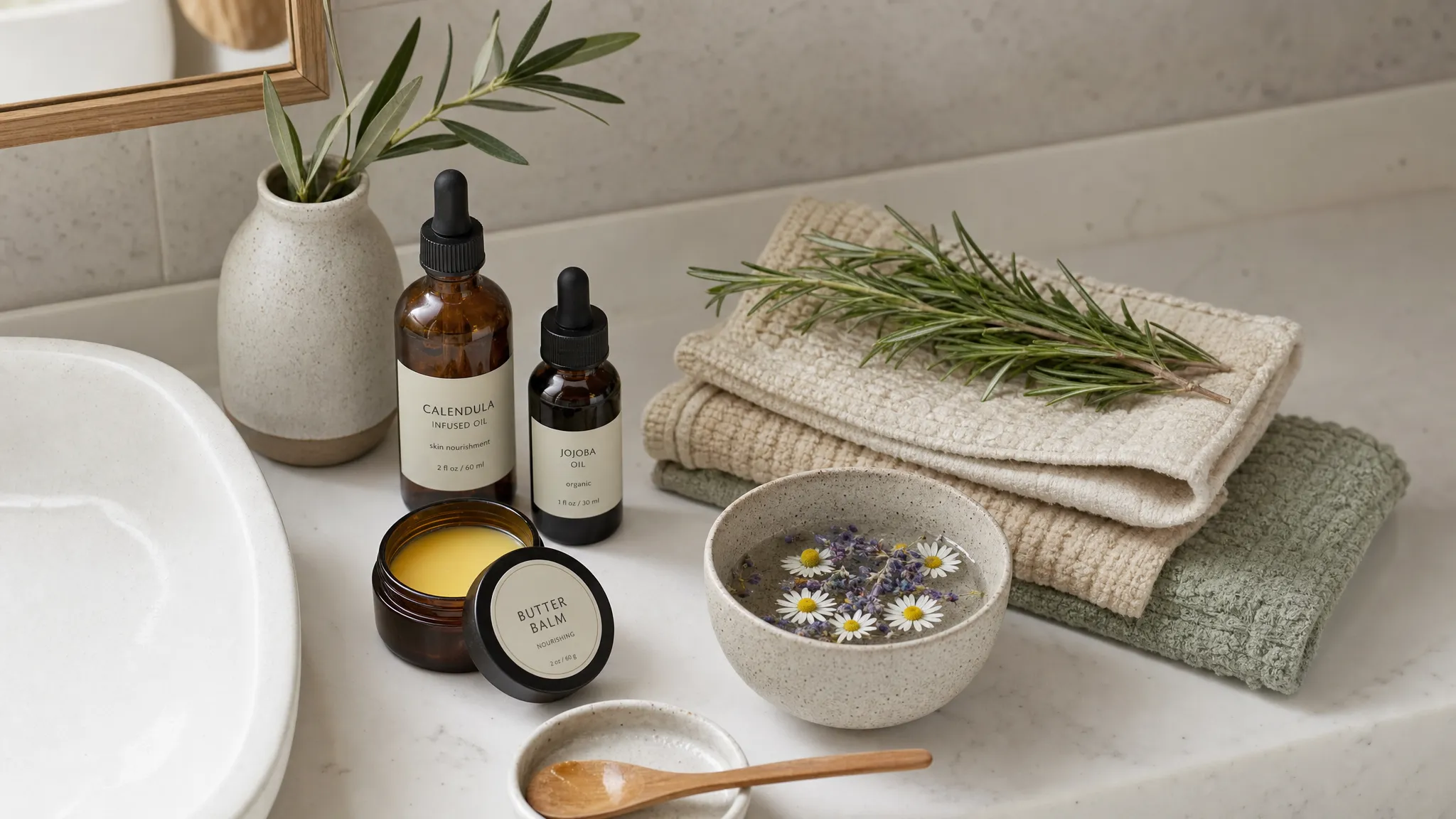
Natural skin care basics by skin type
Dry skin
Dry skin usually needs two things: more water and better lipid support. A common mistake is applying oil to bone-dry skin and expecting it to hydrate. Oils and balms are excellent for softening and sealing, but they work best when applied over damp skin or a hydrating layer.
For dry skin, choose a gentle cleanser that does not foam aggressively or leave the face tight. Follow with a hydrating mist, serum, or damp-skin application, then seal with a nourishing face oil or balm. Ingredients like shea butter, jojoba oil, argan oil, rosehip oil, calendula-infused oil, and beeswax-based balms can help skin feel more cushioned and protected.
Hot water, over-exfoliation, and frequent morning cleansing can make dry skin worse. In the morning, some dry skin types do well with a simple rinse or a very gentle cleanse, followed by hydration, oil or balm, and sunscreen.
Oily or acne-prone skin
Oily skin still needs moisture. In fact, stripping oily skin with harsh cleansers can leave it dehydrated, which may make the skin feel both tight and shiny. The goal is balance, not drying the skin into submission.
Look for light, non-greasy textures and avoid coating the entire face with heavy occlusives if you are prone to clogged pores. Jojoba, squalane, grapeseed, and other lightweight oils are often preferred by oily skin types, while richer ingredients can be reserved for dry spots. Pure coconut oil is usually too heavy for acne-prone facial skin, so it is better suited to very dry body areas if your skin tolerates it.
A gentle cleanser at night is especially important if you wear sunscreen or makeup. If you use exfoliation, keep it mild and occasional. Persistent acne, painful cysts, or scarring should be discussed with a dermatologist, even if your daily routine stays natural and barrier-friendly.
Combination skin
Combination skin is best treated by zones. Your cheeks may need a richer balm while your nose, forehead, and chin prefer a lightweight oil or no occlusive layer at all. Trying to force one texture across the entire face often leads to either dry cheeks or a congested T-zone.
A balanced routine might use the same gentle cleanser everywhere, a light hydrating layer all over, then a small amount of oil pressed into the cheeks and jawline. Balm can be used only where skin flakes, chaps, or feels exposed to wind and cold.
This skin type also changes easily with the seasons. In humid weather, lighter layers may be enough. In colder months, a protective balm on dry areas can make the routine feel more comfortable.
Sensitive or reactive skin
Sensitive skin needs fewer experiments. A natural routine can be a beautiful fit for sensitive skin, but only when formulas are simple, well made, and introduced slowly. Botanical ingredients are potent, and some aromatic plant compounds can trigger stinging or flushing.
Start with a gentle cleanser, a bland hydrating layer if tolerated, and a small amount of oil or balm to seal. Look for calming ingredients such as calendula, chamomile, oat, aloe, and barrier-supportive plant oils. Be cautious with strong essential oils, synthetic fragrance, harsh scrubs, high-strength acids, and too many new products at once.
If sensitivity is your main concern, read Baby le Bébé’s deeper guide to building a sensitive skin care routine. The most important rule is consistency. Calm skin usually comes from doing less, not more.
Mature or sun-exposed skin
Mature skin is not a flaw to correct. It is skin that often needs more consistent hydration, lipid replenishment, and protection from environmental stress. Natural ingredients rich in fatty acids and antioxidants can help skin look more supple and luminous, especially when used regularly.
Rosehip, argan, sea buckthorn, jojoba, and vitamin-rich botanical oils are common choices for mature skin because they help soften the look of dryness and support a smoother-looking barrier. Gentle exfoliation can also improve dullness, but too much can create irritation and make fine lines look more pronounced.
Daily sun protection is essential. If you use facial oils, apply them under sunscreen only if they absorb well and do not disrupt the sunscreen film. At night, richer oil or balm textures can be used more generously.
Normal or balanced skin
Balanced skin does not need a complicated routine to stay healthy. A gentle cleanser, hydrating layer, light oil or moisturizer, and daily sunscreen may be enough. The main goal is prevention: avoid harsh cleansing, do not over-exfoliate, and adjust textures with the weather.
Balanced skin can still become reactive if it is overwhelmed. Introduce new natural products one at a time, and do not assume your skin needs every trending ingredient. A steady, minimal ritual is often the most luxurious thing you can give your skin.
How to read a natural skin care label
Label reading is where natural skin care becomes less confusing. In the United States, terms like “natural” and “clean” are not standardized in the same way consumers often assume. The FDA’s page on organic cosmetics also explains that organic claims involve rules outside ordinary cosmetic labeling. This is why the ingredient list matters more than front-label language.
When evaluating a formula, look beyond the hero ingredient on the front. A product may advertise one beautiful botanical but still rely on a base that does not match your skin needs.
Use these label basics as a starting point:
- Check the first five ingredients, since they usually make up much of the formula.
- Look for complete ingredient transparency rather than vague “proprietary blend” language.
- Treat “fragrance” or “parfum” cautiously if your skin is sensitive or reactive.
- If a product contains water, make sure it has an appropriate preservation system for safety.
- For vegan routines, check for beeswax, honey, lanolin, milk derivatives, and carmine.
- For petroleum-free routines, look for plant oils, butters, and waxes instead of petrolatum or mineral oil.
Preservative-free products require context. Water-based products generally need preservation because water can support microbial growth. Anhydrous formulas, such as many oils and balms, have different formulation needs because they do not contain water. If you want to understand this more deeply, Baby le Bébé’s guide to preservative-free skincare explains why formula type matters.
How to introduce natural products without irritating your skin
Switching to natural skin care does not have to mean replacing everything overnight. In fact, a sudden full-routine change makes it harder to know what is helping and what is causing a reaction.
Start with the product that matters most for your current concern. If your skin feels stripped, begin with a gentler cleanser. If it feels dry and rough, add a nourishing oil or balm over damp skin. If it feels reactive, simplify before adding anything new.
Patch testing is especially important with botanical formulas. Apply a small amount to a discreet area, such as behind the ear or along the jaw, and watch for signs of redness, itching, bumps, or stinging over 24 to 48 hours. If your skin stays calm, use the product on a small facial area before applying it everywhere.
Storage also matters. Natural oils and balms should be kept away from heat, direct sunlight, and water contamination. Close lids tightly, use clean hands or a spatula when appropriate, and pay attention to changes in scent, color, or texture.
For more shopping guidance, see Baby le Bébé’s guide on how to shop natural and organic skin care products.
Common natural skin care mistakes
Using oil as your only source of hydration
Oil helps seal and soften, but skin also needs water. Apply oils and balms to damp skin or over a hydrating layer for better comfort.
Over-cleansing in the name of “clean” skin
A tight, squeaky feeling is usually a sign that the cleanser is too aggressive or that you are cleansing too often. Healthy skin should feel clean but not stripped.
Assuming every botanical is gentle
Plants are powerful. Essential oils, exfoliating fruit enzymes, clays, and active herbal extracts can be beneficial, but sensitive skin may need lower exposure and simpler formulas.
Choosing products by trend instead of texture
The “best” ingredient is the one your skin can use comfortably. Dry skin may love rich balms, while oily skin may prefer a few drops of lightweight oil.
Changing too many products at once
Introduce one new product at a time and give your skin at least a couple of weeks to adjust, unless irritation appears. Slow changes create clearer results.
Frequently Asked Questions
What is a basic natural skin care routine? A basic routine includes a gentle cleanser, a hydrating step, a nourishing oil or balm to seal moisture, and daily broad-spectrum sunscreen in the morning.
Is natural skin care good for every skin type? It can be, as long as the formula and texture match the skin type. Dry skin often needs richer products, oily skin usually prefers lighter layers, and sensitive skin benefits from minimal formulas and patch testing.
Can oily skin use facial oil? Yes, but choose lightweight oils and use only a few drops. Applying too much oil or using very heavy oils can feel greasy or contribute to congestion for some people.
Does natural mean hypoallergenic? No. Natural ingredients can still cause irritation or allergies. Sensitive skin should patch test new products and be cautious with strong essential oils and fragrance-heavy formulas.
Should I avoid preservatives in all skin care? Not always. Water-based products generally need preservatives for safety. Preservative-free formulas make the most sense when the product is properly designed, such as many oil-based or balm-based products.
How long does it take to see results from a natural routine? Comfort and softness can improve within days, but visible changes in dryness, tone, or texture often take several weeks of consistent use. If irritation develops, stop the product and reassess.
Begin with a simple, botanical ritual
The best natural skin care routine is the one your skin understands: gentle cleansing, thoughtful hydration, a compatible oil or balm, and daily protection. Once those basics are in place, your routine can stay beautifully minimal or evolve with the seasons.
Explore Baby le Bébé’s curated natural apothecary to discover 100% natural, cruelty-free skin and body care crafted with botanical ingredients and a less-is-more approach to healthy, feel-good skin.


0 comments