

Most body care products are used on repeat, often every single day, across far more skin than a face serum or eye cream ever touches. That makes the quality of your cleanser, body oil, balm, and bath products worth a closer look. The best natural body care products for everyday use are not just prettier versions of conventional formulas. They are products that support the skin barrier, feel good enough to use consistently, and make ingredient lists easier to understand.
A truly useful routine does not need to be complicated. For many people, it comes down to three steps: cleanse gently, moisturize while skin is still damp, and protect dry or high-friction areas with a richer balm. From there, you can add simple rituals like a bath oil or body polish when your skin needs extra care.
Below is a practical guide to building a natural body care routine that feels luxurious, low-maintenance, and suitable for real life.
What Makes a Body Care Product Good for Everyday Use?
Daily-use body care has a different job than an occasional treatment. A once-a-week exfoliating polish can be more active or sensorial. A product you use every morning after the shower needs to be gentle, reliable, and compatible with your skin over time.
The most important quality is barrier support. The skin barrier, especially the outer stratum corneum, helps reduce water loss and protect against external irritants. When that barrier is disrupted, skin can feel tight, itchy, rough, flaky, or reactive. Everyday products should help maintain comfort rather than create a cycle of stripping and over-correcting.
It is also worth remembering that terms like “natural” and “organic” require context. The FDA explains that organic cosmetic claims are not regulated by the FDA in the same way as cosmetic safety and labeling, and organic agricultural ingredients may fall under USDA rules. In everyday shopping, this means you should look beyond front-label claims and read the ingredient list, product format, and usage instructions.
In practical terms, a good everyday body care product should have a clear purpose, a transparent ingredient list, a texture you enjoy using, and a formula that makes sense for your skin type and climate.
The Everyday Natural Body Care Shelf
You do not need a crowded bathroom cabinet to care for your skin well. A small, thoughtful set of products can cover most daily needs.
| Product type | Everyday purpose | What to look for | How often to use |
|---|---|---|---|
| Gentle body cleanser | Removes sweat, sunscreen, and buildup without leaving skin tight | Mild cleansing agents, oil-based or low-stripping formulas, no harsh synthetic fragrance | Daily or as needed |
| Body oil | Softens skin and helps seal in post-shower moisture | Plant oils, simple blends, protective packaging, clear botanical names | Daily after bathing |
| Body balm | Protects dry patches and high-friction areas | Plant butters, botanical oils, beeswax or vegan waxes, minimal fragrance | Daily on targeted areas |
| Lip balm | Prevents dryness and cracking | Occlusive waxes, nourishing oils, butters, no petroleum if you prefer plant-based care | As needed |
| Bath oil | Turns bathing into a moisturizing ritual | Botanical oils, gentle aromatics, no synthetic dyes or fillers | A few times weekly or as desired |
| Body polish | Smooths dull, rough skin | Fine exfoliating particles in a nourishing base | Usually 1 to 2 times weekly |
| Mineral sunscreen | Protects exposed skin from UV damage | Broad-spectrum SPF, appropriate active ingredients, comfortable finish | Daily on exposed skin |
This kind of routine works because each product has a specific job. You cleanse without over-washing, moisturize before water evaporates from the skin, and reinforce vulnerable areas before they become uncomfortable.
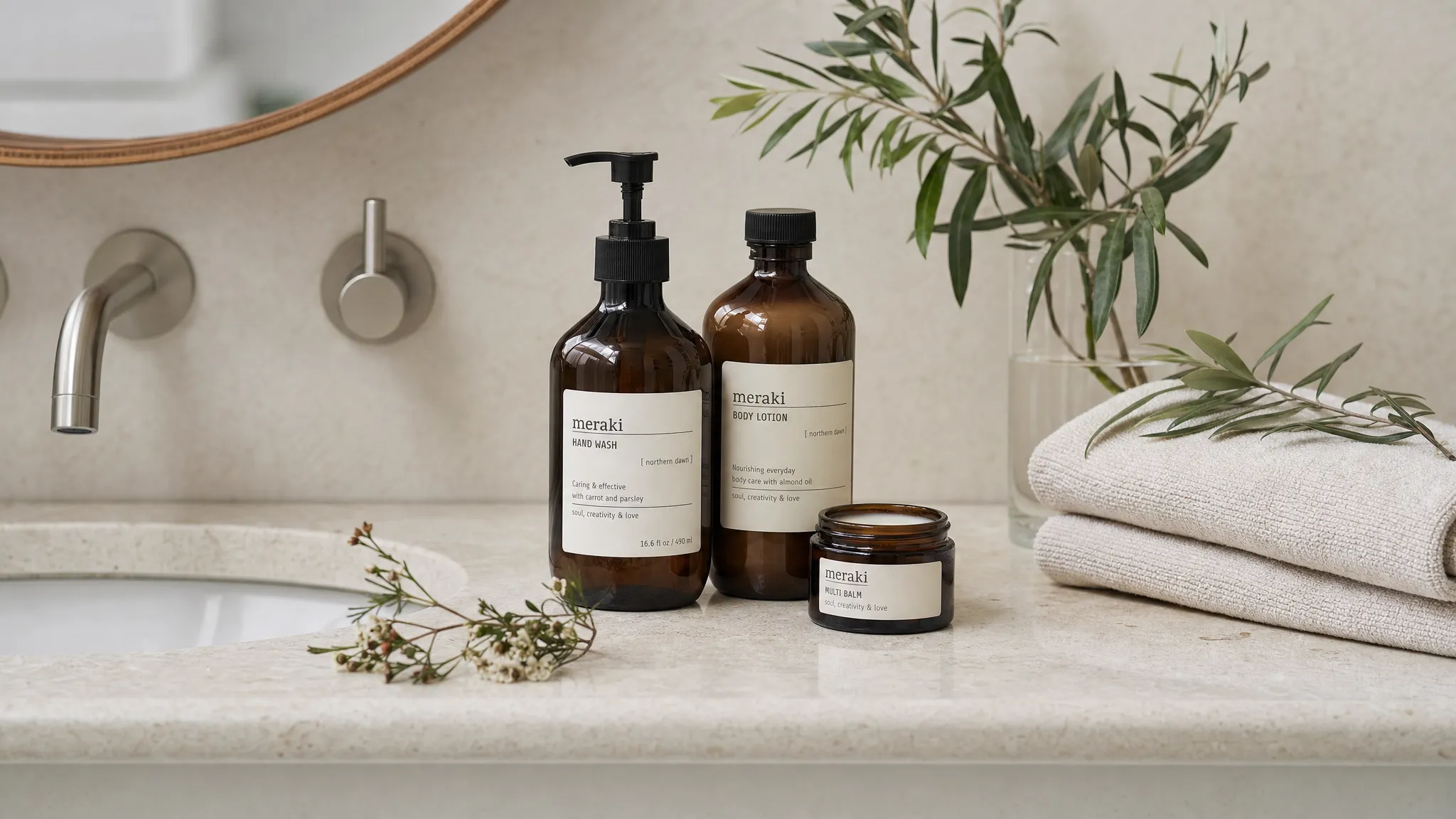
Step One: Cleanse Without Stripping
Cleansing is the foundation of body care, but it is also where many routines become too harsh. A body wash that leaves skin squeaky clean may feel satisfying in the moment, but that tight feeling often signals that too much natural oil has been removed.
For everyday use, choose a cleanser that rinses clean while respecting the skin barrier. People with dry or sensitive skin may prefer oil-based cleansers, creamy washes, or very mild formulas over strong foaming gels. If your skin is easily irritated, be cautious with heavily scented products, aggressive surfactants, and formulas that leave you needing lotion immediately just to feel normal again.
Water temperature matters too. The American Academy of Dermatology recommends using warm rather than hot water and applying moisturizer soon after washing, especially for dry skin. Hot showers can feel comforting, but frequent hot water exposure can worsen dryness by removing surface lipids.
A simple rule: after cleansing, your skin should feel clean, not tight, itchy, or shiny-dry.
Step Two: Moisturize While Skin Is Damp
One of the easiest ways to make natural body care products work better is to apply them at the right time. Body oils are especially effective when used after a shower or bath, while skin is still slightly damp. The water provides hydration, and the oil helps soften the skin and reduce moisture loss.
This is where anhydrous, or water-free, formulas can shine. A botanical body oil does not hydrate by adding water in the way a water-based lotion does. Instead, it helps condition the skin and seal in the water already present after bathing. That is why timing makes such a difference.
Warm a small amount of body oil between your palms, then press or sweep it over damp skin. Start with less than you think you need. A well-formulated oil should leave skin supple, not slick. If you are getting dressed right away, give the oil a minute to settle before putting on clothing.
For very dry skin, layer strategically. Apply body oil first, then use a balm over elbows, knees, heels, hands, or any area that needs extra protection. This combination of emollient oils and richer occlusives can be especially helpful during winter, after travel, or when indoor heating is drying out your skin.
Step Three: Use Balm Where Skin Needs More Protection
Balms are the quiet workhorses of natural body care. They are often thicker than oils and are designed to stay put, making them useful for areas that lose moisture quickly or experience friction.
Common everyday balm zones include hands, cuticles, elbows, knees, heels, lips, and dry patches along the body. A balm may also be helpful before going outside in cold, windy weather, when skin needs an extra protective layer.
Look for formulas made with plant oils, butters, and waxes. Beeswax can create a beautiful protective finish, while plant waxes can be a good option for those who prefer vegan body care. Neither choice is universally better. What matters is whether the formula fits your values, texture preferences, and skin needs.
A balm should feel cushiony and protective, not irritating or overly perfumed. If you are using it on sensitive skin, choose simpler formulas and patch test first.
How to Read Labels on Natural Body Care Products
A good label should make you feel more informed, not more confused. When you are choosing natural body care products for everyday use, start with the full ingredient list rather than the marketing copy on the front.
The first few ingredients usually tell you the most about the product. If a body oil begins with recognizable plant oils, that is useful information. If a balm lists botanical butters, waxes, and oils, you can understand its protective function. If a product relies on vague terms or hides scent behind “fragrance” without clarification, sensitive skin types may want to be cautious.
| Label signal | Why it matters |
|---|---|
| Full ingredient list is easy to find | Transparency helps you make informed choices |
| Specific botanical ingredients are named | You can understand what is actually touching your skin |
| Organic percentage or sourcing details are explained | The claim has more context than a generic “green” label |
| Formula type is clear | Water-based products and oil-based products have different preservation needs |
| Scent source is disclosed | Essential oils and fragrance blends can affect sensitive skin differently |
| Usage and storage guidance is included | Natural formulas often perform best when stored properly |
Be skeptical of claims that sound absolute, such as “chemical-free.” Everything is made of chemicals, including water and plant oils. A more meaningful claim explains what the formula does not contain, such as no petroleum, no synthetic fragrance, or no parabens, and then backs that up with a readable ingredient list.
Natural Does Not Always Mean Non-Irritating
Natural ingredients can be beautiful and effective, but they are not automatically right for every person. Essential oils, botanical extracts, nut-derived oils, and even some plant butters can bother certain skin types. This is especially true for people with eczema-prone, rosacea-prone, allergy-prone, or highly reactive skin.
Patch testing is a simple habit that can prevent many problems. Apply a small amount of product to a discreet area, such as the inner arm, and watch for redness, itching, stinging, or bumps over the next day or two. If your skin is very reactive, introduce one new product at a time so you can identify what is helping and what is not.
For babies, children, pregnancy, nursing, or medically sensitive skin, it is wise to be extra cautious with essential oils and highly aromatic formulas. When in doubt, ask a qualified healthcare professional, especially if skin is broken, infected, or persistently inflamed.
A Simple Morning and Evening Body Care Rhythm
Your routine can be flexible, but a rhythm helps products do their best work.
In the morning, many people only need a quick rinse or gentle cleanse, followed by body oil on damp skin. Add balm to dry areas before getting dressed. If your arms, legs, chest, or neck will be exposed to daylight, finish with a broad-spectrum sunscreen on those areas.
In the evening, cleanse away sweat, sunscreen, and the day’s buildup. After bathing, apply body oil while your skin is still damp. Use balm more generously on hands, feet, elbows, or any area that feels rough. Evening is also a good time for richer textures because they have more time to settle while you sleep.
Once or twice a week, you can add a body polish before moisturizing. Keep exfoliation gentle. The goal is soft, smooth skin, not redness. If your skin is irritated, sunburned, freshly shaved, or experiencing a flare, skip exfoliation and focus on calming moisture instead.
Choosing Products by Skin Type and Season
Dry skin usually benefits from richer body oils and balms, especially after every shower. Look for nourishing plant oils and protective textures that leave a comfortable finish. In winter, you may need to use less cleanser on non-sweaty areas and more balm on exposed or rough spots.
Sensitive skin often does best with fewer ingredients, lighter scent, and a slow introduction process. Avoid changing your entire routine at once. If you find a cleanser, oil, and balm your skin likes, consistency may be more valuable than constant experimentation.
Oily or breakout-prone body skin may still need moisture, but texture matters. Use lightweight oils sparingly, especially on the chest, shoulders, and back. Rinse after sweating, avoid heavy layers under tight clothing, and be cautious with thick balms on areas prone to clogged pores.
Normal or combination skin can usually follow the simplest version of the routine: gentle cleanse, body oil after bathing, balm where needed. Adjust the amount by season. Skin that feels balanced in June may need more protection in January.
Where Baby le Bébé Fits Into an Everyday Ritual
Baby le Bébé’s apothecary is built around 100% natural formulations, 99% organic ingredients, cruelty-free standards, and a curated selection of oils, balms, cleansers, and body care essentials. The brand’s approach is especially aligned with people who prefer no synthetics, no petroleum, no fillers, and ingredient lists rooted in botanical care.
For an everyday routine, you might begin with the categories rather than a long list of products: a gentle cleanser, a nourishing body oil, a protective balm, and a lip balm you will actually keep within reach. From there, bath oils or body polish can become occasional rituals rather than daily obligations.
If you are refining your routine, you may also enjoy Baby le Bébé’s guides on how to use body oil after a shower, choosing the best natural body oil, and building a routine with clean skincare products worth using every day.
Frequently Asked Questions
Are natural body care products safe to use every day? Many natural body care products are suitable for daily use, especially gentle cleansers, body oils, balms, and lip balms. The key is choosing formulas that match your skin type, avoiding known allergens, and patch testing new products before applying them widely.
What is the easiest natural body care product to start with? Body oil is often an easy first switch because it can replace or simplify your post-shower moisturizer. Apply it to damp skin after bathing so it helps seal in moisture and leaves skin feeling soft.
Do I need both a body oil and a balm? Not always. Body oil is ideal for larger areas, while balm is best for targeted dryness and protection. If your skin is very dry, using both can be helpful: oil first on damp skin, then balm on rough or high-friction areas.
How often should I exfoliate with a natural body polish? Most people do well with one to two times per week. If your skin is sensitive, dry, irritated, or freshly shaved, exfoliate less often or pause until your skin feels calm again.
Can natural body care products be used on children? Some simple, gentle products may be appropriate for children, but babies and young children have more delicate skin. Choose mild formulas, avoid strong essential oils, patch test carefully, and ask a pediatrician if your child has eczema, allergies, or ongoing irritation.
Build a Body Care Routine You Will Actually Use
Everyday body care should feel simple, comforting, and trustworthy. Start with the basics: cleanse gently, apply body oil to damp skin, and use balm wherever your skin needs extra protection. When your products are thoughtfully formulated and pleasant to use, consistency becomes easy.
Explore Baby le Bébé’s natural apothecary at babylebebe.com to find botanical oils, balms, cleansers, and body care products designed for healthy, feel-good skin.


0 comments