

When you're trying to manage rosacea with natural skincare, the goal is simple: be gentle. It's about calming your skin down and strengthening its natural defenses, not attacking it with harsh chemicals that can make everything worse.
Understanding Your Rosacea A Sensitive Skin Response
Living with rosacea can be deeply frustrating, but it helps to think of it a little differently. Your skin isn't "bad" or flawed; it just has a highly sensitive "alarm system." This system is excellent at its job—spotting potential threats—but it can be a bit overzealous, sounding the alarm with redness, flushing, and irritation in response to everyday things.
This isn’t a defect. It's just your skin's way of communicating. The goal isn't to fight your skin, but to learn its language and respond with supportive, gentle care. You want to keep that alarm system calm and quiet.
The Four Faces of Rosacea
Rosacea isn’t a one-size-fits-all condition. It usually shows up in one of four main ways, and figuring out your skin's patterns is the first real step toward getting it under control. It's also common to have symptoms from more than one type.
- Erythematotelangiectatic Rosacea (ETR): This is the one most people picture. It involves persistent redness, flushing, and tiny visible blood vessels, usually across the cheeks and nose.
- Papulopopustular Rosacea: Often mistaken for acne, this type brings on bumps (papules) and pus-filled blemishes (pustules) along with the usual redness.
- Phymatous Rosacea: A rarer form that causes the skin to thicken and develop a bumpy texture. This most famously affects the nose, a condition called rhinophyma.
- Ocular Rosacea: This type targets the eyes, making them look watery or bloodshot. It can also cause burning, stinging, dryness, and sensitivity to light.
Knowing which type you're dealing with helps you choose the right natural skincare for rosacea and make smart lifestyle changes. For more on the core principles of gentle care, our guide to natural skincare for sensitive skin is a great place to start.
Identifying Your Personal Triggers
Just as symptoms vary from person to person, so do the triggers. These are the specific things that set off your skin’s alarm system and kickstart a flare-up. While everyone is different, there are some very common culprits.
Think of triggers as the specific sounds that set off a sensitive car alarm. For one car, it might be a loud truck driving by; for another, it's just a strong gust of wind. Your job is to figure out what "sounds" your skin reacts to.
Most triggers fall into a few key buckets:
- Environmental Factors: Sun exposure is a big one for almost everyone. Wind, extreme hot or cold weather, and high humidity are also common.
- Dietary Choices: Spicy foods, very hot drinks like coffee or tea, alcohol (especially red wine), and sometimes dairy can cause a reaction.
- Emotional Influences: Stress and anxiety are powerful triggers. They cause your body to release chemicals that drive inflammation and flushing.
- Skincare and Cosmetics: This is a huge category. Harsh ingredients like alcohol, witch hazel, fragrances, and aggressive exfoliants can easily provoke sensitive skin.
When you start connecting your daily habits to how your skin feels, you gain the power to manage your condition proactively. It’s not about avoiding your life; it's about making mindful choices that create a more peaceful environment for your skin. This compassionate approach is the foundation for building a routine that brings lasting comfort and calm.
Here is the rewritten section, crafted to align with the provided human writing style, tone, and formatting requirements.
Why Natural Skincare Is a Game Changer for Reactive Skin
When you’re navigating rosacea, your skincare can either be your calmest ally or a secret source of agitation. Think of your skin as having a delicate protective shield — your skin barrier. For those with rosacea, this shield is often compromised. It’s thinner and more permeable, making it incredibly easy for irritants to sneak in and trigger that familiar cycle of redness and inflammation.
Many conventional skincare products, packed with synthetic ingredients, can feel like a constant assault on this already fragile barrier. Harsh chemicals, drying alcohols, artificial fragrances, and aggressive preservatives chip away at your skin’s defenses, leaving it even more vulnerable. This is where the whole philosophy behind natural skincare for rosacea becomes so essential.
The Gentle Power of Botanicals
Instead of overwhelming your skin with harsh actives, a natural approach is all about nurturing it back to a state of balance. It's a fundamental shift from stripping and disrupting to soothing and supporting. Imagine the difference you feel eating a diet of highly processed foods versus one full of whole, nourishing ingredients. Your skin feels that difference, too.
Pure, botanical-rich formulas are designed to work in harmony with your skin’s own processes. They are full of things your skin actually recognizes and knows how to use for healing, offering a gentle yet surprisingly powerful way to manage your symptoms.
- Anti-Inflammatory Action: Many plant extracts, like chamomile and centella asiatica, are celebrated for their ability to quiet inflammation and visibly dial down redness.
- Barrier Repair: Nourishing oils and butters deliver the essential fatty acids needed to rebuild and reinforce your skin’s protective layer, locking in precious moisture while keeping irritants out.
- Antioxidant Protection: Botanicals are rich in antioxidants that help defend your skin against environmental stressors — some of the most common triggers for rosacea flare-ups.
This approach creates a safe haven for sensitive skin, giving it the space it needs to rest, repair, and slowly regain its natural resilience. It’s about choosing ingredients that support and heal, not just mask the problem.
Adopting a Less Is More Philosophy
With rosacea, simplicity is your superpower. A pared-down routine centered on a few high-quality, natural products will always be more effective than a complicated regimen with dozens of steps and potential irritants. Every new product you add is another variable that could throw your skin’s delicate balance off-kilter.
Adopting a natural skincare routine is like hiring a team of peacemakers for your skin. Their job is to gently de-escalate the "alarm system," strengthen the defenses, and restore a sense of calm and order.
This gentle, supportive method is gaining serious momentum. The global market for rosacea treatments is growing, with a clear shift toward topical solutions that people can use for long-term management. In fact, within the redness-relief skincare sector, rosacea holds a dominant 46.2% market share, and there's a huge surge in demand for products featuring calming natural ingredients like niacinamide and centella asiatica. This consumer movement highlights a collective desire for safer, more sustainable ways to find skin comfort. You can discover more insights about this growing market trend on gminsights.com.
Ultimately, choosing natural skincare for rosacea is about making a conscious decision to work with your skin, not against it. By cutting out the common culprits and embracing the quiet power of nature, you give your skin the gentle, consistent care it’s been craving. This creates a foundation for long-term health, helping you break the cycle of reaction and irritation and find a new normal of lasting calm and confidence.
Your Rosacea Ingredient Guide: What to Embrace and Avoid
Navigating the world of skincare ingredients can feel like learning a new language—especially when your skin reacts to the slightest provocation. For anyone managing rosacea, becoming a savvy label-reader is one of the most empowering steps you can take. It’s about building a personal skincare philosophy around calming champions and learning to sidestep the common culprits.
Think of it like tending to a delicate garden. You wouldn't use harsh chemicals near your prized roses; instead, you’d provide rich, nourishing soil and gentle care. Your skin needs the same approach—ingredients that fortify its natural defenses, not strip them away.
This is the fundamental shift from conventional, potentially irritating skincare to a more natural, calming solution for rosacea-prone skin.
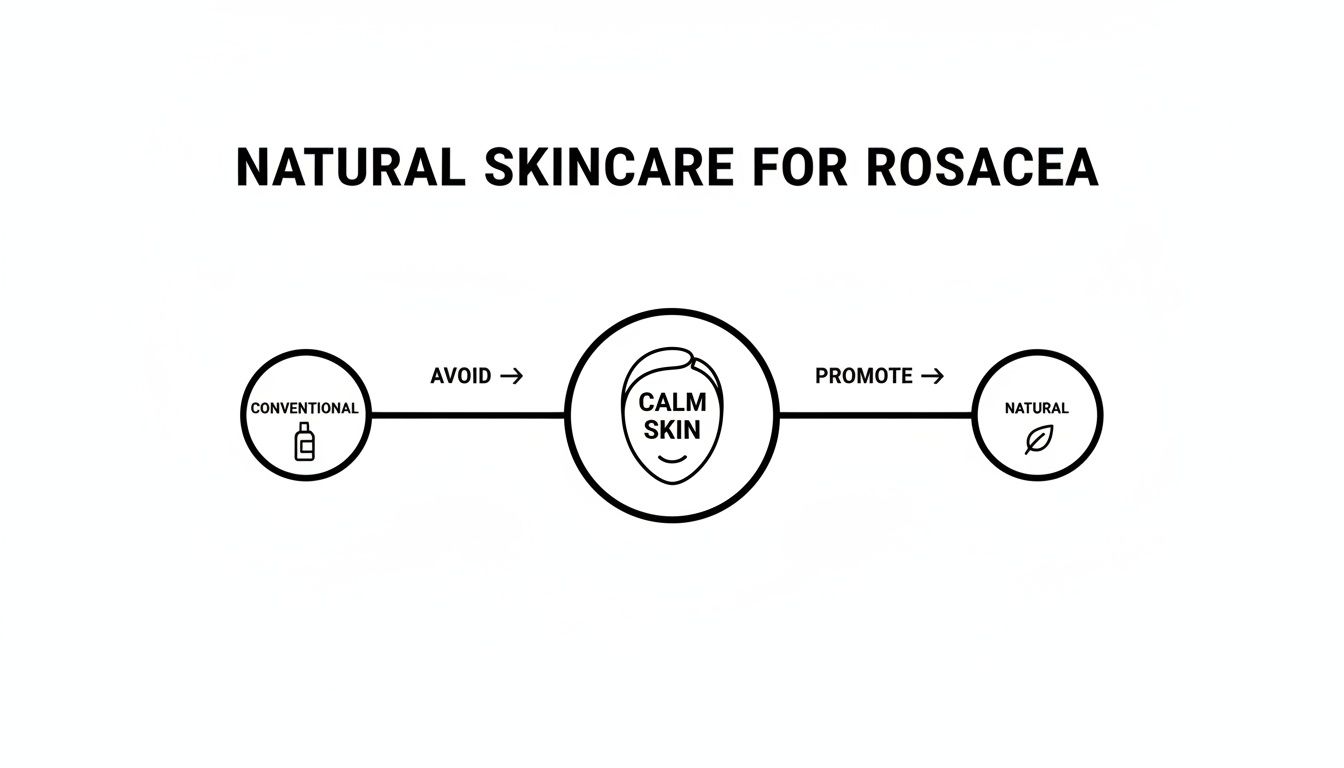
The journey to calm skin involves a conscious move away from synthetic formulas and toward gentle, botanical-based alternatives that truly support your skin's health.
Ingredients to Embrace: Calming Champions
When you're building a routine with natural skincare for rosacea, the goal is to focus on ingredients known for their anti-inflammatory, barrier-repairing, and soothing properties. These are the heroes that will help keep your skin’s sensitive alarm system quiet.
Look for these names on your product labels:
- Niacinamide (Vitamin B3): A true multi-tasker, niacinamide is celebrated for strengthening the skin barrier, reducing redness, and improving overall texture. It’s incredibly well-tolerated by most sensitive skin types.
- Azelaic Acid: Naturally found in grains, this gentle acid is a powerhouse for rosacea. It helps to calm inflammation, reduce the appearance of bumps, and offers mild exfoliation without irritation.
- Chamomile: More than just a calming tea, its active compounds (like bisabolol) have potent anti-inflammatory effects that can visibly soothe flushed, angry skin.
- Centella Asiatica (Cica): Also known as tiger grass, cica is a superstar for repairing a compromised skin barrier. It helps to heal, calm inflammation, and support skin resilience, making it ideal for reactive complexions.
Finding the right ingredients is like assembling a team of expert negotiators for your skin. Their job is to peacefully de-escalate flare-ups and maintain a state of calm.
These ingredients work with your skin, not against it. They help rebuild what has been weakened and soothe what has been irritated, forming the foundation of a truly effective routine.
Ingredients to Avoid: Common Culprits
Just as important as knowing what to look for is knowing what to run from. Certain ingredients are notorious for triggering rosacea flare-ups by stripping the skin's protective oils, causing dehydration, and sparking inflammation. Avoiding them is non-negotiable.
Here are the main offenders to watch out for:
- Drying Alcohols: Specifically, SD alcohol, denatured alcohol, and isopropyl alcohol. These strip the skin of its natural moisture, leading to a damaged barrier and increased sensitivity.
- Synthetic Fragrance: The words "fragrance" or "parfum" on an ingredient list can hide dozens of potential chemical irritants. They are one of the most common causes of flare-ups.
- Sulfates: Ingredients like Sodium Lauryl Sulfate (SLS) create a rich lather but are far too harsh for rosacea. They strip the skin’s protective acid mantle, leaving it tight, dry, and vulnerable.
- Harsh Exfoliants: Abrasive physical scrubs (like those with crushed nut shells) and aggressive chemical exfoliants (like high-concentration glycolic acid) can cause micro-tears and severe irritation.
Understanding the difference between safe and potentially harmful ingredients is a key skill. If you're interested in a deeper dive, our article about demystifying natural ingredients and their efficacy offers more valuable insights.
To make things easier, here’s a simple comparison to help you quickly identify friends and foes on an ingredient list.
Rosacea Skincare Ingredients: Calming Champions vs. Common Culprits
This table breaks down the good, the bad, and the why behind common ingredient choices, so you can make smarter decisions for your skin.
| Ingredient Category | Calming Champions (Embrace These) | Why It Helps | Common Culprits (Avoid These) | Why It Harms |
|---|---|---|---|---|
| Cleansing Agents | Oil-Based Cleansers, Cream Cleansers | Gently dissolves impurities without stripping the skin's natural protective oils. | Foaming Cleansers with Sulfates (SLS/SLES) | Strips the acid mantle, leading to dehydration, irritation, and a compromised barrier. |
| Actives & Treatments | Niacinamide, Azelaic Acid, Cica | Reduces inflammation, strengthens the skin barrier, and soothes redness. | High-Concentration Glycolic Acid, Benzoyl Peroxide | Overly aggressive, causing irritation, excessive dryness, and potential flare-ups. |
| Additives | Natural Botanical Extracts (e.g., Chamomile) | Offers targeted anti-inflammatory and antioxidant benefits to calm the skin. | Synthetic Fragrance/Parfum, Essential Oils | Common allergens and irritants that can easily trigger redness and sensitivity. |
| Alcohols | Fatty Alcohols (e.g., Cetyl, Stearyl) | These are non-irritating emollients that help moisturize and soften the skin. | Drying Alcohols (e.g., SD Alcohol, Denatured) | Dehydrates the skin by stripping its natural oils, worsening barrier function. |
By getting familiar with these key players, you can confidently choose products that will nourish and protect your skin, paving the way for lasting comfort and a calmer complexion.
Building Your Gentle Daily Skincare Routine
Understanding what your skin needs is one thing. Turning that knowledge into a consistent, calming daily ritual is where the real magic happens. For skin with rosacea, a routine isn’t about layering on a dozen different products. It’s about creating a simple, predictable sanctuary—a moment of self-care that reinforces your skin’s strength.
A successful natural skincare for rosacea routine is built on minimalism and gentleness. The goal is to cleanse, hydrate, and protect your skin's delicate barrier without causing any unnecessary stress or friction. This means focusing on three core steps, morning and night, and performing them with a mindful, soothing touch.
Think of this routine as a quiet conversation with your skin. You’re giving it the calm, nourishing support it needs to feel safe and balanced, which in turn helps keep its sensitive alarm system from going off.
Your Morning Ritual: Cleanse, Hydrate, and Protect
Your morning routine really only has two jobs: to gently refresh your skin from the night and prepare it to face the day’s environmental stressors. Keep it simple and always be gentle.
Step 1: Cleanse Gently Start your day by rinsing your face with lukewarm water. Extreme temperatures, both hot and cold, are notorious for triggering flushing and irritation. With just your fingertips, apply a tiny amount of a non-stripping oil or cream cleanser, massaging it in with slow, circular motions.
Step 2: Hydrate and Soothe While your skin is still a little damp, it’s the perfect time to lock in moisture. Gently press a few drops of a nourishing, calming face oil into your skin. Look for formulas with ingredients like chamomile or jojoba oil that soothe inflammation and support the skin barrier.
Step 3: Protect with SPF This might just be the single most crucial step for anyone with rosacea. Sun exposure is a universal trigger, making daily sun protection completely non-negotiable. Choose a mineral-based sunscreen with zinc oxide or titanium dioxide—these are far less likely to cause irritation than their chemical counterparts.
By creating a consistent morning practice, you're not just applying products; you're setting a protective boundary for your skin. This simple, three-step shield helps it stay calm and resilient, no matter what the day brings.
Your Evening Ritual: Cleanse, Hydrate, and Repair
The evening is your skin's opportunity to rest and repair. This routine is all about removing the day's impurities without stripping the skin, then providing deep, restorative hydration while you sleep.
Step 1: Oil Cleanse to Dissolve Impurities An oil cleanser is your best friend for gently dissolving makeup, sunscreen, and daily grime without a fight. Apply it to dry skin and massage it in for about a minute. Then, wet your hands with lukewarm water and continue massaging as the oil emulsifies into a milky texture before rinsing completely. For a deeper dive into this method, check out our guide on choosing a gentle cleanser for sensitive skin.
Step 2: Lock in Moisture Just like in the morning, apply a soothing face oil to damp skin to seal in hydration. This step is vital for reinforcing your skin barrier overnight, which helps reduce sensitivity and redness over time. Remember to pat the oil in gently; never rub or pull at your skin.
This simple, profound approach is gaining traction as more people seek solutions that are both effective and gentle. In fact, the Rosacea Therapeutics Market, valued at USD 2.12 billion in 2025, is projected to reach USD 3.71 billion by 2034, driven by a consumer shift toward tolerable, natural skincare alternatives. This trend highlights the growing demand for pure formulas like Baby le Bébé's Veranium and Mountain Haze bath oils, which hydrate and seal moisture using 100% natural ingredients while avoiding the synthetic irritants that can worsen rosacea. You can learn more about these market findings on researchandmarkets.com.
Consistency is everything. Sticking to this simple, twice-daily ritual gives your skin the stability it craves, transforming your routine from a chore into a therapeutic practice that fosters lasting calm.
Managing Rosacea Beyond Your Skincare Routine
While a gentle, natural skincare routine is the cornerstone of managing rosacea, the products you put on your skin are only half the story. True, lasting calm comes from a more holistic approach that considers what’s happening inside your body and how your daily habits influence your skin’s behavior.
Think of it this way: your skincare is your first line of defense, but your lifestyle is the strategic support that keeps the alarm from being triggered in the first place. By making mindful adjustments, you can significantly reduce the frequency and intensity of flare-ups, creating a more peaceful environment for your skin. This is a vital part of a successful natural skincare for rosacea plan.
Identifying Your Personal Triggers
Rosacea triggers are incredibly individual; what causes a flare-up for one person might have zero effect on another. The key is to become a detective for your own skin. Keeping a simple diary for a few weeks is one of the most powerful things you can do to reveal patterns you might otherwise miss.
Each day, just jot down a few key details:
- What you ate and drank: Did you have spicy food, a hot coffee, or a glass of wine?
- Your environment: Note any time spent in the sun, wind, or extreme cold.
- Your stress level: Did you have a high-pressure day at work or feel anxious?
- Your skin’s reaction: Log any flushing, redness, or new bumps that appeared.
After a couple of weeks, you’ll likely start to see clear connections. This isn’t about creating a long list of forbidden things; it’s about gathering information to make empowered choices for your skin.
Protecting Your Skin Every Single Day
Sun exposure is the most commonly reported trigger for rosacea. This makes daily sun protection your single most important habit—a total non-negotiable. UV radiation is a powerful instigator of inflammation and can easily provoke redness and flushing.
Think of sunscreen as the most crucial piece of armor for your sensitive skin. Without it, even the most perfect skincare routine is left vulnerable to one of the biggest known aggressors.
Always choose a mineral-based sunscreen with an SPF of 30 or higher. Formulas with zinc oxide and titanium dioxide sit on top of the skin to physically block UV rays, making them much less likely to cause irritation than chemical sunscreens. Apply it generously every single morning, even on cloudy days.
Calming Your System from the Inside Out
Stress and rosacea are deeply connected. When you feel anxious, your body releases hormones like cortisol that drive inflammation, often leading directly to a flare-up. Incorporating simple stress-reduction techniques into your day can make a visible difference.
- Mindful Breathing: Take just five minutes for deep, slow belly breaths. This simple act can lower stress hormones and calm your entire nervous system down.
- Gentle Movement: A quiet walk in nature or some gentle stretching helps release tension without overheating your body and triggering a flush.
What you eat can also either fuel inflammation or help to calm it. Consider simple dietary swaps, like trading spicy dishes for meals seasoned with fresh, cooling herbs. Beyond what you put on your skin, learning about nourishing your body naturally with essential nutrients plays a huge role in supporting skin health from within. This complete approach empowers you to manage your skin from every angle, fostering long-term comfort and control.
When to Partner with a Dermatologist for Your Rosacea
Embracing a gentle, natural skincare routine is a beautiful and foundational step in managing rosacea. But it's important to see it for what it is: a supportive partner, not a replacement for professional medical advice.
A dermatologist is an invaluable ally on your journey to calm skin, especially when you need clarity, a definitive diagnosis, and a higher level of care. Partnering with one ensures you’re making the most informed decisions for your skin’s long-term health.
Your first visit is really about getting that official diagnosis. Because rosacea can look so much like other conditions—acne, an allergic reaction, general sensitivity—a professional assessment is key to making sure you’re on the right path. A dermatologist can confirm what’s going on and identify your specific subtype, which makes all the difference in managing it effectively.
When Natural Approaches Aren't Enough
There are clear signals that your skin is asking for more support. If your symptoms are sticking around or getting worse despite a consistent, gentle routine, a dermatologist can offer treatments that work right alongside your natural skincare for rosacea plan.
Consider booking an appointment if you experience:
- Persistent Bumps and Pustules: If acne-like breakouts just aren't responding to your at-home care, a dermatologist can prescribe topical or oral medications to get the inflammation under control.
- Thickening Skin (Phymatous Rosacea): Any changes in skin texture, especially around the nose, absolutely require a medical evaluation and treatment plan.
- Ocular Rosacea Symptoms: This one is critical. If you notice eye irritation, redness, burning, or a gritty feeling, see a doctor right away to protect your eye health.
Think of your dermatologist as the architect who provides the blueprint for your skin's health. Your daily natural skincare routine is the careful, consistent construction work you do based on that expert plan. Both are essential for building strong, resilient skin.
A dermatologist can also introduce you to in-office procedures that are fantastic for managing persistent redness and visible blood vessels. Among the professional options, gentle procedures such as Hydrafacial treatments are often considered beneficial for sensitive skin when performed by a qualified professional.
This integrated approach—combining medical expertise with your mindful daily care—is truly the most comprehensive and effective strategy for keeping your skin calm, comfortable, and happy.
A Few Common Questions About Natural Rosacea Care
Stepping into a new way of caring for your skin always brings up questions. When your skin is reactive, every choice matters, and you deserve to feel confident about the routine you’re building. Here are a few clear answers to the questions we hear most often about using natural skincare for rosacea.
Is Oil Cleansing Really Safe for My Rosacea?
Yes, absolutely. When it’s done the right way with a high-quality, non-comedogenic oil, it’s one of the kindest ways to cleanse reactive skin. Foaming cleansers can strip the skin’s delicate lipid barrier, but a good oil cleanser melts away makeup, sunscreen, and daily grime while leaving your skin's moisture completely intact.
This method actively supports the skin barrier, which is often the weak link when you’re dealing with rosacea. Just remember the golden rule: rinse well with lukewarm water and gently pat your skin dry. Never, ever rub.
How Long Until I See a Real Difference?
Patience is your most important ingredient here. While you might feel an immediate sense of calm or relief, the visible improvements—like a reduction in redness and reactivity—typically take about four to six weeks of consistent care. Your skin needs that time to repair its barrier, quiet down the underlying inflammation, and adjust to a new, gentle rhythm.
The secret is consistency. Sticking with a simple, soothing ritual is far more powerful than chasing new products. Try taking a quick photo once a week in the same lighting—it’s a great way to see subtle progress that you might otherwise miss day-to-day.
What’s the Right Way to Patch Test New Products?
Patch testing is your non-negotiable safety check. It’s a simple but crucial step that can save you from a full-blown flare-up, and it’s much easier than it sounds. Think of it as introducing a new product to your skin on your own terms.
Here’s all you have to do:
- Find a Discreet Spot: Dab a tiny amount of the new product on a small area, like just behind your ear or on the inside of your wrist.
- Wait and Watch: Do this once a day for three days in a row.
- Check In with Your Skin: If you see any redness, feel any itching, or notice any burning or irritation at all, that product isn't for you. Don't use it on your face.
This little precaution helps you build a routine you can truly trust, one product at a time.
For a routine built on gentle, botanical-rich formulas that support sensitive skin, explore the curated collection from Baby le Bébé. Our products are crafted with 100% natural ingredients to cleanse, hydrate, and calm your skin. Build your soothing ritual at https://www.babylebebe.com.


0 comments