

Smooth body skin is not about polishing yourself into perfection. It is about keeping the skin barrier comfortable, flexible, and well-nourished so your arms, legs, hands, and dry spots feel soft instead of tight or irritated. That is where vegan body care can be beautifully practical: fewer animal-derived ingredients, more thoughtful plant oils and butters, and a routine that feels good from the shower to bedtime.
The best vegan body routine is not complicated. It usually comes down to five essentials: a gentle cleanse, mindful exfoliation, moisture applied at the right time, richer protection for dry areas, and labels you can actually trust.
What vegan body care really means
Vegan body care products are formulated without animal-derived ingredients. That means no beeswax, lanolin, honey, milk proteins, collagen, keratin, tallow, or carmine. Instead, vegan formulas lean on plant oils, botanical waxes, butters, minerals, clays, and plant-derived humectants.
It is also important to know the difference between vegan and cruelty-free. Vegan refers to ingredients. Cruelty-free refers to animal testing practices. A product can be vegan but not clearly cruelty-free, or cruelty-free but not vegan. If both values matter to you, look for transparent ingredient lists and trusted programs such as Leaping Bunny or The Vegan Society.
At Baby le Bébé, the apothecary includes cruelty-free, 100% natural body care made with botanical ingredients, with both vegan and beeswax options. If you follow a strictly vegan routine, the simplest habit is to read each product page and ingredient list before buying.
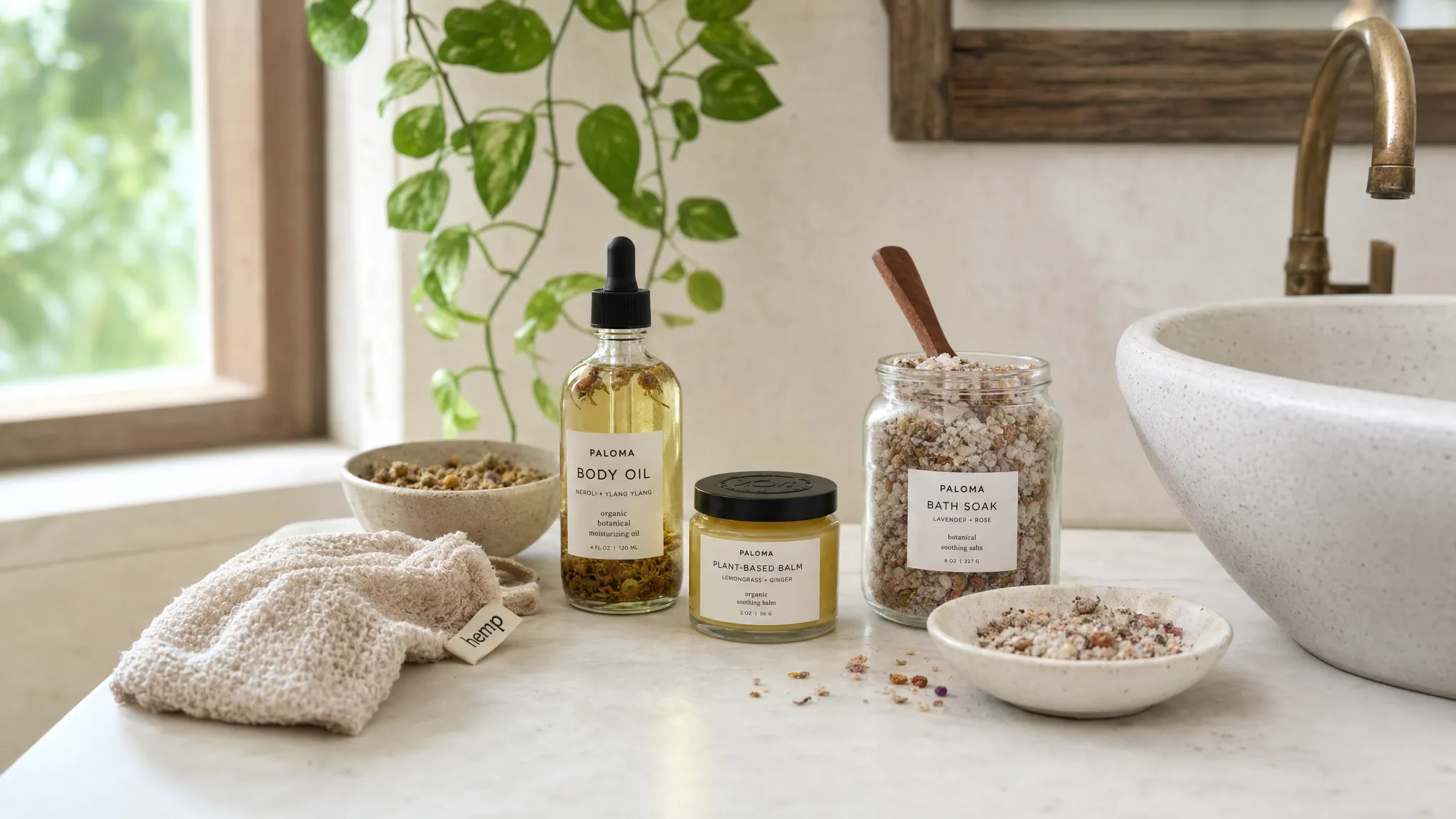
The vegan body care essentials at a glance
A smooth-skin routine works best when each product has a clear purpose. You do not need a crowded shelf. You need products that support the skin barrier and make sense for how your skin actually behaves.
| Essential | Why it matters | What to look for |
|---|---|---|
| Gentle cleanser | Removes sweat, sunscreen, and buildup without stripping skin | Mild, non-drying surfactants or oil-based cleansing options |
| Soft exfoliation | Helps rough texture feel smoother | Fine-grain polish, soft cloth, or very gentle acids if tolerated |
| Body oil | Softens skin and helps reduce moisture loss | Jojoba, sunflower, argan, rosehip, squalane, or other plant oils |
| Vegan balm or butter | Protects elbows, knees, hands, feet, and winter-dry areas | Shea butter, cocoa butter, candelilla wax, plant oils |
| Bath or shower ritual | Turns body care into a calming habit | Bath oils, mineral salts, gentle aromatics, warm water instead of hot |
Essential 1: Cleanse without leaving skin squeaky
A body cleanser should leave skin feeling clean, not tight. That squeaky-clean feeling often means too much of your natural lipid barrier has been removed. Over time, harsh cleansing can make skin feel dry, itchy, or reactive, especially on the legs, arms, and hands.
The American Academy of Dermatology recommends using warm rather than hot water, limiting shower time, and applying moisturizer soon after bathing to help relieve dry skin. Those basics matter just as much as the products you buy.
For vegan body care, look for cleansers that avoid harsh sulfates, synthetic fragrance, and an overly foamy finish. If your skin is dry, a cream cleanser, oil cleanser, or low-lather wash may feel more comfortable than a traditional gel. If you prefer bar soap, choose one that is superfatted or made with nourishing plant oils, not a deodorant-style bar that leaves skin feeling stripped.
A good rule: if you step out of the shower and immediately feel desperate for lotion, your cleanser or water temperature may be too aggressive.
Essential 2: Exfoliate gently for smoother texture
Smooth skin is partly about moisture and partly about texture. Dead skin cells naturally shed, but friction, dry weather, shaving, tight clothing, and not moisturizing regularly can make skin feel rough. Gentle exfoliation can help, but more is not better.
The AAD’s guidance on at-home exfoliation emphasizes choosing an exfoliation method based on your skin type and being careful if your skin is sensitive, dry, or acne-prone. For the body, that might mean using a soft washcloth, a mild body polish, or occasional dry brushing if your skin tolerates it.
Avoid sharp, scratchy scrubs and do not exfoliate over eczema flares, sunburn, razor burn, open skin, or fresh irritation. The goal is a satin finish, not redness. Once or twice a week is plenty for many people, and sensitive skin may prefer even less.
After exfoliating, apply body oil or balm while the skin is still slightly damp. This is when your skin is most receptive to softening and sealing.
Essential 3: Use plant oils to soften and seal
Plant oils are the heart of many vegan body care routines because they are rich in fatty acids that help skin feel supple. They act mainly as emollients, which soften and smooth, and some also help reduce water loss by adding a light protective layer.
A review published in the International Journal of Molecular Sciences discusses how certain topically applied plant oils may support the skin barrier, depending on their fatty acid composition and how they are used. In daily life, that translates into a simple practice: apply body oil after bathing, while skin is still damp, so it helps seal in the water already on your skin.
Different oils feel different. Some sink in quickly, while others are richer and more cushiony. If your skin dislikes heavy textures, start with a few drops per limb and add more only where needed.
| Plant-based ingredient | Typical feel | Best for |
|---|---|---|
| Jojoba oil | Lightweight, silky, balanced | Most skin types, including sensitive body skin |
| Sunflower seed oil | Soft, cushiony, approachable | Dry or easily irritated skin |
| Squalane | Very light, elegant, fast-absorbing | People who dislike a greasy finish |
| Argan oil | Rich but not overly heavy | Dry legs, arms, and mature skin |
| Rosehip oil | Lightweight to medium, nutrient-rich | Dullness and rough-looking texture |
| Shea butter | Dense, protective, creamy | Feet, elbows, knees, hands, winter skin |
Body oils work especially well on freshly showered skin, after shaving, after a bath, or before bed. If your skin still feels dry after oil, it may need a hydrating layer first, such as water, aloe, or a simple humectant product, followed by oil or balm to seal.
For a deeper guide to application timing, see Baby le Bébé’s article on how to use body oil after showering.
Essential 4: Keep a vegan balm for dry zones
Body oil is beautiful for all-over softness, but some areas need more protection. Think elbows, knees, heels, knuckles, cuticles, and any patch that gets dry from friction or cold air. This is where a richer balm or butter becomes essential.
Traditional natural balms often use beeswax, which is not vegan. Vegan balms can use plant waxes such as candelilla wax, sunflower wax, or other botanical structuring ingredients, often paired with shea butter, cocoa butter, and plant oils.
Use a vegan balm as the last step in your routine. Press it onto damp skin or layer it over body oil on stubborn dry spots. For feet, apply a thin coat before socks at night. For hands, use it after washing dishes or before going outside in cold weather.
If you are shopping the Baby le Bébé apothecary, remember that the collection includes both vegan and beeswax options, so a quick ingredient check is the best way to match your routine to your values.
Essential 5: Upgrade your bath and shower ritual
Vegan body care is not only about what you apply after bathing. The bath or shower itself can either support your skin or quietly deplete it.
Hot water, strong fragrance, harsh bubble baths, and long soaks can leave skin drier than before. Warm water, a short soak, and a few drops of a nourishing bath oil can make the ritual more skin-friendly. Mineral salts can be lovely for a relaxing bath, but if your skin is very dry or sensitive, pair them with oil and rinse gently afterward.
Essential oils deserve a thoughtful mention. They can make body care feel luxurious, but they are potent botanical ingredients, not harmless decoration. Sensitive skin, pregnancy, young children, and certain health conditions may call for unscented products or extra caution. When in doubt, patch test first and choose low-aroma formulas.
For more on choosing ingredient-conscious bath products, read the Baby le Bébé guide to organic bath and body products.
How to build a simple vegan body care routine
The best routine is the one you can repeat without overthinking it. Smooth skin responds to consistency more than complexity.
| Moment | What to do | Why it helps |
|---|---|---|
| In the shower | Use warm water and a gentle cleanser | Cleans without stripping the barrier |
| 1 to 2 times weekly | Exfoliate lightly if skin is not irritated | Softens rough texture and helps products spread evenly |
| Right after bathing | Apply body oil to damp skin | Helps lock in surface moisture and leaves skin silky |
| Before bed | Add balm to dry zones | Gives rough areas longer contact time with protective ingredients |
| Morning | Apply sunscreen to exposed skin | Helps protect body skin from UV damage and dryness-related stress |
If your skin is very dry, keep the routine even simpler for two weeks: gentle cleanse, body oil on damp skin, balm on dry patches. Once your skin feels calmer, add exfoliation back slowly.
How to read vegan body care labels without getting fooled
A pretty label can say vegan, natural, clean, green, botanical, or plant-based, but the ingredient list tells the real story. If you want vegan body care that is also skin-kind, look for both ethical alignment and formula quality.
Ingredients to avoid in a strictly vegan routine include:
- Beeswax, often listed as cera alba
- Lanolin, which comes from sheep’s wool
- Honey, propolis, or royal jelly
- Collagen, elastin, or keratin unless clearly plant-derived or biotech-derived and vegan-certified
- Milk, yogurt, goat milk, or whey proteins
- Carmine, sometimes listed as CI 75470
- Tallow or animal fat derivatives
Also watch for vague fragrance terms. Fragrance is not automatically non-vegan, but undisclosed fragrance can be irritating for some people and makes it harder to understand what you are applying to your skin. If your skin is sensitive, simpler is usually better.
| Label claim | What to check |
|---|---|
| Vegan | Confirm there are no animal-derived ingredients and look for certification if available |
| Cruelty-free | Check whether the brand explains its animal testing policy or uses a recognized program |
| Natural | Read the full ingredient list, since natural is not a guarantee of gentleness |
| Organic | Look for the percentage of organic ingredients or a certification statement |
| Preservative-free | Check whether the formula is waterless, since water-containing products usually need preservation |
Baby le Bébé’s approach centers on 100% natural formulations, 99% organic ingredients, cruelty-free practices, and no synthetics, preservatives, petroleum, or fillers. For shoppers who want a pared-back routine, that ingredient philosophy can make label reading feel calmer and more intentional.
You can also explore the brand’s broader perspective on cruelty-free and vegan skin care.
Troubleshooting: why your skin still feels rough
If you are using vegan body care but your skin still feels dry, bumpy, or uncomfortable, the issue may be technique rather than ingredient quality.
Skin that feels tight right after showering may be reacting to hot water, over-cleansing, or a cleanser that is too strong. Try shorter showers, lower water temperature, and immediate post-shower oil.
Skin that feels greasy but still dry may need more water, not more oil. Apply oil to damp skin rather than completely dry skin, or layer a light hydrating mist or aloe-based product underneath.
Skin that feels rough on the backs of arms or thighs may need gentle, consistent exfoliation, but avoid scrubbing aggressively. If bumps are inflamed, itchy, painful, or persistent, it is worth checking with a dermatologist.
Skin that stings when you apply products may be sensitized. Pause exfoliation, fragrance, and strong actives. Return to the simplest possible routine until the skin feels calm again.
Vegan body care for sensitive skin
Vegan does not automatically mean hypoallergenic. Poison ivy is natural and vegan, but no one wants it in a body balm. What matters is thoughtful formulation, appropriate concentration, and how your skin responds.
For sensitive skin, prioritize fragrance-free or low-aroma formulas, simple ingredient lists, and barrier-supportive textures. Patch test new products on a small area of the inner arm or behind the knee before applying them widely. Wait at least 24 hours, longer if your skin tends to react slowly.
If you are shopping for babies, children, or someone with eczema-prone skin, be even more conservative. Choose minimal formulas, avoid strong essential oils, and speak with a healthcare professional for chronic irritation, rashes, or broken skin.
Frequently Asked Questions
What are the most important vegan body care products? The essentials are a gentle cleanser, a body oil or moisturizer, a richer vegan balm for dry areas, and sunscreen for exposed skin. Exfoliation and bath oils are helpful additions, but they should support the routine rather than complicate it.
Is beeswax vegan? No. Beeswax is an animal-derived ingredient, so it is not considered vegan. If you want a vegan balm, look for plant waxes such as candelilla wax or other clearly labeled botanical alternatives.
Can vegan body care moisturize as well as conventional products? Yes, well-formulated vegan body care can be very effective. Plant oils, butters, waxes, and humectants can soften skin, support the barrier, and help reduce moisture loss when used consistently.
Should I use body oil every day? Many people can use body oil daily, especially after showering. Apply it to damp skin and start with a small amount. If your skin feels too slick, use less or reserve richer oils for dry areas.
Is vegan body care good for sensitive skin? It can be, but vegan is not a guarantee that a product will suit sensitive skin. Look for simple formulas, avoid strong fragrance or essential oils if you react easily, and patch test before full-body use.
How do I know if a body care product is truly vegan? Read the full ingredient list and watch for animal-derived ingredients such as beeswax, lanolin, honey, collagen, keratin, milk proteins, carmine, and tallow. Certifications can help, but transparent labeling matters most.
Make your body routine feel simple again
Vegan body care should feel like a ritual, not a research project. Start with gentle cleansing, apply plant oils while skin is damp, protect dry zones with a vegan balm, and choose labels that are transparent about what is inside.
If you want natural, cruelty-free body care rooted in botanical ingredients, explore the Baby le Bébé apothecary. You will find a curated selection of oils, balms, cleansers, and body care essentials crafted for healthy, feel-good skin, with vegan and beeswax options clearly worth checking by ingredient list.


0 comments