

Soft, balanced body skin does not come from coating yourself in the heaviest cream you can find. It comes from choosing products that respect the skin barrier, replenish lipids, and leave skin comfortable after cleansing, bathing, shaving, and seasonal weather changes.
That is where vegan body care products can be especially beautiful. When they are well formulated, plant oils, botanical butters, gentle cleansers, and mineral-rich exfoliants can soften roughness without relying on animal-derived ingredients, petroleum fillers, or harsh synthetics. The key is knowing what to look for, what to avoid, and how to build a ritual that keeps skin supple without feeling greasy.
What Makes a Body Care Product Vegan?
A vegan body care product contains no animal-derived ingredients. In body care, that means checking for obvious ingredients like milk, honey, beeswax, and lanolin, but also less obvious ones like collagen, keratin, carmine, silk proteins, and animal-derived squalene.
Vegan is not the same as cruelty-free. A vegan formula avoids animal-derived ingredients. A cruelty-free product is not tested on animals. Many conscious shoppers want both. If you are still sorting through these terms, Baby le Bébé’s guide to cruelty-free and vegan skin care explains the difference in more detail.
It is also worth saying plainly: vegan does not automatically mean gentle, natural, organic, or effective. A vegan body lotion can still contain synthetic fragrance, drying alcohols, or fillers that do little for the skin barrier. The best vegan body care products combine ethical ingredient choices with thoughtful formulation, especially if your goal is soft, balanced skin rather than a quick perfumed finish.
What “Balanced Skin” Really Means for the Body
Balanced skin is skin that feels calm, flexible, and resilient. It is not overly dry, tight, itchy, greasy, or congested. On the body, imbalance often shows up as rough elbows, flaky shins, bumpy upper arms, dullness, post-shower tightness, or irritation from shaving and clothing friction.
Your skin barrier is central to that balance. The outer layer of skin holds water inside while keeping irritants out. When the barrier is depleted, water escapes more easily, and skin becomes more reactive. According to the American Academy of Dermatology, simple habits like using gentle cleansers, applying moisturizer after bathing, and avoiding fragrance can help relieve dry skin.
For a plant-based body ritual, the goal is to support three basic needs:
- Gentle cleansing that does not strip the skin.
- Lightweight hydration and emollience that restore softness.
- A protective seal that reduces water loss, especially on dry areas.
That is why body oils, balms, bath oils, and soft exfoliants can work so well when used correctly. They do not just sit on the surface. Many botanical lipids help cushion the stratum corneum, smooth rough texture, and make skin feel more comfortable after daily stress.
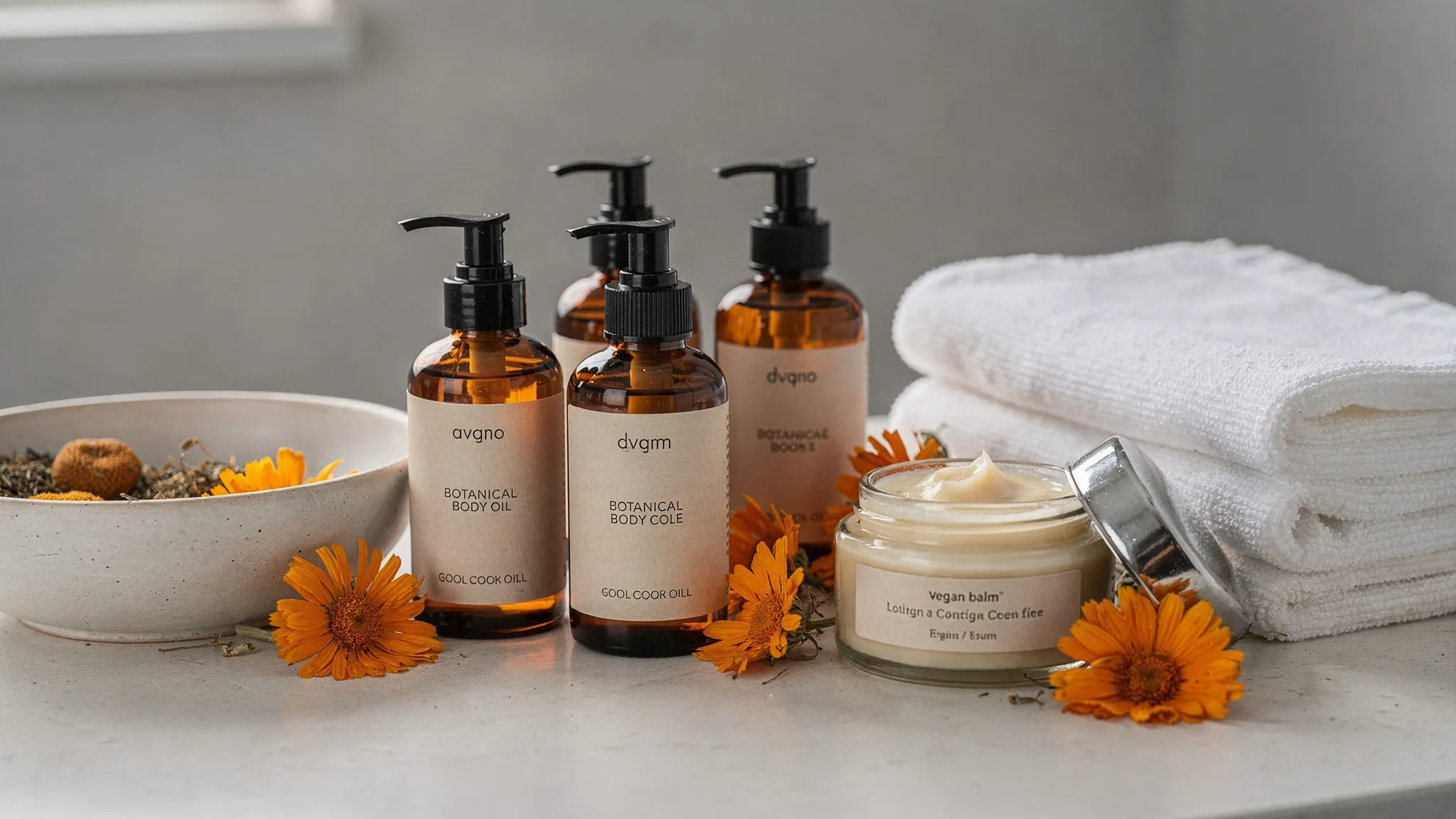
The Best Vegan Ingredients for Soft, Balanced Skin
The strongest vegan body care formulas tend to be simple but strategic. They use plant-derived ingredients with clear roles, rather than long ingredient lists built around fragrance and texture modifiers.
| Skin need | Vegan ingredients to look for | Why they help | Best suited for |
|---|---|---|---|
| Dryness and tightness | Jojoba, sunflower, argan, safflower, hemp seed oil | Replenish skin with emollient plant lipids and fatty acids | Daily body oil, post-shower care |
| Rough texture | Shea butter, cocoa butter, mango butter | Soften dry patches and cushion the skin barrier | Elbows, knees, heels, winter skin |
| Dehydrated feel | Aloe, glycerin, hyaluronic acid, botanical hydrosols | Attract water to the surface layers of skin | Layering before oils or balms |
| Protective sealing | Candelilla wax, carnauba wax, sunflower wax, rice bran wax | Create a vegan alternative to beeswax-based balms | Hands, feet, wind-exposed skin |
| Dullness | Fine sugar, fruit enzymes, gentle mineral powders | Buff away dead surface cells without harsh abrasion | Weekly body polish |
| Sensitivity | Calendula, chamomile, oat, unscented plant oils | Calm the feel of stressed skin and reduce friction | Reactive, dry, or easily irritated skin |
If you want to understand why plant oils behave differently on skin, fatty acid profile matters. Oils rich in linoleic acid often feel lighter and can be helpful for balanced or breakout-prone body skin, while more oleic-rich oils can feel richer and more comforting on dryness. Baby le Bébé’s guide to fatty acids in skincare offers a deeper look at how these lipids support the skin barrier.
Ingredients to Double-Check on Vegan Body Care Labels
Because “vegan” can appear on many very different formulas, the ingredient list still matters. A product can avoid animal-derived ingredients yet still be too harsh, too fragranced, or too occlusive for your skin.
Common animal-derived ingredients to watch for include:
- Beeswax, which is common in balms but not vegan.
- Lanolin, a waxy substance from sheep’s wool.
- Honey, propolis, and royal jelly.
- Collagen, elastin, and keratin.
- Carmine, a red pigment derived from insects.
- Squalene if the source is not clearly plant-derived.
Also watch for ingredients that may not align with a natural or barrier-first body care philosophy. Synthetic fragrance, phthalates, parabens, harsh sulfates, and petroleum-derived fillers are common in conventional body products. Petroleum jelly is technically vegan, but if you are choosing body care for botanical purity, plant oils, butters, and waxes may better match your values.
For sensitive skin, fragrance deserves special attention. Essential oils can be natural and vegan, but that does not mean every skin type tolerates them. If your skin stings easily, becomes red after showers, or reacts to scented lotions, choose unscented or very gently aromatic formulas and patch test first.
How to Build a Vegan Body Care Ritual
A balanced body routine does not need ten steps. In fact, the body often responds best to a simple rhythm: cleanse, soften, seal, and occasionally polish.
1. Cleanse without stripping
Start with a body cleanser that leaves skin comfortable, not squeaky. That tight, shiny feeling after showering is usually a sign that the cleanser has removed too much surface oil. Look for gentle surfactants, oil-based cleansers, or creamy cleansers, especially if your skin is dry or sensitive.
Use warm water rather than hot water. Hot showers feel soothing in the moment, but they can worsen dryness by disrupting the skin’s surface lipids. Keep showers shorter in winter or whenever skin feels reactive.
2. Exfoliate softly, not aggressively
Exfoliation can help with dullness, rough patches, and uneven texture, but body skin does not need to be scrubbed raw. A vegan body polish with fine particles in a nourishing oil base can leave skin smooth without the harshness of large, jagged exfoliants.
Use a body polish once or twice weekly, depending on your skin. Avoid exfoliating over eczema flares, sunburn, cuts, active irritation, or freshly shaved skin. If you are curious about this category, Baby le Bébé’s guide to what a body polish is explains how polish differs from a traditional scrub.
3. Apply body oil while skin is damp
Body oil works best when applied after bathing, while skin is still slightly damp. Water hydrates the surface of the skin, and oil helps slow that water from evaporating. This is especially useful on shins, arms, shoulders, and any area that feels tight after showering.
Warm a small amount of oil between your palms, then press and sweep it over the body. Use less than you think you need at first. A good body oil should leave a soft sheen, not a slippery film. For more technique, see Baby le Bébé’s guide on how to use body oil after shower.
4. Seal stubborn dry areas with a vegan balm or butter
If your elbows, knees, hands, or heels stay rough even after body oil, add a richer seal. Vegan balms often use plant waxes instead of beeswax, paired with butters and oils. This creates a more protective layer for high-friction or chronically dry zones.
Apply balm after oil, not before. Think of oil as your softening step and balm as your weatherproofing step. This is especially helpful before bed, before a cold walk, or after frequent handwashing.
5. Adjust by season
Balanced skin changes with the weather. In humid months, a lightweight oil after showering may be enough. In cold, dry months, you may need a richer balm on top, a gentler cleanser, and less frequent exfoliation.
Your routine should respond to your skin, not force your skin to tolerate the same products year-round.
Matching Vegan Body Care Products to Your Skin Type
The body is not one uniform skin type. Your back may be breakout-prone, your legs may be dry, and your hands may be sensitive from washing. Choose by area and need.
| Body concern | What to choose | What to avoid |
|---|---|---|
| Very dry skin | Rich plant oils, shea or mango butter, balm on damp skin | Hot showers, foaming cleansers, strong fragrance |
| Sensitive or reactive skin | Minimal formulas, unscented oils, calendula or oat-based care | Essential oil-heavy products, harsh scrubs, frequent exfoliation |
| Body breakouts | Lighter oils, non-greasy textures, gentle cleansing after sweat | Heavy occlusion on breakout zones, pore-clogging residue |
| Rough bumps or dullness | Gentle body polish, consistent oil after showering | Aggressive scrubbing, daily exfoliation, drying acids over large areas |
| Hands and feet | Dense vegan balm, plant waxes, butters, overnight application | Thin lotions alone, washing without re-sealing |
If you are acne-prone on the chest or back, be selective with richer butters and balms in those areas. Use them where you are dry, not everywhere by default. This helps you stay soft without tipping into congestion.
Are Water-Free Vegan Products Better?
Many luxury natural body care products are anhydrous, meaning they contain no water. Body oils, balms, and butters often fall into this category. Water-free formulas can be elegant for people who want concentrated botanical ingredients and fewer unnecessary additives.
Anhydrous products can also reduce the need for conventional preservatives, because bacteria, yeast, and mold generally need water to grow. Still, preservative-free does not automatically mean safer in every format. A water-based lotion or gel needs an appropriate preservation system. A water-free oil or balm needs good storage habits.
To keep natural body care fresh, close lids tightly, store products away from heat and sunlight, and avoid introducing water into jars. Use clean, dry hands or a spatula for balms if possible.
A Simple Vegan Body Care Routine for Everyday Softness
If you are starting from scratch, keep it minimal. A few well-chosen products used consistently will outperform an overflowing shelf of mismatched formulas.
- Morning or evening shower: Use a gentle, non-stripping cleanser and warm water.
- After shower: Pat skin until damp, not fully dry, then apply a botanical body oil.
- Targeted seal: Add a vegan balm or butter to elbows, knees, heels, hands, and any dry patches.
- Weekly polish: Use a gentle body polish once weekly if skin is not irritated.
- Seasonal upgrade: In colder months, reduce exfoliation and increase balm use on high-friction areas.
That rhythm respects the skin barrier while still giving you the sensory pleasure of body care: the warm oil, the softened skin, the subtle glow, the feeling of being cared for without heaviness.
How Baby le Bébé Approaches Vegan Body Care
Baby le Bébé’s apothecary is rooted in 100% natural formulations, 99% organic ingredients, and cruelty-free botanical care. The collection includes plant-powered oils, balms, cleansers, and body care products made without synthetics, parabens, petroleum, preservatives, or fillers.
Because the apothecary includes both vegan options and beeswax-based options, ingredient transparency matters. If vegan is non-negotiable for you, review each product’s ingredient list before purchasing and choose formulas that use plant oils, botanical butters, and vegan waxes rather than beeswax.
This kind of clarity is part of what makes a body care ritual feel trustworthy. You should not have to guess what is touching your skin every day.
Frequently Asked Questions
Are vegan body care products better for dry skin? They can be excellent for dry skin when they include barrier-supporting plant oils, butters, and waxes. The vegan label alone is not enough. Look for formulas that soften, seal, and avoid harsh fragrance or stripping cleansers.
Is beeswax vegan? No. Beeswax is animal-derived, so it is not considered vegan. If you want a vegan balm, look for plant waxes such as candelilla, carnauba, sunflower, or rice bran wax.
Can body oil replace lotion? Body oil can replace lotion for many people, especially when applied to damp skin. If your skin is dehydrated, layer oil over a humectant-rich product or damp skin so there is water to seal in.
Are natural vegan products safe for sensitive skin? Many are gentle, but not all. Sensitive skin should avoid heavy fragrance, strong essential oil blends, harsh exfoliants, and overly complex formulas. Patch testing is always wise.
How often should I use vegan body polish? Once weekly is enough for most people. If your skin is very dry, reactive, or eczema-prone, exfoliate less often or skip polish until the barrier feels calm.
How do I know if a product is truly vegan? Read the full ingredient list and look for clear vegan labeling or trusted certifications. Avoid lanolin, beeswax, honey, milk derivatives, collagen, keratin, carmine, and animal-derived squalene.
Choose Body Care That Feels Good on Skin and in Practice
The best vegan body care products do more than avoid animal-derived ingredients. They support the skin barrier, soften roughness, respect sensitive skin, and make your daily ritual feel calmer and more intentional.
If you are ready to simplify your shelf with natural, botanical body care, explore the Baby le Bébé apothecary. Choose vegan formulas when that matters most to you, and look for plant oils, butters, cleansers, and balms that leave your skin soft, balanced, and beautifully cared for.


0 comments